Nifty 50
- HCL Technologies₹1,312.2089.20 (7.29%)
- Max Healthcare₹857.75-8.20 (-0.95%)
- Shriram Finance₹986.1056.70 (6.10%)
- Maruti Suzuki₹11,215-100.00 (-0.88%)
- TCS₹2,252.30127.30 (5.99%)
- Kotak Mahindra Bank₹439.55-3.85 (-0.87%)
- Tech Mahindra₹1,53968.00 (4.62%)
- Eternal₹320.35-2.65 (-0.82%)
- Infosys₹1,061.1041.10 (4.03%)
- Power Grid Corp₹247.70-1.30 (-0.52%)
- Hindustan Unilever₹1,87655.30 (3.04%)
- Nestle₹1,319.50-5.20 (-0.39%)
- Bajaj Auto₹10,317283.00 (2.82%)
- HDFC Life Insurance ₹557.70-1.55 (-0.28%)
- Bajaj Finance₹982.5025.25 (2.64%)
- InterGlobe Aviation₹4,787.70-7.30 (-0.15%)
- Trent₹2,98572.00 (2.47%)
- SBI Life Insurance ₹1,680.20-0.60 (-0.04%)
- Adani Enterprises₹2,684.1054.10 (2.06%)

- Offerings
- Tools & Platforms
Tools & Calculators
- Open API
- Calculators
- SIP Calculator
- CAGR Calculator
- Compound Interest Calculator
- FD Calculator
- RD Calculator
- EPF Calculator
- Retirement Calculator
- HDFC SIP Calculator
- Mutual Fund Return Calculator
- Lumpsum Calculator
- Step Up SIP Calculator
- ETF SIP Calculator
- Brokerage Calculator
- Equity Margin Calculator
- SWP Calculator
- EMI Calculator
- MTF Calculator
- Margin Pledge Calculator
- Algo Strategy
- Markets
Stocks
F&O
Mutual Funds
- More
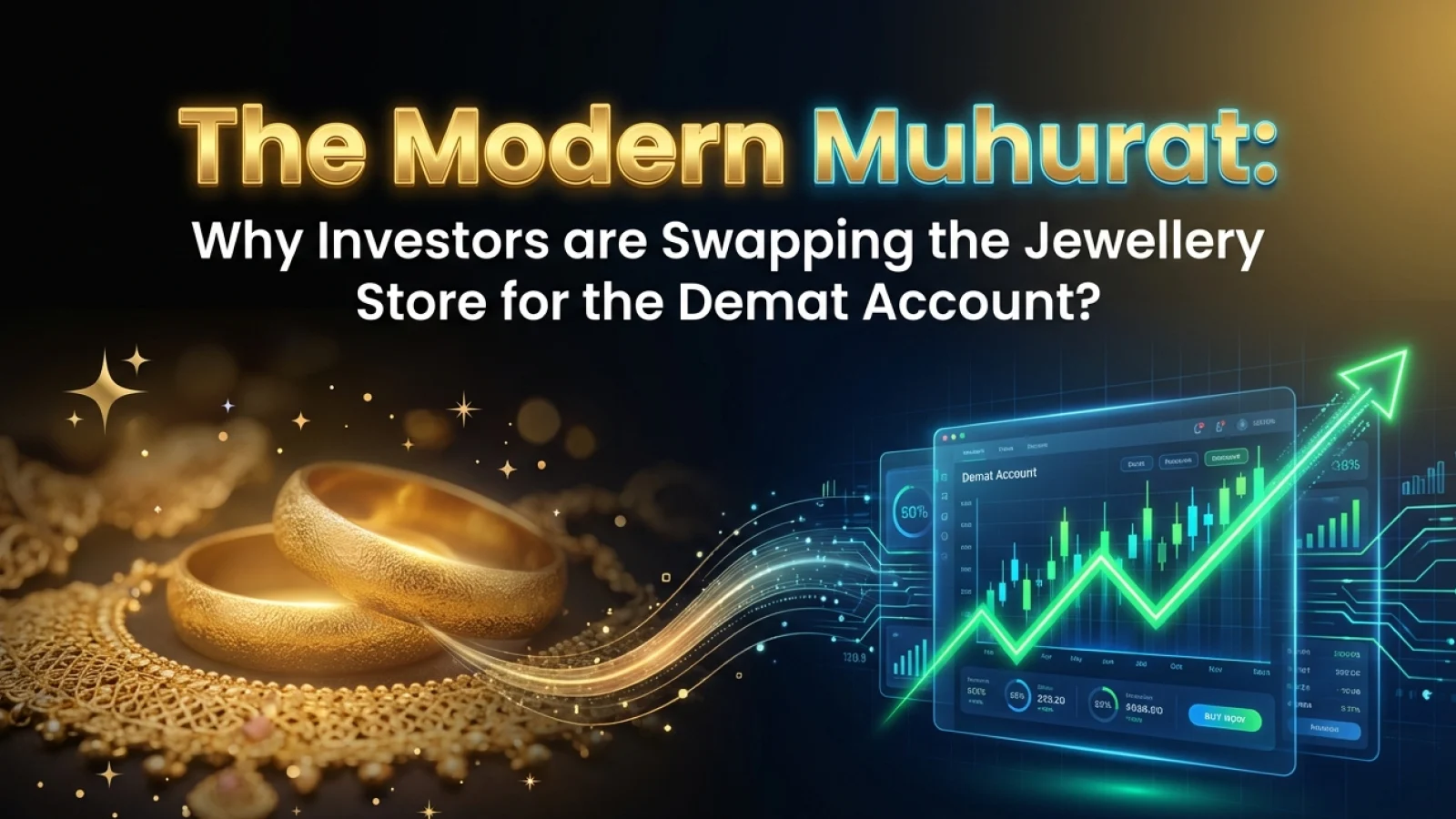
The Modern Muhurat: Why Investors are Swapping the Jewellery Store for the Demat Account?
By HDFC SKY | Published at: Apr 15, 2026 09:58 PM IST
Open Free Demat Account
Open Free Demat Account
Akshaya Tritiya has traditionally been associated with long lines outside jewellery shops. Families would wait for hours to buy gold coins or ornaments, believing the metal would bring eternal prosperity.
But a quiet shift is underway. An increasing number of investors are choosing to open demat accounts on this auspicious day instead of visiting the jeweller.
Why the change? The answer lies in convenience, cost, and returns. Let us examine why financial forms of gold are becoming more attractive from an investment perspective.
Physical Gold Comes with Hidden Costs
Making charges range from 5% to 25% of the gold value. Wastage charges add another 2% to 10%. Storage requires lockers that cost money. Insurance is an additional expense.When selling, especially in the case of jewellery, buyers often do not receive the full market value due to deductions for impurities, making charges, or dealer margins. However, the exact loss can vary depending on the form of gold and the buyer.
Paper Gold Removes Inefficiencies
Gold ETFs or Exchange Traded Funds trade on stock exchanges just like shares. There are no making charges, no wastage, and no storage worries. Digital gold allows purchases in very small denominations (sometimes as low as ₹10). Sovereign Gold Bonds pay 2.5% annual interest on top of price appreciation. The returns are cleaner, and the costs are transparent.
However, unlike Gold ETFs and Sovereign Gold Bonds, digital gold is not regulated by SEBI or the RBI, which exposes investors to counterparty and operational risks.
Tax Treatment is Now uniform
As of April 1, 2026, the tax rates across different gold investment options have been largely aligned, with long-term capital gains taxed at 12.5% without indexation.
However, the holding period for long-term classification differs—24 months for physical and digital gold, and 12 months for Gold ETFs.
The advantage of paper gold is not just convenience but also potentially more efficient tax treatment depending on the holding period and liquidity needs.
The Younger Investor is Driving this Change
Millennials and Gen Z investors increasingly prefer digital solutions. They already have demat accounts for equities. Buying a Gold ETF on Akshaya Tritiya takes two minutes on a mobile app. There is no queue, no purity anxiety, and no negotiation on making charges.
This does not mean jewellery stores will become empty. The emotional and cultural value of physical gold remains strong for weddings and family traditions. But for pure investment, the demat account is becoming the new muhurat favourite.
This Akshaya Tritiya, consider both options. Buy the necklace for the family ritual. Buy the Gold ETF for your portfolio. One preserves tradition. The other builds wealth.


FAQs
What kind of gold investment will be appropriate for ₹500 SIP per month?
Is digital gold as pure as physical gold coins from a jeweller?
Can I buy Gold ETFs on Akshaya Tritiya if the stock market is closed?

Open Free Demat Account
Open Free Demat Account
Popular Posts
- 10 Interesting Facts About NSE You Probably Didn’t KnowLast Updated: Sep 30, 2026
- 8-4-3 Rule of SIP - How Does That Work?Last Updated: Jul 30, 2025
- Let's view more exciting Post!
Popular Post from Media Coverage
- India’s young investors are changing the markets : The industry must change tooLast Updated: Sep 17, 2026
- HDFC SKY Sees Sharp Generational and Digital Shift in New-Age IPO InvestingLast Updated: Sep 17, 2026
- HDFC SKY Launches Scalper Terminal for Faster, Smarter Options Trading; InvestRight Gets the Same Edge, Powered by NXTOptionLast Updated: Sep 3, 2026
- Akshaya Tritiya 2026: Why Do We Invest in Gold on This Day?Last Updated: Apr 15, 2026
- Financials Top Bullish Pick Right Now, Says HDFC Securities Chief Research Officer – Equities, Varun LohchabLast Updated: Apr 13, 2026
- Let's view more exciting Post!
Popular Post from Blogs
- “Bounce Back” Theme Gains Traction in 2026Last Updated: Apr 8, 2026
- 5 Takeaways for Tax Payers from the Budget 2025Last Updated: Jan 29, 2026
- Let’s view more exciting Posts


Invest Anytime, Anywhere


By signing up I certify terms, conditions & privacy policy