Nifty 50
- Infosys₹1,03540.90 (4.11%)
- Bajaj Auto₹10,045-829.00 (-7.62%)
- HDFC Life Insurance ₹534.2013.00 (2.49%)
- Maruti Suzuki₹11,386-581.00 (-4.86%)
- HDFC Bank₹721.2012.50 (1.76%)
- Shriram Finance₹945-37.70 (-3.84%)
- SBI Life Insurance ₹1,721.6025.20 (1.49%)
- Tata Steel₹178-6.30 (-3.42%)
- Max Healthcare₹940.9511.15 (1.20%)
- Adani Ports₹1,737.80-60.50 (-3.36%)
- TCS₹2,07524.40 (1.19%)
- Grasim Industries₹2,962-99.90 (-3.26%)
- HCL Technologies₹1,243.1013.10 (1.07%)
- Eicher Motors₹6,920-230.00 (-3.22%)
- Tata Consumer ₹9577.50 (0.79%)
- Mahindra & Mahindra₹2,860-90.00 (-3.05%)
- Tech Mahindra₹1,5339.00 (0.59%)
- Adani Enterprises₹2,816.80-86.60 (-2.98%)
- Kotak Mahindra Bank₹418.351.35 (0.32%)
- ITC₹255.90-6.85 (-2.61%)

- Offerings
- Tools & Platforms
Tools & Calculators
- Open API
- Calculators
- SIP Calculator
- CAGR Calculator
- Compound Interest Calculator
- FD Calculator
- RD Calculator
- EPF Calculator
- Retirement Calculator
- HDFC SIP Calculator
- Mutual Fund Return Calculator
- Lumpsum Calculator
- Step Up SIP Calculator
- ETF SIP Calculator
- Brokerage Calculator
- Equity Margin Calculator
- SWP Calculator
- EMI Calculator
- MTF Calculator
- Margin Pledge Calculator
- Algo Strategy
- Markets
Stocks
F&O
Mutual Funds
- More
Invest in Exchange Traded Funds (ETFs) in India
Explore exchange traded funds across index, equity, gold, silver, debt, liquid and global categories. Buy and sell ETF units through your HDFC SKY Demat and trading account.

Open Free Demat Account
Open Free Demat Account
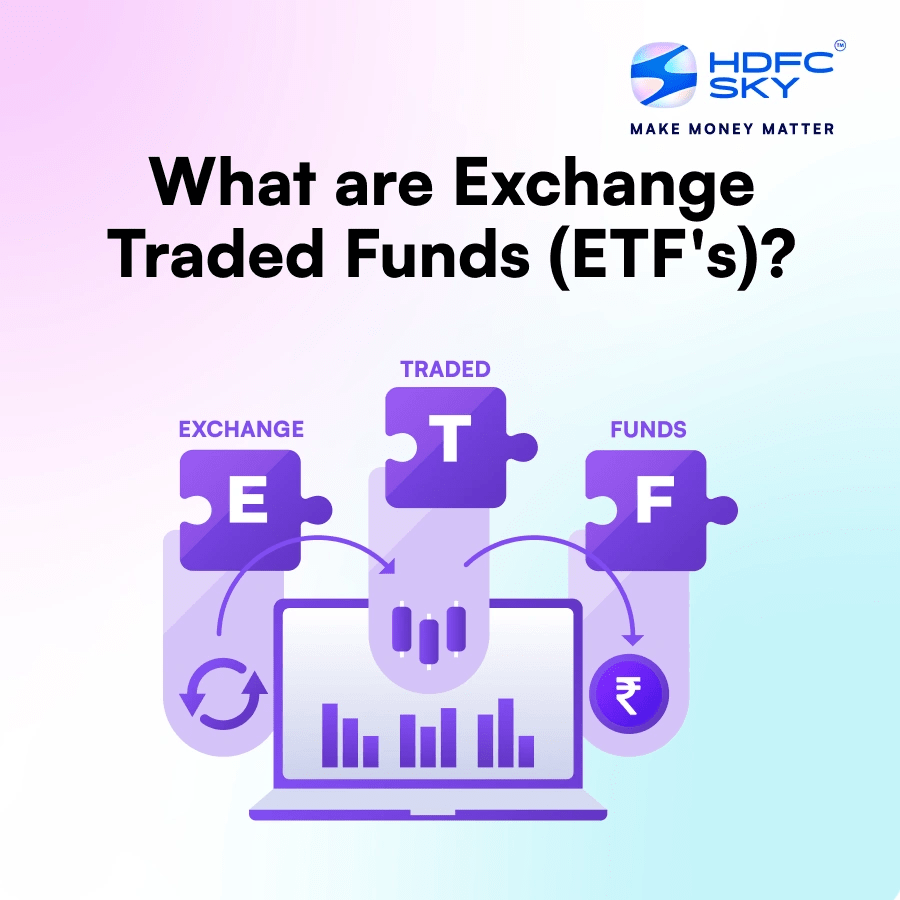
What Is an Exchange Traded Fund (ETF)?
An exchange traded fund (ETF) is an investment fund whose units are bought and sold on a stock exchange during market hours. An ETF may track an index, sector, commodity, bond portfolio or international market. It offers exposure to a basket of securities through a single transaction, while its market price may differ from its net asset value (NAV).
 Index ETFs
- Equity ETFs
- Sectoral & Thematic ETFs
- Gold ETFs
- Silver ETFs
- Debt ETFs
- Liquid ETFs
- Global ETFs
Key Features of Exchange Traded Funds
Diversified Exposure
Exchange Trading
Transparent Holdings

Gain exposure to a basket of securities through one ETF unit.
Buy or sell ETF units on the stock exchange during market hours.
Review the ETF’s benchmark, holdings, expense ratio and tracking error before investing.
Access asset classes such as equity, debt, gold, silver and international markets.
Use market or limit orders based on the ETF’s liquidity and bid-ask spread.
How to Invest in ETFs with HDFC SKY
Open or log in to your HDFC SKY Demat and trading account.
Add funds to your trading account.
Search for the ETF by its name or trading symbol.
Review the ETF’s benchmark, expense ratio, tracking error, liquidity and market price.
Choose the quantity and select a market or limit order.
Review the order details and place the buy or sell order.
Open or log in to your HDFC SKY Demat and trading account.
Add funds to your trading account.
Search for the ETF by its name or trading symbol.
Review the ETF’s benchmark, expense ratio, tracking error, liquidity and market price.
Choose the quantity and select a market or limit order.
Review the order details and place the buy or sell order.
 Pricing
ETF Brokerage and Other Charges
ETF orders are charged as per the applicable HDFC SKY brokerage plan. Exchange charges, statutory levies, taxes, bid-ask spread and other applicable charges may also affect the total transaction cost.
Delivery Orders
As per the applicable brokerage plan
Intraday Orders
As per the applicable brokerage plan
Benefits of Investing in ETFs

Diversification
An ETF can provide exposure to a basket of securities, sectors or asset classes through a single investment.

Lower Cost
Many passively managed ETFs have relatively low expense ratios, but investors should also consider brokerage, bid-ask spread and statutory charges.

Liquidity
ETF units can be traded during market hours. Actual liquidity and transaction cost depend on trading volume, the underlying securities and the bid-ask spread.

Transparency of Holdings
ETF holdings and portfolio information are generally published periodically by the fund house, helping investors understand the fund’s exposure.

Tax Treatment
The tax treatment of an ETF depends on its asset category, holding period and applicable tax rules. Review the latest tax provisions before investing.

Diverse Order Options
Depending on the trading platform and market liquidity, investors may use market or limit orders to buy and sell ETF units.
Diversification
An ETF can provide exposure to a basket of securities, sectors or asset classes through a single investment.
Lower Cost
Many passively managed ETFs have relatively low expense ratios, but investors should also consider brokerage, bid-ask spread and statutory charges.
Liquidity
ETF units can be traded during market hours. Actual liquidity and transaction cost depend on trading volume, the underlying securities and the bid-ask spread.
Transparency of Holdings
ETF holdings and portfolio information are generally published periodically by the fund house, helping investors understand the fund’s exposure.
Tax Treatment
The tax treatment of an ETF depends on its asset category, holding period and applicable tax rules. Review the latest tax provisions before investing.
Diverse Order Options
Depending on the trading platform and market liquidity, investors may use market or limit orders to buy and sell ETF units.
What Is an ETF in the Stock Market?

An ETF is listed on a stock exchange and trades throughout market hours, similar to a share. Each ETF is designed around a stated objective, such as tracking a market index, sector, commodity, bond portfolio or international market. The traded price is determined by market demand and supply and may be above or below the ETF’s net asset value. Investors should compare the benchmark, expense ratio, tracking error, liquidity and bid-ask spread before placing an order.
How Do ETFs Work?
An ETF provider creates a portfolio based on the fund’s stated benchmark or investment objective. ETF units are listed on a stock exchange, where investors buy and sell them through a trading account. The market price changes during the trading day based on demand and supply. Because of expenses, trading costs and tracking difference, an ETF’s return may not exactly match the return of its benchmark.
Here’s a simplified overview of how ETFs work:
- The fund house defines the ETF’s benchmark or investment objective and creates the underlying portfolio.
- The ETF units are listed on a stock exchange and can be purchased through a Demat and trading account.
- Investors buy and sell ETF units during market hours at the available market price or through a limit order.
Types of ETFs in India
ETFs in India provide exposure to different indices, sectors, commodities, debt instruments and international markets. The objective, portfolio, risks, costs and tax treatment vary by ETF category.
- Gold ETFs: Gold ETFs seek to track the domestic price of gold, subject to fund expenses and tracking difference. They provide gold exposure without requiring investors to store physical gold.
- Silver ETFs: Silver ETFs seek to track domestic silver prices, subject to fund expenses and tracking difference. Their value can be affected by changes in silver prices and market liquidity.
- Debt ETFs: Debt ETFs invest in a portfolio of fixed-income securities such as government securities, treasury bills or corporate bonds, depending on the scheme objective. Their risks may include interest-rate, credit and liquidity risk.
- Sectoral and Thematic ETFs: These ETFs track companies from a specific sector or investment theme. They may have higher concentration risk than broad-market index ETFs.
- Liquid ETFs: Liquid ETFs generally invest in short-term money-market instruments and are designed for short-term cash management. Investors should review the scheme objective, liquidity, costs and applicable risks.
- Global ETFs: Global ETFs provide exposure to securities or indices outside India. Their returns may be affected by overseas market movements, currency fluctuations, tracking difference, liquidity and applicable investment restrictions.
- Index ETFs: Index ETFs seek to track a specified market index, such as a broad-market, market-cap or strategy index. Investors should compare tracking error, expense ratio, liquidity and bid-ask spread.
The fund manager holds the securities in the same proportions and makes necessary adjustments to the holdings so as to reflect changes in the index or theme, therefore closely matching the performance of the index or the theme. Global ETFs allow you to diversify your investment opportunities by taking it beyond the local market, to worldwide. The good part of global ETFs is that they are cost-effective as they come with lower fees in comparison to actively managed funds, thus allowing you to keep a greater share of your gains. These funds provide smooth liquidity, making it simple to buy and sell throughout business hours. Since Global ETFs usually follow well-known international indexes, transparency is advantageous since it gives investors a clear picture of their holdings to help them make well-informed decisions. By exposing your portfolio to a variety of currencies and lowering reliance on the performance of a single one, they can also assist in reducing currency risk. In conclusion, Global ETF funds offer a practical and economical means of managing and diversifying your investments globally.
Benefits of Investing in ETFs
- Flexibility in Trading: Unlike traditional mutual funds, which are only traded at the end of the trading day, ETFs allow investors to buy and sell shares at any time during market hours.
- Transparency of Holdings: Most ETFs are obligated to disclose their holdings on a daily basis, providing investors with greater transparency regarding their investments.
- Tax Efficiency: ETFs tend to be more tax-efficient compared to actively managed mutual funds, as they typically generate fewer capital gain distributions, which can benefit investors.
- Diverse Order Options: ETFs are traded similarly to stocks. Investors can utilise various order types, such as limit orders and stop-loss orders, which are not available for mutual funds.
- Ease of Diversification: ETFs make it easy to diversify your portfolio. By buying one ETF, you gain exposure to a collection of securities. This spreads your risk across different assets and sectors.
- Liquidity: ETFs are known for their high liquidity. They are traded actively during market hours. High liquidity can lead to narrower bid-ask spreads. This may reduce transaction costs for investors.
- Potential for Dividend Income: Many ETFs pay dividends from the assets they hold. This can provide an added income stream. It is ideal for investors who seek income-generating options.
- Simplified Management: ETFs are passively managed. They typically follow an index and require less monitoring. It can simplify investment management.
Why Invest in ETFs?
ETFs can help investors obtain diversified exposure through a single exchange-traded instrument. They may suit investors who understand the ETF’s benchmark, costs, tracking difference, liquidity and risks. An ETF should be selected according to the investor’s financial objective, risk profile and investment horizon; returns are not guaranteed.
How to Invest in ETFs Online
Before placing an order, identify the ETF category that matches your investment objective and risk profile. Compare the benchmark, expense ratio, tracking error, assets under management, trading volume, bid-ask spread and historical performance. Past performance does not guarantee future returns.
- Step 1: Log in to HDFC SKY — Access your HDFC SKY account through the app or web trading platform.
- Step 2: Search for the ETF — Enter the ETF name or trading symbol and open its quote page.
- Step 3: Review the ETF — Check the benchmark, market price, expense ratio, tracking error, liquidity and bid-ask spread.
- Step 4: Enter the order details — Select buy or sell, enter the quantity and choose a market or limit order.
- Step 5: Review and place the order — Verify the ETF name, quantity, order type, price and estimated charges before submitting the order.
How to Choose an ETF
Risks of Investing in ETFs
Conclusion
Before investing in an ETF, review its investment objective, benchmark, portfolio, expense ratio, tracking error, liquidity, bid-ask spread, risks and tax treatment. Read the latest scheme information document, key information memorandum and fund factsheet. ETF returns are market-linked and are not guaranteed.
Learn More About Exchange Traded Fund (ETFs)


Frequently Asked Questions About ETFs
How to buy an ETF?
Is a Demat account required to invest in ETFs in India?
When is the ETF NAV calculated?
What is the difference between ETF and F&O?
What is the full form of ETF?
What is tracking error in an ETF?
What is the minimum amount required to invest in an ETF?


Invest Anytime, Anywhere


By signing up I certify terms, conditions & privacy policy