Nifty 50
- TCS₹2,34293.60 (4.16%)
- ICICI Bank₹1,422.80-20.20 (-1.40%)
- Tech Mahindra₹1,640.9055.90 (3.53%)
- Shriram Finance₹1,086.90-14.10 (-1.28%)
- Infosys₹1,14433.20 (2.99%)
- ITC₹266-3.00 (-1.12%)
- HCL Technologies₹1,316.1034.10 (2.66%)
- UltraTech Cement₹11,589-128.00 (-1.09%)
- Wipro₹180.954.55 (2.58%)
- Asian Paints₹2,608.70-22.30 (-0.85%)
- Bajaj Auto₹11,910190.00 (1.62%)
- SBI Life Insurance ₹1,761.10-12.10 (-0.68%)
- Hindalco Industries₹1,037.4013.40 (1.31%)
- Eicher Motors₹8,059-41.00 (-0.51%)
- HDFC Bank₹720.309.30 (1.31%)
- Maruti Suzuki₹13,376-64.00 (-0.48%)
- Tata Motors PV₹319.403.40 (1.08%)
- Bajaj Finserv₹2,002-9.00 (-0.45%)
- Grasim Industries₹3,29032.00 (0.98%)
- InterGlobe Aviation₹5,166-23.00 (-0.44%)

- Offerings
- Tools & Platforms
Tools & Calculators
- Open API
- Calculators
- SIP Calculator
- CAGR Calculator
- Compound Interest Calculator
- FD Calculator
- RD Calculator
- EPF Calculator
- Retirement Calculator
- HDFC SIP Calculator
- Mutual Fund Return Calculator
- Lumpsum Calculator
- Step Up SIP Calculator
- ETF SIP Calculator
- Brokerage Calculator
- Equity Margin Calculator
- SWP Calculator
- EMI Calculator
- MTF Calculator
- Margin Pledge Calculator
- Markets
Stocks
F&O
Mutual Funds
- More
RBI Likely to Keep Repo Rate Unchanged At 5.50% in December Policy Review
Authored By Shishta Dutta | Last Modified: Dec 2, 2025 11:13 PM IST
Open Free Demat Account
Open Free Demat Account
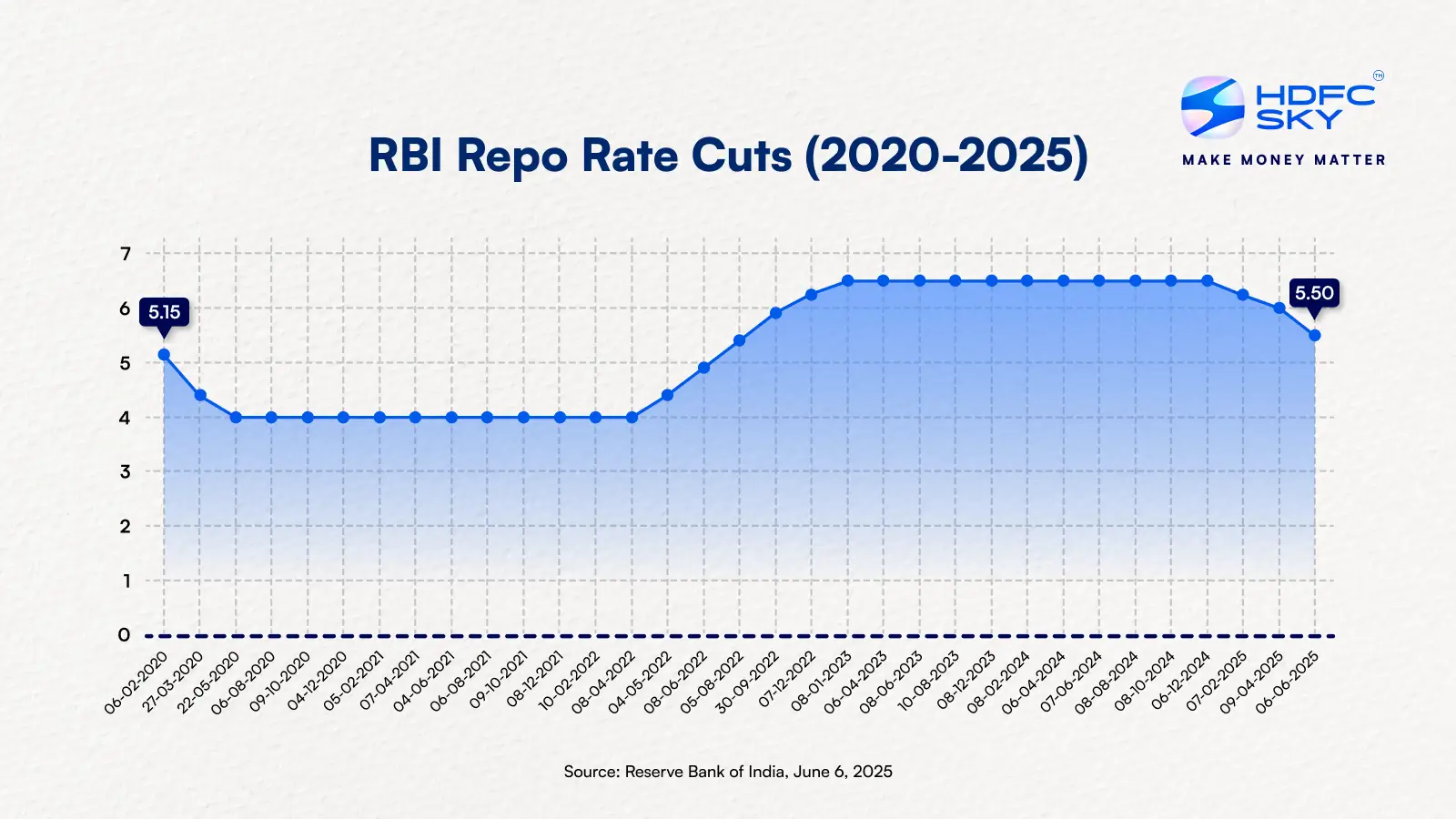
Mumbai, 02 December 2025: The Reserve Bank of India (RBI) is expected to maintain the repo rate at 5.50% in its upcoming December 2025 policy review, with Bank of Baroda’s latest assessment indicating that the central bank will favour stability amid a combination of strong economic growth and easing inflation.

India’s Strong 8.2% GDP Growth And 0.25% Inflation Point Toward Policy Stability At 5.50%
Recent macroeconomic indicators have set the backdrop for the RBI’s upcoming decision. India recorded a robust 8.2% GDP growth in Q2 FY26 (July–September), driven by improving urban spending, rising rural demand, and a steady revival in private investment supported by higher credit offtake. The momentum, according to analysts, is likely to hold through Q3 as consumption and investment both show encouraging signals.
At the same time, headline Consumer Price Index (CPI) inflation fell sharply to 0.25% in October 2025, marking a multi-year low. This decline has been driven primarily by softer food prices supported by improved supply conditions and favourable weather patterns. The easing of inflationary pressure has also been supported by lower Goods and Services Tax (GST) rates, which have helped temper overall price levels across several categories.
The combined effect of strong growth on one hand and exceptionally low inflation on the other has created an environment where the RBI may prefer to hold rates steady rather than introduce new policy action.
Why The Repo Rate May Stay At 5.50%: External Headwinds Offset Space for Rate Cuts
Despite inflation dropping to near-zero levels a condition that ordinarily increases room for monetary easing Bank of Baroda indicates that the RBI will likely retain a neutral stance and allow earlier rate cuts to work through the financial system. A pause at 5.50% would give the economy time to absorb the monetary support already injected over the past few quarters.
However, the report also highlights possible external challenges. Tariff-related trade concerns, softer global demand and broader geopolitical uncertainties could emerge as significant headwinds. Against this backdrop, maintaining the current rate offers policy continuity while reducing exposure to global volatility. The central bank’s approach appears geared toward ensuring that domestic stability is preserved even as the international environment becomes more unpredictable.
Holding Rates At 5.50% Ensures Stability for Borrowers and Credit Conditions
Maintaining the repo rate at 5.50% would help preserve current lending conditions for households and businesses. Borrowing costs are expected to remain steady, allowing banks to continue transmitting the effects of previous rate reductions. For the broader economy, a stable policy rate can support ongoing consumption strength, help companies plan capital expenditure with greater clarity and balance the overall credit environment.
The neutral stance also signals caution at a time when global financial markets show signs of uneven recovery and trade-driven uncertainties continue to influence emerging economies. The RBI’s steady approach underscores its focus on sustaining domestic growth without introducing abrupt policy shifts.
The expected pause of the repo rate at 5.50% indicates continuity in monetary conditions as the RBI weighs strong growth against easing inflation and external uncertainties. Stakeholders across the economy can anticipate a steady interest-rate environment in the immediate term, with future adjustments dependent on upcoming data on inflation trends, domestic demand patterns and evolving global trade conditions.
Disclaimer: At HDFC SKY, we take utmost care and due diligence in curating and presenting news and market-related content. However, inadvertent errors or omissions may occasionally occur.
If you have any concerns, questions, or wish to point out any discrepancies in our content, please feel free to write to us at content@hdfcsec.com.
Please note that the information shared is intended solely for informational purposes and does not make any investment recommendations
 Join Us
 Add as preferred source on Google


More Business News










Open Free Demat Account
Open Free Demat Account







Invest Anytime, Anywhere


By signing up I certify terms, conditions & privacy policy