Nifty 50
- TCS₹2,34293.60 (4.16%)
- ICICI Bank₹1,422.80-20.20 (-1.40%)
- Tech Mahindra₹1,640.9055.90 (3.53%)
- Shriram Finance₹1,086.90-14.10 (-1.28%)
- Infosys₹1,14433.20 (2.99%)
- ITC₹266-3.00 (-1.12%)
- HCL Technologies₹1,316.1034.10 (2.66%)
- UltraTech Cement₹11,589-128.00 (-1.09%)
- Wipro₹180.954.55 (2.58%)
- Asian Paints₹2,608.70-22.30 (-0.85%)
- Bajaj Auto₹11,910190.00 (1.62%)
- SBI Life Insurance ₹1,761.10-12.10 (-0.68%)
- Hindalco Industries₹1,037.4013.40 (1.31%)
- Eicher Motors₹8,059-41.00 (-0.51%)
- HDFC Bank₹720.309.30 (1.31%)
- Maruti Suzuki₹13,376-64.00 (-0.48%)
- Tata Motors PV₹319.403.40 (1.08%)
- Bajaj Finserv₹2,002-9.00 (-0.45%)
- Grasim Industries₹3,29032.00 (0.98%)
- InterGlobe Aviation₹5,166-23.00 (-0.44%)

- Offerings
- Tools & Platforms
Tools & Calculators
- Open API
- Calculators
- SIP Calculator
- CAGR Calculator
- Compound Interest Calculator
- FD Calculator
- RD Calculator
- EPF Calculator
- Retirement Calculator
- HDFC SIP Calculator
- Mutual Fund Return Calculator
- Lumpsum Calculator
- Step Up SIP Calculator
- ETF SIP Calculator
- Brokerage Calculator
- Equity Margin Calculator
- SWP Calculator
- EMI Calculator
- MTF Calculator
- Margin Pledge Calculator
- Markets
Stocks
F&O
Mutual Funds
- More
Swadeshi 2.0: India Asserts Itself from Market to Maker
Authored By Shishta Dutta | Last Modified: Aug 29, 2025 05:59 PM IST
Open Free Demat Account
Open Free Demat Account
This Independence Day saw a new kind of swadeshi marking its roots. The slogan once associated with handspun khadi and self-reliance has evolved into a far more ambitious industrial vision. Today, “Swadeshi 2.0” signals India’s transformation from being merely one of the world’s largest consumer markets to an assertive maker in the global economy.
Over the last decade, a wave of bold reforms and forward-looking policies under the “Make in India” initiative has propelled India onto the global manufacturing map. From defence and electronics to pharmaceuticals and cutting-edge medical devices, Indian factories are now delivering world-class products for both domestic consumption and international markets.
To sustain and accelerate this momentum, the government has announced the National Manufacturing Mission (NMM) in the Union Budget 2025-26, backed by an initial outlay of ₹100 crore. The mission is designed to foster innovation, enhance competitiveness, and expand capacity across key industrial sectors.
This transformation is backed by a decade of bold economic and industrial reforms. At the heart of this industrial resurgence lies the steady growth of India’s manufacturing sector.

India’s Manufacturing Overview
Manufacturing has long been a cornerstone of India’s economic development. Over the past decade, the sector has shown consistent growth, contributing steadily to the country’s Gross Value Added (GVA) and offering stable employment opportunities.
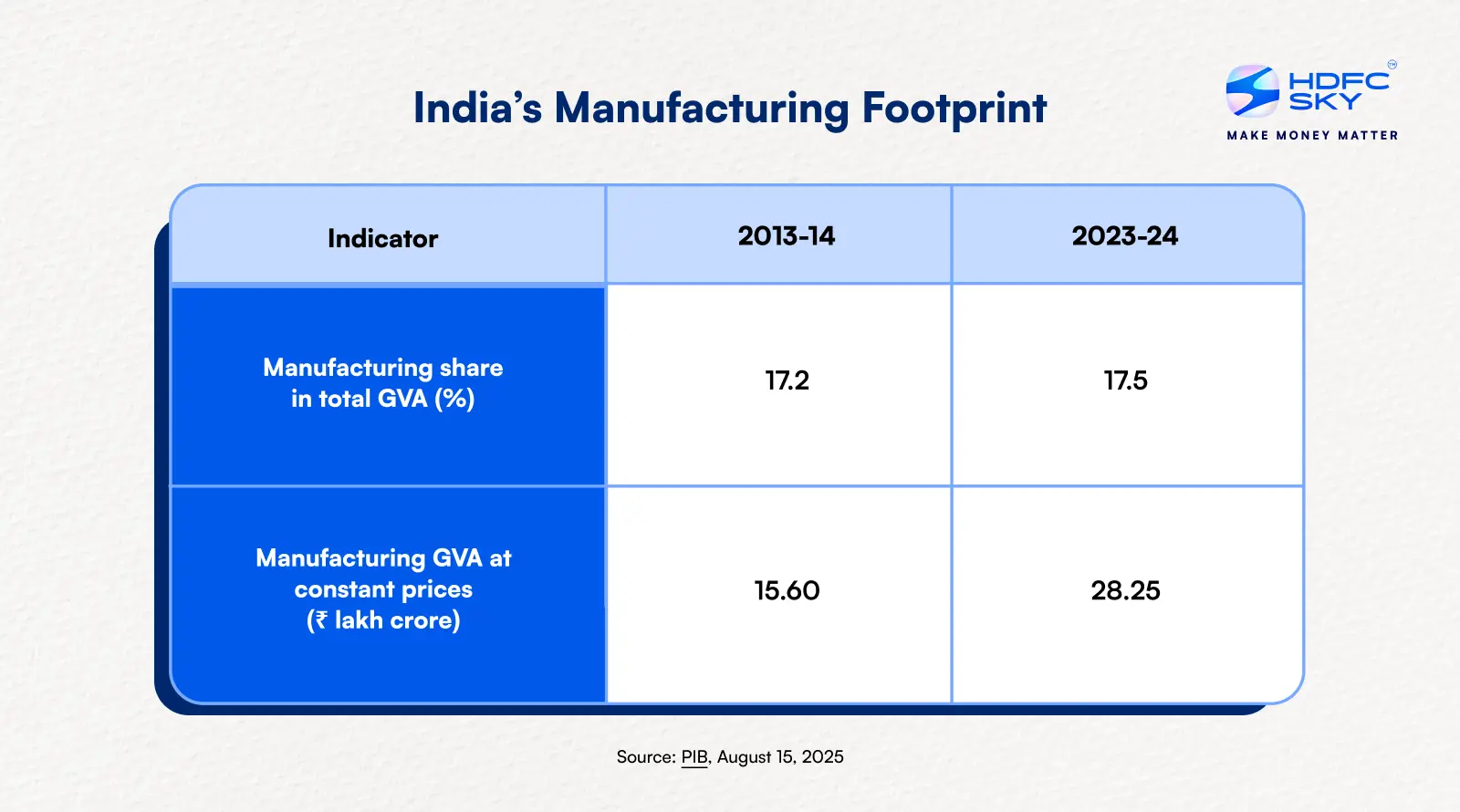
This structural shift is also reflected in India’s export performance over a decade.
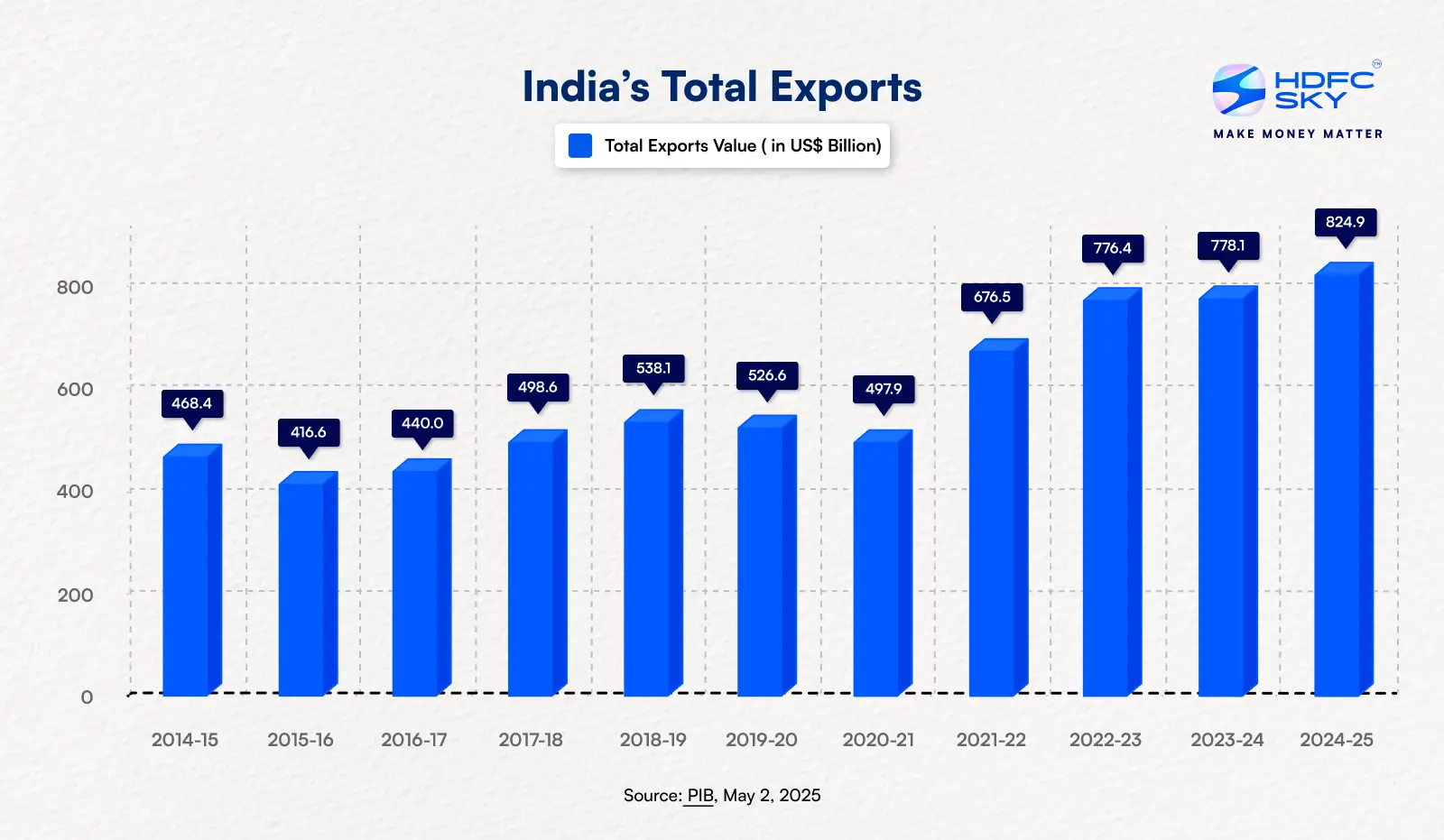
Despite pandemic-related disruptions, India has maintained a strong growth trajectory in trade. Even more telling is the rise in merchandise exports, that is tangible goods manufactured and shipped out of the country.
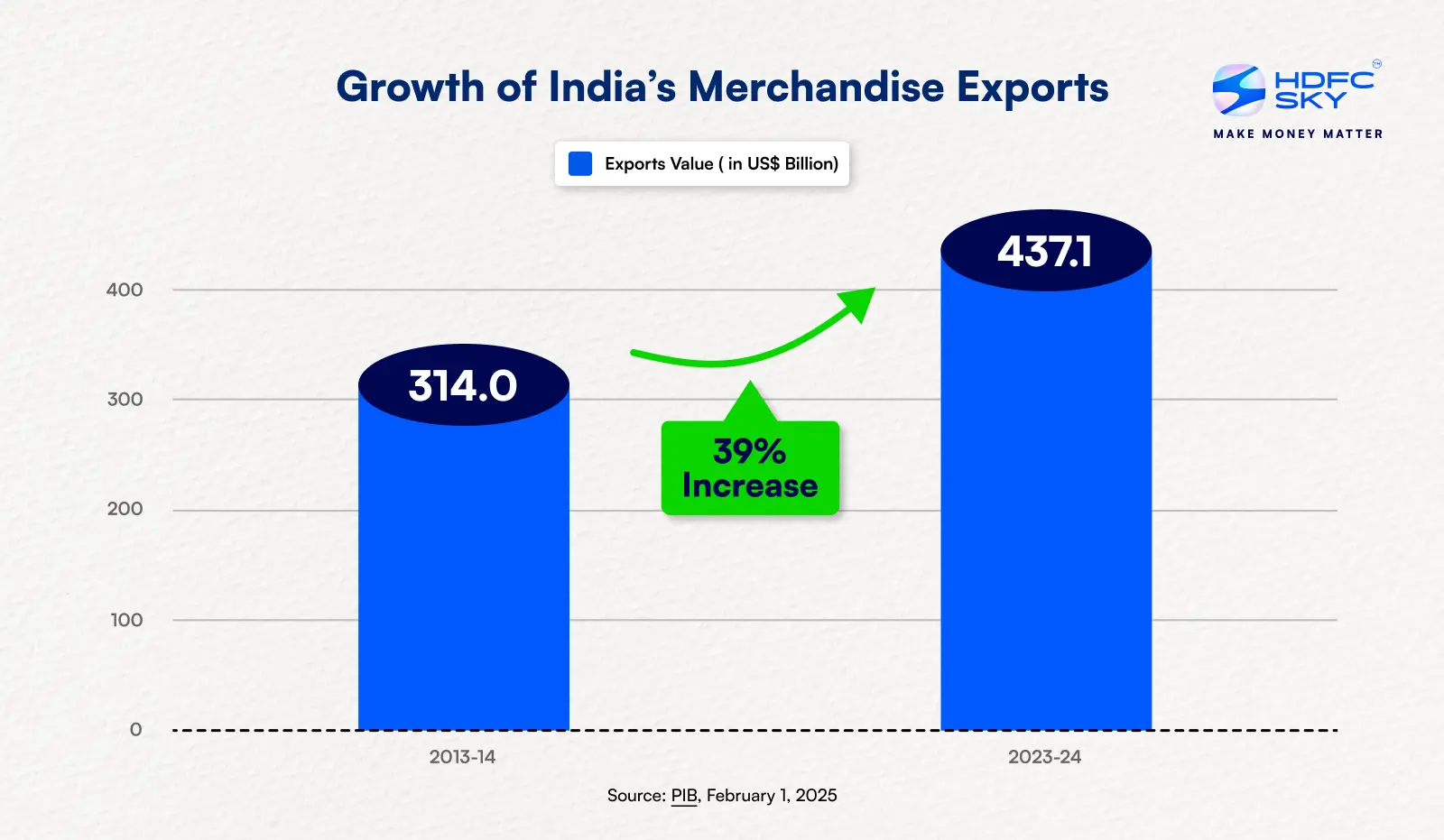
Behind this export momentum is a powerful policy engine: the Production-Linked Incentive scheme.
Policy Engine: The PLI Scheme
A key driver of this manufacturing boom is the Production-Linked Incentive (PLI) scheme, launched in 2020.
The Production-Linked Incentive (PLI) Scheme, with a total outlay of ₹1.97 lakh crore (over USD 26 billion), spans 14 high-priority sectors such as electronics, IT hardware, pharmaceuticals, automobiles, specialty steel, textiles, drones, and others.
The scheme aims to catalyze domestic manufacturing, promote technology adoption, and reinforce India’s integration into global value chains by incentivizing scale, competitiveness, and innovation.
Among all sectors, mobile manufacturing has emerged as a standout success story.
Smartphones: The Flagship of Indian Manufacturing
Nothing captures India’s “maker” narrative better than its booming mobile phone exports. In FY25, smartphone exports have reached US$24.1 billion, with Apple alone accounting for US$17.5 billion.
In just the first quarter of FY26, India has already exported $7.72 billion worth of smartphones, putting it firmly on course to break previous records.
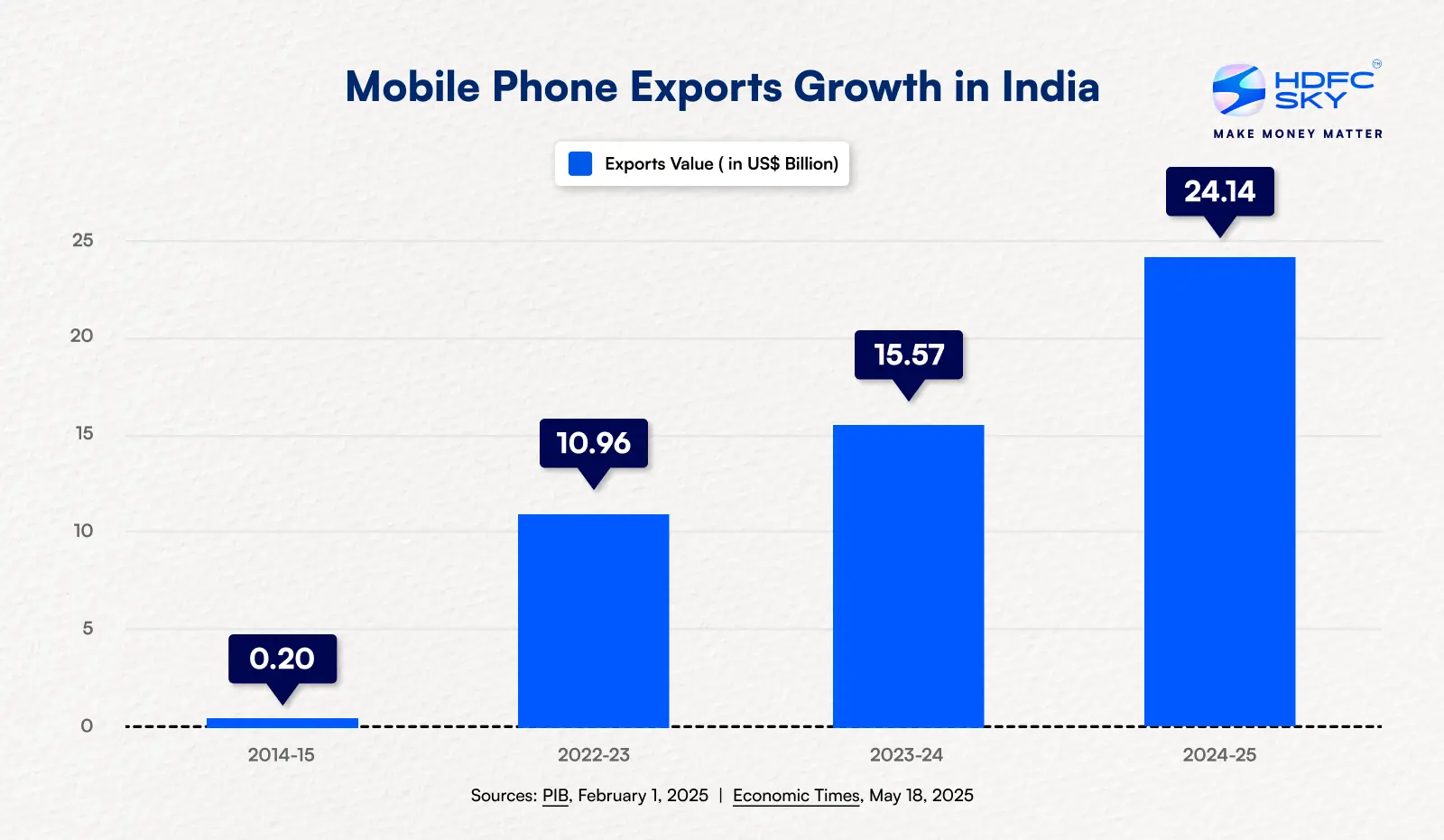
From a modest beginning just a few years ago, India now contributes 16-17% of Apple’s global iPhone production. If current trends continue, that share could rise to 25% by 2027.
Driven by its ‘China Plus One’ strategy, Apple has steadily scaled up its manufacturing capacity in India, directing a significant portion of its 2025 exports to meet U.S. demand.
India has now overtaken China to become the leading smartphone exporter to the U.S., thanks in large part to Apple’s deepening production base. Notably, the iPhone 17 is under production in India, marking a new milestone in local value addition.
These gains are not just visible in exports, but also in production volumes and ecosystem scale.
India’s electronics goods production has seen a sixfold increase over the past decade, rising from ₹1.9 lakh crore in 2014-15 to ₹11.3 lakh crore in 2024-25, while the number of mobile manufacturing units has jumped from 2 to 300, a 150-fold rise that reflects the sector’s dramatic scale-up.
Another sector that has seen a strategic shift is defence manufacturing.
Defence Manufacturing – From Importer to Exporter
India’s defence industry has witnessed a dramatic transformation over the past decade. Driven by focused policies, strategic investments, and a strong push for self-reliance, the country has emerged as a key producer and exporter of defence equipment.
India’s indigenous defence production soared to a record ₹1,50,590 crore in FY 2024-25, marking a 224% jump from ₹46,429 crore in 2014-15.
Meanwhile, defence exports have surged 34-fold, rising from just ₹686 crore in 2013-14 to ₹23,622 crore in 2024-25, reflecting India’s growing footprint in the global defence market.
Healthcare and pharma have also become key pillars of India’s global manufacturing narrative.
Pharma and Medical Manufacturing
India holds a prominent position in the global pharmaceutical landscape, ranking third in volume and fourteenth in value. As a key provider of affordable healthcare solutions, the country supplies 20% of the world’s generic medicines and a significant share of global vaccines. Continuous growth in production, exports, and domestic innovation has cemented its reputation as a reliable global supplier.
The pharmaceutical sector recorded a turnover of ₹4,17,345 crore in 2023-24, sustaining an annual growth rate of over 10% over the past five years.
This manufacturing boom is not just export-driven. Domestic demand is playing an equally vital role.
A Market That Fuels Making
India’s internal demand is playing a major role in its manufacturing push. Monthly household consumption has grown from US$271 in 2012 to US$705 in 2023, underscoring the dual role India plays as both a huge market and a production powerhouse.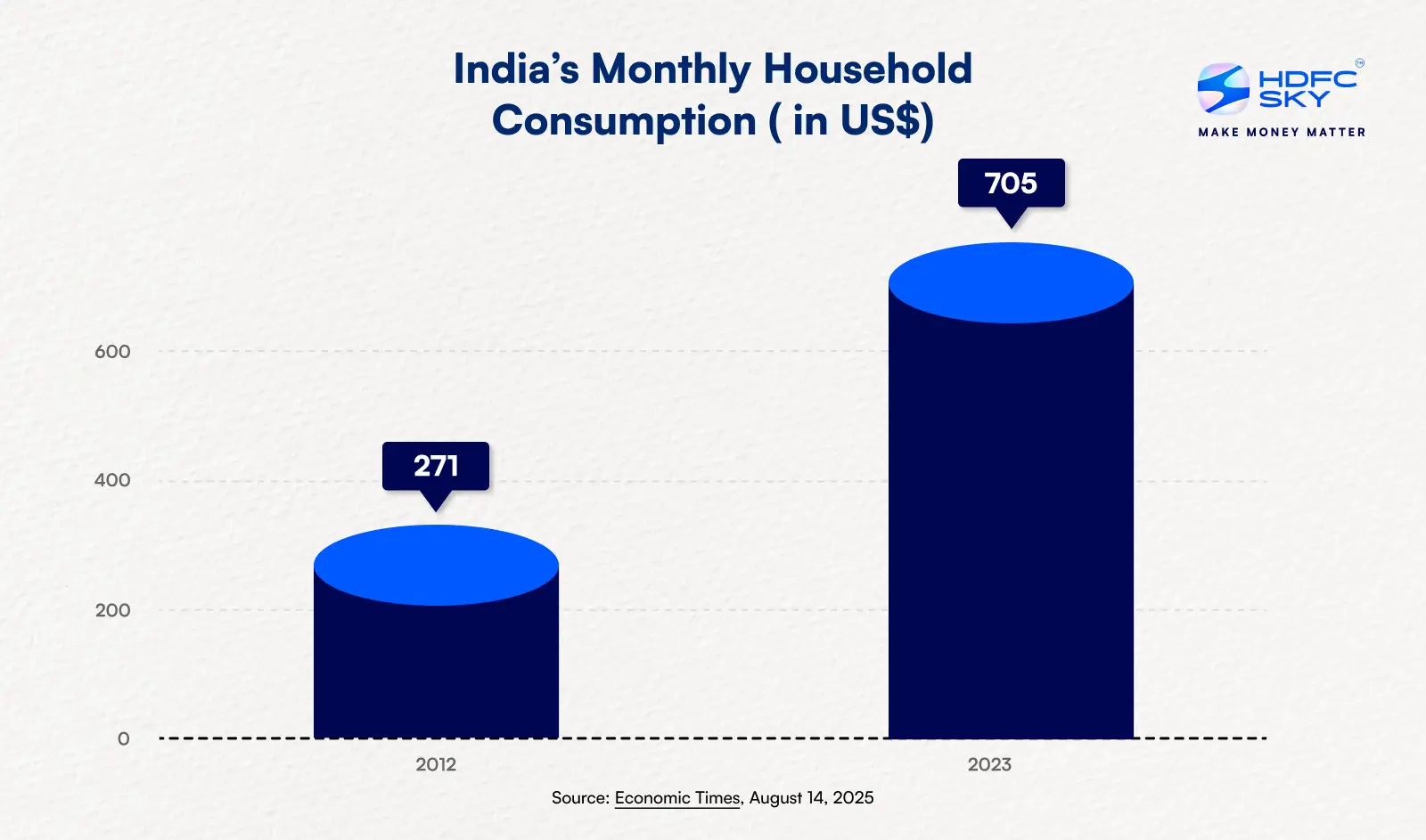
India’s appeal as a manufacturing hub is further validated by rising foreign direct investment.
Foreign Direct Investment (FDI) in Manufacturing
India has rapidly gained ground as a top choice for global manufacturing investments. Over the past decade, consistent reforms, streamlined regulations, and a stable policy environment have created a fertile ground for FDI. Coupled with a strong emphasis on ease of doing business and sector-specific incentives, these efforts have firmly positioned India as a competitive and attractive manufacturing hub on the global stage.
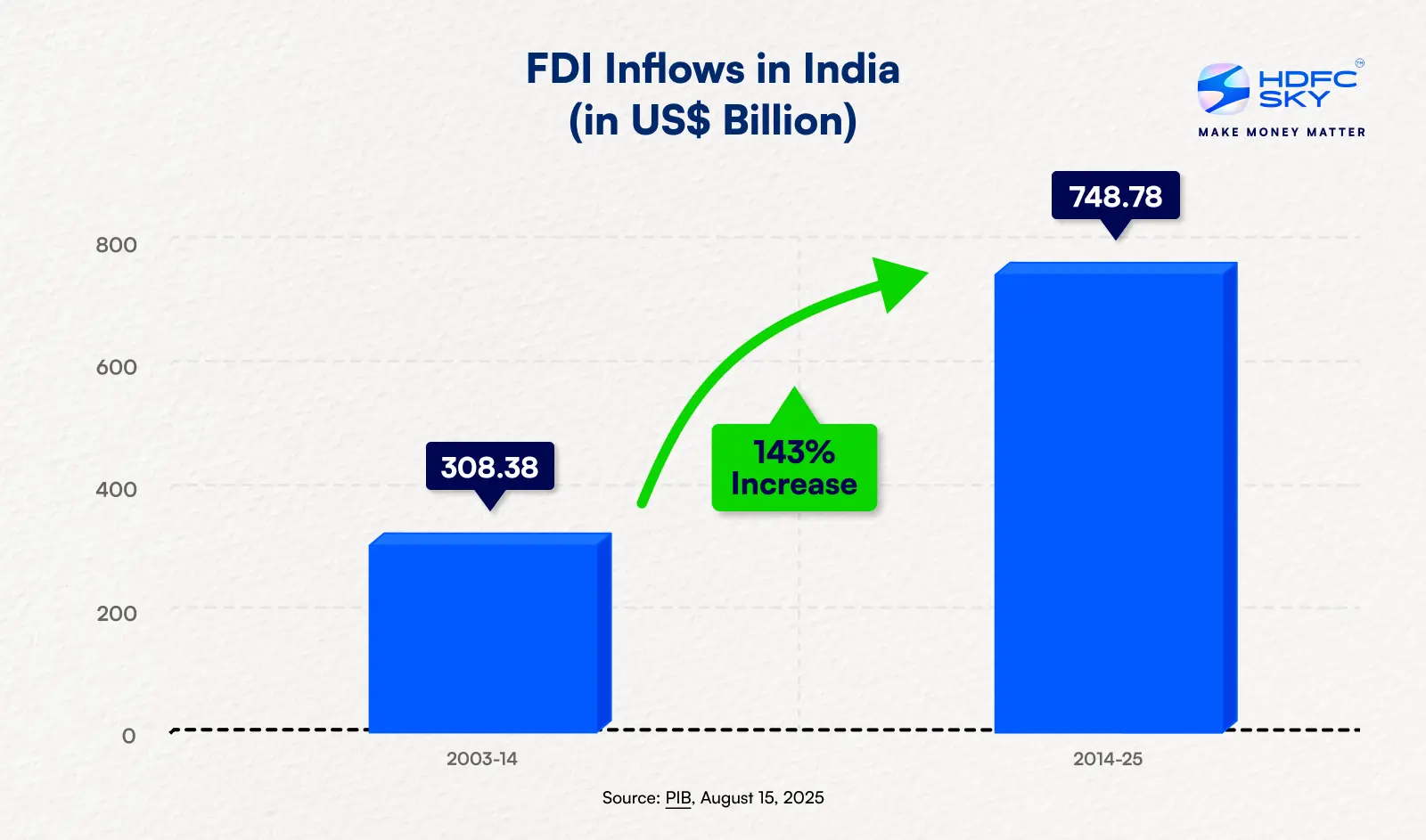
Clearly, this new phase of Swadeshi is not about isolation; it’s about global ambition.
Swadeshi 2.0: Beyond Self-Reliance
Swadeshi 2.0 is not about retreating into protectionism. It’s about building industrial strength, becoming export competitive, and shaping global supply chains. From iPhones to semiconductors, India is asserting itself not just as a market to sell into but as a nation that builds, innovates, and exports to the world.
The journey is far from complete. But the trajectory is clear: India is no longer just a market. It is, increasingly and deliberately, a maker and a serious contender in the new global manufacturing order.
 Join Us
 Add as preferred source on Google


More Business News









Open Free Demat Account
Open Free Demat Account







Invest Anytime, Anywhere


By signing up I certify terms, conditions & privacy policy