Nifty 50
- Kotak Mahindra Bank₹4408.10 (1.88%)
- Titan Company₹4,377-173.00 (-3.80%)
- BSE₹3,35651.00 (1.54%)
- Adani Enterprises₹2,743-106.90 (-3.75%)
- Bharti Airtel₹1,833.9023.40 (1.29%)
- Hindalco Industries₹910.85-29.65 (-3.15%)
- ICICI Bank₹1,357.5014.70 (1.09%)
- JSW Steel₹1,230-29.60 (-2.35%)
- Coal India₹414.502.85 (0.69%)
- Bharat Electronics₹378.30-9.10 (-2.35%)
- Max Healthcare₹9085.50 (0.61%)
- Infosys₹992-21.85 (-2.16%)
- HDFC Life Insurance ₹546.052.10 (0.39%)
- Asian Paints₹2,372.10-52.10 (-2.15%)
- Bajaj Finance₹963.850.75 (0.08%)
- Mahindra & Mahindra₹2,800-55.00 (-1.93%)
- Apollo Hospitals₹7,9172.50 (0.03%)
- Adani Ports₹1,750.10-33.30 (-1.87%)
- L&T₹3,701.50-68.50 (-1.82%)

- Offerings
- Tools & Platforms
Tools & Calculators
- Open API
- Calculators
- SIP Calculator
- CAGR Calculator
- Compound Interest Calculator
- FD Calculator
- RD Calculator
- EPF Calculator
- Retirement Calculator
- HDFC SIP Calculator
- Mutual Fund Return Calculator
- Lumpsum Calculator
- Step Up SIP Calculator
- ETF SIP Calculator
- Brokerage Calculator
- Equity Margin Calculator
- SWP Calculator
- EMI Calculator
- MTF Calculator
- Margin Pledge Calculator
- Algo Strategy
- Markets
Stocks
F&O
Mutual Funds
- More
- Unprecedented Growth in Demat Accounts
- The SIP Wave: Discipline Over Speculation
- Domestic Investors Offset Foreign Outflows
- Technology: The Great Level for Retail Participation
- Investment Culture Spreads Beyond Big Cities
- The Derivatives Trap and Lessons Learnt
- Global Volatility Tested Investor Resilience
- Regulatory Reforms Bolster Market Integrity
- The Future: Towards the Equitisation of Savings
- Unprecedented Growth in Demat Accounts
- The SIP Wave: Discipline Over Speculation
- Domestic Investors Offset Foreign Outflows
- Technology: The Great Level for Retail Participation
- Investment Culture Spreads Beyond Big Cities
- The Derivatives Trap and Lessons Learnt
- Global Volatility Tested Investor Resilience
- Regulatory Reforms Bolster Market Integrity
- The Future: Towards the Equitisation of Savings
India's Retail Investing Revolution: 20 Crore Demat Accounts and How They Redefined Market Participation
By Dhiraj Relli | Updated at: Nov 24, 2025 05:31 PM IST

Open Free Demat Account
Open Free Demat Account
A structural shift is under way in the way households in India are perceiving wealth creation. What was hitherto a niche activity pursued by a small investing class has now become a national phenomenon, aided by technology, increasing financial literacy and unparalleled access to markets.
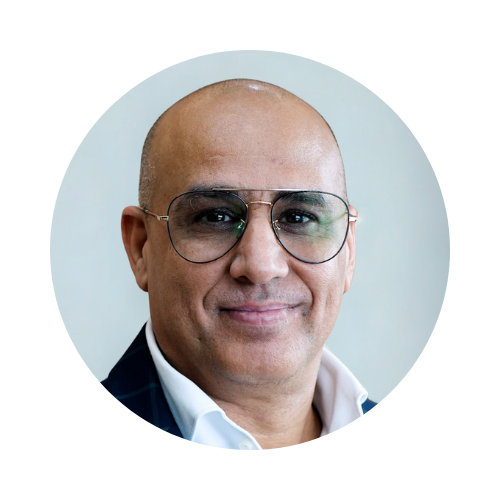
According to Dhiraj Relli, MD & CEO, HDFC Securities, all this action represents a broader behavioural change and not a part of just the short term market cycle. This rise to nearly 21 crore demat accounts by the end of 2025 indicates that investing is not a choice but a lens through which Indians are going to view their financial future.
This cultural shift is believed to bring in a new class of people who want a piece of India’s growth story. Representing a new breed of people across age groups and different income bands, the investor base has broadened on both intent and capability fronts. Participation is rising, and it hints at a new and critical juncture in the India economy and the maturing retail investor class.
Unprecedented Growth in Demat Accounts
The demographic change is best captured by numbers: the leap from 2.5 crore demat accounts in 2016 to nearly 21 crore by October 2025 was nothing short of phenomenal. Such a rapid growth rate reflects a wider access to formal financial networks and an eagerness to create long-term wealth. In the words of Dhiraj Relli, the momentum is essentially of growing trust in the capital markets and the ease which digital onboarding processes have brought about.
The exponential rise not only brings millions of new investors into the ecosystem, but also underlines India’s move toward more transparency, regulation, and account-based investing. More households now consider equity as one of the feasible options to create wealth, on the backdrop of better market infrastructure, regulatory safeguards, and investor-friendly platforms.
The SIP Wave: Discipline Over Speculation
Monthly SIP contributions reaching ₹29,500 crore in October 2025 marked an important milestone in India’s investment journey. In fact, the unrelenting rise in SIP inflows indicates that investors are getting more disciplined, systematic, and long-term oriented. This trend is redefining how Indians save, says Dhiraj Relli, replacing traditional idle saving with consistent equity participation.
With SIP accounts crossing 9.45 crore and mutual fund AUM reaching ₹80 lakh crore, the retail investor is increasingly banking on structured investing rather than sporadic market timing. Such behaviour helps stabilize the markets too, with SIP flows providing steady liquidity regardless of volatility. The penetration of SIPs across smaller towns shows a democratization of wealth-building tools, which once remained confined to the metros.
Domestic Investors Offset Foreign Outflows
One of the defining themes of 2025 was the declining influence of foreign investors and the growing dominance of domestic participation. For instance, foreign ownership in Indian companies fell from 22% to 17%, while domestic institutional ownership rose from 13% to 20%. As Dhiraj Relli explains, such a shift indicates India’s progress toward a self-reliant investment ecosystem where the central role is taken by domestic institutions and retail investors.
This is an important transition to make, given that domestic investors provide stability when global events prompt foreign investors to withdraw money from the country. Greater participation bolsters market resilience and makes the system more resistant to external shocks. With every increment in household wealth pouring into equities, India’s equity markets are relying increasingly on local conviction rather than overseas capital.
Technology: The Great Level for Retail Participation
At the heart of this transformation lies, no doubt, technology. It is about modern trading applications, rapid account opening, Aadhaar-linked e-KYC, UPI-based transactions, and mobile-first interfaces. As Dhiraj Relli explains, with the simplicity and seamless ease of digital platforms, millions of first-time investors are trying the markets without hesitation.
Digital literacy and smartphone penetration have taken market access to the grassroots. For investors, no longer is there a need for intermediaries or lengthy paperwork; instead, trade, investment, analysis, and even learning come about through intuitive applications. This technological wave has democratized investing, hence making it accessible to people of different geographies and educational backgrounds with ease.
Investment Culture Spreads Beyond Big Cities
The expansion of retail investor activity into Tier 2 and Tier 3 cities is one of the most promising aspects of 2025. The fact that NSDL has a presence in 99% of Indian pin codes shows that the equity market is no longer urban-centric. As Dhiraj Relli says, this level of penetration shows that investing has become ‘culturally relevant’ even for smaller towns.
People from non-metro areas are opening demat accounts in record numbers today and embracing SIPs, ETFs, equity funds, and direct stock investing. The growing participation from these regions is reshaping the investor base and ensuring that the capital markets reflect the aspirations of a more diverse population.
The Derivatives Trap and Lessons Learnt
Despite the exponential progress, 2025 also exposed flaws, especially in derivatives trading. Retail investors lost close to ₹3 lakh crore between FY22 and FY25, with SEBI estimating that 91% of retail derivatives traders lost money. The data indicates a dire need for financial awareness and risk education, says Dhiraj Relli.
The ease with which it is possible to trade online sometimes promotes speculation over informed investing. The popularity of derivatives among unsophisticated traders led to widespread losses, proving that access without education can be dangerous. The episode served as a crucial reminder: while democracy in markets is a good thing, knowledge must accompany participation.
Global Volatility Tested Investor Resilience
Geopolitical tensions, trade uncertainties, conflicts involving major economies, and rising commodity prices were some of the major volatile factors that continued into the entire span of 2025. High crude prices, pressure on currencies, and sector-specific downturns kept investors on tenterhooks. But, as Dhiraj Relli says, the sustained participation by domestic investors cushioned the markets against global tremors.
Despite foreign selloffs triggered by global uncertainty, domestic flows kept markets stable. This resilience reflects deeper structural maturity, which is indicative of the fact that India’s investor base has stopped being reactive but has, in fact, become increasingly confident about the country’s long-term prospects.
Regulatory Reforms Bolster Market Integrity
SEBI implemented a raft of key reforms in 2025: it had delta-based open interest rules, tighter position limits, and enhanced real-time surveillance. These measures are put in place to help check excessive risk-taking and ensure safer participation. As Dhiraj Relli says, such reforms are very important for ensuring that retail investors operate in a fair, transparent, and protected environment.
Strengthened regulations build trust, especially among new investors who depend on the system for protection of their interests. These enhancements contribute to India’s reputation as a sophisticated market ecosystem in line with global best practices.
The Future: Towards the Equitisation of Savings
The most striking result of this whole journey has been a change in the savings allocation of Indians. Conventional avenues like gold, real estate, and fixed deposits are now making way for equity participation. As Dhiraj Relli concludes, India is well on its way to the “Equitisation of Savings”—a structural change wherein more and more household capital flows into the equity markets.
This is a trend that seems to define the next decade of India’s financial evolution. With greater market penetration, increasing literacy, better governance, and an increasingly empowered domestic investor base, India’s capital market is entering into its long-term sustainable growth phase.


Open Free Demat Account
Open Free Demat Account
Popular Posts
- 10 Interesting Facts About NSE You Probably Didn’t KnowLast Updated: Sep 30, 2026
- 8-4-3 Rule of SIP - How Does That Work?Last Updated: Jul 30, 2025
- Let's view more exciting Post!
Popular Post from Media Coverage
- India’s young investors are changing the markets : The industry must change tooLast Updated: Sep 17, 2026
- HDFC SKY Sees Sharp Generational and Digital Shift in New-Age IPO InvestingLast Updated: Sep 17, 2026
- HDFC SKY Launches Scalper Terminal for Faster, Smarter Options Trading; InvestRight Gets the Same Edge, Powered by NXTOptionLast Updated: Sep 3, 2026
- The Modern Muhurat: Why Investors are Swapping the Jewellery Store for the Demat Account?Last Updated: Apr 15, 2026
- Akshaya Tritiya 2026: Why Do We Invest in Gold on This Day?Last Updated: Apr 15, 2026
- Let's view more exciting Post!
Popular Post from Blogs
- “Bounce Back” Theme Gains Traction in 2026Last Updated: Apr 8, 2026
- 5 Takeaways for Tax Payers from the Budget 2025Last Updated: Jan 29, 2026
- Let’s view more exciting Posts


Invest Anytime, Anywhere


By signing up I certify terms, conditions & privacy policy