Nifty 50
- TCS₹2,102.7022.40 (1.08%)
- Adani Enterprises₹2,555.70-187.30 (-6.83%)
- Axis Bank₹1,252.109.60 (0.77%)
- ITC₹254.80-10.90 (-4.10%)
- Infosys₹999.257.25 (0.73%)
- Adani Ports₹1,679.80-70.30 (-4.02%)
- HCL Technologies₹1,193.208.20 (0.69%)
- Max Healthcare₹872.25-35.75 (-3.94%)
- Tech Mahindra₹1,500.609.50 (0.64%)
- JSW Steel₹1,182.60-47.40 (-3.85%)
- Titan Company₹4,404.1027.10 (0.62%)
- SBI Life Insurance ₹1,661-65.10 (-3.77%)
- Nestle₹1,330.906.90 (0.52%)
- Apollo Hospitals₹7,626.50-290.50 (-3.67%)
- Trent₹2,896.406.10 (0.21%)
- InterGlobe Aviation₹4,812.20-177.80 (-3.56%)
- HDFC Life Insurance ₹546.500.45 (0.08%)
- Dr. Reddy's Labs₹1,170.30-33.50 (-2.78%)
- Reliance Industries₹1,175.60-32.10 (-2.66%)

- Offerings
- Tools & Platforms
Tools & Calculators
- Open API
- Calculators
- SIP Calculator
- CAGR Calculator
- Compound Interest Calculator
- FD Calculator
- RD Calculator
- EPF Calculator
- Retirement Calculator
- HDFC SIP Calculator
- Mutual Fund Return Calculator
- Lumpsum Calculator
- Step Up SIP Calculator
- ETF SIP Calculator
- Brokerage Calculator
- Equity Margin Calculator
- SWP Calculator
- EMI Calculator
- MTF Calculator
- Margin Pledge Calculator
- Algo Strategy
- Markets
Stocks
F&O
Mutual Funds
- More
What is Fiscal-Monetary Mix?
By HDFC SKY | Updated at: Jan 29, 2026 03:26 PM IST
Open Free Demat Account
Open Free Demat Account
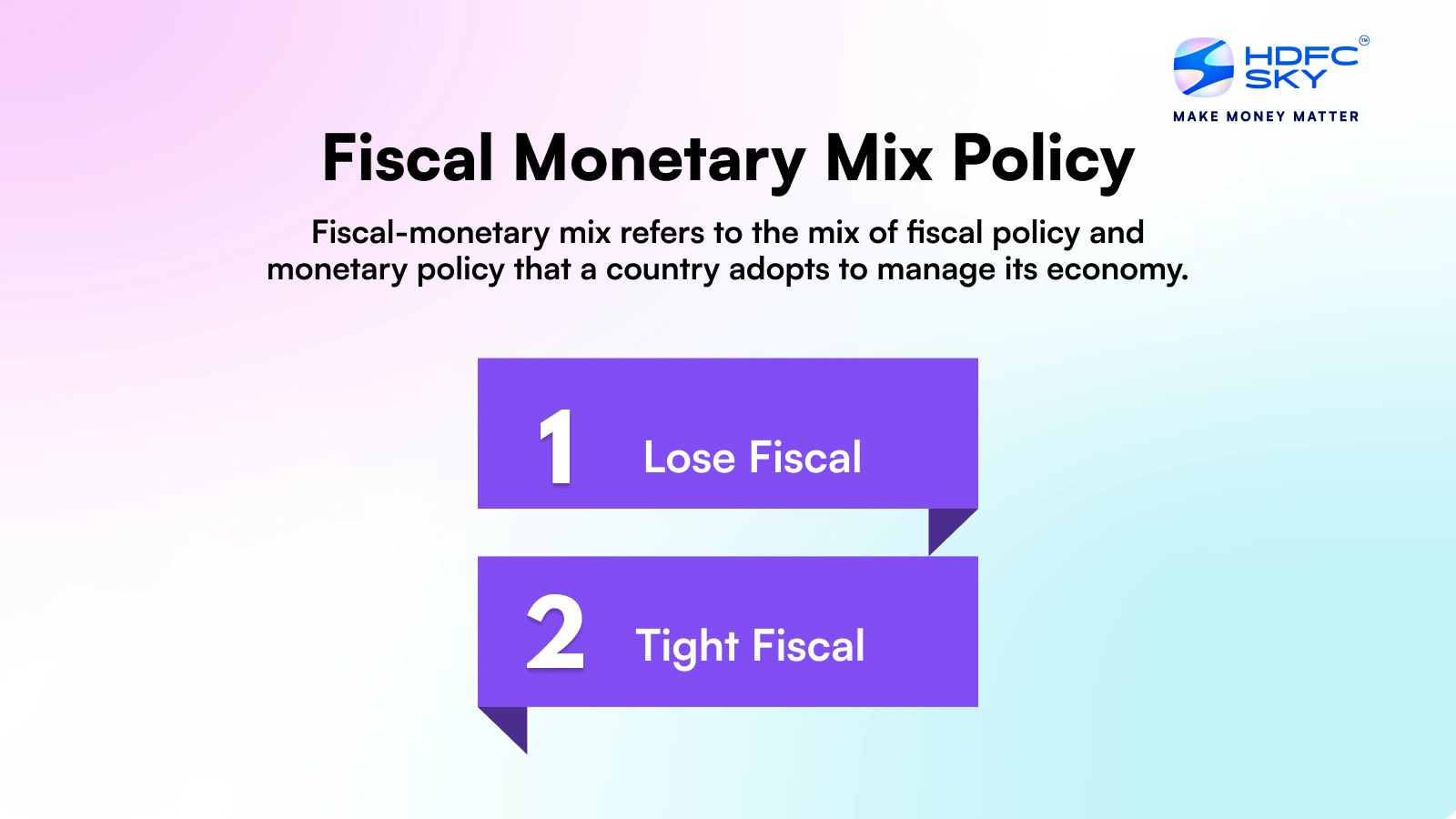
Fiscal-monetary mix refers to the mix of fiscal policy and monetary policy that a country adopts to manage its economy. The government conducts fiscal policy, which focuses on taxation and public expenditure. In contrast, the central bank of a country conducts monetary policy, which deals with interest rates and the demand and supply of money. For an investor, a clear understanding of the fiscal policy, monetary policy, and fiscal monetary mix can help in making more informed investment decisions. It can help in making better forecasts related to the economy and various investments.
Lose Fiscal- Tight Monetary Policy
One type of fiscal-monetary mix is a loose fiscal–tight monetary policy. The government pursues a loose fiscal policy, while the central bank pursues a tight monetary policy. A loose fiscal policy means the government increases its expenditures without raising taxes. This, in turn, may increase inflation. In such a scenario, to counteract inflationary pressures, the central bank may opt for a tight monetary policy to control the rise in inflation. It does this by reducing the money supply and increasing interest rates.
Due to an increase in interest rates, the currency of the country may appreciate. This, in turn, may make the country’s exports more expensive, which can slow down the net exports of the country. Also, interest-sensitive investments and consumption may slow down because of higher interest rates. So, while one component of GDP government expenditure goes up in this fiscal-monetary mix, the other three components net exports, private investment and consumption may slow down. For equity investors, understanding this dynamic can provide valuable insights into which sectors or stocks are likely to be more affected.
Tight Fiscal- Loose Monetary Policy
Another type of fiscal monetary policy mix is a tight fiscal policy combined with a loose monetary policy. As part of tight fiscal policy, the government reduces its expenditures and raises taxes with the aim of narrowing down the fiscal deficit. However, an increase in taxes will lower the disposable income of people, which in turn, will have an adverse impact on consumption.
The central bank, on the other hand, cuts down interest rates and increases the money supply. Lower interest rates give a boost to interest sensitive investments and interest-sensitive consumption. The country’s currency may depreciate because of lower interest rates, making exports more competitive globally and boosting net exports. By understanding these cause-and-effect relationships, investors can better assess how this fiscal-monetary mix might influence different asset classes and sectors.
When Both Go Hand-In-Hand
Sometimes, both fiscal policy and monetary policy go in the same direction, like loose fiscal policy loose monetary policy. Or tight fiscal policy tight monetary policy. An instance of this was during COVID-19 lockdowns. Governments in many countries pursued loose monetary policy through higher transfer payments and cutting down taxes. And central banks, too lowered interest rates and pursued loose monetary policy.
Conclusion
Understanding the fiscal–monetary mix can give investors a better understanding of the possible economic impact of government and central bank actions on various types of investments. It can help make more informed investment and trading decisions. Moreover, central banks often adjust their monetary policy in response to the fiscal stance adopted by the government.



Open Free Demat Account
Open Free Demat Account
Popular Posts
- 10 Interesting Facts About NSE You Probably Didn’t KnowLast Updated: Sep 30, 2026
- 8-4-3 Rule of SIP - How Does That Work?Last Updated: Jul 30, 2025
- Let's view more exciting Post!
Popular Post from Union Budget
- How to Plan Savings Allocation in 2026: Stock Market Outlook with HDFC Securities Research TeamLast Updated: Feb 4, 2026
- Union Budget 2026: How Will the Move to Increase STT Affect the Market?Last Updated: Feb 3, 2026
- Union Budget 2026: Economic Challenges, Policy Choices and Possible Road AheadLast Updated: Jan 31, 2026
- When and Where to Watch Union Budget 2026Last Updated: Jan 31, 2026
- Union Budget 2026: How the Budget Impacts Banking and Financial ServicesLast Updated: Jan 30, 2026
- Let's view more exciting Post!
Popular Post from Blogs
- “Bounce Back” Theme Gains Traction in 2026Last Updated: Apr 8, 2026
- 5 Takeaways for Tax Payers from the Budget 2025Last Updated: Jan 29, 2026
- Let’s view more exciting Posts


Invest Anytime, Anywhere


By signing up I certify terms, conditions & privacy policy