Nifty 50
- HDFC Life Insurance ₹526.1512.15 (2.36%)
- HCL Technologies₹1,207-22.80 (-1.85%)
- Power Grid Corp₹271.755.90 (2.22%)
- Hindalco Industries₹1,014-12.90 (-1.26%)
- ONGC₹237.273.25 (1.39%)
- Tata Steel₹186.78-1.97 (-1.04%)
- Bharti Airtel₹1,83924.30 (1.34%)
- Adani Enterprises₹3,077.20-27.50 (-0.89%)
- Tech Mahindra₹1,525.8017.80 (1.18%)
- Mahindra & Mahindra₹3,123.80-26.20 (-0.83%)
- SBI Life Insurance ₹1,700.6016.60 (0.99%)
- Tata Motors PV₹300.50-2.50 (-0.83%)
- HDFC Bank₹693.806.70 (0.98%)
- Apollo Hospitals₹8,900-67.00 (-0.75%)
- SBI₹1,009.709.20 (0.92%)
- InterGlobe Aviation₹4,945-30.00 (-0.60%)
- Shriram Finance₹1,0389.00 (0.87%)
- ITC₹259.30-1.50 (-0.58%)
- L&T₹3,95532.40 (0.83%)
- Nestle₹1,386.20-6.80 (-0.49%)

- Offerings
- Tools & Platforms
Tools & Calculators
- Open API
- Calculators
- SIP Calculator
- CAGR Calculator
- Compound Interest Calculator
- FD Calculator
- RD Calculator
- EPF Calculator
- Retirement Calculator
- HDFC SIP Calculator
- Mutual Fund Return Calculator
- Lumpsum Calculator
- Step Up SIP Calculator
- ETF SIP Calculator
- Brokerage Calculator
- Equity Margin Calculator
- SWP Calculator
- EMI Calculator
- MTF Calculator
- Margin Pledge Calculator
- Algo Strategy
- Markets
Stocks
F&O
Mutual Funds
- More
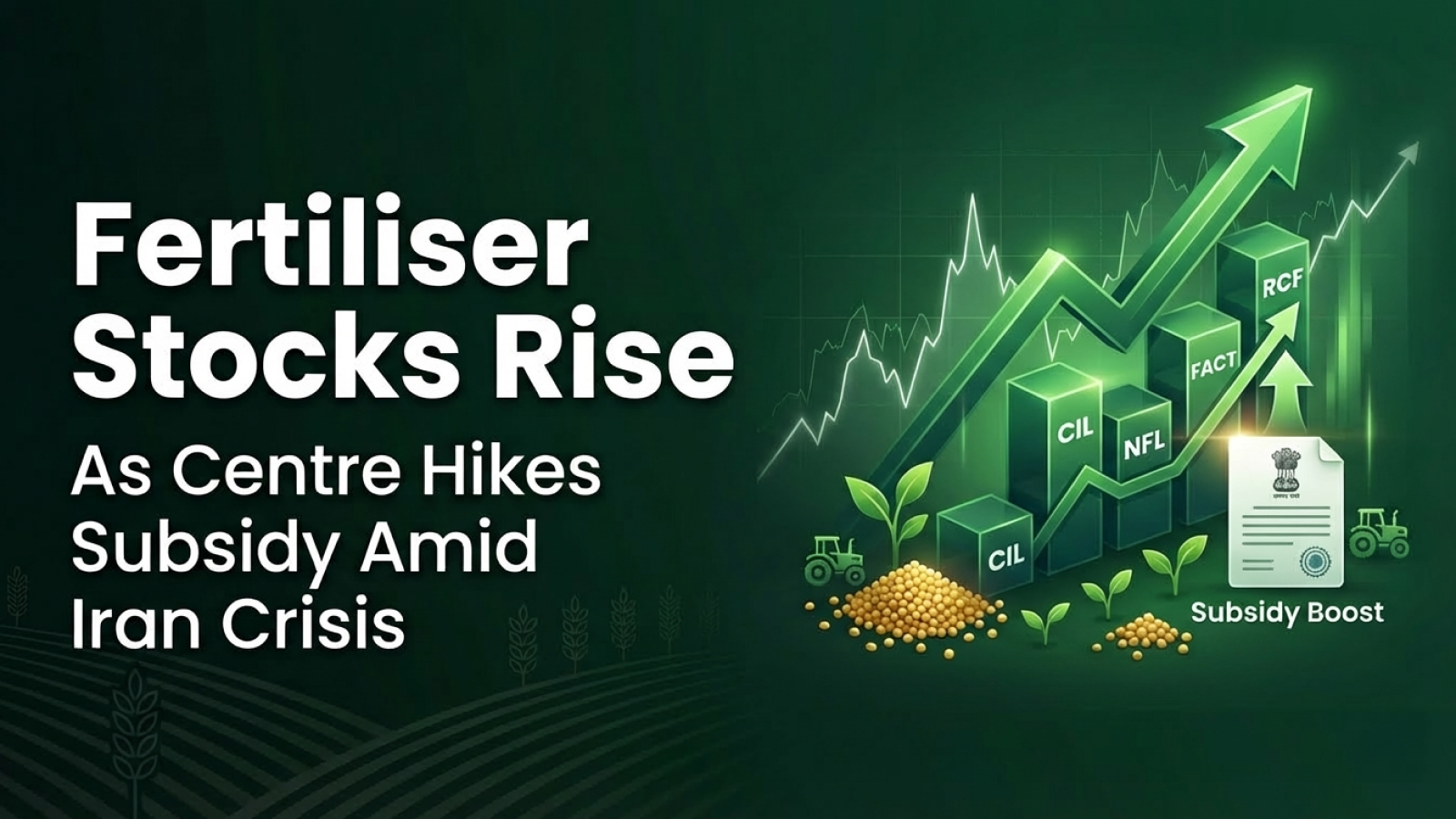
Fertiliser Stocks Rise As Centre Hikes Subsidy Amid Iran Crisis
Authored By HDFC SKY | Last Modified: Apr 9, 2026 04:51 PM IST
Open Free Demat Account
Open Free Demat Account
Mumbai, April 9: Shares of fertiliser companies moved higher on April 9 after the Centre raised nutrient-based subsidies for the upcoming kharif season, aiming to shield farmers from rising global prices triggered by the ongoing Middle East conflict.
Fertilisers and Chemicals Travancore surged over 4 per cent at Rs 853.55 and Coromandel International rose nearly 2 per cent at Rs 2,153.00 around mid-day as the policy move improved earnings visibility and demand outlook for the sector. However, Chambal Fertilisers and Chemicals bucked the trend, dipping 0.53 per cent at Rs 462.50.
Geopolitical Tensions
The development comes at a time when global fertiliser markets are facing heightened volatility due to supply disruptions linked to geopolitical tensions.
The government’s decision on Wednesday to increase the allocation under the nutrient-based subsidy regime is intended to offset higher import costs of key inputs like phosphatic and potassic fertilisers. Under this mechanism, subsidies are calibrated based on nutrient content to ensure balanced fertiliser usage while keeping input prices affordable for farmers.
The latest hike in subsidy of Rs 4,317 crore, or nearly 12%, from the previous cropping cycle, at around Rs 41,500 crore marks a notable increase. This comes as global prices of fertilisers such as diammonium phosphate (DAP) have surged due to supply constraints and higher raw material costs.
The hike is aimed at keeping prices of key fertilisers stable, particularly DAP. For instance, a 50-kg bag of DAP is expected to remain priced at around Rs 1,350, with the Centre absorbing the additional burden. This price stability is seen as critical ahead of the sowing season, ensuring farmers are not hit by sudden cost spikes.

Supply Disruptions From Middle East Crisis
The move also reflects broader concerns over supply disruptions stemming from the Middle East crisis, which has impacted global fertiliser trade routes and input availability. India relies significantly on imports for fertilisers and their raw materials, with a large share sourced from the Gulf region. Any disruption in this corridor tends to ripple through domestic supply chains and pricing.
Government officials have, however, sought to allay fears of shortages, stating that adequate stocks are available domestically. At the same time, authorities have cautioned against hoarding, which could exacerbate supply concerns in local markets.
The subsidy hike is being viewed positively by investors as it not only supports demand but also improves cash flows for fertiliser companies, which are often sensitive to subsidy disbursements. Analysts note that sustained government support remains a key driver for the sector, particularly during periods of global uncertainty.
More broadly, the development underscores how geopolitical tensions are increasingly influencing domestic sectors such as agriculture and chemicals. With fertiliser availability closely tied to food security, policy support is expected to remain proactive as India navigates volatile global supply conditions ahead of the crucial kharif planting season.
Source:
- https://www.nseindia.com/
- https://www.nseindia.com/get-quote/equity/SHREEPUSHK/Shree-Pushkar-Chemicals-&-Fertilisers-Limited
- https://www.nseindia.com/get-quote/equity/COROMANDEL/Coromandel-International-Limited
- https://www.nseindia.com/get-quote/equity/CHAMBLFERT/Chambal-Fertilizers-&-Chemicals-Limited
Disclaimer
If you have any concerns, questions, or wish to point out any discrepancies in our content, please feel free to write to us at content@hdfcsec.com.
Please Note: The information shared is intended solely for informational purposes and does not make any investment recommendations.
Disclaimer
At HDFC SKY*, we take utmost care and due diligence in curating and presenting news and market-related content. However, inadvertent errors or omissions may occasionally occur.
If you have any concerns, questions, or wish to point out any discrepancies in our content, please feel free to write to us at content@hdfcsec.com.
Please Note: The information shared is intended solely for informational purposes and does not make any investment recommendations.
HDFC SKY from HDFC Securities, one of most trusted trading platforms in India, has been recognized with the *Next-Gen Digi Content Awards 2025-26.
 Join Us
 Add as preferred source on Google


More Markets News









Open Free Demat Account
Open Free Demat Account











Invest Anytime, Anywhere


By signing up I certify terms, conditions & privacy policy