Nifty 50
- Dr. Reddy's Labs₹1,310.9081.40 (6.62%)
- Shriram Finance₹825-40.00 (-4.62%)
- JSW Steel₹1,26074.50 (6.28%)
- Tata Consumer ₹936.50-27.40 (-2.84%)
- BSE₹3,359128.20 (3.97%)
- Bajaj Finance₹918.70-10.25 (-1.10%)
- Adani Ports₹1,752.5049.80 (2.92%)
- HDFC Life Insurance ₹519-4.75 (-0.91%)
- Eternal₹325.558.15 (2.57%)
- HDFC Bank₹688.05-4.75 (-0.69%)
- Max Healthcare₹83520.00 (2.45%)
- Sun Pharmaceutical₹1,740-8.00 (-0.46%)
- Kotak Mahindra Bank₹440.7510.25 (2.38%)
- HCL Technologies₹1,417-5.20 (-0.37%)
- Grasim Industries₹2,95056.00 (1.94%)
- Tata Motors PV₹263.70-0.90 (-0.34%)
- Coal India₹4057.55 (1.90%)
- Mahindra & Mahindra₹2,853.10-8.10 (-0.28%)
- Hindalco Industries₹885.6515.80 (1.82%)
- Power Grid Corp₹247-0.40 (-0.16%)

- Offerings
- Tools & Platforms
Tools & Calculators
- Open API
- Calculators
- SIP Calculator
- CAGR Calculator
- Compound Interest Calculator
- FD Calculator
- RD Calculator
- EPF Calculator
- Retirement Calculator
- HDFC SIP Calculator
- Mutual Fund Return Calculator
- Lumpsum Calculator
- Step Up SIP Calculator
- ETF SIP Calculator
- Brokerage Calculator
- Equity Margin Calculator
- SWP Calculator
- EMI Calculator
- MTF Calculator
- Margin Pledge Calculator
- Algo Strategy
- Markets
Stocks
F&O
Mutual Funds
- More
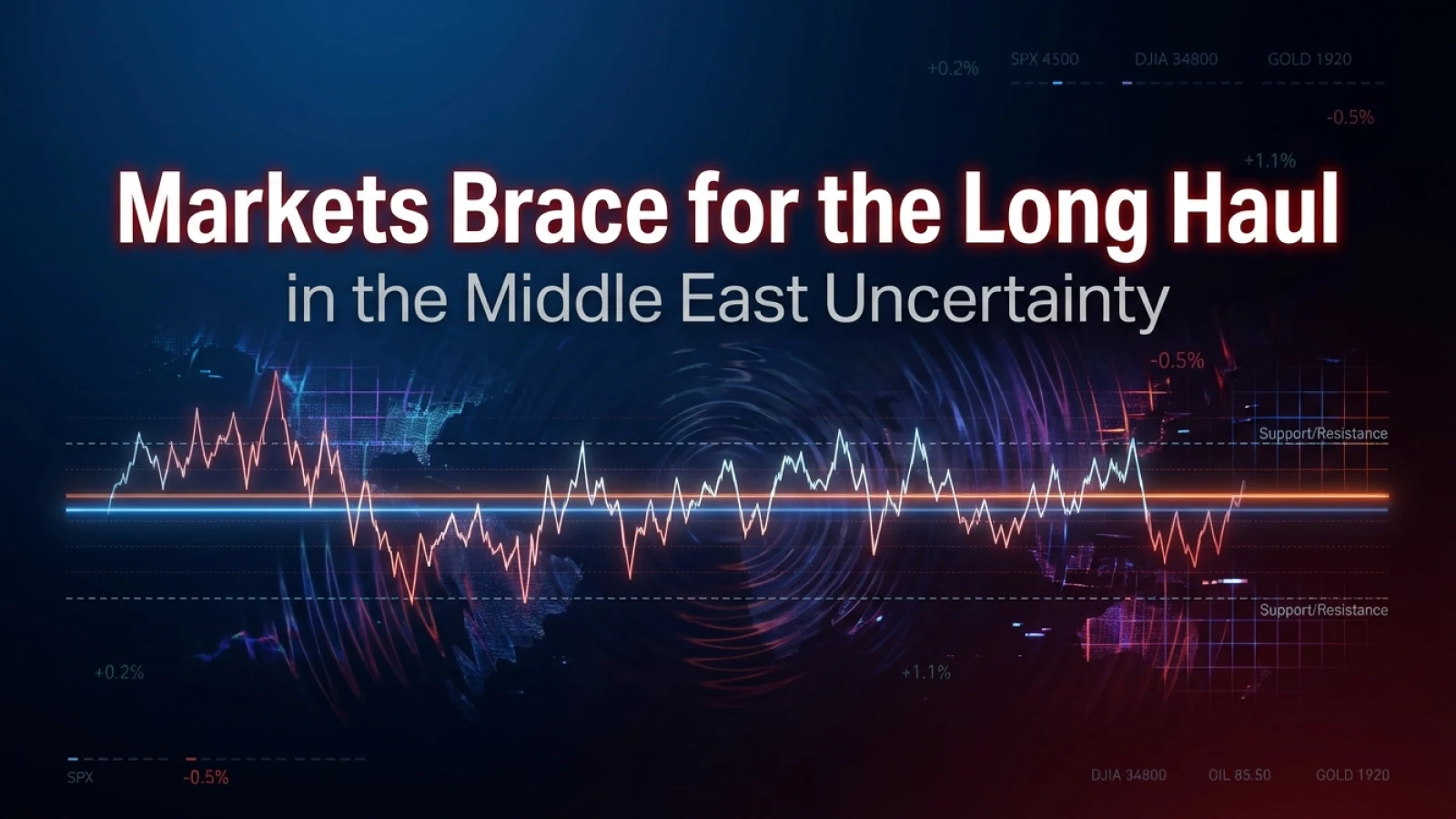
Markets Brace for the Long Haul in the Middle East Uncertainty
Authored By Prime Research | Last Modified: Apr 13, 2026 02:01 PM IST
Open Free Demat Account
Open Free Demat Account
The breakdown of negotiations over the weekend in Islamabad reignited worries that the U.S.-Iran conflict will last longer than feared, leading to higher oil prices that will continue to strain economies worldwide.
Oil prices spiked sharply after President Trump announced the U.S. Navy would blockade the Strait of Hormuz following the collapse of peace talks with Iran in Islamabad. The strait is a choke point for roughly 20% of the world’s daily energy supply, and U.S. Central Command confirmed the blockade on all vessels would begin on April 13.
European natural gas futures surged as much as 17% in early trading, compounding existing energy-driven inflation pressures across the continent. The escalation reignites fears of a prolonged supply disruption, with analysts warning that renewed U.S. strikes on Iranian energy infrastructure could have a lasting global impact.
US equity futures fell around 1.25% after the breakdown of U.S.-Iran peace negotiations.
Major U.S. banks, including Goldman Sachs, JPMorgan Chase, Bank of America, Wells Fargo, Citigroup, and Morgan Stanley, are all set to report Q1 results this week, offering the first major test of corporate resilience amid the ongoing conflict.
Asian markets opened lower today, as investors weigh a U.S. naval blockade on Iran’s ports after talks between Washington and Tehran failed to produce an agreement to end the conflict in the Middle East.
China is set to halt sulfuric acid exports from May, targeting supplies generated as a by-product of copper and zinc smelting to conserve availability during the peak crop-planting season. This move is likely to intensify existing raw material bottlenecks stemming from the conflict in Iran, putting additional pressure on the metals and fertiliser industries.
India has moved to safeguard fuel availability by increasing windfall taxes on exports. The diesel export tax has been raised to 55.5 rupees per litre from 21.5 rupees, while the aviation turbine fuel export tax has been increased to 42 rupees per litre from 29.5 rupees, effective immediately
Indian markets are set to open approximately 1.5% lower, pressured by a breakdown in US–Iran negotiations.
23,700 has emerged as the key short-term support level for the Nifty. A decisive break below this level could accelerate the decline toward 23,153, while any recovery attempts are likely to face stiff resistance at 23,990.
Disclaimer
At HDFC SKY, we take utmost care and due diligence in curating and presenting news and market-related content. However, inadvertent errors or omissions may occasionally occur.
If you have any concerns, questions, or wish to point out any discrepancies in our content, please feel free to write to us at content@hdfcsec.com.
Please Note: The information shared is intended solely for informational purposes and does not make any investment recommendations
If you have any concerns, questions, or wish to point out any discrepancies in our content, please feel free to write to us at content@hdfcsec.com.
Please Note: The information shared is intended solely for informational purposes and does not make any investment recommendations
Disclaimer
The information shared here is intended solely for informational and educational purposes and does not constitute investment recommendations. While we practice strict due diligence in curating daily market data, readers must perform independent research before trading. To flag any real-time data discrepancies or content concerns, please write to us at content@hdfcsec.com.
 Join Us
 Add as preferred source on Google
Summarize with AI


More Markets News









Open Free Demat Account
Open Free Demat Account
Trending News


Similar News
View All ↗


Latest Articles
View MoreReading Probability Language in a Trade Idea
Last Updated: Oct 26, 2026

Why DMart’s Stock Has Always Looked So Expensive
Last Updated: Oct 26, 2026

Tired of Tips? Become an Independent F&O Trader
Last Updated: Oct 26, 2026

Call Triggered, Now What? Managing a Trade After Entry
Last Updated: Oct 26, 2026

How Varun Beverages Became A Multibagger
Last Updated: Oct 26, 2026



Invest Anytime, Anywhere


By signing up I certify terms, conditions & privacy policy