Nifty 50
- Dr. Reddy's Labs₹1,310.9081.40 (6.62%)
- Shriram Finance₹825-40.00 (-4.62%)
- JSW Steel₹1,26074.50 (6.28%)
- Tata Consumer ₹936.50-27.40 (-2.84%)
- BSE₹3,359128.20 (3.97%)
- Bajaj Finance₹918.70-10.25 (-1.10%)
- Adani Ports₹1,752.5049.80 (2.92%)
- HDFC Life Insurance ₹519-4.75 (-0.91%)
- Eternal₹325.558.15 (2.57%)
- HDFC Bank₹688.05-4.75 (-0.69%)
- Max Healthcare₹83520.00 (2.45%)
- Sun Pharmaceutical₹1,740-8.00 (-0.46%)
- Kotak Mahindra Bank₹440.7510.25 (2.38%)
- HCL Technologies₹1,417-5.20 (-0.37%)
- Grasim Industries₹2,95056.00 (1.94%)
- Tata Motors PV₹263.70-0.90 (-0.34%)
- Coal India₹4057.55 (1.90%)
- Mahindra & Mahindra₹2,853.10-8.10 (-0.28%)
- Hindalco Industries₹885.6515.80 (1.82%)
- Power Grid Corp₹247-0.40 (-0.16%)

- Offerings
- Tools & Platforms
Tools & Calculators
- Open API
- Calculators
- SIP Calculator
- CAGR Calculator
- Compound Interest Calculator
- FD Calculator
- RD Calculator
- EPF Calculator
- Retirement Calculator
- HDFC SIP Calculator
- Mutual Fund Return Calculator
- Lumpsum Calculator
- Step Up SIP Calculator
- ETF SIP Calculator
- Brokerage Calculator
- Equity Margin Calculator
- SWP Calculator
- EMI Calculator
- MTF Calculator
- Margin Pledge Calculator
- Algo Strategy
- Markets
Stocks
F&O
Mutual Funds
- More
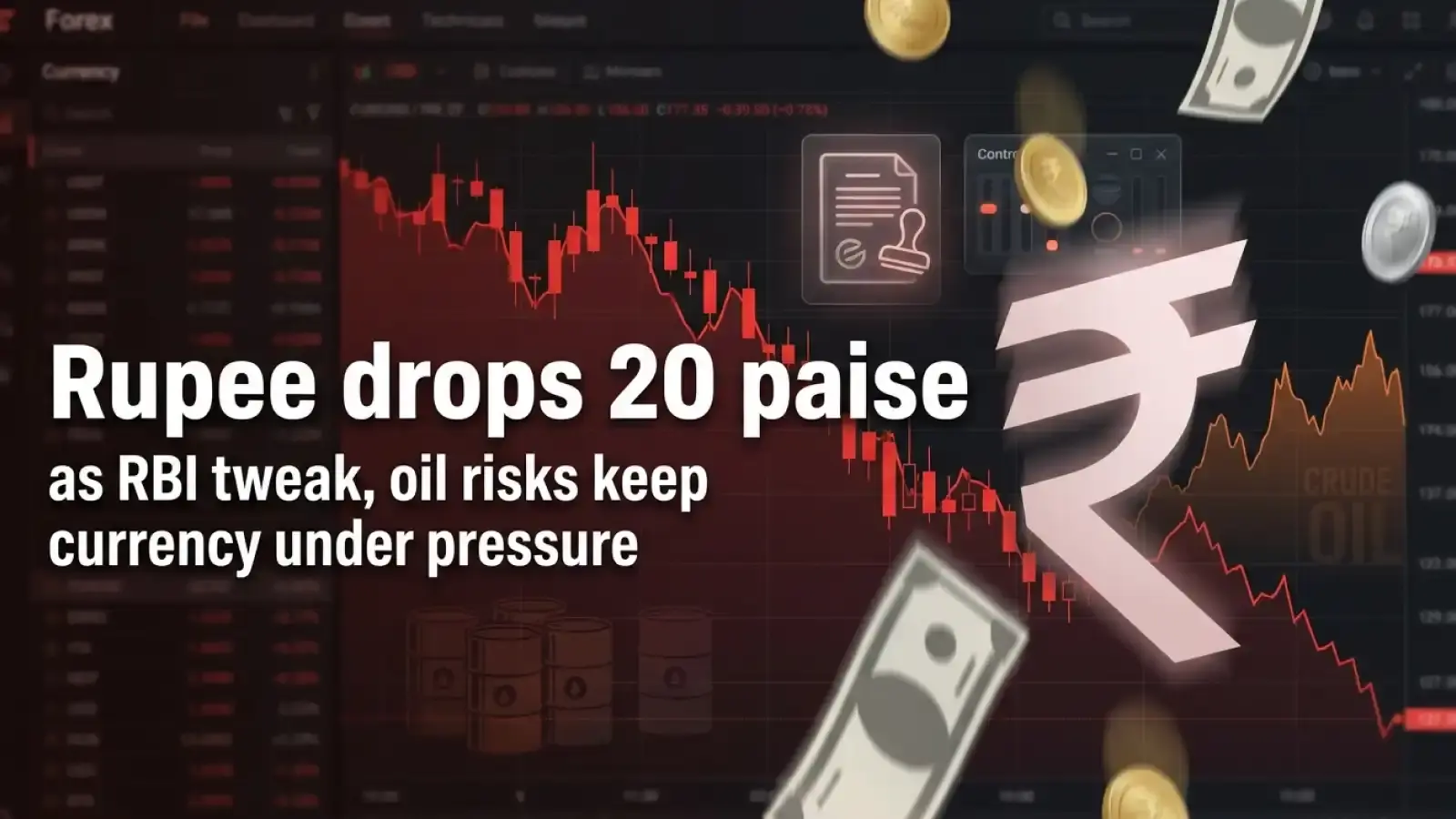
Rupee Drops 20 Paise As RBI Tweak, Oil Risks Keep Currency Under Pressure
Authored By HDFC SKY | Last Modified: Apr 21, 2026 12:31 PM IST
Open Free Demat Account
Open Free Demat Account
Mumbai, April 21: The Indian rupee weakened by about 20 paise against the US dollar at 93.33 on Tuesday, tracking a mix of domestic policy shifts and persistent global uncertainties that kept sentiment fragile in the currency market.
At the open, the rupee fell 18 paise to 93.31 against the greenback and extended losses in early trade, as traders reacted to the Reserve Bank of India’s partial rollback of recent restrictions in the offshore non-deliverable forward (NDF) market.

RBI Move Alters Near-Term Dynamics
The central bank’s decision to ease curbs on offshore derivative trades, which were imposed earlier this month to curb volatility, has reintroduced some uncertainty into the market. While the rollback is expected to normalise hedging activity and improve liquidity, it also opens the door for increased arbitrage between onshore and offshore markets.
Currency dealers noted that the earlier restrictions had helped anchor the rupee by limiting speculative positions. With those curbs partially lifted, dollar demand could pick up again, exerting downward pressure on the domestic unit.
At the same time, the move may lead to a rise in forward premiums, as market participants recalibrate positions in response to the evolving regulatory landscape.
Oil Prices, Geopolitics Weigh
Beyond domestic factors, global cues continue to play a significant role. Ongoing tensions between the United States and Iran have kept crude oil prices elevated, with markets closely watching developments around a fragile ceasefire.
For India, higher oil prices typically translate into a weaker currency, as the country imports the bulk of its crude requirements. Elevated crude levels not only increase the import bill but also stoke concerns about inflation and the current account deficit.
Even though oil prices have eased slightly from recent highs, they remain elevated enough to keep pressure on the rupee.
Dollar Demand Stays Firm
The rupee’s weakness was also driven by sustained demand for dollars from importers and corporates. Market participants reported steady buying interest from oil companies and other large importers, which kept the currency biased lower through the session.
Foreign portfolio flows have also been mixed, offering little support to the rupee at a time when global risk sentiment remains uncertain.
Outlook: Rangebound With a Weak Bias
Going ahead, the rupee is expected to trade in a narrow range, with intermittent support likely from central bank intervention and any cooling in oil prices.
However, the near-term bias remains tilted to the downside.
With policy adjustments at home and geopolitical tensions abroad, the rupee is navigating a delicate balance. Any sharp move in crude or escalation in global risks could deepen losses, while signs of stability may help the currency find its footing.
For now, the rupee remains on the back foot—caught between easing regulatory constraints and stubborn external headwinds.
Source:
- spot rates from https://www.moneycontrol.com/markets/currencies/
Disclaimer
If you have any concerns, questions, or wish to point out any discrepancies in our content, please feel free to write to us at content@hdfcsec.com.
Please Note: The information shared is intended solely for informational purposes and does not make any investment recommendations
Disclaimer
The information shared here is intended solely for informational and educational purposes and does not constitute investment recommendations. While we practice strict due diligence in curating daily market data, readers must perform independent research before trading. To flag any real-time data discrepancies or content concerns, please write to us at content@hdfcsec.com.
 Join Us
 Add as preferred source on Google


More Markets News










Open Free Demat Account
Open Free Demat Account












Invest Anytime, Anywhere


By signing up I certify terms, conditions & privacy policy