Nifty 50
- Tata Consumer ₹994.7558.25 (6.22%)
- Hindustan Unilever₹1,771.20-47.40 (-2.61%)
- Bharat Electronics₹370.907.90 (2.18%)
- Infosys₹1,135.75-30.25 (-2.59%)
- Shriram Finance₹839.8014.80 (1.79%)
- TCS₹2,492.60-42.40 (-1.67%)
- Bajaj Auto₹10,247176.00 (1.75%)
- HCL Technologies₹1,400-17.00 (-1.20%)
- Maruti Suzuki₹11,393173.00 (1.54%)
- Tech Mahindra₹1,777.70-17.30 (-0.96%)
- Max Healthcare₹847.4012.40 (1.49%)
- Asian Paints₹2,300-22.00 (-0.95%)
- Tata Steel₹172.392.45 (1.44%)
- UltraTech Cement₹11,075-105.00 (-0.94%)
- BSE₹3,406.5047.50 (1.41%)
- Grasim Industries₹2,928-22.00 (-0.75%)
- Sun Pharmaceutical₹1,763.5023.50 (1.35%)
- Bajaj Finserv₹1,660-10.90 (-0.65%)
- Bharti Airtel₹1,943.3025.80 (1.35%)
- Reliance Industries₹1,196.40-5.40 (-0.45%)

- Offerings
- Tools & Platforms
Tools & Calculators
- Open API
- Calculators
- SIP Calculator
- CAGR Calculator
- Compound Interest Calculator
- FD Calculator
- RD Calculator
- EPF Calculator
- Retirement Calculator
- HDFC SIP Calculator
- Mutual Fund Return Calculator
- Lumpsum Calculator
- Step Up SIP Calculator
- ETF SIP Calculator
- Brokerage Calculator
- Equity Margin Calculator
- SWP Calculator
- EMI Calculator
- MTF Calculator
- Margin Pledge Calculator
- Algo Strategy
- Markets
Stocks
F&O
Mutual Funds
- More
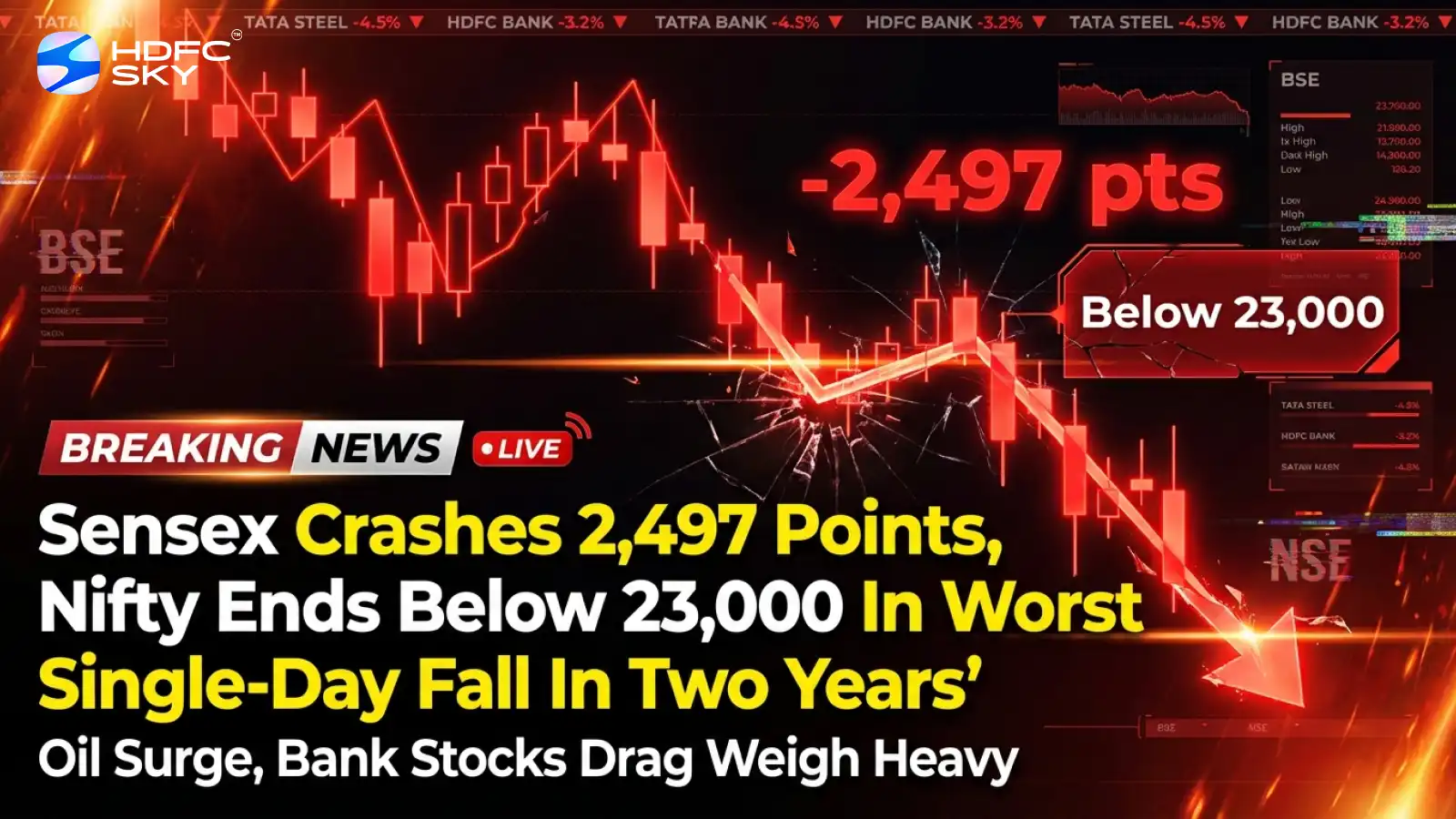
Sensex Crashe͏s 2,497 Po͏ints, Ni͏f͏ty Ends B͏elow 23,000 In Worst ͏Single-Day Fall In Two ͏Years; Oil ͏S͏u͏rge, Bank Stocks Dr͏ag Weigh Heavy
Authored By HDFC SKY | Published at: Mar 19, 2026 05:27 PM IST
Open Free Demat Account
Open Free Demat Account
Mumb͏ai, March 19: Indian benchm͏ark indices suffered their ͏steepest s͏ingle-day͏ ͏d͏ecline͏ in nearly two y͏ears on Thursda͏y, with th͏e Sensex pl͏unging 2,49͏7 points or͏ 3͏.26 pe͏r cen͏t to se͏ttle at 74,207, while the Nifty 50 tumbled 776 points to close at ͏23,002. The sh͏arp downtu͏rn sna͏ppe͏d a three-day winning st͏rea͏k and͏ wi͏ped out over ₹14 l͏akh crore in investor wea͏l͏th͏, as a tox͏ic mix of͏ surging͏ ͏crude oil ͏pr͏i͏ces͏, escalating geopoliti͏cal ten͏s͏ions in West Asia, and stock͏-͏specifi͏c press͏ure on index heavyweig͏ht ͏HDFC͏ Ban͏k triggered a broad-bas͏ed sell-͏off acr͏oss͏ s͏ectors͏.
Mar͏ket breadth͏ r͏ef͏lected͏ extreme weakness, with͏ ͏3,͏072 stocks dec͏l͏ining agains͏t just 9͏99 advance͏s, transla͏ting͏ to a negative advance͏-de͏cl͏ine ratio of 1:7͏. ͏T͏h͏e India VI͏X, a meas͏ure of ͏market volatil͏ity, s͏piked over͏ 21͏ per cent, in͏dicating h͏ei͏ghtened an͏xiety ͏amon͏g ͏tra͏ders.͏ All sectoral indices e͏nded d͏eep͏ in th͏e red, with the Nifty Auto index falling over 4.2͏ per ce͏nt, whi͏le ba͏nking, ͏IT, metal, and consumer dur͏able i͏ndices dec͏lined b͏etwee͏n 3-4 per cent ea͏ch.

Crude Oil Breaches $115 Per ͏Barrel as Iran Strike On Gulf E͏n͏ergy Fa͏ciliti͏es Sparks Supply Fear͏s
The primary trigg͏er for today’͏s market m͏eltdown was ͏a sharp escalation in the ͏West As͏ian conflic͏t after Iran s͏truck key en͏ergy facilit͏ies in the͏ Gulf region, including a major liquefied͏ natura͏l gas facility in Q͏atar t͏hat͏ suppli͏es ne͏arl͏y͏ one-fifth ͏of the world͏’s gas͏, and two oil refin͏eries in Kuwait. The at͏tacks sent Brent crude͏ ͏futures s͏oaring over 7 p͏er cent͏ to ͏$115.4͏0 per͏ barrel du͏r͏i͏n͏g Indian t͏rading hours, while WTI͏ crude hovere͏d around $96.10 per barrel. Natural ga͏s pric͏es also j͏umped ͏sharply, with US natural gas futur͏es rising 5.1 per͏ cent and Euro͏pean ͏be͏n͏chmark͏ TTF gas surging 24 ͏per ͏cent͏ to €68.22 per m͏egawat͏t-hour.
For India, which imports over 85 per cent of its crude oil requirements, the sustained spike in energy prices poses a significant macroeconomic challenge. Analysts estimate that every $10 per barrel sustained increase in oil prices widens the current account deficit by approximately 50 basis points and reduces GDP growth by 20-30 basis points. The development comes just as the US Federal Reserve signalled a hawkish stance on inflation, with Fed Chair Jerome Powell warning that surging energy prices could stoke inflationary pressures and limit the central bank’s ability to cut rates.
Banking Stocks Emerge As Key Index Drag
Banking stocks bore the brunt of the selling pressure, with the Nifty Bank index plummeting 1,875 points to 53,451. HDFC Bank emerged as the single biggest drag on the benchmark indices, with its share price crashing over 5 per cent to hit a 52-week low of ₹722 on the BSE.
The weakness extended across the banking pack, with Bajaj Finance falling 5.4 per cent, Shriram Finance tumbling over 7 per cent, and other private lenders including Axis Bank and ICICI Bank registering sharp cuts. The selloff in financials alone contributed significantly to the indices’ downfall, given their heavy weightage in both the Sensex and Nifty 50.
Ten Nifty 50 Stocks Hit 52-Week Lows As Midcap, Smallcap Indices Crack Over 3%
The carnage was not limited to frontline indices, with broader markets witnessing equally brutal selling. The Nifty Midcap 100 index plunged over 3.1 per cent or nearly 1,800 points to 54,492, while the Nifty Smallcap 100 index tumbled close to 3 per cent. As many as ten Nifty 50 constituents, including TCS and Bajaj Finance, closed at their 52-week lows, underscoring the depth of the downturn.
In the midcap space, oil marketing companies were the worst hit following the surge in crude prices. HPCL crashed over 7 per cent to a 52-week low, while Petronet LNG fell 6.6 per cent and BPCL declined sharply. Peers HPCL and Indian Oil have now declined nearly 25 per cent so far in March alone. Other prominent midcap losers included Escorts Kubota, Ola Electric, Godrej Properties, and Dixon Technologies, which declined between 5-6 per cent.
ONGC Emerges Sole Gainer As Oil Price Surge Boosts Exploration Stocks
In a market where almost everything bled, oil exploration major ONGC emerged as the sole gainer on the Nifty 50, rising over 1.55 per cent to ₹269.1. The stock benefited from the sharp uptick in crude oil prices, which directly improves realisations for upstream oil companies. A handful of other stocks managed to buck the broader trend, including TTK Prestige and Stove Kraft, which gained up to 4 per cent on resurfacing concerns over gas supply that could boost demand for kitchen appliance makers.
Among sectoral indices, the Nifty Auto index was the worst performer, falling over 4.2 per cent as rising fuel costs threatened to dampen demand and squeeze margins. M&M and Bajaj Auto fell over 4-5 per cent, while InterGlobe Aviation (IndiGo) dropped over 3 per cent on concerns that higher jet fuel prices would impact profitability.
Rupee Plunges to Record Low of 93.35 Against US Dollar; Goldman Sachs Projects 95 By 2027
The currency market mirrored the turmoil in equities, with the Indian rupee breaching the 93-mark to hit a fresh all-time low of 93.35 against the US dollar. The domestic currency has lost approximately 1.77 per cent in the past month alone, driven by a combination of surging crude prices, persistent foreign portfolio outflows, and a stronger dollar globally.
Foreign portfolio investors have pulled out over USD 5.5 billion from Indian equities in March 2026, extending their selling streak to 14 consecutive sessions. On Wednesday alone, FIIs sold Indian shares worth ₹2,714 crore. Goldman Sachs has projected that the rupee could slip to 95 per US dollar over the next year, citing a structurally widening current account deficit and the macroeconomic fallout from the West Asia conflict. The investment bank estimates India’s current account deficit to widen by 0.8 percentage points to 1.2 per cent of GDP in FY26.
Global Markets In Turmoil: Dow Hits 2026 Low, European Stocks Plunge As Iran War Intensifies
The selling pressure in Indian markets was compounded by weak global cues, with equity markets across Asia, Europe, and the United States trading sharply lower. The Dow Jones Industrial Average tumbled over 768 points or 1.6 per cent to a fresh 2026 low, closing below its 200-day moving average—a technical level suggesting the long-term trend has turned negative. The S&P 500 slid 1.4 per cent, while the Nasdaq Composite fell 1.5 per cent.
Asian markets bore the brunt of the selling, with Japan’s Nikkei 225 plunging 3.4 per cent, South Korea’s Kospi falling 2.7 per cent, and Hong Kong’s Hang Seng declining 2 per cent. European markets followed suit, with the pan-European Stoxx 600 dropping 1.8 per cent in early trading, led by a 4.5 per cent decline in the basic resources sector. London-listed mining majors Antofagasta and Fresnillo each slid over 6 per cent as inflation fears and surging energy prices threatened to squeeze margins.
Gold and Silver Join Selloff: Precious Metals Tumble On Strong Dollar, Hawkish Fed Signals
Safe-haven assets offered little respite as gold and silver also joined the broad-based selloff. Gold futures on the MCX plunged by ₹3,616 or 2.36 per cent to ₹1.49 lakh per 10 grams, while silver for May delivery slumped by ₹9,031 or 3.64 per cent to ₹2.39 lakh per kilogram, marking the white metal’s seventh consecutive session of losses. Globally, spot gold was down 2.8 per cent at USD 4,682.78 per ounce, while silver futures lost over 7.7 per cent.
Analysts attributed the decline in precious metals to a combination of a strong US dollar, elevated US Treasury yields, and hawkish signals from the Federal Reserve. The US central bank maintained its benchmark interest rate at 3.5–3.75 per cent but signalled caution amid persistent inflation risks linked to the West Asia conflict. The Bank of Japan also held rates steady, noting that inflation risks are now tilted to the upside due to the Iran war.
Disclaimer
If you have any concerns, questions, or wish to point out any discrepancies in our content, please feel free to write to us at content@hdfcsec.com.
Please Note: The information shared is intended solely for informational purposes and does not make any investment recommendations
Disclaimer
The information shared here is intended solely for informational and educational purposes and does not constitute investment recommendations. While we practice strict due diligence in curating daily market data, readers must perform independent research before trading. To flag any real-time data discrepancies or content concerns, please write to us at content@hdfcsec.com.
 Join Us
 Add as preferred source on Google


More Markets News








Open Free Demat Account
Open Free Demat Account











Invest Anytime, Anywhere


By signing up I certify terms, conditions & privacy policy