Nifty 50
- JSW Steel₹1,241.3025.00 (2.06%)
- Axis Bank₹1,236-54.00 (-4.19%)
- ONGC₹2253.00 (1.35%)
- Tata Motors PV₹278-8.85 (-3.09%)
- SBI₹973.7011.10 (1.15%)
- Infosys₹1,130.70-30.50 (-2.63%)
- L&T₹3,661.9034.80 (0.96%)
- Bajaj Finance₹957.35-24.75 (-2.52%)
- Eicher Motors₹7,34964.50 (0.89%)
- Apollo Hospitals₹7,700-190.00 (-2.41%)
- Adani Ports₹1,76615.20 (0.87%)
- UltraTech Cement₹10,650-257.00 (-2.36%)
- Dr. Reddy's Labs₹1,242.509.50 (0.77%)
- HDFC Bank₹712-16.85 (-2.31%)
- InterGlobe Aviation₹4,70013.10 (0.28%)
- Trent₹2,891.60-67.10 (-2.27%)
- Bharat Electronics₹377.200.35 (0.09%)
- Hindustan Unilever₹1,853.20-40.60 (-2.14%)
- NTPC₹309-6.15 (-1.95%)

- Offerings
- Tools & Platforms
Tools & Calculators
- Open API
- Calculators
- SIP Calculator
- CAGR Calculator
- Compound Interest Calculator
- FD Calculator
- RD Calculator
- EPF Calculator
- Retirement Calculator
- HDFC SIP Calculator
- Mutual Fund Return Calculator
- Lumpsum Calculator
- Step Up SIP Calculator
- ETF SIP Calculator
- Brokerage Calculator
- Equity Margin Calculator
- SWP Calculator
- EMI Calculator
- MTF Calculator
- Margin Pledge Calculator
- Algo Strategy
- Markets
Stocks
F&O
Mutual Funds
- More
India’s ₹20,000-Crore Export Promotion Mission: A Strategic Response to US Tariff Shock
Authored By Shishta Dutta | Last Modified: Aug 28, 2025 03:59 PM IST
Open Free Demat Account
Open Free Demat Account
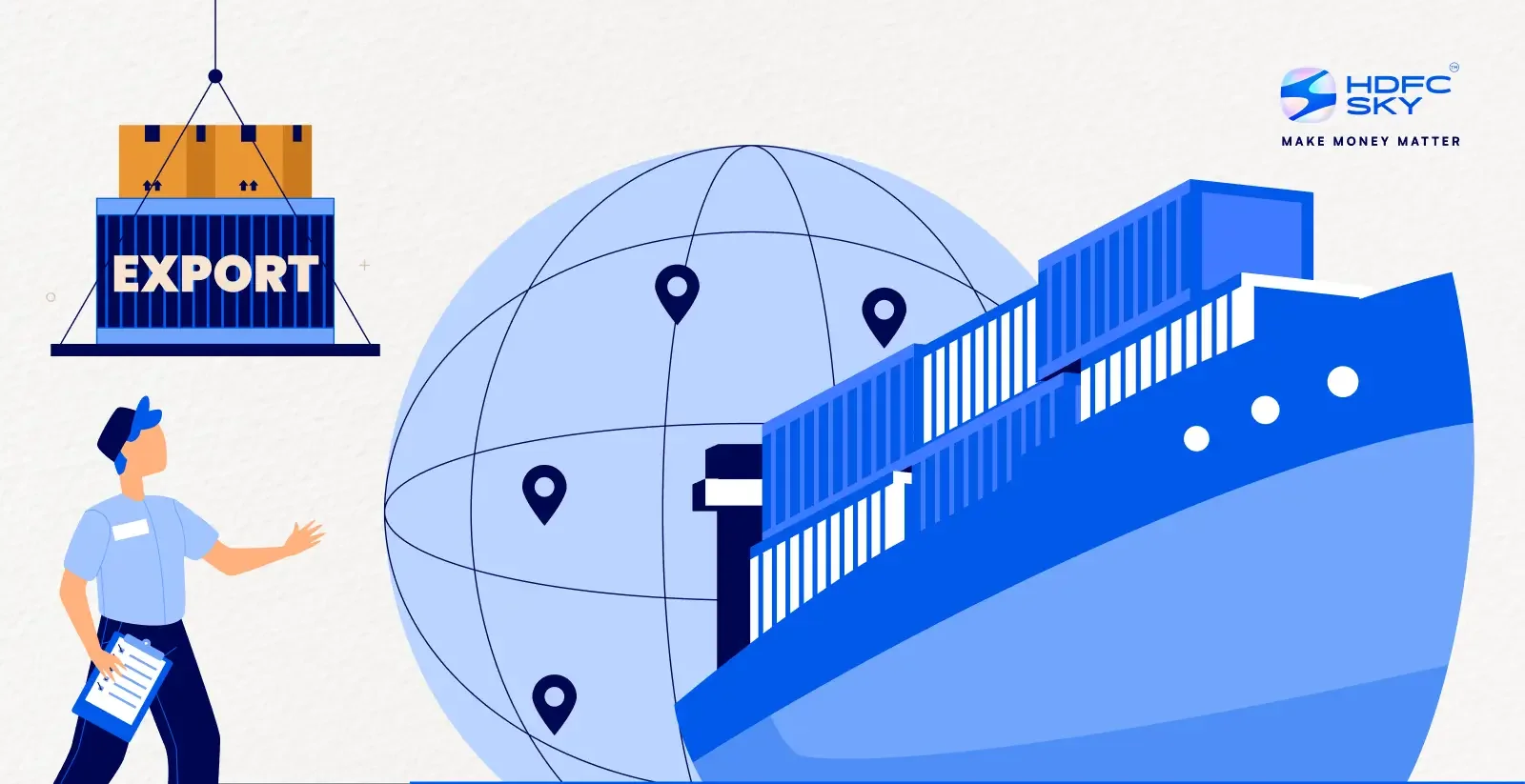
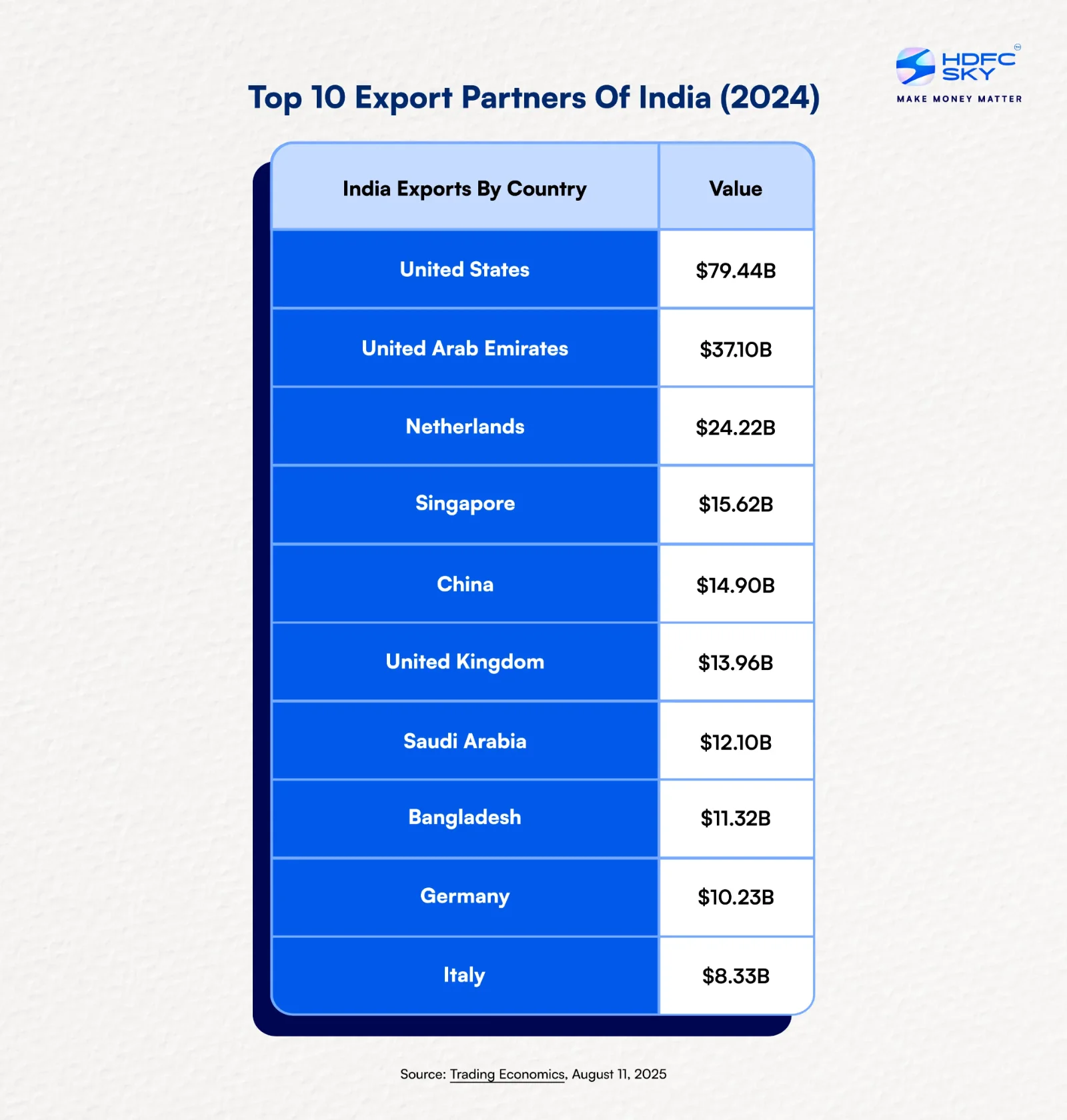
In 2025, India is facing a challenging trade situation. This is because India’s biggest export market in 2024, the United States, has raised tariffs on most Indian goods. First, they increased it by 25% and then by 50%. These steep duties, announced by President Donald Trump’s administration in August 2025, could make Indian products more expensive in the US.
That clearly means a potential reduction in exports, which can thus hurt industries like manufacturing and MSMEs that employ millions. To tackle this challenge, the Indian government is launching a ₹20,000-crore Export Promotion Mission. The plan aims to support exporters, improve competitiveness, and strengthen “Brand India” so that the country can maintain its presence and resilience in international markets.

What’s Behind the Recent US Tariff Hike?
Since August 7, 2025, a 25% tariff on all Indian exports has been effective, which was announced on July 30. On 6th August, 2025, they added another 25%, pushing the total tariff to 50%, which will be effective by 27th August.
According to the US, this move was necessary because India continued to buy Russian crude oil. The US said the decision was part of its “reciprocal” tariff policy. They aim to address what they see as unfair trade gaps and protect their industries.
In terms of other economies, China has a 30% tariff, Vietnam and the Philippines have 20%, while India and Brazil face the highest tariff rate at 50%.
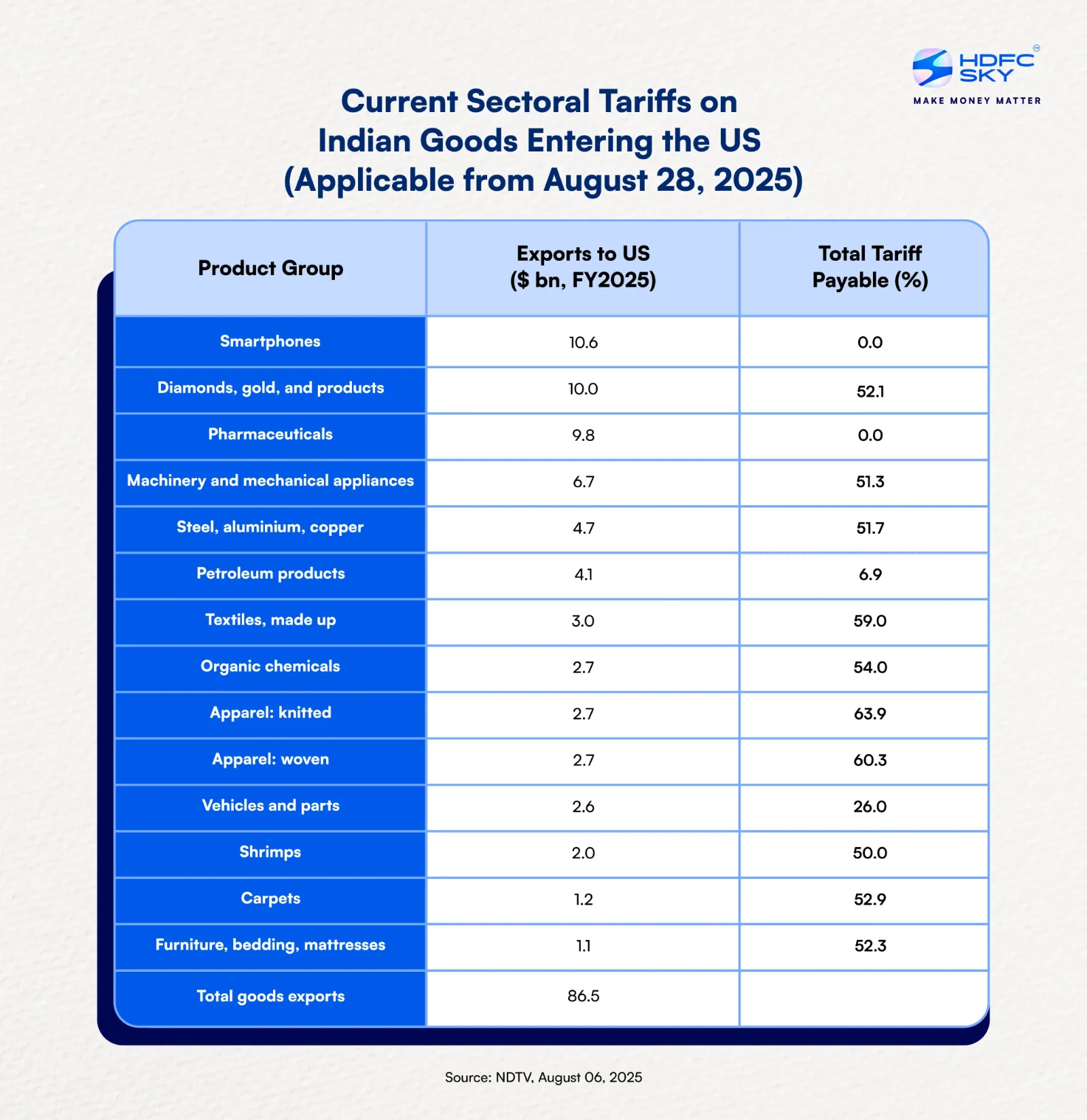
For exporters, this big jump in tariffs puts nearly half of India’s yearly exports to the market, which is worth over $85 billion, at risk. Products like textiles, gems, machinery, engineering goods, chemicals, leather, and auto parts could become too costly compared to competitors.
Strategic Pillars of The Export Promotion Mission
The ₹20,000-crore Export Promotion Mission is set to start by September 2025.
It is a long-term plan, which brings together the Ministries of Commerce & Industry, MSME, and Finance. The motive of this mission is to give particular support, make important reforms, and boost market growth through the following parts:
- Trade Finance and Non-Trade Finance
Improving access to export credit, enabling cross-border factoring, and addressing non-tariff barriers should be effectively targeted and implemented to ensure they benefit Micro, Small, and Medium Enterprises (MSMEs) across the country.
Exporters will get help in the form of interest subsidies, loan guarantees, and reduced certification fees for MSMEs. The government will create easy-to-use online platforms where exporters can apply for support, track their applications, and get reimbursements faster and more transparently.
- E-commerce Hubs & Warehousing
Warehouses and order fulfilment centres will help exporters reach new markets more easily. The plan will also promote digital trade tools like export credit cards and BharatTradeNET. This approach will make cross-border business smoother for MSMEs.
- Improved Brand Memory for Brand India
The mission will run global campaigns to position Indian products alongside those from countries like Japan, Korea, and Switzerland. Exporters will also get incentives to build and promote their own brands so they can compete better despite higher tariffs and strong competition.
-
Trade Facilitation
They are going to develop fifty districts as export hubs, and they will receive ₹50 crore each. So, infrastructure and logistics are going to improve, which will boost local products. State and district export committees will work together to identify strong local industries, promote promising products, and implement export growth plans for each district.
Direct Benefits for MSMEs
MSMEs play a massive role in India’s exports by contributing 45.73% of total shipments in 2023-24 and providing jobs to around 25 crore people. The Export Promotion Mission is made to give them strong support.
Under this initiative, MSMEs can get loans without giving full collateral. The government will cover upwards of 80% of the collateral needed, based on the exporter’s past performance. An online system will check eligibility and give a unique ID to each exporter. The loan money will be released every month or quarter through a credit guarantee fund, making it easier for small exporters to get finance.
They will also reimburse the costs for meeting international requirements regarding registration, testing, certification, and inspection. So, MSMEs can meet global standards easily.
Conclusion
India’s ₹20,000-crore Export Promotion Mission is a bold and wide-ranging plan. It is expected to counter the threat from high US tariffs and global trade uncertainty. This mission is aimed at focusing on improving trade finance and brand visibility while developing export hubs and supporting MSMEs. The goal is not just to protect India’s exports but to reshape and strengthen them.
The mission’s success will rely on a quick and transparent rollout and flexible strategies for different sectors as global trade changes. If this plan is executed well, millions of jobs will remain safe. Moreover, India will remain a strong and competitive trading nation even during tariff wars and economic challenges.
Disclaimer: At HDFC SKY, we take utmost care and due diligence in curating and presenting news and market-related content. However, inadvertent errors or omissions may occasionally occur.
If you have any concerns, questions, or wish to point out any discrepancies in our content, please feel free to write to us at content@hdfcsec.com
Please note that the information shared is intended solely for informational purposes and does not make any investment recommendations
 Join Us
 Add as preferred source on Google


More Business News



Open Free Demat Account
Open Free Demat Account







Invest Anytime, Anywhere


By signing up I certify terms, conditions & privacy policy