Nifty 50
- Dr. Reddy's Labs₹1,22120.00 (1.67%)
- Tata Motors PV₹281.75-8.70 (-3.00%)
- Infosys₹1,003.203.00 (0.30%)
- Adani Enterprises₹2,831.10-85.40 (-2.93%)
- HDFC Life Insurance ₹531.600.60 (0.11%)
- Jio Financial ₹220.50-6.50 (-2.86%)
- Power Grid Corp₹261.85-7.65 (-2.84%)
- L&T₹3,766.40-109.80 (-2.83%)
- ONGC₹230-5.86 (-2.48%)
- Adani Ports₹1,743.70-44.30 (-2.48%)
- Hindustan Unilever₹1,896-46.90 (-2.41%)
- Tata Consumer ₹960-23.20 (-2.36%)
- Reliance Industries₹1,197.60-28.40 (-2.32%)

- Offerings
- Tools & Platforms
Tools & Calculators
- Open API
- Calculators
- SIP Calculator
- CAGR Calculator
- Compound Interest Calculator
- FD Calculator
- RD Calculator
- EPF Calculator
- Retirement Calculator
- HDFC SIP Calculator
- Mutual Fund Return Calculator
- Lumpsum Calculator
- Step Up SIP Calculator
- ETF SIP Calculator
- Brokerage Calculator
- Equity Margin Calculator
- SWP Calculator
- EMI Calculator
- MTF Calculator
- Margin Pledge Calculator
- Algo Strategy
- Markets
Stocks
F&O
Mutual Funds
- More
Oil Price Today, August 12, 2026: Crude Oil Prices Rise to $89.7 Per Barrel as US-Iran Deal Hopes Fade, Strait of Hormuz Disruption Fuels Supply Concerns
Authored By HDFC Sky | Last Modified: Aug 12, 2026 10:28 AM IST

Open Free Demat Account
Open Free Demat Account
Mumbai, August 12: Crude oil prices climbed on Wednesday as fading hopes of a U.S.-Iran peace agreement and fresh attacks on shipping vessels heightened concerns over prolonged disruptions to Middle East supplies. The rise came despite data pointing to a sharp increase in U.S. crude inventories, with traders focusing on the possibility that disruptions to key shipping routes could keep global supplies constrained for an extended period.
Brent, WTI Extend Gains
Brent crude futures rose 0.9% to $89.7 a barrel while U.S. West Texas Intermediate crude gained 1% to $84. Both benchmarks had settled more than $1 higher on Tuesday, marking their highest closing levels since July 31. Oil prices had also jumped around 5% on Monday as optimism over a potential peace deal between Washington and Tehran began to fade.
Also Read: How to invest in crude oil
The latest gains underline how quickly geopolitical developments have become the dominant driver for the oil market. Investors had initially expected a diplomatic breakthrough between the United States and Iran to help ease supply concerns, but those expectations have weakened, keeping a risk premium embedded in crude prices.
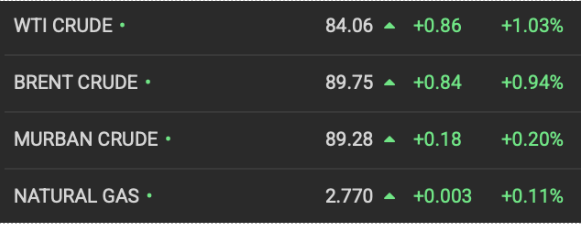
Both benchmarks gained as hopes of an Iran peace deal faded. Source: oilprice.com
The Strait of Hormuz is particularly important for global energy markets because a significant share of internationally traded oil and petroleum products passes through the waterway. Any prolonged reduction in traffic could therefore tighten supplies and increase price volatility.

Longer-Term Supply Risks Persist
The U.S. Energy Information Administration expects disruptions to Middle East crude supplies of around 600,000 barrels per day to continue through the end of 2027, suggesting that geopolitical risks could remain an important factor in the oil market well beyond the immediate conflict.
For India, the rise in crude prices is particularly significant because the country depends heavily on imports to meet its oil requirements. Sustained higher prices could increase the country’s import bill, put pressure on the rupee and widen the trade deficit. Higher energy costs could also feed into inflation and raise input expenses for businesses.
Indian Markets In Focus
The renewed rise in crude prices is likely to remain a key trigger for Indian equities. Oil marketing companies, upstream producers, aviation firms, paints, chemicals and other energy-intensive sectors could see increased investor attention as markets assess the impact of higher crude prices on earnings.
While upstream oil producers can benefit from stronger crude prices, companies with high fuel and transportation costs could face margin pressure if elevated prices persist.
With Brent crude moving closer to the $90-a-barrel mark, investors are likely to track developments around the Strait of Hormuz and U.S.-Iran negotiations closely. Any indication of a diplomatic breakthrough could ease the risk premium in crude, while further attacks or a prolonged closure of key shipping routes could push prices higher.
For Indian markets, therefore, crude oil remains one of the most important external variables to watch, alongside the rupee and global risk sentiment.
Source
- oilprice.com
Disclaimer
If you have any concerns, questions, or wish to point out any discrepancies in our content, please feel free to write to us at content@hdfcsec.com.
Please Note: The information shared is intended solely for informational purposes and does not make any investment recommendations
Disclaimer
At HDFC SKY*, we take utmost care and due diligence in curating and presenting news and market-related content. However, inadvertent errors or omissions may occasionally occur.
If you have any concerns, questions, or wish to point out any discrepancies in our content, please feel free to write to us at content@hdfcsec.com.
Please Note: The information shared is intended solely for informational purposes and does not make any investment recommendations.
HDFC SKY from HDFC Securities, one of most trusted trading platforms in India, has been recognized with the *Next-Gen Digi Content Awards 2025-26.
 Join Us
 Add as preferred source on Google


More Uncategorized News








Open Free Demat Account
Open Free Demat Account











Invest Anytime, Anywhere


By signing up I certify terms, conditions & privacy policy