Nifty 50
- Eternal₹317.4012.95 (4.25%)
- Shriram Finance₹865-35.90 (-3.98%)
- Apollo Hospitals₹7,730125.50 (1.65%)
- Adani Enterprises₹2,477-73.00 (-2.86%)
- ONGC₹227.502.50 (1.11%)
- JSW Steel₹1,185.50-34.50 (-2.83%)
- Asian Paints₹2,30722.20 (0.97%)
- Jio Financial ₹205.03-5.77 (-2.74%)
- TCS₹2,53023.10 (0.92%)
- Tata Steel₹167.67-4.66 (-2.70%)
- UltraTech Cement₹11,05092.00 (0.84%)
- Adani Ports₹1,702.70-47.30 (-2.70%)
- Maruti Suzuki₹11,23060.00 (0.54%)
- Tech Mahindra₹1,790-39.10 (-2.14%)
- Cipla₹1,3387.10 (0.53%)
- Tata Motors PV₹264.60-5.40 (-2.00%)
- Reliance Industries₹1,1905.50 (0.46%)
- Hindalco Industries₹869.85-15.75 (-1.78%)
- Axis Bank₹1,217.505.50 (0.45%)
- Trent₹2,727.50-48.30 (-1.74%)

- Offerings
- Tools & Platforms
Tools & Calculators
- Open API
- Calculators
- SIP Calculator
- CAGR Calculator
- Compound Interest Calculator
- FD Calculator
- RD Calculator
- EPF Calculator
- Retirement Calculator
- HDFC SIP Calculator
- Mutual Fund Return Calculator
- Lumpsum Calculator
- Step Up SIP Calculator
- ETF SIP Calculator
- Brokerage Calculator
- Equity Margin Calculator
- SWP Calculator
- EMI Calculator
- MTF Calculator
- Margin Pledge Calculator
- Algo Strategy
- Markets
Stocks
F&O
Mutual Funds
- More
Oil Price Today, June 17, 2026: Oil Extends Decline to $78.6 as Markets Weigh Iran Supply Prospects After Peace Deal
Authored By HDFC SKY | Published at: Jun 17, 2026 11:10 AM IST
Open Free Demat Account
Open Free Demat Account
Mumbai, June 17: Oil prices declined on Wednesday after crashing a day earlier, as investors assessed the likelihood of increased Iranian crude exports against lingering uncertainty surrounding the reopening of the Strait of Hormuz, one of the world’s most critical energy shipping routes.
Brent crude futures fell 0.5% to $78.6 a barrel while U.S. West Texas Intermediate (WTI) crude fell 0.7% to $75 a barrel. Oil benchmarks fell roughly 5% for a second straight day on Tuesday, settling at three-month lows as investors bet that a potential U.S.-Iran deal would help normalise crude shipments through the Strait of Hormuz and boost global supplies.

Iran Deal Keeps Supply Outlook in Focus
Market sentiment remains heavily influenced by a preliminary agreement between the United States and Iran, which has raised expectations that Iranian oil exports could gradually return to global markets. The prospect of additional crude supply has significantly reduced the geopolitical risk premium that had lifted prices during the recent Middle East conflict.
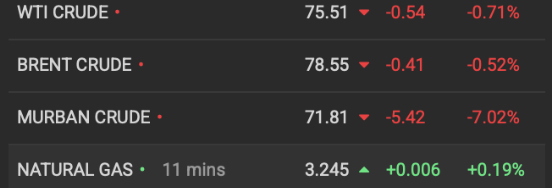
Both benchmarks extended declines although by far less today as uncertainty surrounded Hormuz reopening despite Iran peace deal. Source: oilprice.com
Traders are now attempting to gauge how quickly Iranian production and exports could recover if sanctions relief materialises. Analysts note that while the agreement has improved the supply outlook, restoring output to pre-conflict levels is unlikely to happen overnight and could take several months.
Also Read: How To Invest In Crude Oil
The possibility of higher Iranian exports comes at a time when global oil balances are already expected to loosen in the second half of the year, adding further downward pressure on prices.
Strait of Hormuz Remains Key Variable
Despite easing geopolitical tensions, uncertainty continues to surround the Strait of Hormuz, through which roughly a fifth of the world’s oil consumption passes. While the agreement has increased hopes that tanker traffic will gradually normalise, shipping activity has yet to fully recover.
Any delays in reopening the waterway or disruptions to shipping schedules could temporarily tighten supplies and inject volatility back into the market. As a result, traders remain cautious about aggressively pricing in a sustained increase in oil flows from the region.
The Strait’s strategic importance means developments related to maritime security and export logistics are likely to remain key drivers of oil prices in the near term.
Implications for India
For India, the world’s third-largest oil importer, softer crude prices are broadly positive. Lower oil prices help ease imported inflation, improve the trade deficit and reduce fuel-related input costs for businesses.
The recent decline in crude prices has also strengthened sentiment in domestic equity markets, with investors viewing lower energy costs as supportive for corporate earnings and the broader economy.
Source
- rates from oilprice.com
Disclaimer
If you have any concerns, questions, or wish to point out any discrepancies in our content, please feel free to write to us at content@hdfcsec.com.
Please Note: The information shared is intended solely for informational purposes and does not make any investment recommendations
Disclaimer
At HDFC SKY*, we take utmost care and due diligence in curating and presenting news and market-related content. However, inadvertent errors or omissions may occasionally occur.
If you have any concerns, questions, or wish to point out any discrepancies in our content, please feel free to write to us at content@hdfcsec.com.
Please Note: The information shared is intended solely for informational purposes and does not make any investment recommendations.
HDFC SKY from HDFC Securities, one of most trusted trading platforms in India, has been recognized with the *Next-Gen Digi Content Awards 2025-26.
 Join Us
 Add as preferred source on Google


More International News








Open Free Demat Account
Open Free Demat Account












Invest Anytime, Anywhere


By signing up I certify terms, conditions & privacy policy