Nifty 50
- HCL Technologies₹1,263.3057.20 (4.74%)
- Bharat Electronics₹388-16.35 (-4.04%)
- Infosys₹1,076.1038.40 (3.70%)
- Adani Enterprises₹2,937.70-122.30 (-4.00%)
- TCS₹2,27372.20 (3.28%)
- Shriram Finance₹989.80-38.80 (-3.77%)
- Tech Mahindra₹1,582.7041.70 (2.71%)
- InterGlobe Aviation₹4,790-183.00 (-3.68%)
- Tata Motors PV₹306.605.50 (1.83%)
- Grasim Industries₹3,192-89.90 (-2.74%)
- Hindustan Unilever₹1,957.7030.70 (1.59%)
- Bajaj Finserv₹1,865-48.50 (-2.53%)
- Wipro₹169.802.40 (1.43%)
- Bajaj Finance₹1,010-24.50 (-2.37%)
- HDFC Bank₹716.458.20 (1.16%)
- Titan Company₹4,892-117.50 (-2.35%)
- ONGC₹2341.50 (0.65%)
- Asian Paints₹2,417.50-55.00 (-2.22%)
- Max Healthcare₹1,0413.30 (0.32%)
- L&T₹3,850.90-79.80 (-2.03%)

- Offerings
- Tools & Platforms
Tools & Calculators
- Open API
- Calculators
- SIP Calculator
- CAGR Calculator
- Compound Interest Calculator
- FD Calculator
- RD Calculator
- EPF Calculator
- Retirement Calculator
- HDFC SIP Calculator
- Mutual Fund Return Calculator
- Lumpsum Calculator
- Step Up SIP Calculator
- ETF SIP Calculator
- Brokerage Calculator
- Equity Margin Calculator
- SWP Calculator
- EMI Calculator
- MTF Calculator
- Margin Pledge Calculator
- Algo Strategy
- Markets
Stocks
F&O
Mutual Funds
- More
Oil Prices Today, September 15, 2026: Brent Crude Rises To $107, WTI At $103 As Saudi Pipeline Outage Fuels Supply Fears
Authored By HDFC SKY | Published at: Sep 15, 2026 10:12 AM IST

Open Free Demat Account
Open Free Demat Account
Mumbai, September 15: Oil prices climbed on Tuesday as fresh attacks on Saudi Arabia and the shutdown of a key crude pipeline heightened concerns over global supplies, adding to an already elevated risk premium in the market amid continuing disruptions to energy flows through the Middle East.
Brent crude futures rose 1.2% to $107 a barrel, while US West Texas Intermediate crude gained 1.5% to $103 a barrel. Both benchmarks extended gains after rising sharply in the previous session as investors assessed the potential impact of further attacks on energy infrastructure and disruptions to crude shipments.

Saudi Pipeline Outage Adds To Supply Concerns
A key focus for oil markets remains the outage of Saudi Arabia’s East-West oil pipeline following attacks on the route. The pipeline is strategically important because it allows Saudi Arabia to transport crude to its Red Sea coast, providing an alternative route to exports through the Strait of Hormuz.
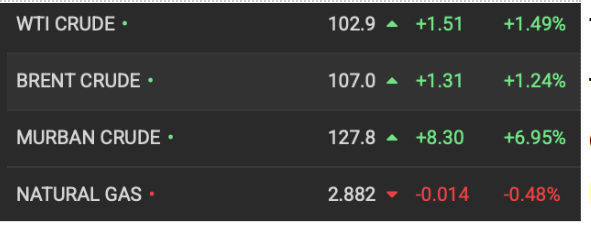
Both contracts rose as Middle East continued to simmer. Source: oilprice.com
The pipeline has the capacity to carry around 5 million barrels per day, making any prolonged disruption significant for global oil markets. Traders are closely watching how quickly operations can resume and whether Saudi Arabia can redirect affected volumes through other export routes.
The outage comes at a particularly sensitive time for oil markets, with concerns already mounting over the security of energy infrastructure in the region. A prolonged shutdown could tighten the physical oil market and encourage traders to price in a larger supply disruption.
Also Read: How To Invest In Crude Oil
Fresh Attacks Keep Risk Premium Elevated
The latest rise in crude prices followed fresh attacks in and around Saudi Arabia, adding to fears that the conflict could spread further across the region and threaten critical energy infrastructure.
Investors have increasingly focused on whether attacks will remain isolated incidents or develop into a broader campaign targeting oil production, storage and transportation facilities.
The possibility of further disruptions has kept a significant geopolitical premium embedded in crude prices. Even if actual production losses remain limited, uncertainty over future supply can encourage refiners, traders and consumers to secure additional barrels, supporting prices.
Strait Of Hormuz Remains Key
The disruption to shipping through the Strait of Hormuz remains another major concern for the oil market. The waterway is one of the world’s most important energy corridors, with a substantial share of global crude and liquefied natural gas shipments passing through it.
Any prolonged reduction in tanker traffic could have an outsized impact on oil prices because alternative export routes and spare transportation capacity are limited.
For Asian economies that rely heavily on imported energy, the developments are particularly important. Refiners are having to assess not only the price of crude but also the availability and cost of shipping as geopolitical risks rise.
How High Can Oil Prices Go?
The immediate direction of crude prices will depend largely on the duration and scale of supply disruptions. If Saudi pipeline operations resume quickly and attacks on energy infrastructure subside, some of the geopolitical premium could unwind.
However, a prolonged outage or additional damage to oil facilities could push prices higher. With Brent already around $107 a barrel and WTI above $100, markets are increasingly pricing in the possibility that supply disruptions could persist.
Higher crude prices are also complicating the outlook for central banks. A sustained oil shock can feed into headline inflation through higher fuel and transportation costs and can eventually raise input costs for businesses.
What Higher Oil Prices Mean For India
For India, the latest jump in crude prices is a significant concern because the country depends heavily on imports to meet its oil requirements.
Brent crude above $100 a barrel can put pressure on India’s import bill and trade balance while increasing risks for the rupee. It can also raise transportation and production costs across the economy if higher international prices are passed through to domestic fuel and other energy-intensive sectors.
Indian equities are therefore likely to remain sensitive to movements in crude oil. Higher oil prices could weigh particularly on sectors with significant fuel costs, while companies benefiting from stronger energy prices could see relative support.
The surge in crude also comes against a backdrop of renewed inflation concerns globally. If oil prices remain elevated for an extended period, investors may need to reassess expectations for interest-rate cuts, adding another layer of uncertainty for emerging-market assets.
For now, traders will closely monitor developments around Saudi Arabia’s pipeline, the security of regional energy infrastructure and traffic through the Strait of Hormuz. With Brent at around $107 a barrel and WTI at $103, the oil market remains firmly focused on the risk of further supply disruptions.
Source
Disclaimer
At HDFC SKY*, we take utmost care and due diligence in curating and presenting news and market-related content. However, inadvertent errors or omissions may occasionally occur.
If you have any concerns, questions, or wish to point out any discrepancies in our content, please feel free to write to us at content@hdfcsec.com.
Please Note: The information shared is intended solely for informational purposes and does not make any investment recommendations.
HDFC SKY from HDFC Securities, one of most trusted trading platforms in India, has been recognized with the *Next-Gen Digi Content Awards 2025-26.
 Join Us
 Add as preferred source on Google


More Business News







1 min read

Open Free Demat Account
Open Free Demat Account











Invest Anytime, Anywhere


By signing up I certify terms, conditions & privacy policy