Nifty 50
- Dr. Reddy's Labs₹1,229.4032.40 (2.71%)
- Apollo Hospitals₹7,775-252.50 (-3.15%)
- Bajaj Auto₹10,034256.00 (2.62%)
- ITC₹257.90-8.10 (-3.05%)
- Tata Motors PV₹284.454.55 (1.63%)
- Tech Mahindra₹1,471-43.10 (-2.85%)
- Bharat Electronics₹373.905.75 (1.56%)
- L&T₹3,627.50-75.80 (-2.05%)
- BSE₹3,330.2043.00 (1.31%)
- Max Healthcare₹865.95-17.85 (-2.02%)
- Cipla₹1,317.4016.40 (1.26%)
- Hindalco Industries₹882.50-17.85 (-1.98%)
- Eicher Motors₹7,11969.00 (0.98%)
- Hindustan Unilever₹1,820.70-36.00 (-1.94%)
- Mahindra & Mahindra₹2,81316.80 (0.60%)
- SBI₹941-18.10 (-1.89%)
- Kotak Mahindra Bank₹443.402.40 (0.54%)
- Coal India₹404.80-6.75 (-1.64%)
- HCL Technologies₹1,2236.30 (0.52%)
- Bharti Airtel₹1,778.70-26.40 (-1.46%)

- Offerings
- Tools & Platforms
Tools & Calculators
- Open API
- Calculators
- SIP Calculator
- CAGR Calculator
- Compound Interest Calculator
- FD Calculator
- RD Calculator
- EPF Calculator
- Retirement Calculator
- HDFC SIP Calculator
- Mutual Fund Return Calculator
- Lumpsum Calculator
- Step Up SIP Calculator
- ETF SIP Calculator
- Brokerage Calculator
- Equity Margin Calculator
- SWP Calculator
- EMI Calculator
- MTF Calculator
- Margin Pledge Calculator
- Algo Strategy
- Markets
Stocks
F&O
Mutual Funds
- More
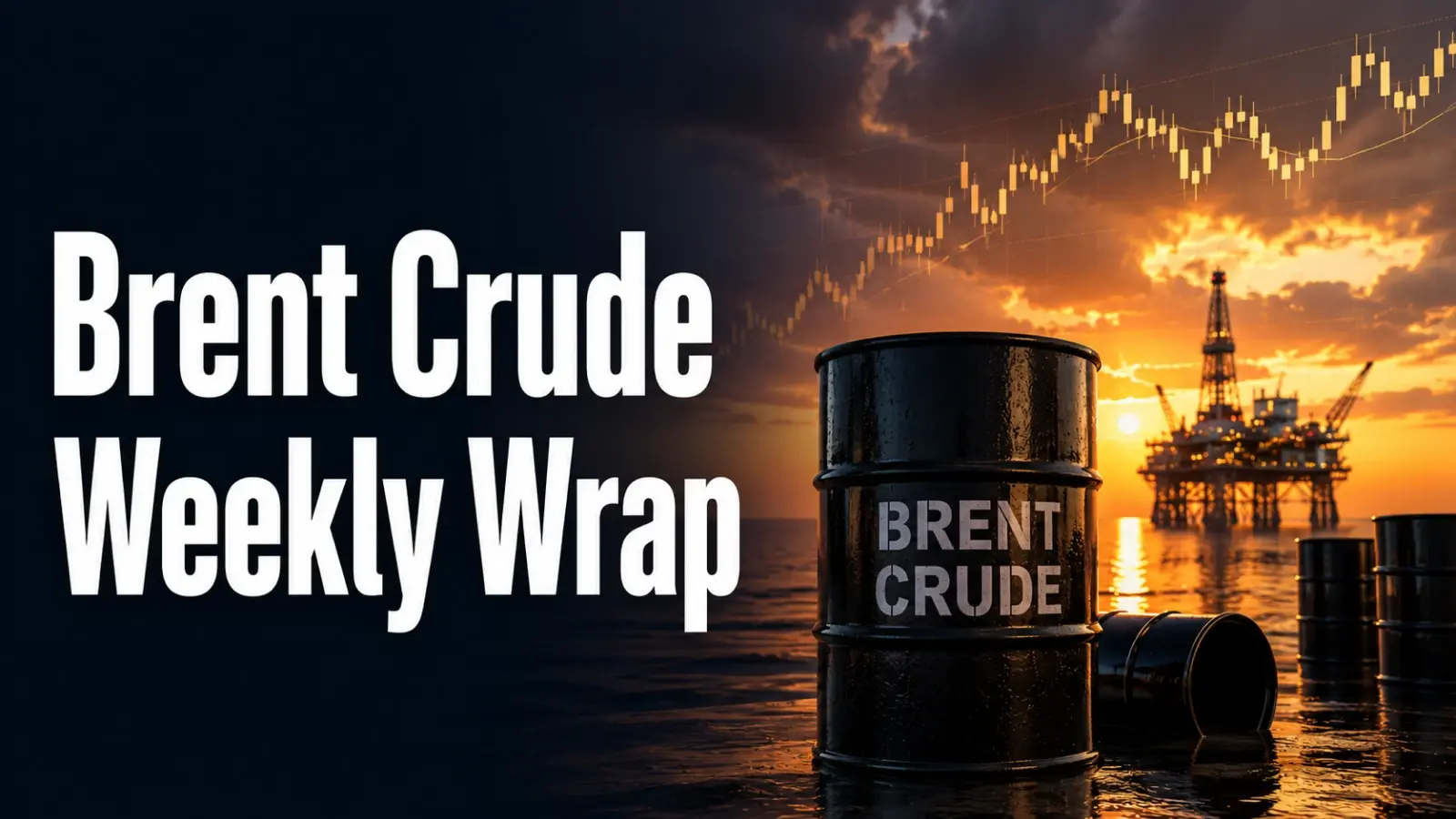
Brent Crude Weekly Wrap: Prices Plunge 9.5% to $79/bbl as Hormuz Reopens After US-Iran Peace Deal
Authored By HDFC SKY | Last Modified: Jun 22, 2026 10:54 AM IST
Open Free Demat Account
Open Free Demat Account
Mumbai, June 21: The week witnessed one of the most dramatic sell-offs in the history of crude oil when Brent crude declined by 9.5%, the sharpest weekly fall in months, following the interim peace agreement between the US and Iran and the reopening of the Strait of Hormuz.
By Friday, the Brent crude futures price traded at $79 per barrel, whereas West Texas Intermediate crude declined by almost 10% for the week to around $75.96 per barrel. As of June 11, the Indian crude basket price was at $93.19 per barrel, but it fell sharply to $83 per barrel after the peace deal announcement.
However, despite the sharp fall in global crude oil prices, the retail price of petrol and diesel remained unchanged during the week, with Delhi petrol costing around ₹102.12 per litre while Delhi diesel costs around ₹95.20 per litre.
US-Iran Peace Announcement Triggers Monday Sell Off
The week’s dramatic price move started after Pakistan Prime Minister Shehbaz Sharif announced that a US-Iran deal was finalised, with the official signing ceremony planned to be held on 19 June in Switzerland.
The Deputy Foreign Minister of Iran confirmed the agreement on state television, while President Trump tweeted “Let the oil flow”. Brent crude, which had risen to around $120 a barrel during the conflict and was trading near $109 only weeks ago, dropped by 4.8% to $83.18 a barrel. WTI crude crashed by 5.6% to $80.13 a barrel. The announcement wiped out a substantial part of the war premium that had accumulated since the outbreak of the conflict in February.
Also Read: How To Invest In Crude Oil
By Monday, 15 June, Brent crude had fallen further to approximately $83.75 per barrel – its lowest level since March. Asian stock markets welcomed the development, with Japan’s Nikkei rising 5.4% and South
Korea’s Kospi jumping over 5.5%.
Brent Futures Hit $78.50 Intraday as Freefall Continues Through Tuesday
The selling pressure intensified on Monday and Tuesday, 15–16 June, as traders continued unwinding bullish positions. By Tuesday, 16 June, ICE Brent crude futures dropped to as low as $78.50 per barrel in intraday trading – just $8 above pre-war levels. Brent had not settled below $80 for over three months and had peaked near $108 on 4 May.
Dated Brent fell $7 per barrel to $81, its lowest since 2 March. The hefty premium for prompt supply evaporated, with the Brent M1/M2 backwardation narrowing to just 48 cents – the weakest spread since the conflict began. HSBC analysts noted that markets appeared to be pricing in a relatively high probability of full Hormuz flow normalisation, while BNP Paribas warned that oil prices could reach $70 per barrel under that scenario. Morgan Stanley and Goldman Sachs both cut their fourth-quarter 2026 Brent forecasts by $10 or more.
MOU Signed on Wednesday as White House Lets Russian Sanctions Waiver Expire
Wednesday, 17 June, marked a pivotal day for energy markets. President Trump confirmed he personally signed the Memorandum of Understanding between the United States and Iran.
The Strait of Hormuz – the world’s most strategic oil chokepoint, through which approximately 20% of global oil supply transits – reopened after being effectively closed since 28 February. In a parallel development, the White House allowed its waiver of Russian oil sanctions to expire, ratcheting pressure on Moscow as its oil exports had soared to 6 million barrels per day in May.
Three tankers carrying 5 million barrels of Iranian crude transited the Gulf of Oman, marking the end of the US blockade of Tehran’s oil flows. Kuwait Petroleum Corp lifted all force majeure notices with immediate effect, while Iraq’s Oil Minister Basim Mohammed stated that oilfields were ready to resume production, with output returning gradually to previous rates.
Tanker Movements Release 85 Million Barrels of Stranded Oil
Thursday, 18 June, saw both benchmarks touch their lowest levels since early March, with Brent briefly falling below $77 per barrel intraday. Three Saudi-flagged vessels carrying 6 million barrels of crude sailed through the Strait of Hormuz.
Analysts expect the deal to release more than 85 million barrels of oil stranded in the Middle East Gulf. The agreement includes lifting US sanctions on Iranian oil, which would add further supply to already well-supplied markets. The International Energy Agency warned of a potential supply glut, as markets brace for a flood of Middle Eastern crude.
India’s Petroleum Ministry Joint Secretary Sujata Sharma noted that crude prices had come down significantly from $120 per barrel, and that retail fuel price decisions would continue to be taken in line with the evolving global situation. India sources crude from more than 40 countries, with procurement based on techno-commercial viability.
Israel-Hezbollah Ceasefire and Postponed Peace Talks Create Late-Week Volatility
Friday, 19 June, brought a mix of positive and negative developments for oil markets. Israel and Hezbollah agreed to a ceasefire beginning at 4 PM local time (1300 GMT), easing concerns over Middle East supply disruptions. However, Switzerland confirmed that US talks with Iranian negotiators scheduled for Friday would NOT take place, and Vice President JD Vance dropped his travel plans. This added significant uncertainty over prospects for a lasting truce. Brent crude recovered to $79.94 per barrel by 1226 GMT, up 0.1% , while WTI rose 79 cents or 1% to $77.39.
Brent climbed back above $80 in Asian trade as uncertainty set in. Analysts noted that the postponement laid bare the rocky road ahead to achieve full and uninterrupted resumption of oil flow through the Strait.
Citigroup maintained a 60% probability base case of oil markets moving into surplus, with prices trending to $60-65 per barrel by the first quarter of 2027. Commerzbank lowered its Brent year-end forecast to $80 from $85.
Natural Gas Prices Gain 3.62% Despite Crude Sell-Off
While crude oil prices tumbled, natural gas markets exhibited relative strength during the week. Nymex natural gas futures for July delivery gained 3.62% to settle at $3.2330 per MMBtu by Friday.
US dry gas production forecasts were raised to 111 billion cubic feet per day. Year-to-date, global natural gas prices are down 11.61% . Asia spot liquefied natural gas hit an 11-week high earlier in June at approximately $16.74 per MMBtu due to Middle East tensions and hot weather driving cooling demand.
Around 20% of global LNG supply normally transits through the Strait of Hormuz, and traders remained cautious about shipping risks even as the waterway reopened.
Indian Fuel Prices Unchanged Despite 9.5% Crude Crash
A critical development during the week was the complete absence of retail fuel price revisions in India, despite Brent crude plunging over 9% . Petrol and diesel prices remained unchanged throughout the week across all major cities.
On Friday, 19 June, Delhi petrol was priced at ₹102.12 per litre, while diesel stood at ₹95.20 per litre. Mumbai quoted petrol at ₹111.21 per litre and diesel at ₹97.83 per litre. Kolkata recorded petrol at ₹113.51 per litre and diesel at ₹99.82 per litre.
Chennai reported petrol at ₹108.01 per litre and diesel at ₹99.66 per litre. Hyderabad recorded petrol at ₹115.73 per litre and diesel at ₹103.82 per litre, while Bengaluru quoted petrol at ₹110.89 per litre and diesel at ₹98.80 per litre.
Since the US-Iran war began, fuel prices have been hiked four times, with the latest increase of ₹2.6 per litre for petrol and ₹2.7 per litre for diesel implemented last month. Total increases stand at approximately ₹7.5-8 per litre since the conflict started. State-owned oil marketing companies had incurred losses of ₹1,600-1,700 crore per day – over ₹1 lakh crore in 10 weeks – but under-recoveries have improved significantly.
Petrol under-recoveries are down 83% to ₹3 per litre from ₹24 per litre on 1 April, while diesel under-recoveries saw a 75% reduction to ₹27 per litre from ₹105 per litre.
LPG and CNG Prices Remain Stable During the Week
Domestic LPG prices remained unchanged during the week. A 14.2 kg domestic cylinder in Delhi cost ₹942, Mumbai ₹941.50, Chennai ₹957.50, and Kolkata ₹968.
Commercial LPG cylinder prices, however, had already been increased from 1 June. A 19 kg commercial cylinder in Delhi cost ₹3,113.50, Mumbai ₹3,067.50, Chennai ₹3,283, and Kolkata ₹3,255.50. CNG in Delhi was around ₹78-79 per kilogram, while PNG tariffs varied according to state and distributor.
The government noted that supplying domestic LPG had become more expensive due to rising international energy prices.
Supply Chain Logistics and Recovery Timeline
Several industry experts warned that reopening the Strait of Hormuz would not immediately solve the supply problem. De-mining the waterway could take a few weeks to up to six months. Empty tankers need to return to the area, production needs to restart, and oil flow restart is a process that could take months before returning to normal.
Approximately 600 tankers had been stuck in the Gulf during the conflict, and a backlog of tankers waiting to use the waterway has accumulated. Global stockpiles were drawn down by 190 million barrels in recent months, with US Strategic Petroleum Reserve at a 43-year low and OECD strategic reserves at their lowest since 1990. Analysts estimate that more than 1.15 billion barrels of total oil supply were lost during the 3.5-month conflict.
The week’s oil sell-off showed how quickly easing geopolitical tensions can affect energy markets. The reopening of the Strait of Hormuz may release more than 85 million barrels of stranded crude. Future price trends will depend on supply normalisation and Iranian exports. Domestic fuel prices remain influenced by government policies and oil companies, with no immediate revisions despite lower crude prices.
Source:
https://ppac.gov.in/prices/international-prices-of-crude-oil
https://ppac.gov.in/natural-gas/gas-price
https://pngrb.gov.in/eng-web/png-cng-prices.html
https://www.eia.gov/outlooks/steo/report/global_oil.php
Disclaimer
If you have any concerns, questions, or wish to point out any discrepancies in our content, please feel free to write to us at content@hdfcsec.com.
Please Note: The information shared is intended solely for informational purposes and does not make any investment recommendations
Disclaimer
At HDFC SKY*, we take utmost care and due diligence in curating and presenting news and market-related content. However, inadvertent errors or omissions may occasionally occur.
If you have any concerns, questions, or wish to point out any discrepancies in our content, please feel free to write to us at content@hdfcsec.com.
Please Note: The information shared is intended solely for informational purposes and does not make any investment recommendations.
HDFC SKY from HDFC Securities, one of most trusted trading platforms in India, has been recognized with the *Next-Gen Digi Content Awards 2025-26.
 Join Us
 Add as preferred source on Google


More Business News









Open Free Demat Account
Open Free Demat Account












Invest Anytime, Anywhere


By signing up I certify terms, conditions & privacy policy