Nifty 50
- TCS₹2,211.8086.80 (4.08%)
- Max Healthcare₹855.10-10.85 (-1.25%)
- HCL Technologies₹1,27047.00 (3.84%)
- NTPC₹306.55-3.45 (-1.11%)
- Tech Mahindra₹1,500.6029.60 (2.01%)
- Power Grid Corp₹246.80-2.20 (-0.88%)
- Infosys₹1,03616.00 (1.57%)
- Tata Motors PV₹282.30-2.15 (-0.76%)
- HDFC Bank₹715.6010.70 (1.52%)
- Kotak Mahindra Bank₹440.85-2.55 (-0.58%)
- Adani Enterprises₹2,66131.00 (1.18%)
- JSW Steel₹1,166.60-6.40 (-0.55%)
- Bajaj Auto₹10,141107.00 (1.07%)
- Maruti Suzuki₹11,261-54.00 (-0.48%)
- Tata Consumer ₹967.408.60 (0.90%)
- Eicher Motors₹7,088-31.00 (-0.44%)
- Hindustan Unilever₹1,835.3014.60 (0.80%)
- Bharat Electronics₹372.45-1.45 (-0.39%)
- Nestle₹1,335.3010.60 (0.80%)
- L&T₹3,615.90-11.60 (-0.32%)

- Offerings
- Tools & Platforms
Tools & Calculators
- Open API
- Calculators
- SIP Calculator
- CAGR Calculator
- Compound Interest Calculator
- FD Calculator
- RD Calculator
- EPF Calculator
- Retirement Calculator
- HDFC SIP Calculator
- Mutual Fund Return Calculator
- Lumpsum Calculator
- Step Up SIP Calculator
- ETF SIP Calculator
- Brokerage Calculator
- Equity Margin Calculator
- SWP Calculator
- EMI Calculator
- MTF Calculator
- Margin Pledge Calculator
- Algo Strategy
- Markets
Stocks
F&O
Mutual Funds
- More
Oil Prices To Ease After US-Iran Deal, but Return to Pre-War Levels Could Take Months: Analysts
Authored By PTI | Last Modified: Jun 16, 2026 05:05 PM IST
Open Free Demat Account
Open Free Demat Account
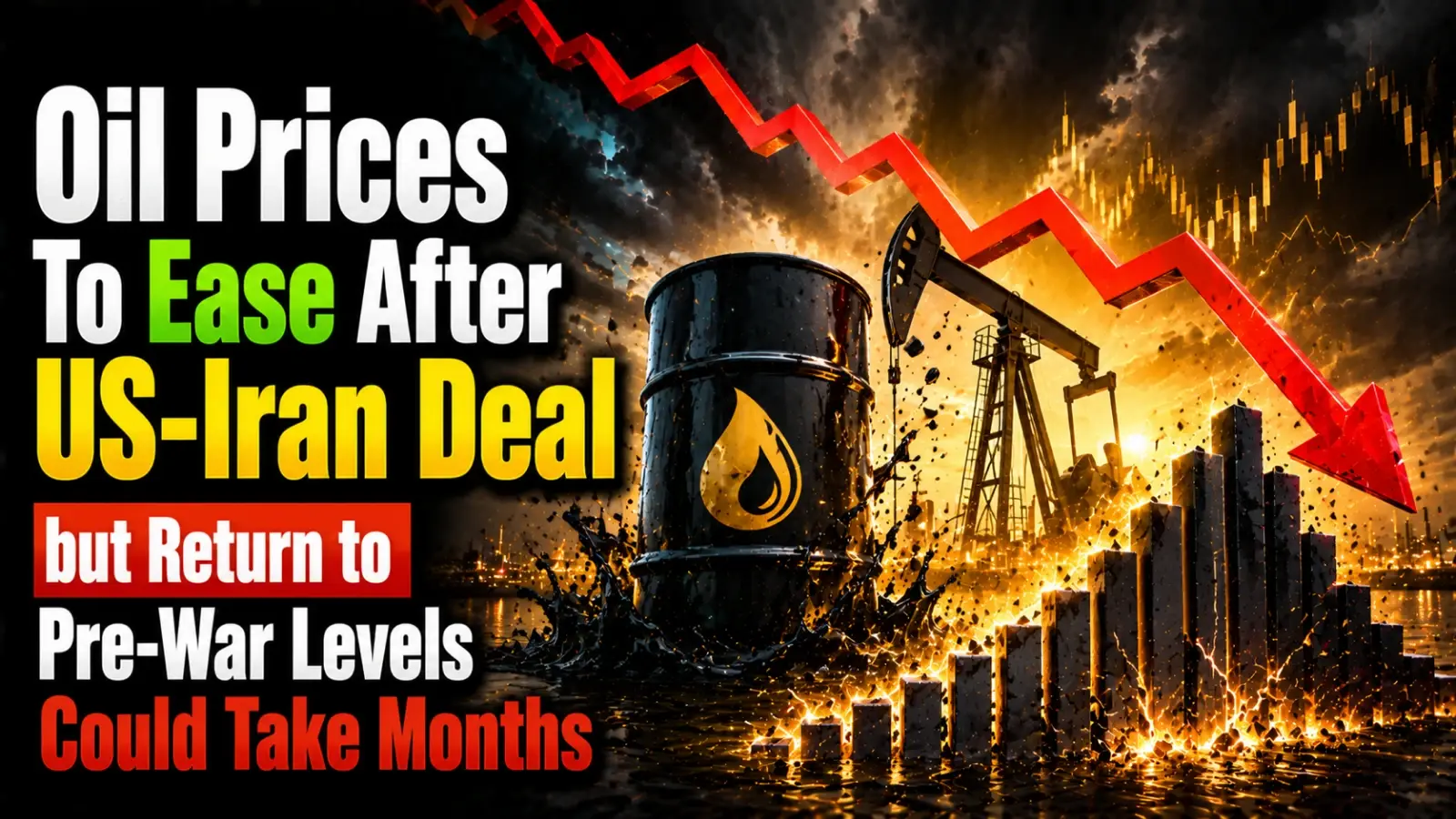
New Delhi: Crude oil and liquefied natural gas (LNG) prices are expected to moderate following signs of a potential US-Iran peace agreement and the reopening of the Strait of Hormuz, although analysts cautioned that supply disruptions, damaged infrastructure and tight inventories could keep energy markets volatile for months.
The prospect of normalised shipping through the strategically important Strait of Hormuz has already triggered a sharp decline in geopolitical risk premiums, helping Brent crude retreat about 20 per cent from recent highs, while LNG benchmark prices have also softened.
“The potential reopening of the Strait of Hormuz, amid signs of de-escalation in the West Asia conflict, has triggered a sharp decline in geopolitical risk premiums in energy markets,” said Sehul Bhatt, Director, Crisil Intelligence.
Bhatt said the decline in crude prices, coupled with recent increases in domestic fuel prices and reductions in excise duties, had largely offset under-recoveries on automobile fuels, easing pressure on petrol and diesel marketing margins.
“The cumulative under-recovery on petrol, diesel and liquefied petroleum gas during March-May 2026 is estimated at approximately Rs 1 lakh crore. If the Indian crude basket remains below USD 90 per barrel, under-recoveries are unlikely to increase materially from current levels,” he said.
Lower crude prices would also help reduce inflationary pressures, and India’s energy import bill, Bhatt added, though he cautioned that it could take weeks or months for global oil and gas markets to fully normalise.
“While the risk of prolonged supply disruption has eased, it may take several weeks or months for crude oil and LNG markets to fully normalise,” Bhatt said. “In the near term, uncertainties around the implementation of the peace deal could continue to drive volatility in energy markets.” Prashant Vasisht, Senior Vice President and Co-Group Head, Corporate Ratings at ICRA Ltd, said a successful US-Iran agreement would ease crude and gas prices, but a return to pre-conflict levels could take significantly longer.
“Crude prices could take six months to one year to normalise to pre-war levels, given that almost 10-11 million barrels per day of production has been shut in West Asia, besides which some facilities have suffered damage,” Vasisht said.
He added that the removal of sanctions on Iranian crude would be beneficial for India because of geographical proximity and historically favourable credit terms offered by Tehran.
Also Read: How to invest in crude oil
Analysts at Equirus Securities said the market reaction so far reflected a reversal of geopolitical fears rather than a fundamental shift in supply-demand dynamics.
“Brent fell to around USD 82-84 per barrel immediately post-deal announcement as markets unwound the geopolitical risk premium,” said Maulik Patel, Head of Research at Equirus Securities. “However, this is a sentiment-driven move, not a fundamental re-rating.” Patel said sharply lower global inventories and cumulative supply disruptions meant oil was unlikely to revisit pre-crisis levels near USD 65 per barrel. Equirus expects crude to stabilise in the USD 75-80 per barrel range in the near term, with a return to the USD 60-70 range appearing unlikely even if the Strait of Hormuz fully reopens later this year.
The brokerage also identified China as a key variable for global oil prices. China’s decision to draw down strategic inventories and reduce imports during the conflict helped prevent a sharper rally in crude prices, Patel said, warning that any resurgence in Chinese buying could tighten markets again. Natural gas prices may also remain elevated despite easing geopolitical tensions. Spot LNG prices, currently around USD 17-18 per million British thermal units, are expected to decline gradually but are unlikely to return to pre-crisis levels of USD 10-11 per mmBtu during 2026, according to Equirus.
For India, the reopening of Gulf shipping routes is expected to improve crude supplies and reduce freight costs. However, analysts said full normalisation of trade flows would take time as insurers regain confidence and damaged infrastructure is repaired.
“Shipping companies are expected to take at least two months to resume full Persian Gulf operations, with damaged refinery infrastructure requiring additional time. Normalisation is therefore a third-quarter 2026 story at the earliest,” Patel said.
India’s energy security during the crisis was supported by Russian crude supplies, which emerged as a key alternative source. While Middle East supplies are expected to return, Patel said Russia would remain an important part of India’s energy basket.
On LNG, India has demonstrated greater resilience to higher prices, with imports rebounding to near pre-crisis levels in May despite spot prices remaining substantially above historical norms. Increased purchases from the United States, Nigeria and Oman helped offset supply disruptions, while discounted Russian LNG could emerge as another source of diversification in the coming years.
Analysts expect vessel traffic through the Strait of Hormuz to gradually recover over the next two to three months following any formal agreement, with export flows from major Gulf producers returning before fuel product markets fully stabilise.
(Disclaimer: Except for the headline, this article has not been edited by HDFC Sky editorial team and is auto-generated from PTI feed.)
Disclaimer
If you have any concerns, questions, or wish to point out any discrepancies in our content, please feel free to write to us at content@hdfcsec.com.
Please Note: The information shared is intended solely for informational purposes and does not make any investment recommendations
Disclaimer
At HDFC SKY*, we take utmost care and due diligence in curating and presenting news and market-related content. However, inadvertent errors or omissions may occasionally occur.
If you have any concerns, questions, or wish to point out any discrepancies in our content, please feel free to write to us at content@hdfcsec.com.
Please Note: The information shared is intended solely for informational purposes and does not make any investment recommendations.
HDFC SKY from HDFC Securities, one of most trusted trading platforms in India, has been recognized with the *Next-Gen Digi Content Awards 2025-26.
 Join Us
 Add as preferred source on Google


More Business News








Open Free Demat Account
Open Free Demat Account










Invest Anytime, Anywhere


By signing up I certify terms, conditions & privacy policy