Nifty 50
- Infosys₹1,03540.90 (4.11%)
- Bajaj Auto₹10,045-829.00 (-7.62%)
- HDFC Life Insurance ₹534.2013.00 (2.49%)
- Maruti Suzuki₹11,386-581.00 (-4.86%)
- HDFC Bank₹721.2012.50 (1.76%)
- Shriram Finance₹945-37.70 (-3.84%)
- SBI Life Insurance ₹1,721.6025.20 (1.49%)
- Tata Steel₹178-6.30 (-3.42%)
- Max Healthcare₹940.9511.15 (1.20%)
- Adani Ports₹1,737.80-60.50 (-3.36%)
- TCS₹2,07524.40 (1.19%)
- Grasim Industries₹2,962-99.90 (-3.26%)
- HCL Technologies₹1,243.1013.10 (1.07%)
- Eicher Motors₹6,920-230.00 (-3.22%)
- Tata Consumer ₹9577.50 (0.79%)
- Mahindra & Mahindra₹2,860-90.00 (-3.05%)
- Tech Mahindra₹1,5339.00 (0.59%)
- Adani Enterprises₹2,816.80-86.60 (-2.98%)
- Kotak Mahindra Bank₹418.351.35 (0.32%)
- ITC₹255.90-6.85 (-2.61%)

- Offerings
- Tools & Platforms
Tools & Calculators
- Open API
- Calculators
- SIP Calculator
- CAGR Calculator
- Compound Interest Calculator
- FD Calculator
- RD Calculator
- EPF Calculator
- Retirement Calculator
- HDFC SIP Calculator
- Mutual Fund Return Calculator
- Lumpsum Calculator
- Step Up SIP Calculator
- ETF SIP Calculator
- Brokerage Calculator
- Equity Margin Calculator
- SWP Calculator
- EMI Calculator
- MTF Calculator
- Margin Pledge Calculator
- Algo Strategy
- Markets
Stocks
F&O
Mutual Funds
- More
India VIX Rises 7.12% to 14.45 as Nifty Falls Below 22,300
Authored By HDFC Sky | Published at: Oct 1, 2026 05:21 PM IST
Open Free Demat Account
Open Free Demat Account
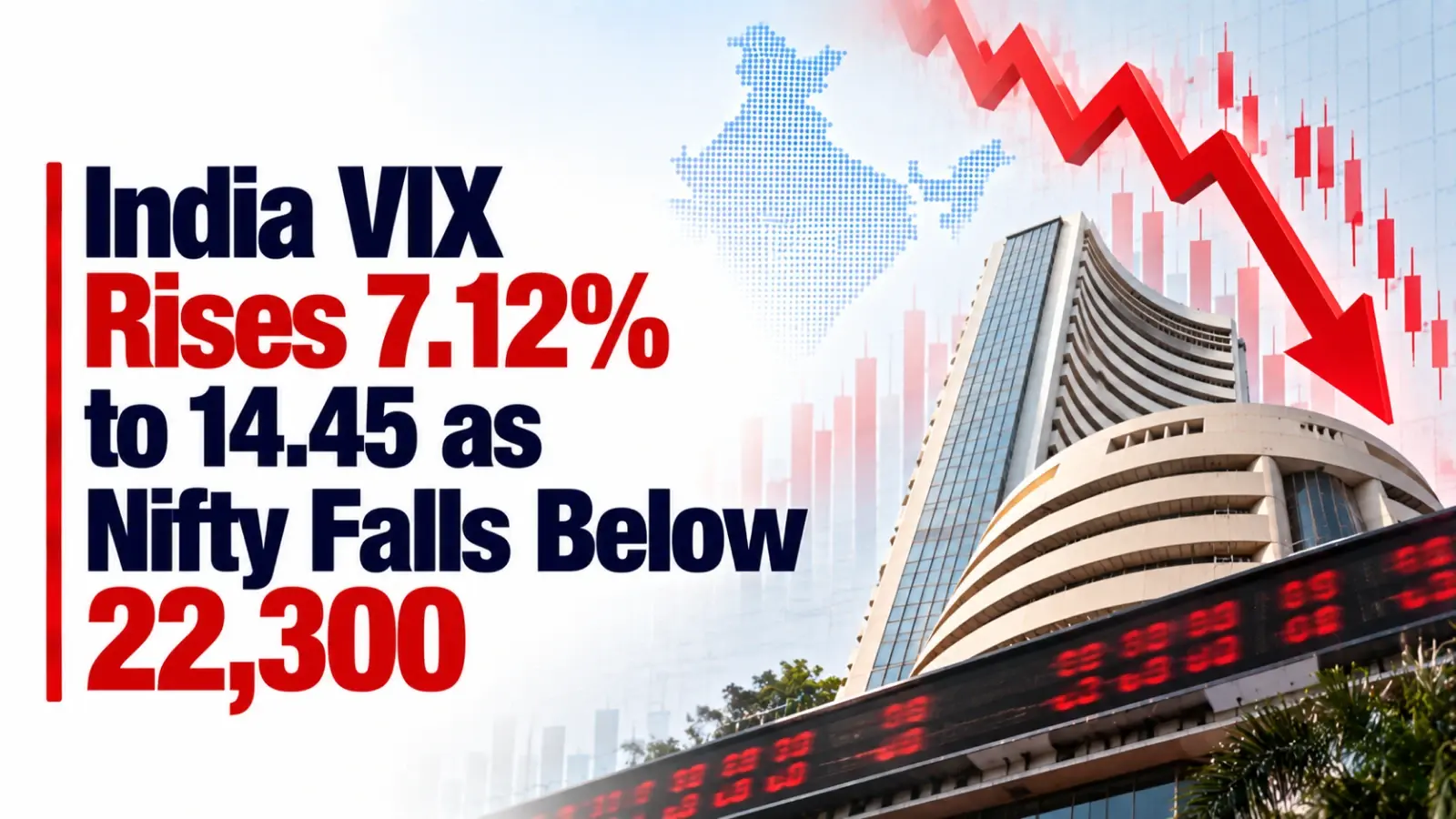
Mumbai, Oct 1: India VIX closed at 14.45 on Thursday, rising 0.96 points or 7.12%, as a sharp decline in benchmark equities, elevated US Treasury yields, rupee weakness, crude oil volatility and fresh pressure on auto stocks increased market volatility during the session. India VIX opened at 13.49, matching its previous close, and climbed to a day high of 15.68 before ending lower than the intraday peak.

India VIX Climbs 7.12% as Nifty Decline Deepens
The rise in India VIX gathered pace as the Nifty 50 moved from a relatively modest opening decline to a much sharper fall during the session. The Nifty opened at 22,543.70, down 0.34%, before slipping below 22,400 and moving towards 22,300. The Sensex also declined by more than 1,100 points during the session.
India VIX, which reflects expected volatility based on Nifty option prices, initially remained close to its previous level before rising as the equity-market decline widened. The index touched 13.93 during the early session and subsequently moved above 15 as the broader market weakened.
The session therefore saw volatility increase alongside the deterioration in the benchmark indices rather than through a sharp opening gap in India VIX.
FII Selling and Derivative Positioning Kept Pressure Elevated
Foreign institutional investor (FII) selling remained an important backdrop for the session. FIIs had sold approximately ₹10,148 crore of Indian equities on 30 September, taking September’s foreign selling to around ₹44,000 crore.
The ₹10,148 crore outflow was recorded on 30 September and was therefore not a fresh transaction on 1 October. However, the scale of the previous day’s selling formed part of the market backdrop as the new month began.
Foreign positioning in Nifty index futures also remained defensive, with short positions at around 267,000 contracts, compared with approximately 184,000 contracts at the previous expiry. The September series had ended with the Nifty down 6.7% and Bank Nifty down 5.7%, while Nifty futures open interest had increased by almost 30% during the month. These figures provided the derivatives context as October trading began.
US Yields Near 5.30% Added Pressure to Indian Markets
Global bond-market conditions added to the volatility during the Indian session. The US 10-year Treasury yield remained around 5.29–5.30%, while the 30-year yield was around 5.6%.
The rise in US yields supported the US dollar and put pressure on risk-sensitive emerging-market assets. The elevated yields also remained notable despite softer-than-expected US inflation data, which had reduced some expectations of an immediate additional Federal Reserve rate increase.
For Indian markets, the combination of higher US yields and a stronger dollar coincided with weakness in the rupee and equities, adding to the broader volatility backdrop during the session.
Rupee Nears ₹96 As Dollar Strength And Yields Weigh
The Indian rupee weakened to ₹95.9850 per US dollar, remaining close to the ₹96 level as the dollar index strengthened and US Treasury yields rose.
The currency move came alongside pressure from foreign outflows and elevated crude prices. State-run banks were reported to have sold dollars around the ₹96 level, with the activity potentially linked to efforts to limit further rupee weakness.
The rupee’s movement was significant for the day’s market conditions because currency weakness occurred at the same time as falling equities and elevated global bond yields, creating several simultaneous sources of market pressure.
Brent Moves Towards $100 as Oil Volatility Returns
Crude oil also shifted during the session. Brent prices were initially around $97–98 per barrel, after falling below the $100 mark, but subsequently moved higher.
December Brent futures were reported at around $96.55 at 11:03 am before rising to approximately $100.20 by 1:07 pm. The move brought crude back towards and above a level closely watched by the Indian market.
Oil movements remained linked to developments surrounding US-Iran discussions, Gulf exports and regional supply conditions. Earlier indications of recovering Gulf exports had helped crude prices ease, while continuing uncertainty over Middle East supply kept the market sensitive to fresh developments.
Auto Sales Trigger Fresh Selling Across the Sector
September automobile sales data released on 1 October added a domestic trigger to the broader market weakness. The Nifty Auto index fell more than 3% during the morning, making it the weakest-performing sectoral index at that stage.
Bajaj Auto reported September total sales of 5.38 lakh units, up 5% year on year, but domestic sales declined 9% to 2.94 lakh units. Exports increased 32% to 2.43 lakh units. The company’s total sales were below the market estimate of 5.79 lakh units, while its shares fell nearly 8% during the morning.
Mahindra & Mahindra reported September sales of around 1.15 lakh units, below the estimated 1.17 lakh, although total sales still increased 15% year on year. Its shares fell around 2.6% during the morning.
The pressure extended to several other automobile stocks, while Hyundai Motor India moved in the opposite direction after reporting September sales of 77,916 units, up 10.8% year on year and above the estimated 74,000 units.
IT Gains and Softer Inflation Limit Early Market Pressure
The session also contained factors that initially moderated the volatility. Indian information technology stocks gained during the morning after softer US inflation data reduced some expectations of an immediate Federal Reserve rate increase.
Nifty IT was among the few sectoral indices trading higher, with stocks including Infosys, Tata Consultancy Services and HCLTech providing some support to the benchmark during the early part of the session.
However, this support was not sufficient to offset weakness across several other sectors as the trading day progressed. Auto, media and metal stocks came under pressure, while the broader market decline deepened.
Mixed Global Markets Leave India Facing Multiple Pressures
Asian markets presented a mixed picture at the start of India’s session. Japan’s Nikkei traded higher, while South Korea’s Kospi and Australia’s ASX 200 declined. China and Hong Kong remained closed for holidays.
US markets had also ended on a mixed note, with the Dow Jones down 0.86%, the S&P 500 down 0.25% and the Nasdaq up 0.24%.
The external backdrop was therefore not defined by a uniform global equity sell-off. Instead, India’s market was responding to a combination of elevated Treasury yields, dollar strength, crude-price movements, currency weakness and continued foreign-flow pressure.
India VIX Peaks at 15.68 Before Closing at 14.45
The intraday movement in India VIX reflected the changing intensity of the equity sell-off. The index began at 13.49, its previous close, and rose to 13.93 during the early session.
As the Nifty moved below 22,400 and towards 22,300, volatility increased further, with India VIX reaching a high of 15.68. It subsequently eased from the day’s peak but still finished at 14.45, representing a gain of 7.12% or 0.96 points.
The closing level remained well below the 52-week high of 28.90 and above the 52-week low of 8.72. The index’s year-to-date return stood at 52.43% as of the close.
India VIX closed at 14.45, up 7.12%, after touching 15.68 as the Nifty declined towards 22,300. The session combined domestic equity weakness with rupee pressure, elevated US yields, crude-price volatility, foreign-flow concerns and auto-sector declines, while IT gains and softer US inflation provided limited offsets.
Source
- https://www.nseindia.com/reports-indices-historical-vix
Disclaimer
At HDFC SKY*, we take utmost care and due diligence in curating and presenting news and market-related content. However, inadvertent errors or omissions may occasionally occur.
If you have any concerns, questions, or wish to point out any discrepancies in our content, please feel free to write to us at content@hdfcsec.com.
Please Note: The information shared is intended solely for informational purposes and does not make any investment recommendations.
HDFC SKY from HDFC Securities, one of most trusted trading platforms in India, has been recognized with the *Next-Gen Digi Content Awards 2025-26.
 Join Us
 Add as preferred source on Google


More Uncategorized News








Open Free Demat Account
Open Free Demat Account












Invest Anytime, Anywhere


By signing up I certify terms, conditions & privacy policy