Nifty 50
- Infosys₹1,03540.90 (4.11%)
- Bajaj Auto₹10,045-829.00 (-7.62%)
- HDFC Life Insurance ₹534.2013.00 (2.49%)
- Maruti Suzuki₹11,386-581.00 (-4.86%)
- HDFC Bank₹721.2012.50 (1.76%)
- Shriram Finance₹945-37.70 (-3.84%)
- SBI Life Insurance ₹1,721.6025.20 (1.49%)
- Tata Steel₹178-6.30 (-3.42%)
- Max Healthcare₹940.9511.15 (1.20%)
- Adani Ports₹1,737.80-60.50 (-3.36%)
- TCS₹2,07524.40 (1.19%)
- Grasim Industries₹2,962-99.90 (-3.26%)
- HCL Technologies₹1,243.1013.10 (1.07%)
- Eicher Motors₹6,920-230.00 (-3.22%)
- Tata Consumer ₹9577.50 (0.79%)
- Mahindra & Mahindra₹2,860-90.00 (-3.05%)
- Tech Mahindra₹1,5339.00 (0.59%)
- Adani Enterprises₹2,816.80-86.60 (-2.98%)
- Kotak Mahindra Bank₹418.351.35 (0.32%)
- ITC₹255.90-6.85 (-2.61%)

- Offerings
- Tools & Platforms
Tools & Calculators
- Open API
- Calculators
- SIP Calculator
- CAGR Calculator
- Compound Interest Calculator
- FD Calculator
- RD Calculator
- EPF Calculator
- Retirement Calculator
- HDFC SIP Calculator
- Mutual Fund Return Calculator
- Lumpsum Calculator
- Step Up SIP Calculator
- ETF SIP Calculator
- Brokerage Calculator
- Equity Margin Calculator
- SWP Calculator
- EMI Calculator
- MTF Calculator
- Margin Pledge Calculator
- Algo Strategy
- Markets
Stocks
F&O
Mutual Funds
- More
Nvidia’s $150 Billion Buyback, Accenture’s 17.85% Surge and Corteva’s 84.31% Plunge Drive a Volatile US Stock Week
Authored By HDFC SKY | Last Modified: Oct 3, 2026 02:53 PM IST
Open Free Demat Account
Open Free Demat Account
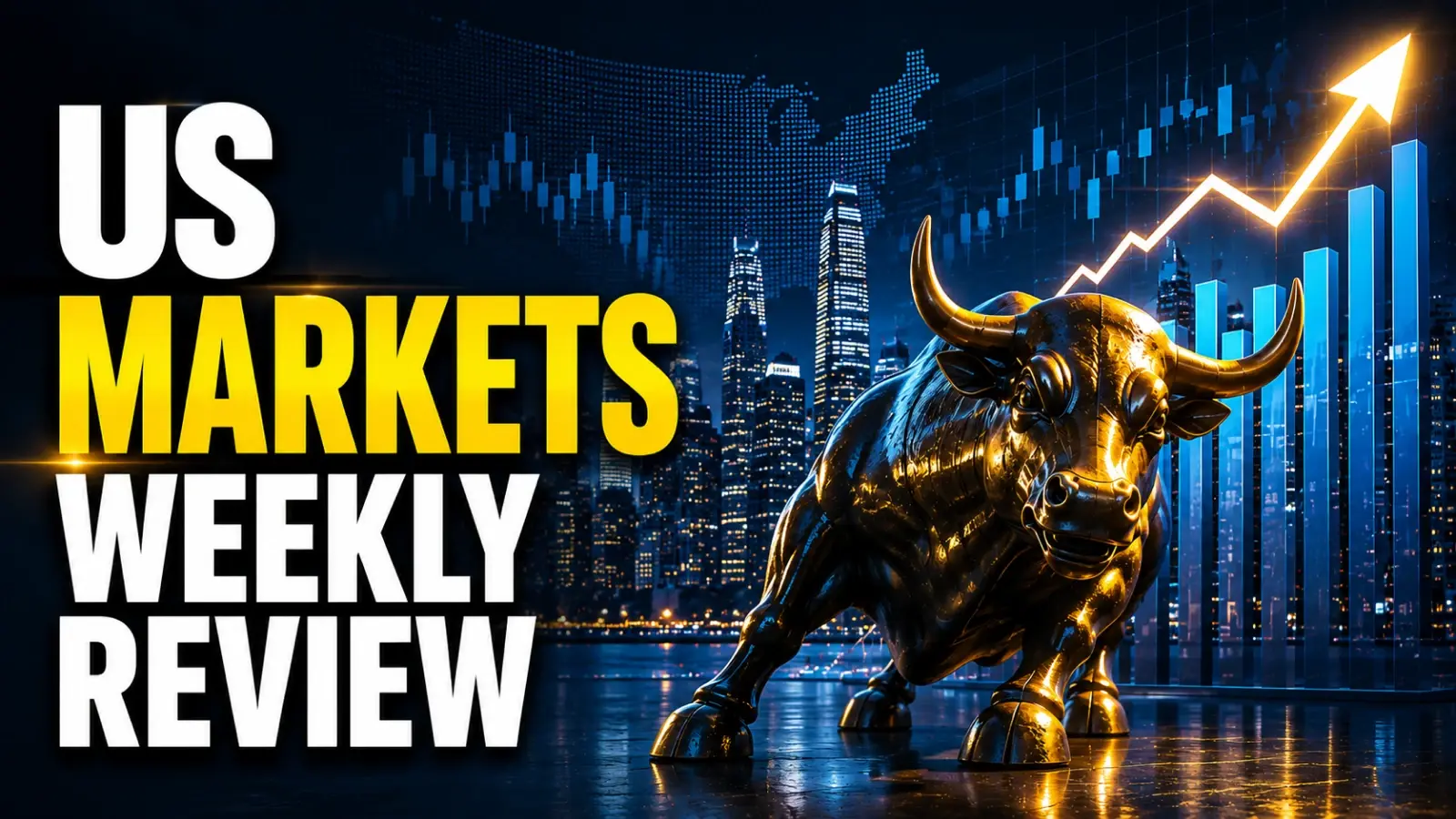
Mumbai, Oct 3: US-listed equities saw sharp company-specific moves during the week from Monday, 28 September to Friday, 2 October 2026. Nvidia expanded its share repurchase authorisation by $150 billion, taking the total programme to $235 billion through fiscal 2028, while its shares reached a record $237.39. Accenture jumped 17.85% after reporting record quarterly bookings of $22.2 billion, while MongoDB fell about 17% after its chief executive left for Meta Platforms.
Mergers, acquisitions, contracts, earnings and corporate restructuring also drove large moves. Lifecore Biomedical surged 56.19% after agreeing to be acquired for as much as $663.7 million, SoundThinking gained 50.82% after a proposed buyout, and Hewlett Packard Enterprise advanced after securing a $1.2 billion AI systems order.
Corteva appeared to lose 84.31% after separating its seed business into Vylor, although the decline largely reflected the mechanical effect of the spin-off. Regeneron fell 4.78% despite an expanded $8 billion Sanofi partnership, while financing announcements triggered sharp moves in several smaller companies.
The broader US market also ended the week higher. Weaker-than-expected September employment data reduced immediate expectations of another Federal Reserve rate increase. The Nasdaq Composite gained 309.80 points, or about 1.1%, while the S&P 500 added 52.69 points and the Dow Jones Industrial Average rose 182.27 points.

Nvidia Adds $150 Billion Buyback as AI Demand Lifts Shares Towards Record Highs
Nvidia Corporation announced on Monday, 28 September, that its board had approved an additional $150 billion under its existing share repurchase programme. The decision increased the total remaining authorisation to $235 billion, which Nvidia expects to execute through fiscal 2028. The company described the increase as the largest share repurchase authorisation increase in its history.
Nvidia shares responded positively. The stock opened at $229.75, against the previous close of $225.07, and traded between $228.46 and $233.21 before closing higher. It later extended the move during the week and reached a record $237.39 on Friday, 2 October, with the shares gaining about 2.83% that day.
The buyback announcement mattered because Nvidia has generated substantial cash from the rapid expansion of AI infrastructure spending. The company has simultaneously invested heavily in accelerated computing, graphics processing units and supporting software while returning capital to shareholders.
Nvidia’s repurchases have increased significantly in recent years. Repurchases were around $10 billion in fiscal 2023 and approached $34 billion in fiscal 2025. The new authorisation therefore represents a substantial increase in the company’s ability to return capital.
Chief Executive Jensen Huang linked the company’s financial strength to the continuing expansion of artificial intelligence and accelerated computing. The announcement came as investors continued to debate how long the current AI infrastructure investment cycle can remain strong.
The share-price response showed how investors interpreted the decision. Nvidia gained about 2.30% on Monday, despite pressure across parts of the technology sector. By Friday, the stock had moved to a new record level, with the market capitalisation approaching $6 trillion.
The announcement also affected the broader semiconductor narrative. Nvidia remains one of the most important suppliers to the AI infrastructure ecosystem, so continued capital spending by the company and its customers remains relevant to chip designers, manufacturers, networking companies and technology service providers.
MongoDB Drops 17% After CEO Exit Creates Leadership Uncertainty
MongoDB experienced one of Monday’s sharpest declines after President and Chief Executive Officer Chirantan “CJ” Desai stepped down with immediate effect. Desai left to take a senior role at Meta Platforms, where he is expected to serve as Chief Enterprise Platform Officer. MongoDB appointed former CEO Dev Ittycheria as interim president and CEO.
The stock opened at $311.34, sharply below the previous close of $410.55, and touched an intraday low of $300.00 before recovering towards $340.09 during the session. The decline of approximately 17% reflected the immediate uncertainty surrounding another leadership change.
The development marked the company’s second chief executive transition in less than a year. MongoDB nevertheless reaffirmed its current-quarter and fiscal 2027 guidance, signalling that management did not make an immediate change to its existing financial outlook.
Dev Ittycheria’s return provided continuity because he previously served as MongoDB’s chief executive for eleven years, from 2014 to 2025. During that period, annual revenue expanded from approximately $35 million to more than $2.3 billion. The company therefore enters another leadership transition with an established operating history but also with investors watching its strategic direction closely.
MongoDB’s market capitalisation stood at approximately $26.4 billion following the decline. Meta Platforms, meanwhile, also traded lower, with its shares falling about 4.18% to $720.23 during the reported session.
The reaction demonstrated how quickly investors can reprice technology companies after senior leadership changes. MongoDB continues to operate a major document-oriented database platform, and the company has maintained its financial guidance despite the executive departure.
Lifecore Surges 56% After $663.7 Million Buyout Offer
Lifecore Biomedical delivered another dramatic Monday move after agreeing to be acquired by Webster Equity Partners in a transaction valued at up to $663.7 million, including potential performance-based payments.
Lifecore shares opened at $6.52, compared with the previous close of $4.20, and climbed to an intraday high of $6.65. The stock was trading around $6.56, representing a 56.19% increase.
Under the proposed transaction, Webster will pay $6.28 per share in cash at closing. Shareholders will also receive one non-tradable contingent value right for each share. The initial cash consideration represents a 49.5% premium to Lifecore’s closing price before the merger agreement.
The contingent value rights could provide shareholders with as much as $160 million in additional aggregate cash payments if specified revenue and EBITDA milestones are achieved. If all conditions are met, the total potential consideration could reach approximately $9.67 per common-equivalent share.
The transaction is expected to close during the fourth quarter of 2026, subject to shareholder and regulatory approvals. After completion, Lifecore is expected to become privately held and its Nasdaq listing will end.
Lifecore manufactures pharmaceutical-grade hyaluronic acid and provides contract development and manufacturing services. Its specialised capabilities make the transaction relevant to the broader pharmaceutical manufacturing industry.
The share-price reaction showed how an acquisition premium can rapidly change the market’s valuation of a smaller company. Investors immediately compared the cash consideration with the previous trading price, while the contingent value rights introduced an additional performance-linked element.
Carnival Jumps 12.53% After Earnings Beat and Strong 2027 Bookings
Carnival shares rose 12.53% on Tuesday after the cruise operator reported stronger-than-expected third-quarter results and record booking levels for 2027.
The stock opened at $24.39 and reached $25.16, compared with the previous close of about $22.14.
Carnival reported adjusted earnings of $1.43 per share, ahead of the $1.35 estimate. Revenue reached $8.44 billion, against expectations of $8.39 billion.
The company also increased its full-year adjusted net income outlook by more than $150 million despite an additional $150 million in fuel costs.
Record net yields, higher customer deposits and strong booked occupancy and pricing for 2027 supported the results. The figures provided investors with greater visibility into future revenue and highlighted continued consumer spending on travel and leisure.
SoundThinking Gains 50.82% After Transom Buyout Offer
SoundThinking shares surged 50.82% on Tuesday after Transom Capital Group agreed to acquire the company for $8 per share in upfront cash, plus a contingent value right worth up to another $3 per share. The stock opened at $8.30 and reached $8.43, compared with the previous close of $5.47.
The contingent payment depends on 2027 revenue milestones for the company’s ShotSpotter and SafePointe products. Shareholders representing approximately 33% of outstanding shares have entered into support agreements. The transaction is expected to close during the fourth quarter of 2026. SoundThinking would then become privately held and cease trading on Nasdaq.
Corning Gains 3.80% After $3 Billion AT&T Fibre Agreement
Corning shares rose 3.80% on Tuesday after the company announced a multi-year agreement worth more than $3 billion with AT&T to supply fibre and cable for network expansion. Corning shares opened at $157.32, compared with the previous close of $151.59, and reached an intraday high of $161.37. The stock later traded around $157.35, up $5.76.
AT&T plans to expand high-speed internet access to approximately 60 million Americans by the end of 2030. The scale of the programme creates long-term demand for fibre infrastructure and related equipment.
The agreement also arrives as data consumption continues to rise. AT&T said the average household using its fibre service now consumes more than 1 terabyte of data per month. Corning is expanding US fibre and cable manufacturing capacity to address this demand. AT&T shares, by contrast, traded around $24.77, down approximately 0.50% from the previous close of $24.90.
The different share-price reactions reflected the different financial implications of the agreement. For Corning, the contract provides visibility into future demand. For AT&T, the deal represents infrastructure spending required to support network expansion.
The development also demonstrates the importance of fibre infrastructure as data usage grows through cloud computing, streaming, artificial intelligence and connected devices.
Synopsys Gains 4.38% After AWS Commits More Than $1 Billion
Synopsys shares gained 4.38% on Wednesday after signing a multi-year agreement worth more than $1 billion with Amazon Web Services for silicon intellectual property.
The stock traded around $433.96, compared with the previous close of approximately $415.75.
AWS will use Synopsys’ expanded portfolio of application-optimised intellectual property as it develops custom processors, including Graviton CPUs and Trainium AI accelerators.
Synopsys will also provide simulation, analysis and AI software within AWS engineering workflows. Its move towards a licence-plus-royalty model can link future revenue to customer production volumes. The agreement connects chip-design software, semiconductor IP and cloud infrastructure.
HPE Gains 5.62% After Vultr Places $1.2 Billion AI Infrastructure Order
Hewlett Packard Enterprise shares gained 5.62% on Wednesday after securing a $1.2 billion order from Vultr for AMD Helios AI rack systems.
The systems will be deployed across Vultr’s US data centres for AI training and inference. Each rack integrates 72 AMD Instinct MI455X GPUs, AMD EPYC Venice CPUs and AMD Pensando networking technology.
The infrastructure also includes HPE Juniper Networking equipment. HPE Services will provide deployment and liquid-cooling support.
The order illustrates the scale of infrastructure required for large AI models and high-volume inference. It also shows that AI spending extends beyond GPUs into networking, cooling, servers and engineering services.
Accenture Surges 17.85% After Record $22.2 Billion Bookings
Accenture delivered the week’s biggest large-cap earnings move, with shares jumping 17.85% on Thursday after reporting stronger-than-expected fiscal fourth-quarter results.
The stock opened at $215.98, compared with the previous close of $183.37, and traded around $216.10. Adjusted earnings reached $3.29 per share, above the $3.19 estimate, while revenue came in at $18.7 billion, ahead of expectations of about $18.05 billion.
Quarterly bookings reached a record $22.2 billion, including $12.8 billion in managed-services bookings. Revenue rose 6% in US dollar terms and 7% in local currency year-on-year. For fiscal 2027, Accenture expects local-currency revenue growth of 3% to 6% and GAAP diluted EPS of $14.39 to $14.81. It also expects to return at least $9.5 billion to shareholders.
The results provided evidence of continued enterprise spending on technology transformation, AI implementation and managed services despite concerns that generative AI could disrupt traditional IT services.
Corteva Plunges 84.31% After Seed Spin-Off Mechanically Resets Its Share Price
Corteva shares fell 84.31% on Thursday after the company completed the separation of its seed and genetics business into Vylor.
The stock traded around $12.28, compared with the previous close of approximately $78.13. However, the headline decline requires context because Corteva shareholders received Vylor shares as part of the spin-off.
The SEC confirmed that the transaction involved a pro rata distribution of Vylor shares to Corteva shareholders. Therefore, the fall in Corteva’s quoted share price did not represent an equivalent destruction of shareholder value. Investors need to consider the combined value of their Corteva and Vylor holdings.
Corteva now operates as a focused crop-protection company. It said its crop-protection business increased revenue by more than $1 billion between 2020 and 2025, while operating EBITDA margins expanded by about 250 basis points. The company also has around $11 billion of pipeline opportunities and 12 new active ingredients planned over the next decade.
Regeneron Falls 4.78% Despite $8 Billion Sanofi Expansion Increasing Pipeline Funding
Regeneron Pharmaceuticals shares declined 4.78% on Thursday despite an expanded partnership with Sanofi covering four long-acting antibody medicines for inflammatory diseases.
Regeneron opened at $766.53, compared with the previous close of $765.40, before trading around $728.78. The decline amounted to approximately $36.62 per share. Under the expanded agreement, Sanofi will pay Regeneron $1 billion upfront and could make another $7 billion in milestone payments. The payments depend on development, regulatory and commercial milestones.
The companies will jointly develop and commercialise four antibody-based medicines, share development and sales costs and split worldwide profits equally. Regeneron will lead development, while Sanofi will handle global commercialisation.
The first candidate, REGN20423, is already in an early-stage atopic dermatitis study. Three additional candidates are expected to enter human trials in 2027. The companies also settled their previous legal dispute, while their existing Dupixent agreement remains unchanged.
The 4.78% share-price decline showed that investors can focus on the costs, risks and timing of drug development even when a partnership brings substantial external funding.
RTX Secures $24.4 Billion Missile Contract While Shares Remain Almost Flat
RTX’s Raytheon business secured a five-year US Navy contract, with two additional option years, valued at up to $24.4 billion for Standard Missile-6 interceptors.
RTX shares traded around $185.01, showing an intraday gain of approximately 0.01%. The relatively small immediate share-price reaction contrasted with the size and duration of the contract.
The award strengthens Raytheon’s order visibility and provides a long-term programme for its missile business. RTX operates across aerospace and defence, including missiles, radar systems, satellites and cybersecurity.
The contract also illustrates the scale of defence procurement programmes in the United States. While the headline value can reach $24.4 billion, the actual financial contribution to RTX will depend on deliveries, options and programme execution over several years.
onsemi Gains 4.98% After Synaptics Deal Switches To Cash
onsemi revised its agreement to acquire Synaptics for $123 per share in cash, giving the transaction an aggregate value of about $5.7 billion. The original deal had been structured as an all-stock transaction worth around $7 billion. The revised structure removes the share dilution associated with the earlier proposal.
onsemi shares rose 4.98% to $84.07 on Friday, while Synaptics shares gained approximately 15.19% pre-market to $122.27.
The transaction includes previously identified annual synergies of around $200 million and additional potential revenue synergies. The companies expect the deal to close by mid-2027, subject to approvals.
Venture Global Gains 1.03% After Twenty-Year LNG Agreement
Venture Global shares rose 1.03% to $12.72 on Friday after signing a long-term LNG sales agreement with ConocoPhillips. ConocoPhillips will purchase 1 million tonnes per annum of LNG for 20 years, beginning in 2030.
Venture Global has more than 100 million tonnes per annum of capacity across projects in production, construction or development, including Calcasieu Pass, Plaquemines LNG and CP2 LNG. The agreement provides long-term sales visibility and demonstrates how LNG developers secure customers before new capacity becomes operational.
Constellation Gains 2.59% After Amazon Commits to Twenty-Year Nuclear Power Purchase
Constellation Energy announced a 20-year power purchase agreement with Amazon covering 690 megawatts of power from its Calvert Cliffs nuclear plant in Maryland. The agreement includes approximately 190 megawatts of new nuclear capacity, while more than $3 billion will be invested in equipment upgrades and modernisation at the plant.
Constellation shares rose 2.59% to $258.92 on 1 October and continued trading higher on Friday at around $259.89, up approximately 1.93%.
The agreement followed Amazon’s decision to drop plans for a data-centre campus beside Calvert Cliffs after community opposition. Instead, Amazon will support additional plant output while electricity continues to flow into the regional grid.
The arrangement also potentially supports efforts to renew the operating licences of the plant’s two reactors, which face review in 2034 and 2036.
The transaction illustrates the increasing relationship between AI infrastructure and electricity demand. Large technology companies require reliable power for data centres, while nuclear plants provide continuous generation.
Major Deals Across Technology, Energy, Defence and Healthcare
Beyond the largest stock moves, the week produced numerous contracts, partnerships and acquisitions that generated significant individual share-price reactions.
Telos Corporation secured a $13.7 million US Department of Health and Human Services cybersecurity contract. Rank One Computing won an eight-year $64.3 million Department of Justice contract. OSI Systems received approximately $7 million of orders from an industrial-controls manufacturer.
BIO-key International jumped 71.53% to $2.89 after announcing a strategic partnership with Dubai-based Al Majlis Group covering identity-security opportunities in the UAE and Saudi Arabia. Summit Therapeutics rose 5.4% to $16.32 after AstraZeneca agreed to invest $2 billion in the company.
Cheniere Energy announced a long-term agreement with Petrobras for approximately 0.8 million tonnes per annum of LNG for 22 years. Southland Holdings gained 17.59% to $0.72 after its subsidiary secured a $71 million water-pipeline contract.
UiPath gained 3.7% to $12.80 after expanding its partnership with BDO USA to develop AI and business-orchestration solutions.
Rocket Lab rose 1.67% to $70.84 after signing a 20-launch agreement with Synspective. The deal covers 20 StriX synthetic aperture radar satellites between 2028 and 2031.
Veea was another major mover, gaining 47.47% to $3.19 after announcing a phased deployment of its VeeaONE technology across up to 1,000 unattended stores, initially covering as many as 50 locations.
McKesson gained 5.3% to $898.82 after reaffirming its fiscal 2027 adjusted EPS guidance of $44.20 to $45.00 and extending its pharmaceutical distribution agreement with CVS Health through June 2032.
IPO Activity Shows Mixed Conditions as Oura Delays While Accelevation Raises $540 Million
US IPO activity produced mixed signals during the week. Oura Health postponed its planned IPO despite reported demand. Oura had marketed 50 million shares at $40 to $44 each. At the top of the range, the offering could have raised about $2.2 billion and valued the company at around $15.6 billion on a fully diluted basis.
Accelevation Holdings, meanwhile, completed its IPO on 30 September and raised $540 million by selling 30 million shares at $18 each. The offer price was below the marketed $20 to $24 range. Accelevation provides infrastructure products and services for data centres. Revenue increased to $447.8 million in 2025, compared with less than $3 million in 2021.
Southport Acquisition Corp. II priced a $200 million IPO at $10 per unit, while Chilwa Minerals raised approximately $3.5 million through 625,000 shares at $5.60. The week’s IPO activity showed how valuation expectations and market conditions can influence both deal timing and pricing.
Capital Raising Deals Triggered Sharp Share-Price Reactions
Several companies raised capital through equity or convertible securities, producing significant stock-price responses.
Snowflake announced a $3.5 billion convertible debt offering comprising $1.3 billion of notes due in 2029 and $2.2 billion due in 2031. Both carry a 0% regular interest rate. Snowflake shares fell 1.21% to $331.88.
Immix Biopharma priced 11.36 million shares at $11, targeting about $125 million in gross proceeds. Its shares fell 9.94% to $10.38. Pyxis Oncology announced an offering expected to raise approximately $110 million, involving 36.05 million shares and warrants covering another 49.31 million shares. The stock fell 10.4% to $2.24.
Veritone announced a registered direct offering of 20 million shares at an implied $0.75 per share, targeting approximately $15 million. The transaction represented roughly 80% dilution relative to the pre-offering share count, while the stock fell 37.03% to $0.749.
NN Inc. announced a private investment in public equity transaction expected to generate about $50 million through 16.1 million shares at $3.30. Its stock gained 5.72% to $3.88.
Corporate Actions Changed Share Counts, Dividends and Prices
Corporate actions also influenced weekly market data. Nvidia expanded its buyback authorisation to $235 billion, while Valvoline increased its repurchase authorisation by $175 million, leaving $500 million available.
Ovintiv renewed its buyback programme with approval to repurchase up to 26.97 million shares over the following 12 months, representing approximately 10% of its public float.
Keurig Dr Pepper went ex-dividend on 28 September for $0.23 per share, while Meta Platforms paid a quarterly dividend of $0.525 per share.
CDT Equity completed a 1-for-25 reverse stock split, Brightline Interactive completed a 1-for-8 reverse split, and VerifyMe completed a 1-for-10 reverse split.
Such actions can change quoted share prices without producing an equivalent change in the underlying economic value of an investor’s holding. Reverse splits, for example, reduce the number of shares while mechanically increasing the price per share.
Earnings Results Showed Why Strong Numbers Can Still Produce Falling Stocks
Jabil reported adjusted fourth-quarter earnings of $4.40 per share, above the $4.06 estimate, while revenue reached $10.62 billion, ahead of expectations of about $9.66 billion. The company also projected fiscal 2027 adjusted earnings of $17.55 per share and revenue of $44.5 billion, both above consensus expectations. Despite these figures, Jabil shares fell 6.68% to $297.58.
Cal-Maine Foods reported a $1.26 per-share loss and revenue of $539.6 million, compared with expectations of a $0.77 loss and $561.6 million. Revenue declined 41.5%, while the company reported a net loss of $58.6 million, against net income of $199.3 million a year earlier. Its shares fell 3.87% to $65.90.
FactSet Research Systems gained 2.45% to $266.33 after reporting stronger fiscal 2026 results and highlighting demand for AI-powered solutions.
The different reactions demonstrate that share prices respond to the gap between reported results, expectations and forward guidance rather than to headline earnings alone.
AI Infrastructure Remained a Major Global Market Theme
AI infrastructure remained one of the week’s strongest cross-sector themes. Micron Technology continued to attract attention because memory chips remain essential for high-performance AI systems.
Micron’s earlier quarterly performance showed earnings per share rising 1,214% year-on-year and revenue increasing 345%. Its shares had gained approximately 279% year-to-date and 587% over 12 months as of 29 September.
Nvidia’s $235 billion buyback, Synopsys’ $1 billion-plus AWS agreement and HPE’s $1.2 billion Vultr order reinforced the same broader trend. AI investment now extends beyond GPU manufacturers into networking, custom silicon, memory, cooling, electricity generation, data-centre construction and software services.
The week demonstrated that capital allocation decisions, leadership stability and operational execution drive individual stock outcomes even amid broader market uncertainty. Nvidia’s expanded buyback and Accenture’s record bookings reinforced confidence in artificial intelligence demand, while MongoDB’s leadership transition and Integra LifeSciences’ flood-related guidance cut highlighted execution risks.
The contrasting trajectories of companies completing strategic transformations, including Corteva’s spin-off and onsemi’s revised acquisition structure, underscore the importance of monitoring corporate actions and their mechanical effects on share prices. Investors will watch forthcoming earnings reports and regulatory decisions for further direction.
Disclaimer
At HDFC SKY*, we take utmost care and due diligence in curating and presenting news and market-related content. However, inadvertent errors or omissions may occasionally occur.
If you have any concerns, questions, or wish to point out any discrepancies in our content, please feel free to write to us at content@hdfcsec.com.
Please Note: The information shared is intended solely for informational purposes and does not make any investment recommendations.
HDFC SKY from HDFC Securities, one of most trusted trading platforms in India, has been recognized with the *Next-Gen Digi Content Awards 2025-26.
 Join Us
 Add as preferred source on Google


More Business News








Open Free Demat Account
Open Free Demat Account











Invest Anytime, Anywhere


By signing up I certify terms, conditions & privacy policy