Nifty 50
- Dr. Reddy's Labs₹1,22120.00 (1.67%)
- Tata Motors PV₹281.75-8.70 (-3.00%)
- Infosys₹1,003.203.00 (0.30%)
- Adani Enterprises₹2,831.10-85.40 (-2.93%)
- HDFC Life Insurance ₹531.600.60 (0.11%)
- Jio Financial ₹220.50-6.50 (-2.86%)
- Power Grid Corp₹261.85-7.65 (-2.84%)
- L&T₹3,766.40-109.80 (-2.83%)
- ONGC₹230-5.86 (-2.48%)
- Adani Ports₹1,743.70-44.30 (-2.48%)
- Hindustan Unilever₹1,896-46.90 (-2.41%)
- Tata Consumer ₹960-23.20 (-2.36%)
- Reliance Industries₹1,197.60-28.40 (-2.32%)

- Offerings
- Tools & Platforms
Tools & Calculators
- Open API
- Calculators
- SIP Calculator
- CAGR Calculator
- Compound Interest Calculator
- FD Calculator
- RD Calculator
- EPF Calculator
- Retirement Calculator
- HDFC SIP Calculator
- Mutual Fund Return Calculator
- Lumpsum Calculator
- Step Up SIP Calculator
- ETF SIP Calculator
- Brokerage Calculator
- Equity Margin Calculator
- SWP Calculator
- EMI Calculator
- MTF Calculator
- Margin Pledge Calculator
- Algo Strategy
- Markets
Stocks
F&O
Mutual Funds
- More
Mastering Open Interest: A Trader’s Guide to Market Sentiment & Key Levels
By HDFC SKY | Updated at: Jun 20, 2025 10:09 AM IST

Open Free Demat Account
Open Free Demat Account
In the world of derivatives trading, price movements alone don’t tell the full story. Understanding market sentiment requires looking deeper into Open Interest (OI)—a powerful indicator that reveals trader participation and conviction behind price trends.
With the right tools, traders can analyze OI shifts in real time, making informed decisions with confidence. Let’s explore how OI works and how to use it effectively in trading.
What is Open Interest?
Open Interest refers to the total number of outstanding derivative contracts (futures or options) that haven’t been squared off yet. It fluctuates based on new positions being added or old positions being closed.Rising OI = More participation, signaling increased trader interest. Falling OI = Positions are being squared off, often signaling trend exhaustion.
Unlike volume, which resets daily, OI is cumulative, showing the overall market positioning over time.
Why Does OI Matter?
OI helps traders differentiate between a strong trend and a weak one. If a stock is rallying but OI is falling, the move might be driven by short covering rather than genuine buying interest.
Futures vs. Options: How OI Impacts Trading Decisions
OI in Futures Trading
In futures, Open Interest analysis is straightforward:
| OI | Price | Build Up | Indication |
| Increase | Increase | Long Buildup | Strong Bullish |
| Increase | Decrease | Short Buildup | Strong Bearish |
| Decrease | Increase | Short Covering | Bullish but Temporary |
| Decrease | Decrease | Long Unwinding | Bearish but Temporary |
Let’s look at an example:
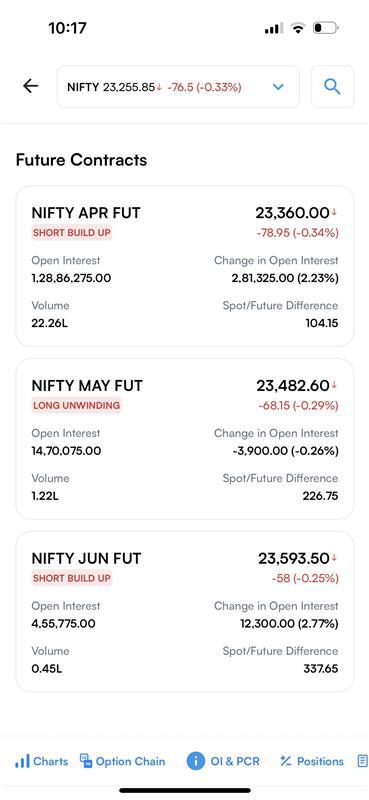
In the Future chain of our HDFC SKY app F&O Dashboard, NIFTY April Futures price reduced by 0.34% with 2.23% increasing OI, it signals strong selling pressure, confirming a Short Build Up – bearish trend.
OI in Options Trading
Options involve multiple strike prices, so along with the build-up, OI analysis is a bit more nuanced:
- High Call OI at a strike price = Indicates strong resistance; traders are writing calls, expecting the price to stay below this level.
- High Put OI at a strike price = Indicates strong support; traders are writing puts, expecting the price to stay above this level.
- Sudden rise in Call OI with price stagnation = Possible call writing (Bearish sign).
- Sudden rise in Put OI with price holding firm = Possible put writing (Bullish sign) Identifying Support & Resistance Using OI
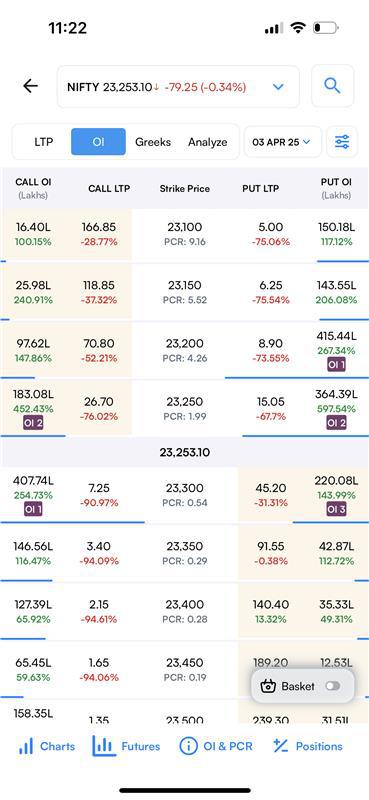
Take a look at this Nifty’s option chain. 23300 CE and 23200 PE have the highest OI indicating this as an immediate resistance and support range. The OI tagging in HDFC SKY’s option chain makes it easy to spot the immediate and wider ranges of support resistance.
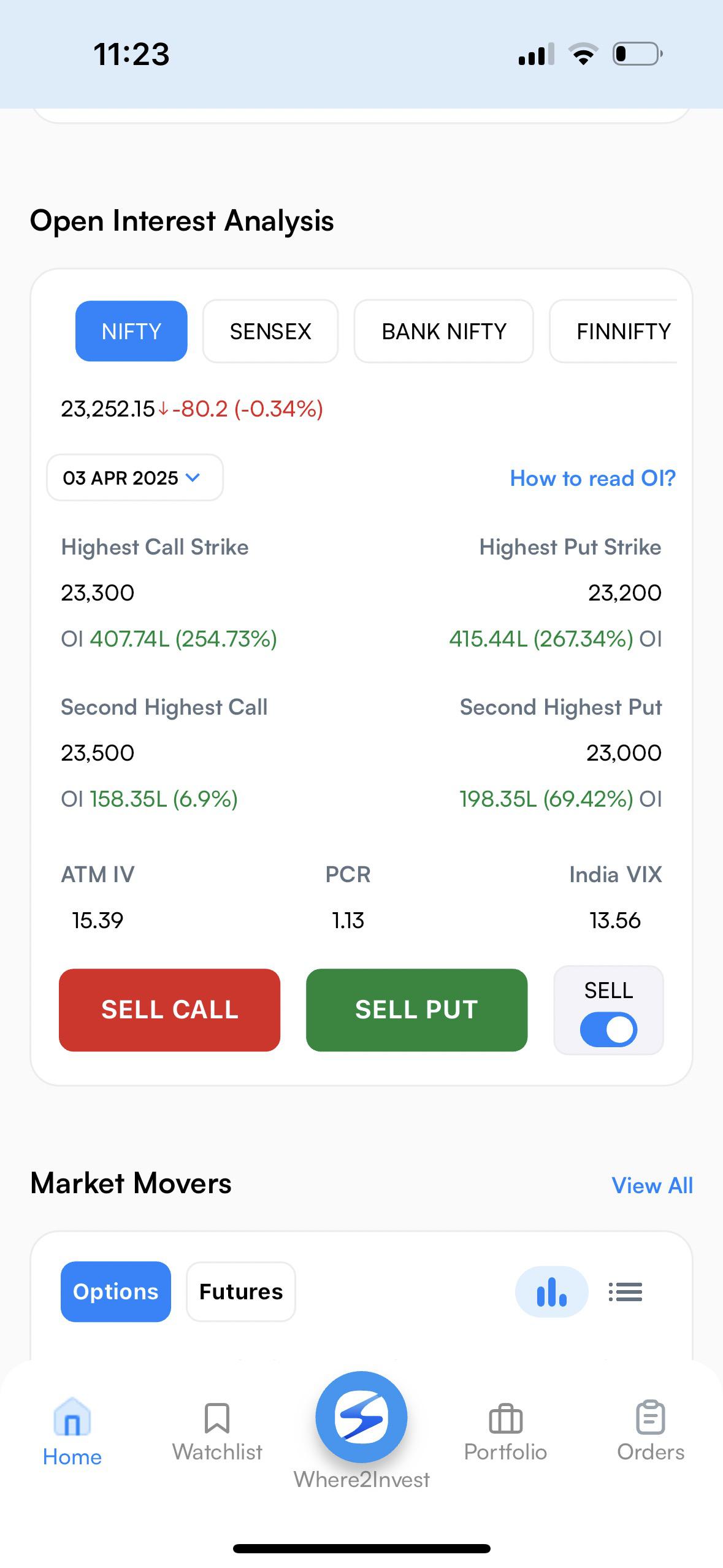
Let’s try to understand this with the Open Interest Analysis tool in HDFC SKY F&O Dashboard:
If 23,200 has the highest Put OI as shown above, it suggests that traders expect this level to hold as strong support. If the market starts falling below 23,200, put sellers might start unwinding, leading to further downside. Similarly, if 23,300 has the highest Call OI, it suggests resistance at this level. A breakout above 23,300 could trigger short covering in calls, leading to a strong rally.
Final Thoughts:
OI analysis is a game-changer for derivatives traders. It goes beyond just tracking price movements and offers a deeper look into market sentiment, positioning, and potential trend reversals.
In futures, OI trends clearly indicate bullish or bearish sentiment.- In options, OI helps spot key support & resistance zones and predict breakouts.- Tracking OI along with price helps traders identify fresh buying, short covering, profit booking, or aggressive short selling. By incorporating OI analysis into your trading strategy, you gain a powerful edge over those who rely solely on price charts. So, the next time you trade F&O, don’t just watch the price watch the OI in HDFC SKY’s F&O Dashboard!


FAQs
What is Open Interest (OI) in trading?
How is Open Interest different from volume?
Why is rising Open Interest significant?
How can OI help identify trend reversals?

Open Free Demat Account
Open Free Demat Account
Popular Posts
- 10 Interesting Facts About NSE You Probably Didn’t KnowLast Updated: Sep 18, 2026
- 8-4-3 Rule of SIP - How Does That Work?Last Updated: Jul 30, 2025
- Let’s view more exciting Posts
Popular Post from Derivatives
- Celebrating Innovation: HDFC SKY Shares Perspectives on India’s F&O Market Growth on National Technology DayLast Updated: May 11, 2026
- The Basics: Why Call Options Deserve Your AttentionLast Updated: Jan 30, 2026
- Understandin͏g Moneyness: The Path ͏to Smarter Option Trading͏Last Updated: Jan 30, 2026
- New Position Page in The HDFC SKY App for Smarter TradingLast Updated: Jan 21, 2025
- How can I activate F&O on HDFC SKY?Last Updated: Jun 5, 2025
- Let's view more exciting Post!
Popular Post from Blogs
- “Bounce Back” Theme Gains Traction in 2026Last Updated: Apr 8, 2026
- 5 Takeaways for Tax Payers from the Budget 2025Last Updated: Jan 29, 2026
- Let’s view more exciting Posts


Invest Anytime, Anywhere


By signing up I certify terms, conditions & privacy policy