Nifty 50
- Dr. Reddy's Labs₹1,231.3034.30 (2.87%)
- Tech Mahindra₹1,454.40-59.70 (-3.94%)
- Bajaj Auto₹10,031253.00 (2.59%)
- ITC₹257.20-8.80 (-3.31%)
- Bharat Electronics₹373.505.35 (1.45%)
- L&T₹3,614.20-89.10 (-2.41%)
- BSE₹3,333.2046.00 (1.40%)
- SBI₹938.55-20.55 (-2.14%)
- Tata Motors PV₹283.403.50 (1.25%)
- Bharti Airtel₹1,770-35.10 (-1.94%)
- Eicher Motors₹7,12373.00 (1.04%)
- Coal India₹403.80-7.75 (-1.88%)
- Cipla₹1,31413.00 (1.00%)
- Hindustan Unilever₹1,821.90-34.80 (-1.87%)
- Mahindra & Mahindra₹2,809.8013.60 (0.49%)
- Hindalco Industries₹886.25-14.10 (-1.57%)
- HCL Technologies₹1,2203.30 (0.27%)
- Reliance Industries₹1,154.50-15.80 (-1.35%)
- Kotak Mahindra Bank₹441.800.80 (0.18%)
- ICICI Bank₹1,337.80-17.20 (-1.27%)

- Offerings
- Tools & Platforms
Tools & Calculators
- Open API
- Calculators
- SIP Calculator
- CAGR Calculator
- Compound Interest Calculator
- FD Calculator
- RD Calculator
- EPF Calculator
- Retirement Calculator
- HDFC SIP Calculator
- Mutual Fund Return Calculator
- Lumpsum Calculator
- Step Up SIP Calculator
- ETF SIP Calculator
- Brokerage Calculator
- Equity Margin Calculator
- SWP Calculator
- EMI Calculator
- MTF Calculator
- Margin Pledge Calculator
- Algo Strategy
- Markets
Stocks
F&O
Mutual Funds
- More
Oil Prices Ease Over 1% At $89.6 As Tankers Continue To Sail Through Middle East Conflict Zones
Authored By HDFC SKY | Last Modified: Jul 30, 2026 11:02 AM IST

Open Free Demat Account
Open Free Demat Account
Mumbai, July 30: Oil prices slipped on Thursday after surging in the previous session, as continued tanker movements through key Middle Eastern waterways offered some reassurance that crude supplies were still reaching global markets despite an escalation in the U.S.-Iran conflict. However, concerns over disruptions to major shipping routes kept the outlook volatile.

Brent, WTI Give Up Some Gains
Brent crude futures fell 1.3% to $89.6 a barrel, while U.S. West Texas Intermediate (WTI) crude declined 1% to $83.6 a barrel.
The pullback came after a sharp rally in the previous session, when Brent settled 7.91% higher and WTI gained 6.56% in one of the steepest oil price spikes since the start of the Iran war. The jump followed a 5% plunge in prices on Tuesday after a temporary pause in hostilities had eased concerns over supply disruptions.
The latest decline suggested that traders were taking some comfort from evidence that oil and other commodities continued to move through alternative routes, even as the conflict spread beyond its main fronts.
Tanker Movements Offer Some Relief
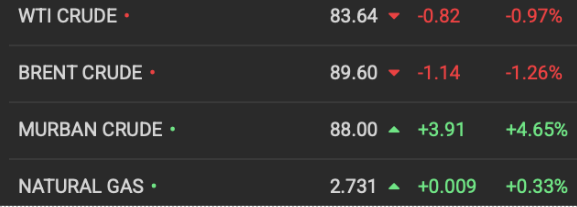
Preliminary shipping data showed that 39 commodity vessels passed through the Bab el-Mandeb Strait into the Red Sea on Tuesday, the highest number since July 19. Only a few vessels, however, were reported to be transiting the Strait of Hormuz.
Oil benchmarks ease as ships continue to transit through Middle East conflict zones. Source: oilprice.com
The continued movement of vessels through the region has provided some relief to oil markets, which have been closely monitoring the risk of a prolonged disruption to global energy supplies.
Hormuz Disruption Remains Key Risk
The Strait of Hormuz remains central to the global oil market. Before the conflict, around one-fifth of the world’s oil and gas supplies passed through the strategic waterway.
The strait has been largely blocked since the U.S.-Iran war began in February, despite efforts to secure a diplomatic breakthrough that would allow ships to pass safely. Iran has also rejected an Omani proposal for joint regional management of the waterway, further complicating efforts to restore normal shipping flows.
Any prolonged disruption to the strait could significantly tighten global crude supplies and put renewed upward pressure on prices. For now, however, the movement of tankers through other channels has helped prevent an immediate supply shock.
Also Read: How To Invest In Crude Oil
Conflict Spreads, Shipping Risks Mount
The geopolitical situation remained tense, with the conflict expanding to other parts of the Middle East.
U.S. and Saudi forces struck Iran-backed paramilitary groups in Iraq on Wednesday in retaliation for drone attacks on Saudi oil targets launched from Iraqi territory. The strikes marked a resumption of U.S. military action in the region after President Donald Trump had called off a bombing campaign over the weekend amid dwindling munitions.
Iran said it had also fired on U.S. bases in Jordan and attacked three tankers travelling through the Strait of Hormuz via what it described as an unauthorised route.
The developments have raised fresh concerns over the safety of commercial shipping and the possibility of further disruptions to oil transportation.
Red Sea Shipping Adds To Supply Concerns
Risks are also building around the Bab el-Mandeb Strait, another critical shipping route for global energy supplies.
Saudi Arabia is seeking to build a coalition to protect Red Sea shipping from attacks by Yemen’s Houthi group, according to sources. The Iran-backed group said on July 20 that it would impose a naval blockade on Saudi Arabia in the Red Sea, potentially expanding attacks on tankers and opening another front in the conflict.
The threat adds another layer of uncertainty for energy markets, with traders now monitoring both the Strait of Hormuz and the Bab el-Mandeb for signs of disruptions.
Oil Market Outlook Remains Volatile
For now, the continued movement of tankers and the availability of alternative shipping routes have helped ease some immediate concerns over crude supplies. However, global oil markets remain highly sensitive to developments in the conflict.
Traders are likely to closely track tanker movements, the security of major shipping lanes and diplomatic efforts to restore normal trade flows. Any further escalation that restricts access to key waterways could trigger another sharp rise in crude prices.
Conversely, a sustained increase in shipping activity through alternative routes could reduce the immediate supply premium embedded in oil prices. With the conflict continuing to evolve, crude markets are likely to remain volatile, balancing signs of resilient supply flows against the risk of a broader disruption to the world’s most important energy corridors.
Source
- oilprice.com
Disclaimer
If you have any concerns, questions, or wish to point out any discrepancies in our content, please feel free to write to us at content@hdfcsec.com.
Please Note: The information shared is intended solely for informational purposes and does not make any investment recommendations
Disclaimer
At HDFC SKY*, we take utmost care and due diligence in curating and presenting news and market-related content. However, inadvertent errors or omissions may occasionally occur.
If you have any concerns, questions, or wish to point out any discrepancies in our content, please feel free to write to us at content@hdfcsec.com.
Please Note: The information shared is intended solely for informational purposes and does not make any investment recommendations.
HDFC SKY from HDFC Securities, one of most trusted trading platforms in India, has been recognized with the *Next-Gen Digi Content Awards 2025-26.
 Join Us
 Add as preferred source on Google


More Business News










Open Free Demat Account
Open Free Demat Account












Invest Anytime, Anywhere


By signing up I certify terms, conditions & privacy policy