Nifty 50
- HCL Technologies₹1,290.9067.90 (5.55%)
- Max Healthcare₹849.75-16.20 (-1.87%)
- TCS₹2,230.40105.40 (4.96%)
- Maruti Suzuki₹11,174-141.00 (-1.25%)
- Tech Mahindra₹1,522.7051.70 (3.51%)
- NTPC₹307.35-2.65 (-0.85%)
- Infosys₹1,038.7518.75 (1.84%)
- Tata Motors PV₹282.30-2.15 (-0.76%)
- Hindustan Unilever₹1,853.8033.10 (1.82%)
- InterGlobe Aviation₹4,767-28.00 (-0.58%)
- Bajaj Auto₹10,182148.00 (1.47%)
- Eicher Motors₹7,081.50-37.50 (-0.53%)
- Adani Enterprises₹2,66838.00 (1.44%)
- Power Grid Corp₹247.90-1.10 (-0.44%)
- Grasim Industries₹2,898.5040.50 (1.42%)
- Reliance Industries₹1,154.50-4.40 (-0.38%)
- Bajaj Finserv₹1,742.9023.00 (1.34%)
- Bharti Airtel₹1,773.10-5.60 (-0.31%)
- Hindalco Industries₹892.359.85 (1.12%)
- JSW Steel₹1,169.50-3.50 (-0.30%)

- Offerings
- Tools & Platforms
Tools & Calculators
- Open API
- Calculators
- SIP Calculator
- CAGR Calculator
- Compound Interest Calculator
- FD Calculator
- RD Calculator
- EPF Calculator
- Retirement Calculator
- HDFC SIP Calculator
- Mutual Fund Return Calculator
- Lumpsum Calculator
- Step Up SIP Calculator
- ETF SIP Calculator
- Brokerage Calculator
- Equity Margin Calculator
- SWP Calculator
- EMI Calculator
- MTF Calculator
- Margin Pledge Calculator
- Algo Strategy
- Markets
Stocks
F&O
Mutual Funds
- More
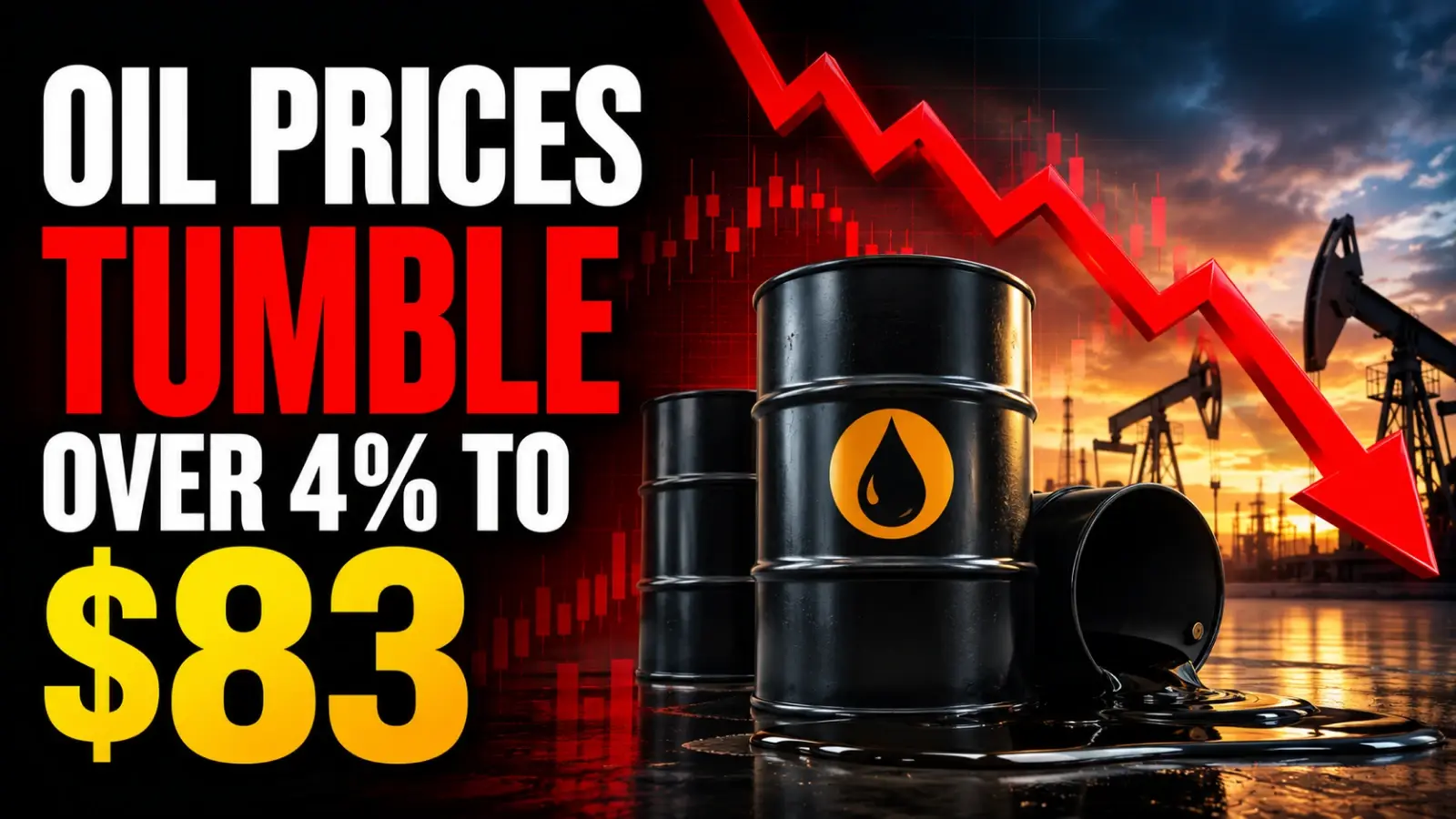
Oil Price Today, June 15, 2026: Oil Prices Tumble Over 4% to $83 as US-Iran Initial Peace Pact Eases Supply Fears
Authored By HDFC SKY | Last Modified: Jun 16, 2026 12:52 PM IST
Open Free Demat Account
Open Free Demat Account
Mumbai, June 15: Crude oil prices fell sharply on Monday after the United States and Iran reached a preliminary peace agreement, raising hopes that one of the world’s most important energy shipping routes could soon reopen and alleviating concerns over disruptions to global supplies.
Brent crude futures dropped more than 4% to trade near $83 a barrel, while U.S. West Texas Intermediate (WTI) crude slipped below the $81 mark. The decline marked one of the steepest single-session drops in recent months as traders rapidly unwound the geopolitical risk premium that had been built into oil prices during the prolonged conflict in the Gulf region.
Strait of Hormuz Reopening in Focus
The selloff was triggered by reports that Washington and Tehran had agreed on a framework aimed at ending hostilities and restoring maritime traffic through the Strait of Hormuz, a strategic chokepoint that handles nearly a fifth of the world’s oil and liquefied natural gas shipments.
Also Read: How To Invest in Crude Oil
Both benchmarks slumped in response to an initial peace pact between Iran and the US. Source: Oilprice.com
Under the proposed agreement, the Strait of Hormuz is expected to reopen within 30 days, while the United States would lift restrictions on Iranian ports. The two sides have also agreed to a 60-day ceasefire period, during which negotiations on broader issues, including Iran’s nuclear programme and sanctions relief, are expected to continue.
The prospect of uninterrupted oil flows from the Gulf prompted traders to reassess supply risks that had supported prices for much of the year.

Risk Premium Evaporates
Oil markets had rallied sharply in recent months amid fears that escalating tensions between the United States and Iran could disrupt exports from the Middle East, a region responsible for a substantial share of global crude production.
With the immediate threat of supply disruptions appearing to recede, investors moved quickly to lock in profits, sending prices lower. Analysts said the market reaction reflected a rapid removal of the geopolitical premium rather than a sudden deterioration in underlying demand fundamentals.
Market participants also noted that any increase in Iranian exports over the coming months could further improve global supply conditions, particularly if sanctions-related restrictions are eased as part of future negotiations.
Uncertainty Still Lingers
Despite the sharp decline in prices, analysts cautioned that the agreement remains a preliminary framework rather than a final settlement.
Shipping companies, insurers and commodity traders are likely to remain cautious until the deal is formally signed and maritime traffic through the Strait of Hormuz resumes without disruption. Any setback in negotiations or violations of ceasefire commitments could quickly reignite supply concerns and trigger renewed volatility in energy markets.
Positive for India
The drop in crude prices is likely to be welcomed by India, one of the world’s largest oil importers. Lower oil prices could ease inflationary pressures, reduce the country’s import bill and improve the fiscal outlook.
From an equity market perspective, the decline in crude is positive for oil marketing companies, airlines, paint manufacturers, tyre makers and other sectors that benefit from lower fuel and raw material costs. The sharp fall in oil prices also improves investor sentiment toward the broader economy, supporting expectations of a favourable start for Indian markets.
Source
- rates from oilprice.com
Disclaimer
At HDFC SKY*, we take utmost care and due diligence in curating and presenting news and market-related content. However, inadvertent errors or omissions may occasionally occur.
If you have any concerns, questions, or wish to point out any discrepancies in our content, please feel free to write to us at content@hdfcsec.com.
Please Note: The information shared is intended solely for informational purposes and does not make any investment recommendations.
HDFC SKY from HDFC Securities, one of most trusted trading platforms in India, has been recognized with the *Next-Gen Digi Content Awards 2025-26.
 Join Us
 Add as preferred source on Google


More Business News










Open Free Demat Account
Open Free Demat Account












Invest Anytime, Anywhere


By signing up I certify terms, conditions & privacy policy