Nifty 50
- HDFC Life Insurance ₹531.6510.45 (2.00%)
- Bajaj Auto₹9,955-919.00 (-8.45%)
- Kotak Mahindra Bank₹424.607.60 (1.82%)
- Mahindra & Mahindra₹2,870.30-79.70 (-2.70%)
- Infosys₹1,011.9017.80 (1.79%)
- Grasim Industries₹2,981.20-80.70 (-2.64%)
- HCL Technologies₹1,247.4017.40 (1.41%)
- Maruti Suzuki₹11,676-291.00 (-2.43%)
- HDFC Bank₹718.559.85 (1.39%)
- Jio Financial ₹211.62-5.26 (-2.43%)
- TCS₹2,073.6023.00 (1.12%)
- Eicher Motors₹6,986.50-163.50 (-2.29%)
- Tata Consumer ₹957.407.90 (0.83%)
- UltraTech Cement₹10,707-249.00 (-2.27%)
- Nestle₹1,319.509.50 (0.73%)
- Shriram Finance₹961.35-21.35 (-2.17%)
- SBI Life Insurance ₹1,708.1011.70 (0.69%)
- Adani Ports₹1,762.90-35.40 (-1.97%)
- Axis Bank₹1,233.507.50 (0.61%)
- Tata Motors PV₹278.30-5.20 (-1.83%)

- Offerings
- Tools & Platforms
Tools & Calculators
- Open API
- Calculators
- SIP Calculator
- CAGR Calculator
- Compound Interest Calculator
- FD Calculator
- RD Calculator
- EPF Calculator
- Retirement Calculator
- HDFC SIP Calculator
- Mutual Fund Return Calculator
- Lumpsum Calculator
- Step Up SIP Calculator
- ETF SIP Calculator
- Brokerage Calculator
- Equity Margin Calculator
- SWP Calculator
- EMI Calculator
- MTF Calculator
- Margin Pledge Calculator
- Algo Strategy
- Markets
Stocks
F&O
Mutual Funds
- More
Oil Prices Today, October 1, 2026: Brent Crude Falls 0.7% To $97.3, WTI Down 0.9% As US-Iran Talks, Gulf Supply In Focus
Authored By HDFC SKY | Last Modified: Oct 1, 2026 11:29 AM IST

Open Free Demat Account
Open Free Demat Account
Mumbai, October 1: Oil prices declined on Thursday as investors weighed the outlook for US-Iran peace talks against signs that crude exports from the Gulf region are recovering. Brent crude futures declined 0.7% to $97.3 a barrel, while US West Texas Intermediate crude was down 0.9% at $89.6 a barrel, extending the market’s cautious response to developments around the conflict and global oil supplies.

Oil prices retreat after strong September gains
The decline came a day after both benchmarks gained around $1 a barrel. Despite Thursday’s weakness, crude prices ended September with substantial gains. Brent rose around 14% during September, its biggest monthly increase since July, while WTI gained about 5% over the month.
The recent rally has been driven largely by concerns that the conflict and uncertainty around US-Iran diplomacy could disrupt oil supplies from the Middle East. However, signs of a recovery in regional exports have provided some counterweight to those supply concerns, limiting the upward pressure on prices.
US-Iran talks remain key market focus
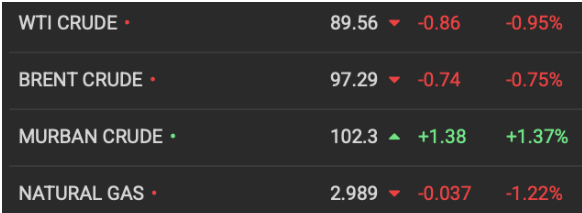
Both contracts declined as traders weighed US-Iran situation. Source: Oilprice.com
Investors are closely watching efforts to revive negotiations between Washington and Tehran. Qatar has said it hopes shuttle diplomacy between the two sides can lead to a breakthrough, although US President Donald Trump has denied reports that he was prepared to offer Iran sanctions relief and release frozen Iranian funds in exchange for concrete steps on its nuclear programme.
The uncertainty around the talks has left traders balancing the possibility of easing geopolitical tensions against the risk of further disruption to Middle Eastern oil supplies. A breakthrough in negotiations could reduce the risk premium embedded in crude prices, while a deterioration in talks could renew concerns over supply.
Also Read: How To Invest In Crude Oil
Gulf oil exports recover
Signs of improving supply from the region have also weighed on crude prices. Saudi Arabia resumed oil tanker loadings from its Red Sea port of Yanbu after restarting operations on its East-West Pipeline.
A broker estimated that Gulf oil exports, including so-called “dark exports” involving vessels with location transponders switched off, had recovered to 23.3 million barrels per day in the latest week. That was broadly in line with the region’s 2025 average, with exports having doubled in September, according to the investment bank.
The recovery in exports suggests that some of the supply disruption concerns that helped drive oil higher earlier in the conflict may be easing. Still, the market remains sensitive to any fresh disruption given the importance of Gulf producers to global crude supplies.
OPEC+ output decision awaited
Another factor in focus is the upcoming OPEC+ meeting. Oil-producing countries are likely to keep their November production targets unchanged when they meet on Sunday, according to two people familiar with the matter. A decision to maintain current targets would leave the market focused primarily on actual supply flows and developments in the Middle East.
Meanwhile, US crude inventories rose by 922,000 barrels to 427.3 million barrels in the week ended September 25, according to the Energy Information Administration. Analysts polled by Reuters had expected inventories to decline by 264,000 barrels.
The inventory build was partly offset by sharp declines in gasoline and distillate stocks, reflecting strong seasonal and global demand. The mixed inventory picture provided another factor for traders to assess alongside geopolitical developments and recovering Gulf exports.
What it means for Indian markets
For Indian equities, crude prices remain an important macroeconomic variable. Sustained oil prices near the $100-a-barrel mark could keep pressure on India’s import bill and inflation outlook, while also affecting the margins of fuel-intensive sectors and the country’s trade balance.
The latest decline in Brent offers some relief, but prices remain substantially elevated after September’s sharp rise. For domestic investors, the direction of crude is likely to remain closely linked to developments in US-Iran negotiations, the pace of Gulf exports and the upcoming OPEC+ production decision.
Source:
- Oilprice.com
Disclaimer
At HDFC SKY*, we take utmost care and due diligence in curating and presenting news and market-related content. However, inadvertent errors or omissions may occasionally occur.
If you have any concerns, questions, or wish to point out any discrepancies in our content, please feel free to write to us at content@hdfcsec.com.
Please Note: The information shared is intended solely for informational purposes and does not make any investment recommendations.
HDFC SKY from HDFC Securities, one of most trusted trading platforms in India, has been recognized with the *Next-Gen Digi Content Awards 2025-26.
 Join Us
 Add as preferred source on Google


More Business News









Open Free Demat Account
Open Free Demat Account











Invest Anytime, Anywhere


By signing up I certify terms, conditions & privacy policy