Nifty 50
- TCS₹2,211.8086.80 (4.08%)
- Max Healthcare₹855.10-10.85 (-1.25%)
- HCL Technologies₹1,27047.00 (3.84%)
- NTPC₹306.55-3.45 (-1.11%)
- Tech Mahindra₹1,500.6029.60 (2.01%)
- Power Grid Corp₹246.80-2.20 (-0.88%)
- Infosys₹1,03616.00 (1.57%)
- Tata Motors PV₹282.30-2.15 (-0.76%)
- HDFC Bank₹715.6010.70 (1.52%)
- Kotak Mahindra Bank₹440.85-2.55 (-0.58%)
- Adani Enterprises₹2,66131.00 (1.18%)
- JSW Steel₹1,166.60-6.40 (-0.55%)
- Bajaj Auto₹10,141107.00 (1.07%)
- Maruti Suzuki₹11,261-54.00 (-0.48%)
- Tata Consumer ₹967.408.60 (0.90%)
- Eicher Motors₹7,088-31.00 (-0.44%)
- Hindustan Unilever₹1,835.3014.60 (0.80%)
- Bharat Electronics₹372.45-1.45 (-0.39%)
- Nestle₹1,335.3010.60 (0.80%)
- L&T₹3,615.90-11.60 (-0.32%)

- Offerings
- Tools & Platforms
Tools & Calculators
- Open API
- Calculators
- SIP Calculator
- CAGR Calculator
- Compound Interest Calculator
- FD Calculator
- RD Calculator
- EPF Calculator
- Retirement Calculator
- HDFC SIP Calculator
- Mutual Fund Return Calculator
- Lumpsum Calculator
- Step Up SIP Calculator
- ETF SIP Calculator
- Brokerage Calculator
- Equity Margin Calculator
- SWP Calculator
- EMI Calculator
- MTF Calculator
- Margin Pledge Calculator
- Algo Strategy
- Markets
Stocks
F&O
Mutual Funds
- More
Oil Prices Today, October 13, 2026: Brent Slips To $105.6, WTI At $92.8 As Russian Diesel Supply Offers Relief
Authored By HDFC SKY | Published at: Oct 13, 2026 09:58 AM IST

Open Free Demat Account
Open Free Demat Account
October 13: Crude oil prices declined on Tuesday, with Brent crude futures falling 1% to $105.6 a barrel and US West Texas Intermediate (WTI) crude futures dropping 1% to $92.8 a barrel. Prospects of additional Russian diesel supplies eased some concerns over fuel availability, although escalating geopolitical tensions in the Middle East continued to threaten global energy flows.
The decline followed a rally in the previous session, when both benchmarks climbed nearly $2 a barrel amid concerns over potential disruptions to energy infrastructure and shipping routes in the Gulf. Brent had settled at its highest level since September 15, reflecting the growing risk premium in oil markets as traders assessed developments involving Russia, Ukraine and the Middle East.

Russian Diesel Supply Prospects Ease Market Concerns
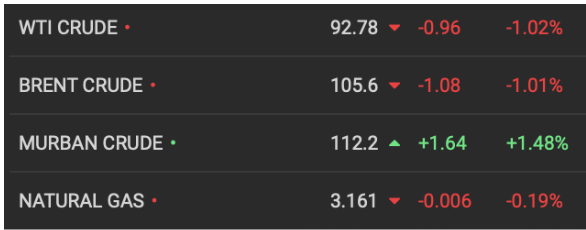
Both contracts fell on the prospect of Russian supplies. Source: oilprice.com
Expectations of additional Russian fuel supplies provided some relief to oil markets on Tuesday. US President Donald Trump said Russia had agreed to supply diesel to global markets, while his administration temporarily lifted sanctions on Russian fuel. The prospect of additional supplies could help ease tightness in refined fuel markets and limit upward pressure on prices.
However, uncertainty surrounding the proposed Russia-Ukraine energy ceasefire continues to cloud the outlook. Reports of further attacks on Ukrainian energy infrastructure have raised doubts about the durability of any agreement and the extent to which Russian energy supplies could return to global markets without disruption.
The prospect of additional Russian diesel supplies is particularly relevant to refined fuel markets, where availability can influence prices across transportation, manufacturing and other energy-intensive industries. Any sustained increase in supply could help offset some of the pressure arising from geopolitical risks elsewhere, although the timing and scale of additional volumes remain important variables.
Also Read: How To Invest In Crude Oil
Middle East Tensions Keep Supply Risks Elevated
Despite Tuesday’s decline, risks to energy infrastructure and shipping routes in the Middle East continued to support crude prices. Attacks by Iran-aligned Houthi forces on Saudi Arabia over the weekend and reported tanker attacks near the Strait of Hormuz renewed concerns about the security of energy shipments through the region.
The Strait of Hormuz is a critical chokepoint for global oil trade, connecting major Gulf producers with international markets. Any prolonged disruption to shipping through the waterway could constrain supplies and push crude prices higher, particularly if alternative routes and spare production capacity prove insufficient to offset lost volumes.
The latest developments have therefore left oil markets balancing the prospect of additional Russian fuel supplies against the possibility of fresh disruptions in the Gulf. While the former has eased some immediate concerns, the latter continues to leave prices vulnerable to sudden swings as traders respond to geopolitical developments.
Higher freight and insurance costs are adding to the strain. Rising costs associated with moving energy cargoes can increase the final price paid by buyers even when benchmark crude prices retreat. The uncertainty surrounding shipping routes and the security of energy infrastructure has consequently remained a key factor in determining the direction of oil prices.
Demand Outlook Adds Another Layer Of Uncertainty
The outlook for global oil demand is also becoming more cautious. OPEC lowered its forecast for global oil demand growth this year to 400,000 barrels per day, compared with the 1.4 million bpd increase projected at the beginning of the year.
A weaker demand outlook could limit the extent of any sustained rally in crude prices, particularly if additional Russian fuel supplies become available. However, demand forecasts offer limited protection against sudden supply shocks, meaning prices could remain elevated if geopolitical tensions lead to significant disruptions.
For investors, the interaction between supply risks and demand expectations remains central to assessing whether crude can sustain levels above $100 a barrel. Tuesday’s decline suggests some easing of immediate supply concerns, but it does not necessarily signal a broader reversal in the market’s risk premium.
What Falling Crude Prices Mean For India
For India, one of the world’s major crude oil importers, movements in international oil prices have significant implications for the economy and financial markets. A sustained decline in crude prices could help contain the country’s import bill, ease pressure on the rupee and reduce inflationary risks. Conversely, oil remaining above $100 a barrel would continue to pose challenges for the external balance and domestic price stability.
Higher crude prices can also raise input costs for sectors such as aviation, paints, tyres, logistics and chemicals, potentially squeezing profit margins. Oil marketing companies face a separate set of considerations, as their profitability depends partly on the relationship between international fuel prices, refining margins and domestic retail pricing.
Tuesday’s fall in Brent and WTI prices offers some near-term relief, but persistent uncertainty over Middle East shipping routes and the Russia-Ukraine conflict means the outlook remains volatile. For Indian markets, the direction of crude prices will remain an important cue for inflation expectations, the rupee and the performance of oil-sensitive stocks.
Source
- Oilprice.com
Disclaimer
At HDFC SKY*, we take utmost care and due diligence in curating and presenting news and market-related content. However, inadvertent errors or omissions may occasionally occur.
If you have any concerns, questions, or wish to point out any discrepancies in our content, please feel free to write to us at content@hdfcsec.com.
Please Note: The information shared is intended solely for informational purposes and does not make any investment recommendations.
HDFC SKY from HDFC Securities, one of most trusted trading platforms in India, has been recognized with the *Next-Gen Digi Content Awards 2025-26.
 Join Us
 Add as preferred source on Google


More Business News










Open Free Demat Account
Open Free Demat Account












Invest Anytime, Anywhere


By signing up I certify terms, conditions & privacy policy