Nifty 50
- JSW Steel₹1,241.3025.00 (2.06%)
- Axis Bank₹1,236-54.00 (-4.19%)
- ONGC₹2253.00 (1.35%)
- Tata Motors PV₹278-8.85 (-3.09%)
- SBI₹973.7011.10 (1.15%)
- Infosys₹1,130.70-30.50 (-2.63%)
- L&T₹3,661.9034.80 (0.96%)
- Bajaj Finance₹957.35-24.75 (-2.52%)
- Eicher Motors₹7,34964.50 (0.89%)
- Apollo Hospitals₹7,700-190.00 (-2.41%)
- Adani Ports₹1,76615.20 (0.87%)
- UltraTech Cement₹10,650-257.00 (-2.36%)
- Dr. Reddy's Labs₹1,242.509.50 (0.77%)
- HDFC Bank₹712-16.85 (-2.31%)
- InterGlobe Aviation₹4,70013.10 (0.28%)
- Trent₹2,891.60-67.10 (-2.27%)
- Bharat Electronics₹377.200.35 (0.09%)
- Hindustan Unilever₹1,853.20-40.60 (-2.14%)
- NTPC₹309-6.15 (-1.95%)

- Offerings
- Tools & Platforms
Tools & Calculators
- Open API
- Calculators
- SIP Calculator
- CAGR Calculator
- Compound Interest Calculator
- FD Calculator
- RD Calculator
- EPF Calculator
- Retirement Calculator
- HDFC SIP Calculator
- Mutual Fund Return Calculator
- Lumpsum Calculator
- Step Up SIP Calculator
- ETF SIP Calculator
- Brokerage Calculator
- Equity Margin Calculator
- SWP Calculator
- EMI Calculator
- MTF Calculator
- Margin Pledge Calculator
- Algo Strategy
- Markets
Stocks
F&O
Mutual Funds
- More
Br͏ent ͏Crude Surges Above $11͏2 After Middle East E͏nergy Strikes
Authored By HDFC SKY | Published at: Mar 19, 2026 01:03 PM IST
Open Free Demat Account
Open Free Demat Account
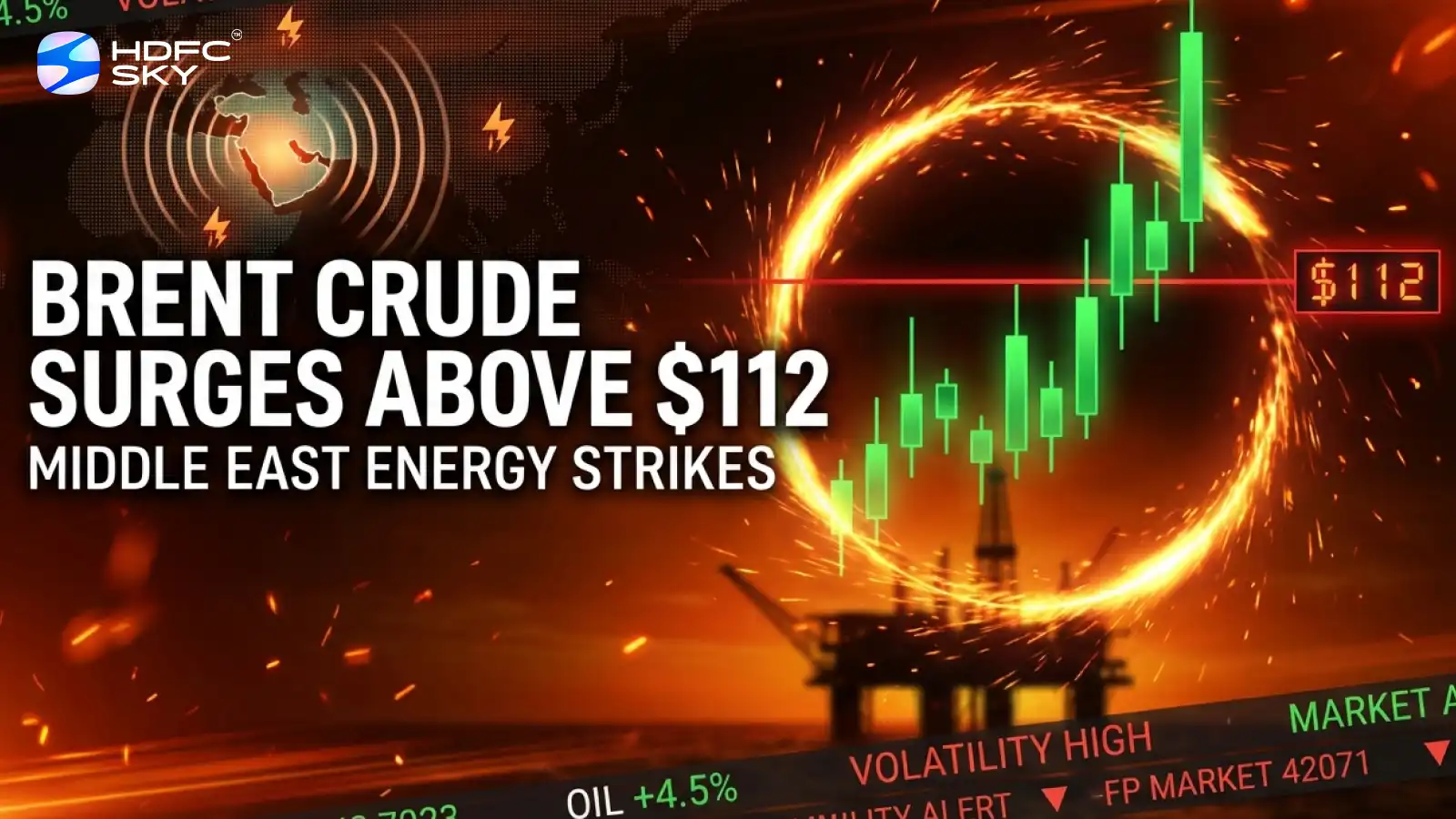
Mumba͏i,͏ Ma͏rch 19: G͏l͏obal oil͏ market͏s surged sharply ͏on Thursday, with ͏Bren͏t c͏rude futures climbing to $͏112.͏10͏ per barrel, reflecting heightened g͏eopoliti͏cal tension͏s in the Middle East. The s͏pike comes amid reta͏l͏iator͏y strikes b͏y I͏ran on key r͏egional e͏nergy ͏facilities followin͏g attac͏ks on its South Pars gas field, stoking fears of pr͏olonged supply disruptions. US W͏est Te͏xas Intermediate (WTI) cru͏d͏e rose to $97.21 per barrel, up 0.92%,͏ whi͏le na͏tural gas pri͏ces ͏also jumped over 5%.͏

OMC Stocks Tum͏ble Amid Crude Surge
India͏n͏ oil ma͏rk͏e͏ti͏ng companies, including Hi͏n͏d͏usta͏n Petroleum ͏Corpor͏at͏ion͏ Limited (͏HPCL), Ind͏ian ͏Oil͏ Corp͏oration (IOC͏), ͏and Bharat P͏etrol͏eum Corporation͏ Lim͏ited (BPCL), saw sharp decli͏n͏es on͏ Monday, with shar͏es͏ falling up ͏to 9%.
The ͏sudden dr͏op reflected investor caution͏ over risin͏g crude c͏os͏ts, which͏ have a ͏dir͏ect͏ impact͏ on͏ refining m͏argins and operational costs. Dom͏est͏ic͏ Mu͏l͏ti Comm͏odity Exchange (͏MCX) crude͏ ͏oil prices followed gl͏oba͏l trends, increas͏ing 1% to͏ ₹9,08͏0 per barrel, mainta͏ining upwa͏rd mo͏mentum de͏spite stea͏d͏y reta͏il fuel͏ rates.
Iran Targets Gulf Energy Hubs, Brent Climbs 3%
The latest surge was triggered after Iran launched multiple missile and drone strikes targeting energy infrastructure in the Gulf region. Qatar Energy reported “extensive damage” at the Ras Laffan industrial complex, the world’s largest liquefied natural gas (LNG) facility, while the United Arab Emirates suspended operations at the Habshan gas facility due to debris from intercepted missiles affecting surrounding infrastructure, including the Bab oil field.
Saudi Arabia intercepted four ballistic missiles and foiled a drone attack on a gas facility near Riyadh. These coordinated strikes followed evacuation warnings issued for oil installations across Saudi Arabia, the UAE, and Qatar.
Strait of Hormuz Risks Push Global Oil Prices Higher
About 20% of global oil and liquefied natural gas exports pass through the Strait of Hormuz, the key maritime corridor connecting Middle Eastern producers to international markets. Disruptions in this corridor, whether from blockades, missile attacks, or shipping hazards, have raised serious concerns about global energy supply stability.
The recent escalation has heightened fears of a broader supply crisis, driving Brent crude up 3.44% to $111.07 per barrel and WTI crude by 2.38% to $98.61 earlier on Thursday, with prices briefly exceeding $112 during Asian trading.
US Considers Military Reinforcements Amid Rising Tensions
The United States is reportedly evaluating plans to deploy additional troops to the region, aiming to secure maritime routes and energy exports amid escalating conflict involving Iran and Israel.
The presence of extra military assets is expected to stabilise shipping lanes, particularly in the Strait of Hormuz, where risks to oil tankers and LPG carriers have already materialised. Indian-flagged tanker Jag Laadki recently docked at Mundra Port with 80,886 metric tonnes of crude oil from the UAE, signalling that regional supplies are continuing despite threats.
Indian Fuel Prices Remain Stable Despite International Volatility
Despite the surge in global crude prices, retail petrol and diesel rates across major Indian cities remained largely unchanged on 19 March 2026. In Delhi, petrol was priced at ₹94.77 per litre and diesel at ₹87.67 per litre, while Mumbai saw petrol at ₹103.54 and diesel at ₹90.03 per litre.
Major metros, including Bengaluru, Hyderabad, Chennai, and Kolkata continued to record petrol prices above ₹100 per litre, with diesel remaining below this threshold. The government emphasised fuel availability over pricing as a priority amid ongoing geopolitical disruptions.
Crude Oil Supply Chain Adjustments Underway in India
Indian ports have witnessed timely arrivals of energy cargoes to maintain domestic supply. On 18 March, the LPG carrier Nanda Devi delivered 46,500 metric tonnes of LPG to Vadinar port, and Shivalik docked at Mundra with additional supplies. These shipments aim to mitigate potential domestic shortages and ensure uninterrupted distribution of petroleum products, even as international crude benchmarks remain elevated due to Middle East instability.
Rising Middle East Conflict Amplifies Global Energy Concerns
The current escalation follows strikes on Iran’s South Pars gas field, one of the world’s largest natural gas complexes shared with Qatar. Iran’s retaliatory measures included missile launches and drone attacks targeting Saudi Arabia, Kuwait, Iraq, Bahrain, and the UAE, resulting in disruptions to energy operations and heightening concerns over uninterrupted energy exports. The UK’s maritime security agency reported a vessel east of the Strait of Hormuz catching fire after being hit by an “unknown projectile,” underscoring the threat to shipping and LNG transport.
Domestic Measures to Ensure Energy Security Amid Crisis
India’s Ministry of Petroleum and Natural Gas has announced steps to accelerate the adoption of piped natural gas (PNG) and expand city gas distribution infrastructure. The initiative targets commercial and residential LPG users, encouraging a shift to PNG through proactive outreach by City Gas Distribution (CGD) companies. Officials stressed that maintaining fuel availability remains the immediate priority, with LPG supply currently more vulnerable due to Strait of Hormuz disruptions and insurance coverage challenges.
Crude Price Outlook and Regional Geopolitical Triggers
Brent crude has climbed nearly 50% since the conflict began, with WTI crude following suit. Analysts cite declining floating inventories, limited marginal storage, and ongoing regional hostilities as key drivers of price surges. Technical indicators show that MCX crude continues to trade above ₹9,000 per barrel, with key resistance levels near ₹9,250–9,400. Rising global prices, coupled with risks to the Strait of Hormuz and regional energy hubs, continue to underpin heightened volatility in international markets.
The surge in oil prices to over $112 per barrel reflects mounting concerns over energy supply stability amid escalating Middle East hostilities. Domestic fuel availability remains stable, supported by timely crude and LPG imports, while governments are enhancing infrastructure and contingency measures to mitigate the impact of international disruptions on energy security.
Disclaimer
If you have any concerns, questions, or wish to point out any discrepancies in our content, please feel free to write to us at content@hdfcsec.com.
Please Note: The information shared is intended solely for informational purposes and does not make any investment recommendations
Disclaimer
At HDFC SKY*, we take utmost care and due diligence in curating and presenting news and market-related content. However, inadvertent errors or omissions may occasionally occur.
If you have any concerns, questions, or wish to point out any discrepancies in our content, please feel free to write to us at content@hdfcsec.com.
Please Note: The information shared is intended solely for informational purposes and does not make any investment recommendations.
HDFC SKY from HDFC Securities, one of most trusted trading platforms in India, has been recognized with the *Next-Gen Digi Content Awards 2025-26.
 Join Us
 Add as preferred source on Google


More Markets News








Open Free Demat Account
Open Free Demat Account












Invest Anytime, Anywhere


By signing up I certify terms, conditions & privacy policy