Nifty 50
- Infosys₹1,03540.90 (4.11%)
- Bajaj Auto₹10,045-829.00 (-7.62%)
- HDFC Life Insurance ₹534.2013.00 (2.49%)
- Maruti Suzuki₹11,386-581.00 (-4.86%)
- HDFC Bank₹721.2012.50 (1.76%)
- Shriram Finance₹945-37.70 (-3.84%)
- SBI Life Insurance ₹1,721.6025.20 (1.49%)
- Tata Steel₹178-6.30 (-3.42%)
- Max Healthcare₹940.9511.15 (1.20%)
- Adani Ports₹1,737.80-60.50 (-3.36%)
- TCS₹2,07524.40 (1.19%)
- Grasim Industries₹2,962-99.90 (-3.26%)
- HCL Technologies₹1,243.1013.10 (1.07%)
- Eicher Motors₹6,920-230.00 (-3.22%)
- Tata Consumer ₹9577.50 (0.79%)
- Mahindra & Mahindra₹2,860-90.00 (-3.05%)
- Tech Mahindra₹1,5339.00 (0.59%)
- Adani Enterprises₹2,816.80-86.60 (-2.98%)
- Kotak Mahindra Bank₹418.351.35 (0.32%)
- ITC₹255.90-6.85 (-2.61%)

- Offerings
- Tools & Platforms
Tools & Calculators
- Open API
- Calculators
- SIP Calculator
- CAGR Calculator
- Compound Interest Calculator
- FD Calculator
- RD Calculator
- EPF Calculator
- Retirement Calculator
- HDFC SIP Calculator
- Mutual Fund Return Calculator
- Lumpsum Calculator
- Step Up SIP Calculator
- ETF SIP Calculator
- Brokerage Calculator
- Equity Margin Calculator
- SWP Calculator
- EMI Calculator
- MTF Calculator
- Margin Pledge Calculator
- Algo Strategy
- Markets
Stocks
F&O
Mutual Funds
- More
Gold Surges 10% in Fortnight as Silver Faces ₹14,000 Weekly Spike Amid Global Turmoil
Authored By HDFC SKY | Published at: Aug 15, 2026 10:13 AM IST
Open Free Demat Account
Open Free Demat Account
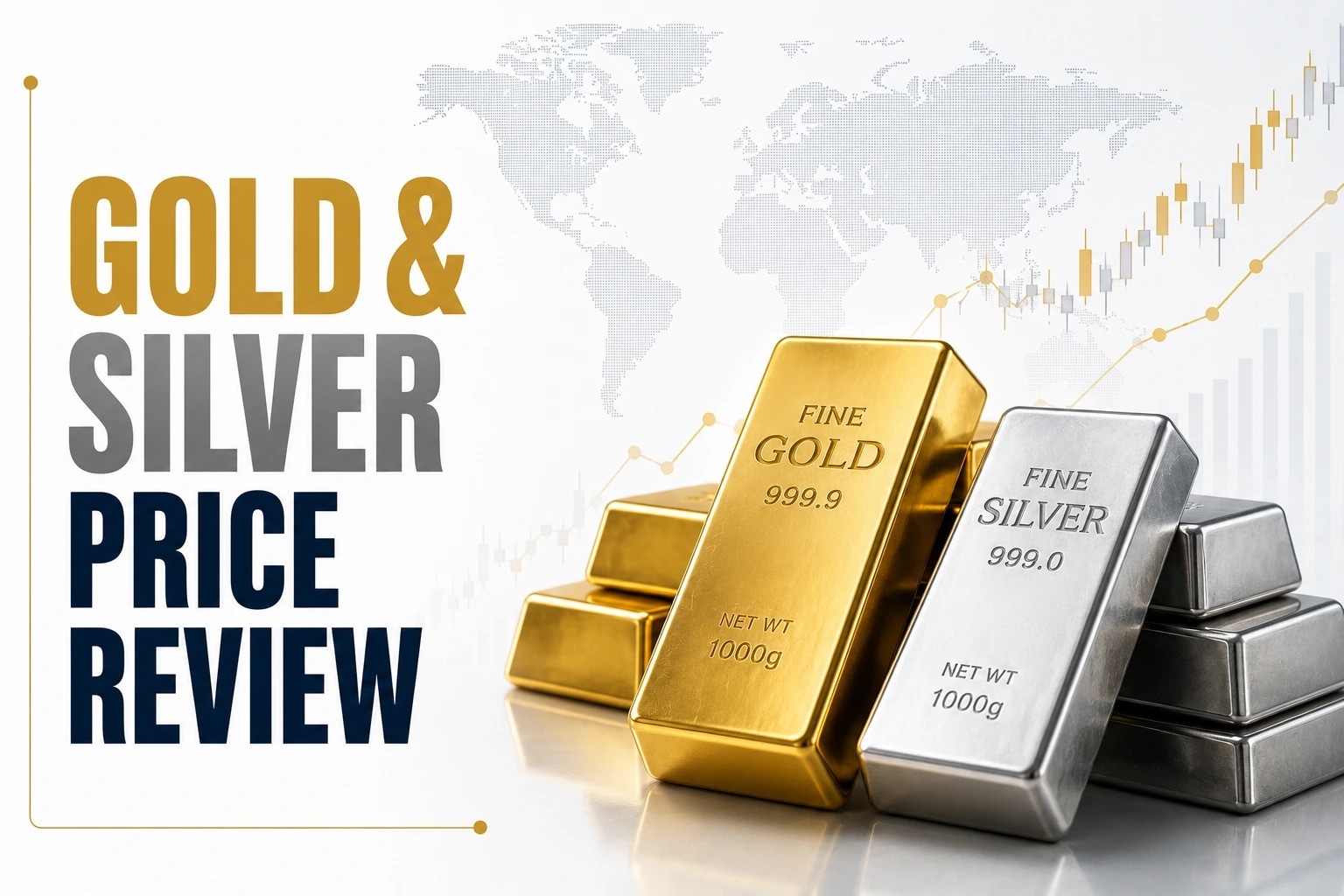
Mumbai, Aug 15: Precious metals recorded a volatile fortnight as gold prices staged a spectacular rally since 31 July, with international benchmarks gaining approximately 9–10% and MCX gold rising about 8%, while silver witnessed sharp weekly gains before profit-taking emerged on the final trading day. The rally was driven by a confluence of cooling US inflation data, heightened geopolitical tensions over the Strait of Hormuz, and technical momentum following gold’s decisive break above $4,200 per ounce. However, both metals faced selling pressure on 14 August as investors booked profits after the sharp run-up, with COMEX gold futures declining 1.01% to $4,375.60 per ounce and silver falling 1.34% to $64.120 per ounce in morning trade.
The domestic market mirrored global trends, with MCX gold October futures closing at ₹1,53,373 per 10 grams and silver at ₹2,35,850 per kilogram on 13 August.
Gold Rallies 10% from July 31 as Fed Rate Hike Odds Drop to 38%
Gold prices surged sharply from 31 July to 12 August, with COMEX gold rising from $4,098.6 per ounce to $4,467 per ounce, a gain of $368.40 or 8.99%. The LBMA Gold PM fix climbed 9.94% from $4,026.6 to $4,426.65 per ounce during the same period. On the Multi Commodity Exchange of India (MCX), gold futures advanced 8.03% from ₹1,43,376 to ₹1,54,882 per 10 grams.
The India Bullion and Jewellers Association (IBJA) afternoon rate rose 7.39% from ₹1,42,860 to ₹1,53,419 per 10 grams. The rally was underpinned by US Consumer Price Index (CPI) easing to 3.4% in July from 3.5% in June, reinforcing expectations of a softer Federal Reserve stance. The CME FedWatch Tool showed the probability of a September rate hike declining to 38% from 48.4% earlier in the week.
Additionally, weaker-than-expected US jobs data, nonfarm payrolls dropping by 23,000 in July against expectations of an 80,000 increase, strengthened expectations that the Federal Reserve may avoid further aggressive tightening.
Gold Hits $4,509 Peak, Retreats Twice from $4,500 Resistance Level
Gold prices touched a monthly peak of $4,509.10 per ounce during the fortnight, marking the first time prices exceeded the $4,500 level since 5 June. However, the $4,500 level emerged as strong resistance, with prices rejected twice at this threshold. On 13 August, COMEX December gold futures declined 1.08% to $4,419.30 per ounce, down $48.20 from the previous settlement.
Despite US Treasury yields falling sharply after the July Producer Price Index (PPI) came in softer than expected, with core PPI rising 0.2% below the expected 0.3%, gold failed to benefit from the spillover effect as the rapid climb from the $4,000 level to $4,500 heightened profit-taking desires. StoneX senior market strategist Bob Haberkorn noted that traders grew nervous as prices approached the $4,500 level. On 14 August, COMEX gold traded at $4,374.30 per ounce, down $46.10 or 1.04%.
Silver Surges 8.3% in a Week but Faces Indian Import Crash of 92%
Silver exhibited even more dramatic moves during the period. The white metal surged 8.3% from 28 July to 5 August, primarily triggered by a weakening US dollar. COMEX silver rose from approximately $62.75 per ounce on 6 July to around $66 on 12 August. London spot silver reached $65.41 per ounce on 12 August, while COMEX silver futures traded at $65.63 per ounce, gaining 1.19%.
In the domestic market, MCX silver September contracts gained ₹2,314 to open at ₹2,37,973 per kilogram on 12 August. However, silver faced significant headwinds from a collapse in Indian imports, which fell by 66.1% year-on-year in July to approximately $174 million in value, according to official trade data.
The crash was attributed to India’s new import measures implemented in May, which raised import duties and required prior government approval for imports, aimed at reducing precious metal imports, conserving foreign exchange, and easing pressure on the rupee. India, which accounts for nearly 19% of global silver demand, imported 210 million ounces in 2025, making the import collapse a significant drag on global physical demand.
Gold Rises ₹10,000 in 12 Days, Silver Jumps ₹16,000 in August
The domestic bullion market witnessed extraordinary price movements in August. According to IBJA data, the price of 10 grams of 24-carat gold increased by ₹158 on 12 August to reach ₹1.53 lakh, while one kilogram of silver rose by ₹46 to ₹2.35 lakh. In just the first 12 days of August, gold became ₹10,000 more expensive, while silver surged by ₹16,000. For the full trading week ending 8 August, gold prices increased by ₹7,064 to ₹1,49,621 per 10 grams, and silver became ₹14,094 more expensive to reach ₹2,31,381 per kilogram.
On the last trading day of that week alone, gold rose ₹1,181 and silver ₹5,707. Year-to-date, gold has become ₹20,000 more expensive, rising from ₹1.33 lakh per 10 grams on 31 December 2025 to ₹1.53 lakh. Silver has gained ₹5,000 so far in 2026, moving from ₹2.30 lakh per kilogram to ₹2.35 lakh.
Delhi Gold at ₹1.53 Lakh, Chennai Silver Commands ₹2.60 Lakh Premium
Retail bullion prices varied across major Indian cities on 14 August following the sharp correction. In the national capital, 24-carat gold was quoted at ₹1,53,740 per 10 grams, with 22-carat at ₹1,40,940 and 18-carat at ₹1,15,340; silver traded at ₹2,54,900 per kilogram. Mumbai quoted 24-carat gold at ₹1,53,590 per 10 grams, 22-carat at ₹1,40,790, and 18-carat at ₹1,15,190, with silver at ₹2,54,900 per kilogram. Lucknow mirrored Delhi’s gold rates at ₹1,53,740 for 24-carat and ₹1,40,940 for 22-carat, but silver commanded a premium at ₹2,55,000 per kilogram. Chennai reported 24-carat gold at ₹1,53,640, 22-carat at ₹1,40,840, and 18-carat at ₹1,15,240, while silver traded significantly higher at ₹2,59,900 to ₹2,60,000 per kilogram, reflecting regional demand variations. Earlier in the month, Delhi gold had touched a one-month high of ₹1.50 lakh per 10 grams on 6 August, while silver surged ₹6,200 to ₹2,32,700 per kilogram.
Gold ETFs See 55% Inflow Drop, Silver ETFs Plunge 70% in July
Despite the price rally, precious metal exchange-traded funds (ETFs) witnessed a sharp slowdown in inflows during July. According to data from the Association of Mutual Funds in India (AMFI), gold ETF net inflows fell 55% month-on-month, while silver ETF inflows dropped 70%. The decline was attributed to profit-taking after the strong rally, though both segments maintained positive inflows for the second consecutive month.
Gold ETFs recorded inflows of ₹1,558 crore in July, while silver ETFs saw ₹1,284 crore of inflows. Gold ETF assets under management rose to ₹1.73 lakh crore, while silver ETF assets declined to ₹7,767.6 crore. Gold ETFs delivered an average return of 1.37% in July, while silver ETFs posted a negative average return of 2.48%.
Financial planners attributed the inflow moderation to normalisation after strong buying and high prices, though continued positive inflows indicated sustained investor interest in precious metals as macro and geopolitical hedges.
Central Banks Add 51 Tonnes of Gold in June as Structural Demand Strengthens
Global central bank gold purchases accelerated in June, with reported net additions of 51 tonnes, up from 41 tonnes in May and nearly double the 12-month average of 27 tonnes. Poland added 19 tonnes, China purchased 15 tonnes, Uzbekistan added 9 tonnes, and Kazakhstan and Singapore each increased their reserves by 7 tonnes.
The People’s Bank of China’s continued accumulation reflects its long-term strategy to reduce foreign exchange reserve dependence on US dollar assets. Even with Russia and Turkey selling 9 tonnes and 2 tonnes respectively in June, global central banks recorded net purchases of 102 tonnes in the first half of 2026, demonstrating that the overall trend of official sector demand remains intact.
Heraeus report highlighted that gold now enjoys two layers of support: short-term monetary policy factors including real interest rates, the dollar, and Federal Reserve policy expectations, and more durable structural demand from central bank de-dollarisation, geopolitical risks, and sovereign asset diversification.
Heraeus: Silver Faces Industrial Demand Tailwinds but Import Curbs Bite
While silver faces near-term headwinds from India’s import collapse, the white metal retains structural advantages that gold lacks, according to Heraeus report. Solar power generation, electrification, AI data centres, advanced electronics, and grid infrastructure all require silver, while mine supply growth remains relatively limited. This creates the potential for structural supply deficits in the silver market. However, India’s import crash—with July imports falling 66.1% year-on-year to approximately $174 million, has directly weakened global physical demand.
India’s new import measures, implemented in May, raised import duties and required prior government approval, aiming to reduce precious metal imports and conserve foreign exchange. Given that India accounts for nearly 19% of global silver demand, the import collapse represents a significant headwind for the white metal.
The precious metals market is re-forming a favourable environment for bulls, driven by shifting US monetary policy expectations, falling oil prices, declining real interest rates, and continued central bank gold purchases.
MCX Gold October at ₹1,54,960 as Dollar Index Reclaims 100 Mark
Domestic futures markets showed mixed signals on 13 August as MCX gold October futures traded 0.05% higher at ₹1,54,960 per 10 grams, while MCX silver September contracts declined 0.16% to ₹2,37,450 per kilogram. The dollar index reclaimed the 100.02 mark, rising about 0.50% for the week, making dollar-denominated bullion more expensive for buyers holding other currencies and creating demand fatigue.
The US 10-year Treasury yield climbed to 4.69%, weighing on gold’s safe-haven appeal. However, US gold futures for December delivery rose to $4,509 per ounce during the session after in-line inflation data reinforced expectations that the Federal Reserve would keep rates on hold at its September meeting.
Investors awaited Producer Price Index data for further clarity on cooling price pressures, while the deadlock between the US and Iran over the Strait of Hormuz kept investors wary.
The fortnight witnessed a sharp gold rally driven by cooling US inflation, weaker jobs data, and escalating geopolitical tensions over the Strait of Hormuz. Silver outperformed with an 8.3% weekly surge but faced headwinds from a 92% crash in Indian imports following new duty and approval requirements. Both metals encountered resistance at key levels—gold at $4,500 and silver facing profit-taking—with the dollar index reclaiming 100 and US bond yields rising to 4.69% weighing on further upside. City-wise rates showed Delhi leading at ₹1,53,740 for 24-carat gold, while Chennai commanded a premium for silver at ₹2.60 lakh per kilogram. ETF inflows moderated sharply in July but remained positive, reflecting sustained strategic interest in precious metals.
Source
Disclaimer
If you have any concerns, questions, or wish to point out any discrepancies in our content, please feel free to write to us at content@hdfcsec.com.
Please Note: The information shared is intended solely for informational purposes and does not make any investment recommendations
Disclaimer
At HDFC SKY*, we take utmost care and due diligence in curating and presenting news and market-related content. However, inadvertent errors or omissions may occasionally occur.
If you have any concerns, questions, or wish to point out any discrepancies in our content, please feel free to write to us at content@hdfcsec.com.
Please Note: The information shared is intended solely for informational purposes and does not make any investment recommendations.
HDFC SKY from HDFC Securities, one of most trusted trading platforms in India, has been recognized with the *Next-Gen Digi Content Awards 2025-26.
 Join Us
 Add as preferred source on Google


More EGOLD News



Open Free Demat Account
Open Free Demat Account
₹146.85












Invest Anytime, Anywhere


By signing up I certify terms, conditions & privacy policy