Nifty 50
- Dr. Reddy's Labs₹1,310.9081.40 (6.62%)
- Shriram Finance₹825-40.00 (-4.62%)
- JSW Steel₹1,26074.50 (6.28%)
- Tata Consumer ₹936.50-27.40 (-2.84%)
- BSE₹3,359128.20 (3.97%)
- Bajaj Finance₹918.70-10.25 (-1.10%)
- Adani Ports₹1,752.5049.80 (2.92%)
- HDFC Life Insurance ₹519-4.75 (-0.91%)
- Eternal₹325.558.15 (2.57%)
- HDFC Bank₹688.05-4.75 (-0.69%)
- Max Healthcare₹83520.00 (2.45%)
- Sun Pharmaceutical₹1,740-8.00 (-0.46%)
- Kotak Mahindra Bank₹440.7510.25 (2.38%)
- HCL Technologies₹1,417-5.20 (-0.37%)
- Grasim Industries₹2,95056.00 (1.94%)
- Tata Motors PV₹263.70-0.90 (-0.34%)
- Coal India₹4057.55 (1.90%)
- Mahindra & Mahindra₹2,853.10-8.10 (-0.28%)
- Hindalco Industries₹885.6515.80 (1.82%)
- Power Grid Corp₹247-0.40 (-0.16%)

- Offerings
- Tools & Platforms
Tools & Calculators
- Open API
- Calculators
- SIP Calculator
- CAGR Calculator
- Compound Interest Calculator
- FD Calculator
- RD Calculator
- EPF Calculator
- Retirement Calculator
- HDFC SIP Calculator
- Mutual Fund Return Calculator
- Lumpsum Calculator
- Step Up SIP Calculator
- ETF SIP Calculator
- Brokerage Calculator
- Equity Margin Calculator
- SWP Calculator
- EMI Calculator
- MTF Calculator
- Margin Pledge Calculator
- Algo Strategy
- Markets
Stocks
F&O
Mutual Funds
- More
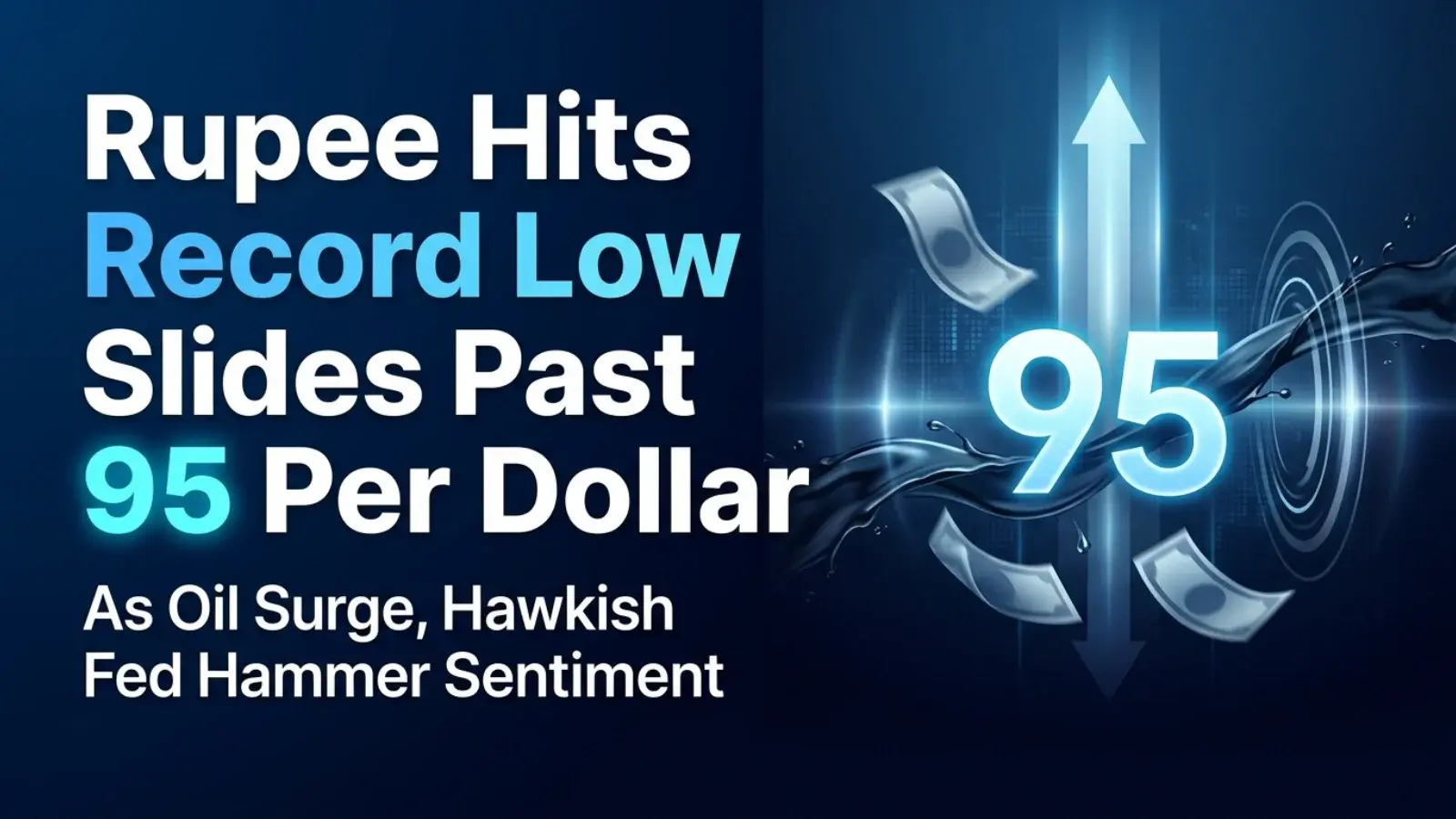
Rupee Hits Record Low, Slides Past 95 Per Dollar As Oil Surge, Hawkish Fed Hammer Sentiment
Authored By HDFC SKY | Last Modified: Apr 30, 2026 05:40 PM IST
Open Free Demat Account
Open Free Demat Account
Mumbai, April 30: The rupee slid past 95 per dollar on Thursday slumping to a fresh record low as surging oil prices and hawkish signals from the US Federal Reserve hit the currency hard
The rupee went as low as 95.34 against the dollar, exceeding its previous all-time low hit in March. At the time of writing, the currency had managed to pare some losses to trade at 95.25, down 38 paise from the previous close of 94.86.
Primary Trigger
The relentless rally in crude oil prices has hammered the rupee real hard, with Brent crude surging to around $126 per barrel, its highest level in four years, on the back of geopolitical tensions and supply disruptions linked to the US-Iran conflict. For India, a major oil importer, higher crude prices mean a widened trade gap and heightened demand for dollars, all of which combine to pressure the rupee.
And the latest signal from the US Federal Reserve only adds to the strain on the currency as the central bank has struck a hawkish tone in its commentary pointing to persistent inflation risks while keeping interest rates unchanged and lowering hopes of rate cuts in the near term. All of this has bumped up the dollar and US bond yields, lowering the attraction of emerging market currencies like the rupee to investors.
Capital Outflows
The rupee’s weakness is also being amplified by sustained foreign capital outflows, with investors pulling billions of dollars from Indian equities and bonds over recent weeks. The outflows, coupled with elevated import costs, have intensified pressure on the currency and eroded the gains seen after recent central bank measures aimed at stabilising the forex market.
The broader trend reflects deepening macro concerns. The rupee has already declined nearly 6% so far in 2026, mirroring last year’s weakness, as India grapples with a combination of external shocks—from trade tensions to energy supply disruptions. Analysts warn that persistently high oil prices could further strain the current account and fuel imported inflation, complicating the policy outlook.
There are also growing concerns about a feedback loop: a weaker rupee raises import costs, which in turn stokes inflation and potentially deters foreign investment, adding to currency pressure. The Reserve Bank of India has stepped in intermittently to smooth volatility, but markets are increasingly speculating whether stronger intervention may be required if the slide continues.
What it means:
The rupee’s sharp fall highlights the vulnerability of emerging market currencies to global shocks. With oil prices elevated and the Fed signalling a higher-for-longer rate regime, the near-term outlook for the rupee remains fragile.
For India, a sustained depreciation could translate into higher inflation, tighter financial conditions and increased pressure on policymakers—keeping currency markets on edge in the sessions ahead.
Source: spot rates from https://www.moneycontrol.com/markets/currencies/
Disclaimer
If you have any concerns, questions, or wish to point out any discrepancies in our content, please feel free to write to us at content@hdfcsec.com.
Please Note: The information shared is intended solely for informational purposes and does not make any investment recommendations
Disclaimer
The information shared here is intended solely for informational and educational purposes and does not constitute investment recommendations. While we practice strict due diligence in curating daily market data, readers must perform independent research before trading. To flag any real-time data discrepancies or content concerns, please write to us at content@hdfcsec.com.
 Join Us
 Add as preferred source on Google


More Business News










Open Free Demat Account
Open Free Demat Account












Invest Anytime, Anywhere


By signing up I certify terms, conditions & privacy policy