Nifty 50
- Kotak Mahindra Bank₹4408.10 (1.88%)
- Titan Company₹4,377-173.00 (-3.80%)
- BSE₹3,35651.00 (1.54%)
- Adani Enterprises₹2,743-106.90 (-3.75%)
- Bharti Airtel₹1,833.9023.40 (1.29%)
- Hindalco Industries₹910.85-29.65 (-3.15%)
- ICICI Bank₹1,357.5014.70 (1.09%)
- JSW Steel₹1,230-29.60 (-2.35%)
- Coal India₹414.502.85 (0.69%)
- Bharat Electronics₹378.30-9.10 (-2.35%)
- Max Healthcare₹9085.50 (0.61%)
- Infosys₹992-21.85 (-2.16%)
- HDFC Life Insurance ₹546.052.10 (0.39%)
- Asian Paints₹2,372.10-52.10 (-2.15%)
- Bajaj Finance₹963.850.75 (0.08%)
- Mahindra & Mahindra₹2,800-55.00 (-1.93%)
- Apollo Hospitals₹7,9172.50 (0.03%)
- Adani Ports₹1,750.10-33.30 (-1.87%)
- L&T₹3,701.50-68.50 (-1.82%)

- Offerings
- Tools & Platforms
Tools & Calculators
- Open API
- Calculators
- SIP Calculator
- CAGR Calculator
- Compound Interest Calculator
- FD Calculator
- RD Calculator
- EPF Calculator
- Retirement Calculator
- HDFC SIP Calculator
- Mutual Fund Return Calculator
- Lumpsum Calculator
- Step Up SIP Calculator
- ETF SIP Calculator
- Brokerage Calculator
- Equity Margin Calculator
- SWP Calculator
- EMI Calculator
- MTF Calculator
- Margin Pledge Calculator
- Algo Strategy
- Markets
Stocks
F&O
Mutual Funds
- More
Decoding the Numbers: India - U.S. Trade Trends and What They Mean for India's Economic Future
Authored By Ankur Chandra | Published at: Jun 6, 2025 06:04 PM IST
Open Free Demat Account
Open Free Demat Account
In a global economy where no country operates in isolation, India’s trade relation with the U.S. is one of the key elements in its broader economic strategy. Lately, both sides have been in talks to seal an interim trade deal which could open up markets and ease tariffs, especially in sectors like agriculture and automobile manufacturing.
The U.S. has consistently ranked among India’s top trading partners, buying everything from pharmaceuticals and textiles to engineering goods and software services.
With a growing share of Indian exports landing in American markets, it’s worth diving into the numbers to understand how this partnership has evolved and what it means for India’s future in global trade.
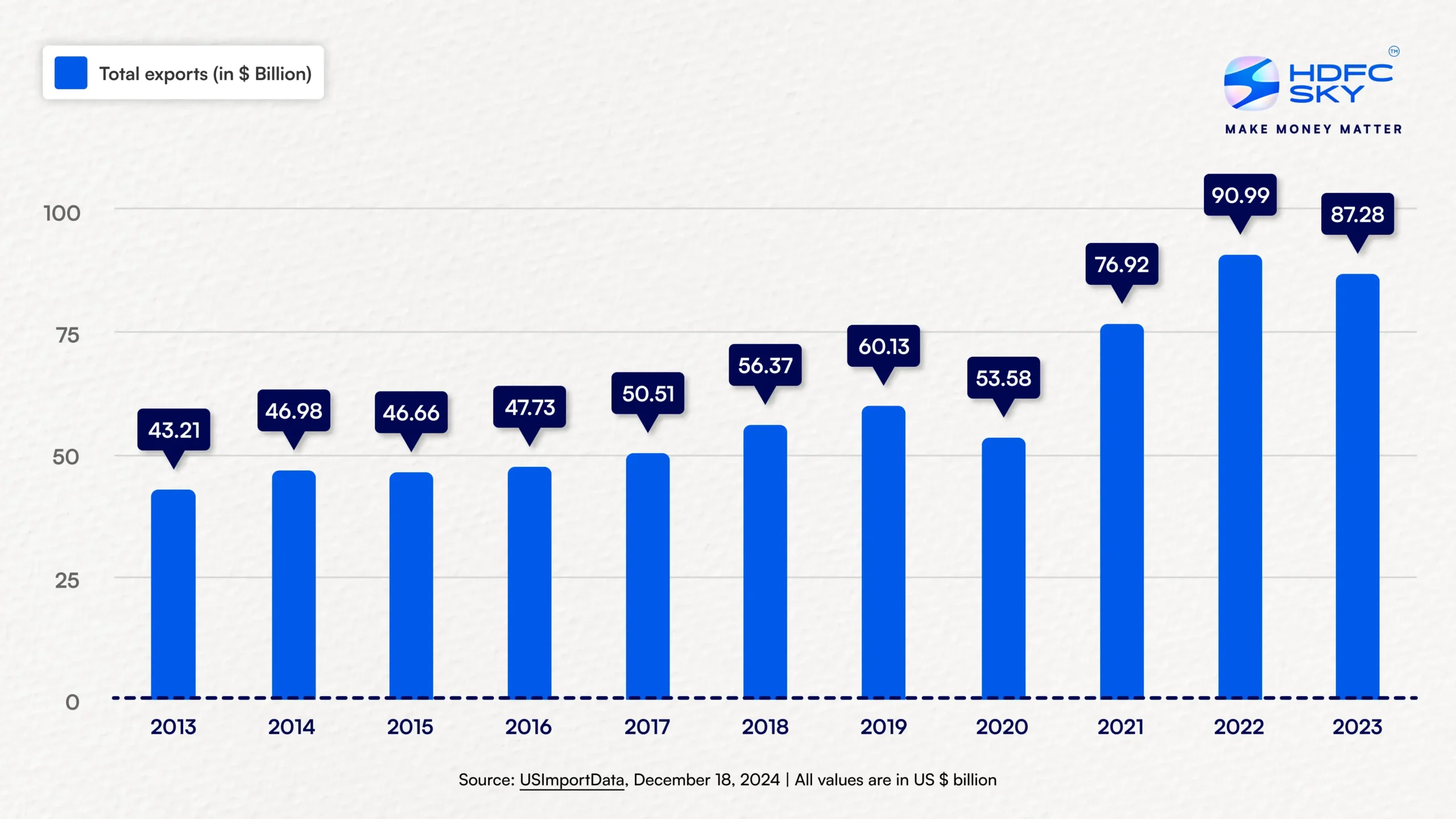
Indian Exports to the USA Over the Years (2013–2023)

Decoding The Numbers – Mission 500
India and the United States have recently agreed on the framework for the first phase of a bilateral trade agreement. Back in February, both sides sat down and decided to work together on an initial pact, aiming to wrap it up by the end of the year.
The bigger picture? They want to boost bilateral trade volumes to $500 billion by 2030, up from the current $191 billion. This trade agreement is part of what they’re calling “Mission 500,” a bold initiative to more than double trade levels and establish India as a key player in global supply chains.
This step forward comes at a time when trade tensions were beginning to heat up, especially after the U.S. imposed a steep 26% reciprocal tariff on certain Indian exports in April. The good news is, there’s now a temporary 90-day pause on those tariff hikes for key trading partners. That gives both sides a window to continue negotiations and find common ground.
A Trade Surplus on the Rise
From FY22 to FY25, the U.S. has been India’s largest trading partner. In fact, in FY25, India recorded a trade surplus of $41.18 billion in goods with the U.S., up from $35.32 billion in FY24 and $27.7 billion in FY23.
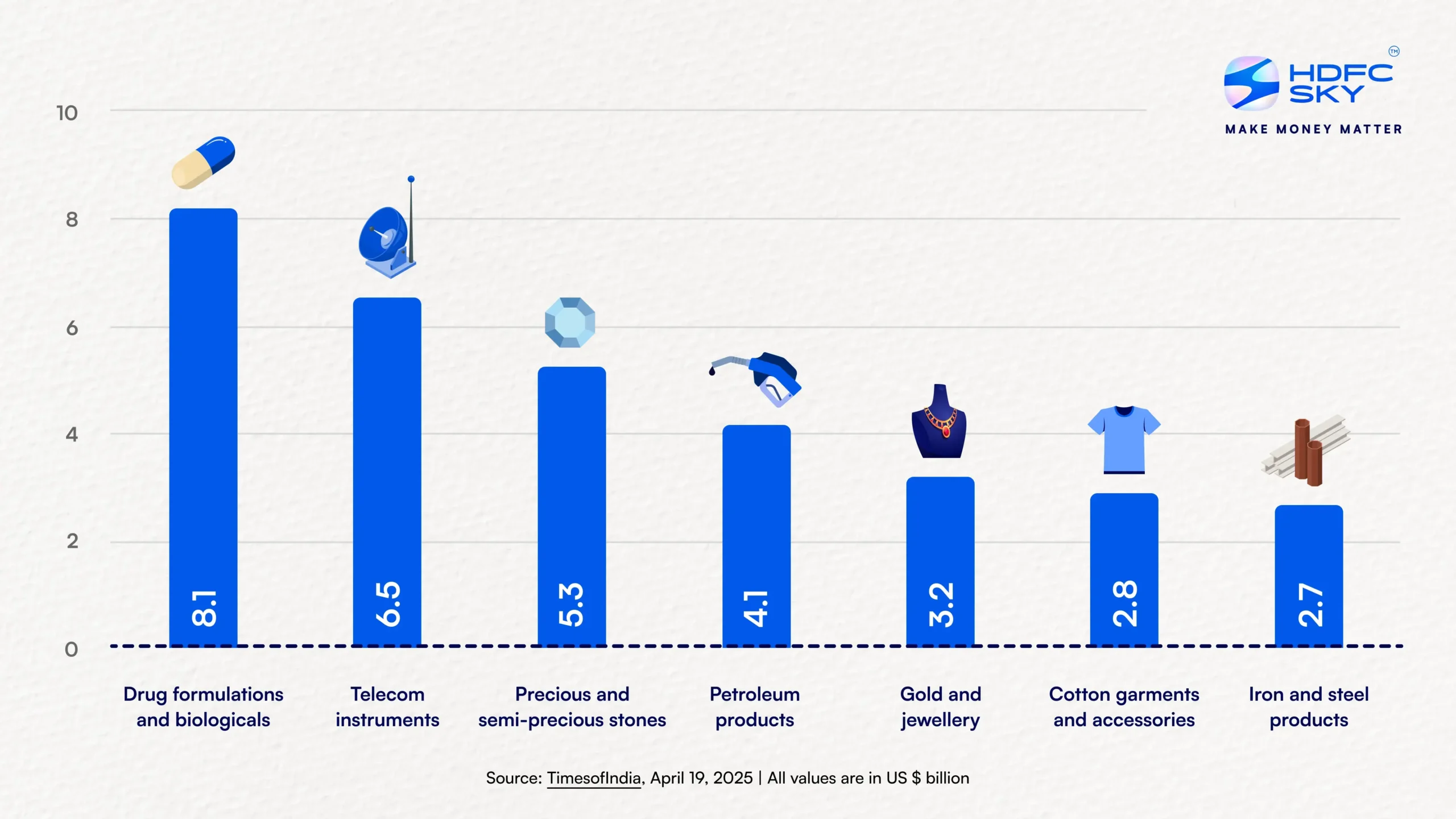
India’s Top Exports to the USA in FY 2024
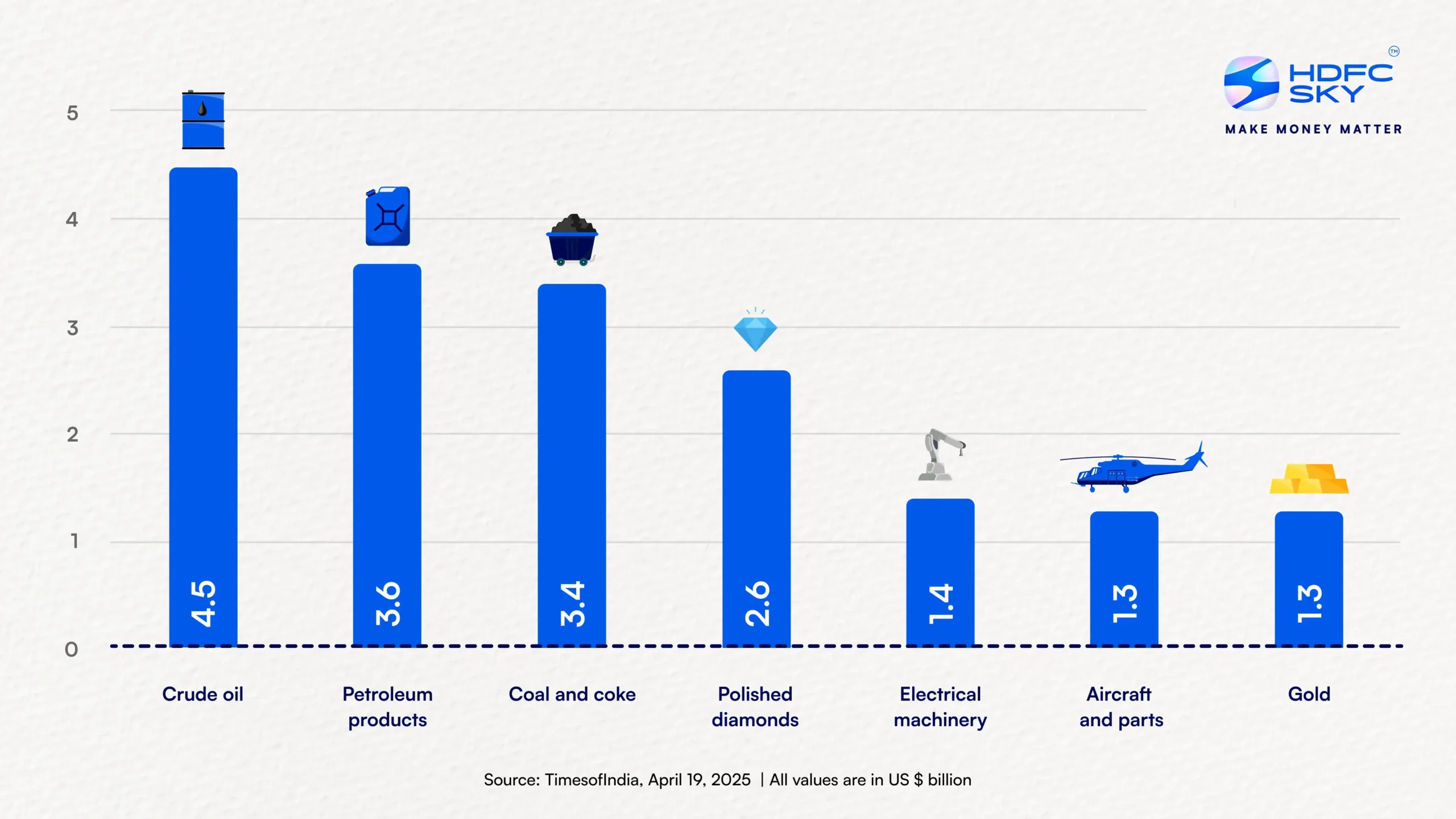
USA’s Top Exports to India in FY 2024
A Look At America’s Top Trading Partners
When it comes to U.S. trade, proximity still plays a big role. Mexico and Canada top the list, thanks to regional supply chains.
China remains a key player at 11%, despite rising tensions. But here’s the interesting part: India, at just 2%, is still a small slice, but one with huge potential. As supply chains shift, that number is expected to grow.
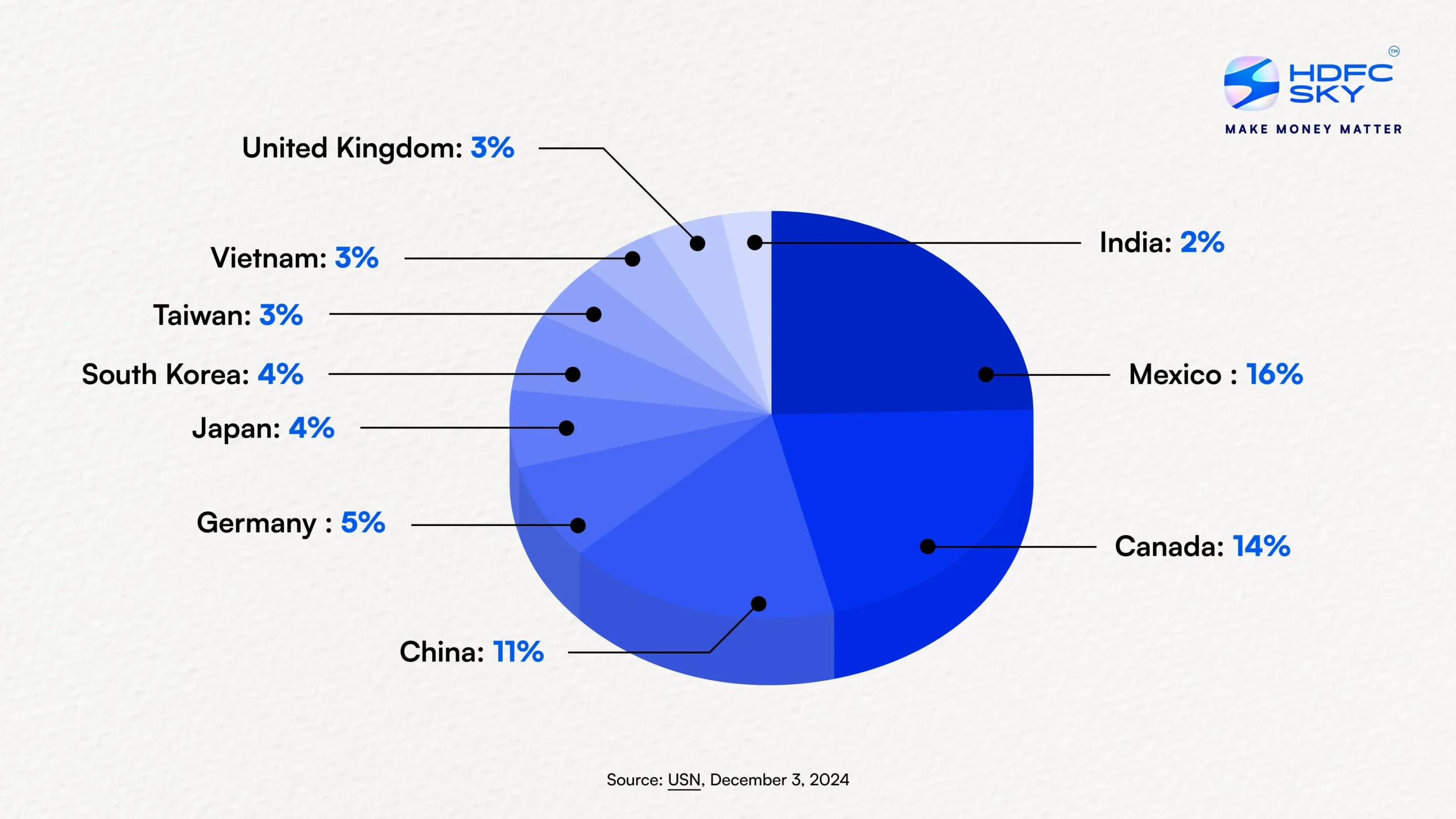
The shift is already underway. Over the past few years, U.S. manufacturers have been gradually moving parts of their sourcing away from China, and India is one of the key beneficiaries. Between 2018 and 2022, U.S. imports from India grew by 44%, while imports from China declined by 10%.
Rethinking Supply Chains: Why the U.S. Is Exploring the China+1 Strategy
Doing business in China isn’t as straightforward as it used to be. With rising tariffs, evolving regulatory landscape, and higher labor costs, many companies are no longer putting all their eggs in one basket.
That’s where the China+1 strategy comes in: keep operations in China, but add another country to the mix to spread the risk.
And India’s checking a lot of the right boxes.
- It’s got a solid manufacturing base in areas like electronics, pharma, and textiles.
- The workforce is young, skilled, and affordable.
- Plus, being a democracy with a strong legal framework gives businesses more peace of mind in the long run.
India’s Big Push: Not Just Growth – A Strategy
India isn’t just sitting back and waiting for global manufacturers to show up, it’s actively rolling out the red carpet. The government has launched a bunch of Production-Linked Incentive (PLI) schemes to sweeten the deal for manufacturers in sectors like electronics, automobiles, pharma, and textiles.
And it’s not just about subsidies. India is steadily building the kind of ecosystem that global supply chains need—industrial corridors, free trade zones, and simplified compliance frameworks—to make it easier for companies to set up and scale operations without the usual headaches.
Fixing the Missing Link: Logistics
The PM Gati Shakti plan is stitching together road, rail, and sea routes into a unified logistics grid. Ports like JNPT, Mundra, and Chennai are getting serious upgrades to match global standards. New Free Trade Agreements (FTAs) are smoothing out the paperwork and cutting delays for exporters.
Six Principles of PM GATI SHAKTI
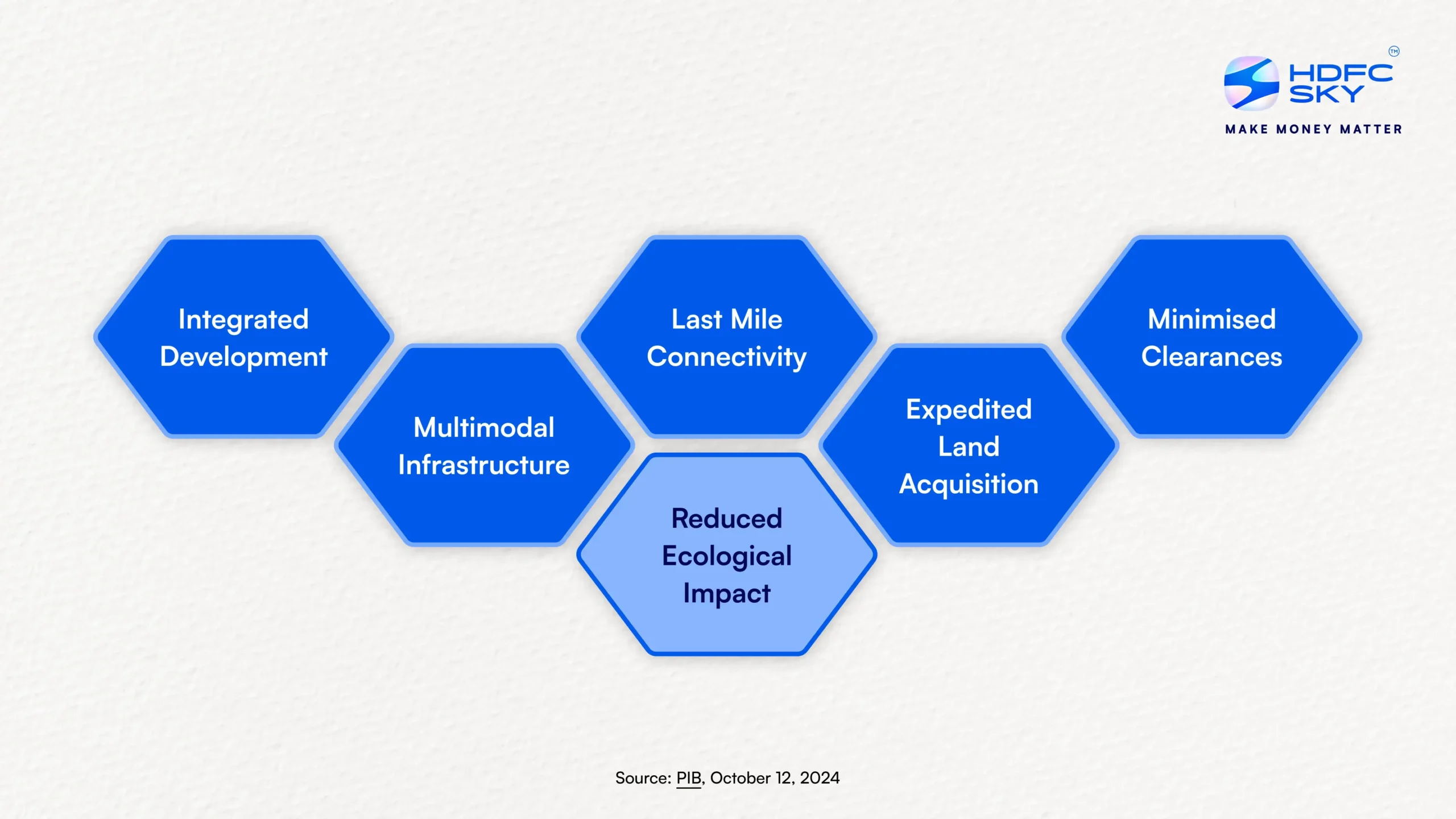
India’s Tech Edge: Smarter Supply Chains
But here’s what really sets India apart: it’s not just building products, it’s building smart supply chains. From AI-powered logistics to blockchain-based tracking systems, the country is creating end-to-end digital solutions that help global brands manage costs, timelines, and risks in real time.
Why India Needs the U.S
The U.S. isn’t just one of India’s biggest export destinations. It’s a high-value, high-growth market. For Indian businesses, it offers access to scale, premium pricing, and global brand exposure. Beyond trade, the U.S. is also a critical partner in technology, investment, defense, and innovation.
As India aims to move up the global value chain—from textiles to semiconductors, from pharma to clean energy—U.S. collaboration becomes essential for capital, expertise, and market access. In a world of shifting alliances and supply chains, deepening ties with the U.S. gives India a stronger global voice and greater economic resilience.
Final Thoughts
The numbers behind India-U.S. trade tell a story of growing interdependence, evolving opportunities, and the power of economic diplomacy. As trade volumes rise and the partnership matures, the focus should shift from transactions to transformation, creating joint ecosystems for innovation, job creation, and sustainable growth.
By doubling down on collaboration and keeping channels open, India and the U.S. can not only strengthen their own economies but also shape a more balanced and resilient global trade order.
Disclaimer: At HDFC SKY, we take utmost care and due diligence in curating and presenting news and market-related content. However, inadvertent errors or omissions may occasionally occur.
If you have any concerns, questions, or wish to point out any discrepancies in our content, please feel free to write to us at content@hdfcsec.com.
Please note that the information shared is intended solely for informational purposes and does not make any investment recommendations
 Join Us
 Add as preferred source on Google


More Business News








Open Free Demat Account
Open Free Demat Account










Invest Anytime, Anywhere


By signing up I certify terms, conditions & privacy policy