Nifty 50
- Dr. Reddy's Labs₹1,229.4032.40 (2.71%)
- Apollo Hospitals₹7,775-252.50 (-3.15%)
- Bajaj Auto₹10,034256.00 (2.62%)
- ITC₹257.90-8.10 (-3.05%)
- Tata Motors PV₹284.454.55 (1.63%)
- Tech Mahindra₹1,471-43.10 (-2.85%)
- Bharat Electronics₹373.905.75 (1.56%)
- L&T₹3,627.50-75.80 (-2.05%)
- BSE₹3,330.2043.00 (1.31%)
- Max Healthcare₹865.95-17.85 (-2.02%)
- Cipla₹1,317.4016.40 (1.26%)
- Hindalco Industries₹882.50-17.85 (-1.98%)
- Eicher Motors₹7,11969.00 (0.98%)
- Hindustan Unilever₹1,820.70-36.00 (-1.94%)
- Mahindra & Mahindra₹2,81316.80 (0.60%)
- SBI₹941-18.10 (-1.89%)
- Kotak Mahindra Bank₹443.402.40 (0.54%)
- Coal India₹404.80-6.75 (-1.64%)
- HCL Technologies₹1,2236.30 (0.52%)
- Bharti Airtel₹1,778.70-26.40 (-1.46%)

- Offerings
- Tools & Platforms
Tools & Calculators
- Open API
- Calculators
- SIP Calculator
- CAGR Calculator
- Compound Interest Calculator
- FD Calculator
- RD Calculator
- EPF Calculator
- Retirement Calculator
- HDFC SIP Calculator
- Mutual Fund Return Calculator
- Lumpsum Calculator
- Step Up SIP Calculator
- ETF SIP Calculator
- Brokerage Calculator
- Equity Margin Calculator
- SWP Calculator
- EMI Calculator
- MTF Calculator
- Margin Pledge Calculator
- Algo Strategy
- Markets
Stocks
F&O
Mutual Funds
- More
India VIX Rises 2.1% to 13.15 as Earnings Season and Global Risks Keep Volatility Elevated
Authored By HDFC SKY | Last Modified: Jul 17, 2026 04:41 PM IST
Open Free Demat Account
Open Free Demat Account
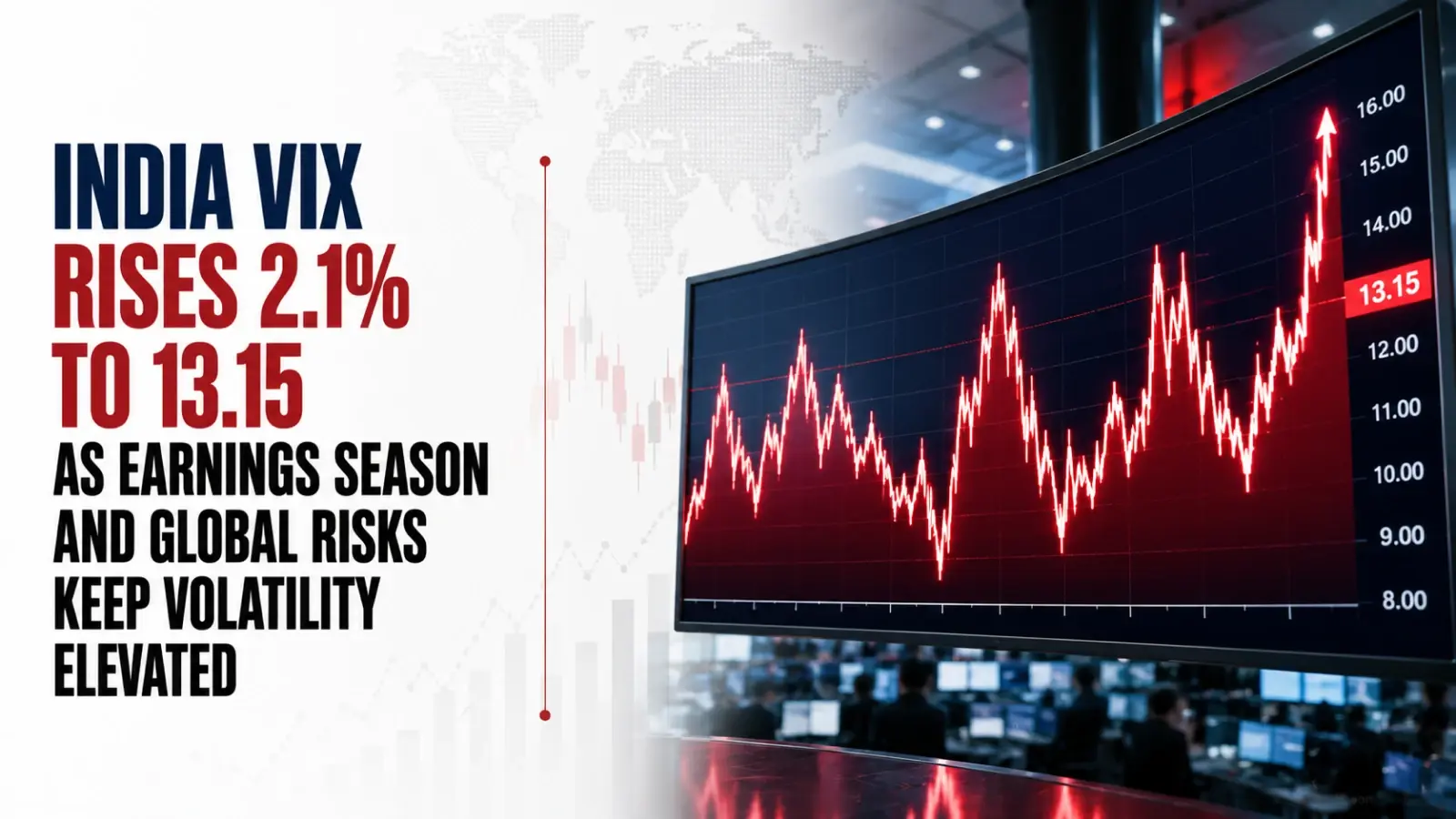
Mumbai, July 17: India VIX, the National Stock Exchange’s (NSE) volatility index, ended the session higher on 17 July 2026, reflecting elevated expectations of market fluctuations even as benchmark equity indices recorded strong gains. The volatility gauge closed at 13.15, up 0.27 points (2.1%) from the previous close of 12.88, after moving within an intraday range of 12.81–13.35.
The index opened at 12.88, touched a high of 13.35, and remained well below its 52-week high of 28.90, while staying above the 52-week low of 8.72. On a year-to-date basis, India VIX has returned 38.71%, indicating that implied volatility remains significantly higher than levels seen at the beginning of the year despite easing from the sharp spike witnessed earlier this month.

India VIX Ends at 13.15 After Trading between 12.81 and 13.35
Throughout the trading session, India VIX remained above the previous day’s closing level, with readings fluctuating across different reporting intervals due to varying market timestamps. During the morning session, the index traded around 13.03–13.23, before settling at 13.15 by the close.
The move reflected a modest increase in implied volatility compared with the previous session rather than a sharp jump. Technical indicators continued to classify the trend as Neutral, while the day’s classical pivot levels placed resistance at 13.18, 13.47, and 13.68, with support positioned at 12.68, 12.47, and 12.18. These technical levels remained unchanged during the session and reflected the previous trading day’s price range.
Benchmark Indices Rally Despite Higher Volatility Expectations
The rise in India VIX came during a session in which Indian benchmark indices advanced strongly despite persistent global uncertainties. The Sensex gained more than 800 points to move above the 78,000 mark, while the Nifty 50 climbed over 200 points to reclaim 24,250.
The advance was largely supported by strong first-quarter FY27 corporate earnings, with Tech Mahindra reporting 28% year-on-year profit growth, while information technology stocks including Infosys, Tata Consultancy Services (TCS), and HCL Technologies contributed to gains across the sector.
Reliance Industries also traded higher ahead of its June-quarter earnings announcement, while Jio Financial Services rose nearly 6% after reporting 155% year-on-year profit growth. In contrast, broader market indices remained relatively weaker, with the Nifty Midcap 100 and Nifty Smallcap 100 declining by up to 0.8–1%, while Pharma, Media and Metal stocks traded under pressure during the session.
Corporate Results and Global Developments Keep Volatility Elevated
The increase in India VIX reflected a combination of domestic and international developments that continued to influence market activity. The ongoing Q1 FY27 earnings season remained the primary domestic factor, with market participants closely tracking corporate earnings announcements, including the release of Reliance Industries’ quarterly results later in the day and the scheduled results of major private sector banks over the weekend.
At the same time, geopolitical developments involving the United States and Iran continued to remain in focus, while Brent crude oil traded around USD 84.45 per barrel, up 0.26%, maintaining attention on global energy markets.
The Indian rupee also weakened for the fourth consecutive trading session to 96.33 against the US dollar, while foreign institutional investors recorded net equity sales of ₹4,206 crore during the previous trading session. Together, these developments kept implied volatility elevated even as benchmark indices extended gains.
India VIX Remains Below July 8 Peak Despite Higher Close
Although India VIX finished higher on 17 July, the index remained significantly below the elevated levels recorded during the sharp volatility event on 8 July 2026. During that session, India VIX surged by nearly 30%, reaching an intraday high of approximately 15.15, while the Sensex declined by nearly 1,700 points and the Nifty 50 lost more than 500 points.
The sharp increase in implied volatility at the time coincided with escalating geopolitical tensions, rising crude oil prices, concerns over shipping through the Strait of Hormuz, increased institutional hedging activity, weakness across global equity markets and the beginning of the first-quarter earnings season.
Since then, implied volatility has moderated steadily, with India VIX largely trading in the 13–14 range before easing further towards 13 during the current session.
Seasonality Data Shows July Has Historically Favoured Lower Readings
Historical data continued to indicate that July has generally been a weaker month for India VIX. According to the seasonality analysis, the volatility index has delivered negative returns in 15 out of the past 18 years during July. The month has recorded a maximum positive change of 7.39% in 2011, an average positive change of 4.47%, a maximum negative change of -24.22% in 2022, an average negative change of -10.81%, and an overall average monthly change of -8.27%. While historical trends do not determine current market movements, the latest session’s performance occurred within a month that has historically seen declining volatility levels over a longer period.
India VIX closed 2.1% higher at 13.15 on 17 July 2026, remaining above the previous session while staying well below the levels recorded during the 8 July volatility spike. The session reflected continued attention on the Q1 FY27 earnings season, global geopolitical developments, crude oil prices, currency movements and routine NSE data publication, with no new India VIX-specific regulatory or methodology changes announced.
Source
- https://www.nseindia.com/reports-indices-historical-vix
Disclaimer
If you have any concerns, questions, or wish to point out any discrepancies in our content, please feel free to write to us at content@hdfcsec.com.
Please Note: The information shared is intended solely for informational purposes and does not make any investment recommendations
Disclaimer
At HDFC SKY*, we take utmost care and due diligence in curating and presenting news and market-related content. However, inadvertent errors or omissions may occasionally occur.
If you have any concerns, questions, or wish to point out any discrepancies in our content, please feel free to write to us at content@hdfcsec.com.
Please Note: The information shared is intended solely for informational purposes and does not make any investment recommendations.
HDFC SKY from HDFC Securities, one of most trusted trading platforms in India, has been recognized with the *Next-Gen Digi Content Awards 2025-26.
 Join Us
 Add as preferred source on Google


More Business News










Open Free Demat Account
Open Free Demat Account












Invest Anytime, Anywhere


By signing up I certify terms, conditions & privacy policy