Nifty 50
- Dr. Reddy's Labs₹1,22120.00 (1.67%)
- Tata Motors PV₹281.75-8.70 (-3.00%)
- Infosys₹1,003.203.00 (0.30%)
- Adani Enterprises₹2,831.10-85.40 (-2.93%)
- HDFC Life Insurance ₹531.600.60 (0.11%)
- Jio Financial ₹220.50-6.50 (-2.86%)
- Power Grid Corp₹261.85-7.65 (-2.84%)
- L&T₹3,766.40-109.80 (-2.83%)
- ONGC₹230-5.86 (-2.48%)
- Adani Ports₹1,743.70-44.30 (-2.48%)
- Hindustan Unilever₹1,896-46.90 (-2.41%)
- Tata Consumer ₹960-23.20 (-2.36%)
- Reliance Industries₹1,197.60-28.40 (-2.32%)

- Offerings
- Tools & Platforms
Tools & Calculators
- Open API
- Calculators
- SIP Calculator
- CAGR Calculator
- Compound Interest Calculator
- FD Calculator
- RD Calculator
- EPF Calculator
- Retirement Calculator
- HDFC SIP Calculator
- Mutual Fund Return Calculator
- Lumpsum Calculator
- Step Up SIP Calculator
- ETF SIP Calculator
- Brokerage Calculator
- Equity Margin Calculator
- SWP Calculator
- EMI Calculator
- MTF Calculator
- Margin Pledge Calculator
- Algo Strategy
- Markets
Stocks
F&O
Mutual Funds
- More
Nasdaq Surges 2.8% as Tech Rebounds, Dow Adds 614 Points on Cooling Inflation Data
Authored By HDFC SKY | Last Modified: Jul 31, 2026 09:04 AM IST
Open Free Demat Account
Open Free Demat Account
Mumbai, July 31: US stock markets staged a powerful rebound on Thursday, recovering sharply from the previous session’s Federal Reserve-driven sell-off as cooling inflation data and robust results from the technology sector reinvigorated investor risk appetite. The tech-heavy Nasdaq Composite led the rally with a surge of nearly 2.8%, while the Dow Jones Industrial Average added over 600 points and the S&P 500 gained 1.7%.
The rebound came after the Nasdaq-100 index officially entered correction territory on Wednesday, having fallen more than 10% from its June peak. Gains were broad-based, though technology and semiconductor stocks led the charge, with the Philadelphia Semiconductor Index (SOX) soaring over 8%.

Dow Jones Industrial Average Surges 614 Points on Tech-Driven Rebound
The Dow Jones Industrial Average (^DJI) closed at 52,208.06, gaining 613.92 points or 1.19% on the session. The blue-chip index opened at 52,114.27 and traded within a daily range of 51,655.52 to 52,266.45. The rally marked a sharp reversal from Wednesday’s brutal session, when the Dow plunged 1,153.18 points (2.19%) to 51,594.14, its worst single-day decline since April 2025.
The index’s recovery was largely propelled by Microsoft (MSFT), which surged over 15% and recorded its biggest one-day gain since 2008. Other significant contributors included Goldman Sachs (GS), which rose 4.50%; Caterpillar (CAT), up 3.38%; and Boeing (BA), which gained 3.22%. On the downside, Salesforce (CRM) declined 4.07%, Johnson & Johnson (JNJ) fell 3.66%, and Verizon (VZ) dropped 2.35%. The rebound followed a session in which traditional blue-chip stocks had been the heaviest hit, with Caterpillar plunging nearly 7% and financial giants JPMorgan and Goldman Sachs suffering sharp declines.
S&P 500 Climbs 1.7% as Information Technology Sector Leads Broad Recovery
The S&P 500 (^GSPC) closed at 7,437.63, gaining 121.48 points or 1.66%. The benchmark index opened at 7,390.45 and traded between an intraday low of 7,370.98 and a high of 7,448.75. This followed Wednesday’s decline of 112.63 points (1.52%) to 7,316.15.
The Information Technology sector was the standout performer, soaring nearly 5% and on track for its best daily advance since April 2025. The sector’s rally was fuelled by a broad-based rebound in semiconductor and software stocks. Key gainers included Micron Technology (MU), which surged 18.43%; Advanced Micro Devices (AMD), up 13.08%; and Intel (INTC), which gained 11.37%. SanDisk (SNDK) posted the largest gain in the index, soaring 26.05%, while Lam Research (LRCX) jumped 17.86% and Applied Materials (AMAT) advanced 14.97%. Oracle (ORCL) also gained 8.35%. The Communication Services sector was the worst performer, falling 2.6%, dragged down by Meta Platforms (META), which tumbled nearly 8% after reporting disappointing earnings. Consumer Staples also declined 2.2%, reflecting a defensive rotation within the broader market.
Nasdaq Composite Jumps 2.8% to Snap Six-Day Losing Streak
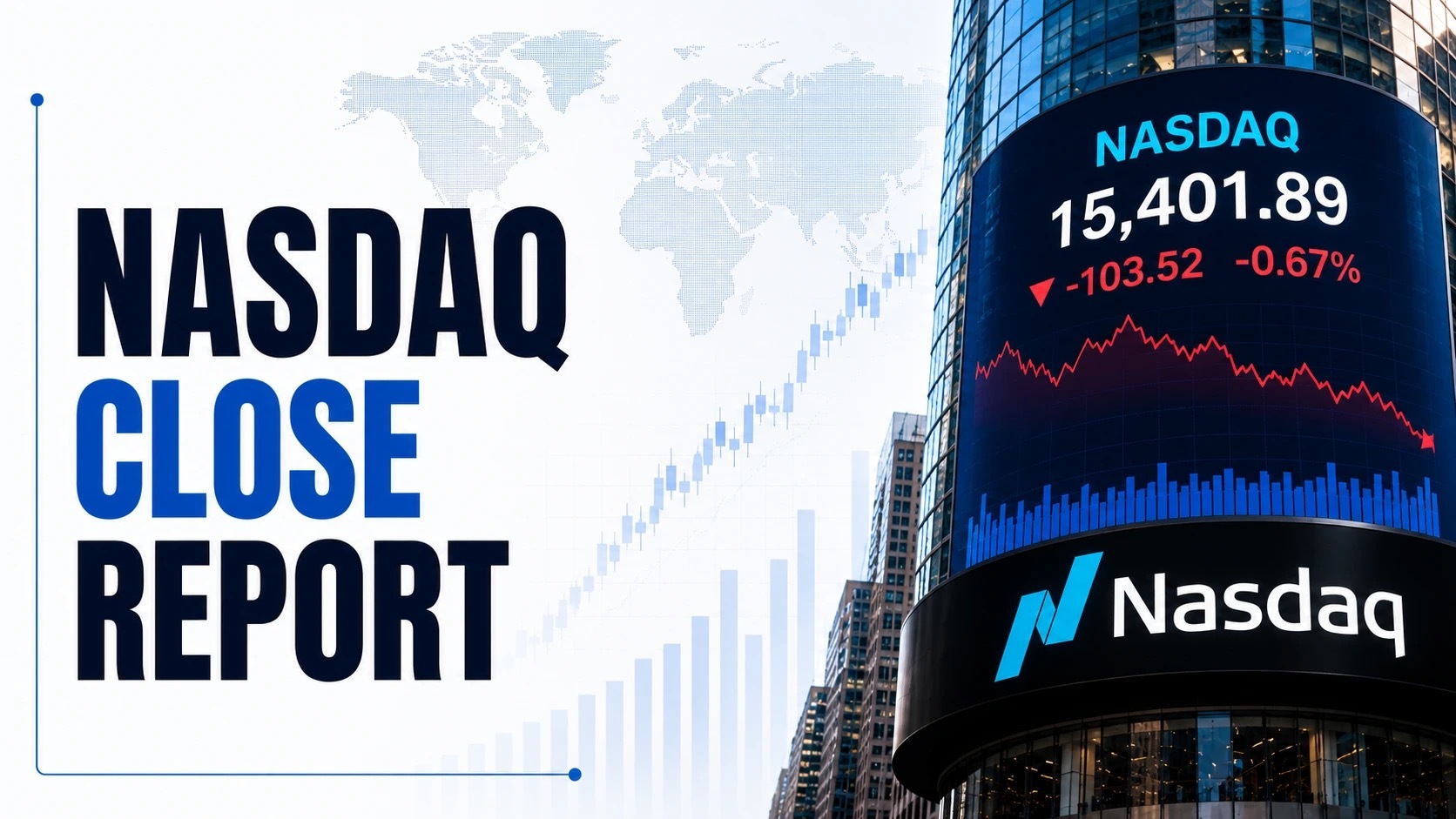
The Nasdaq Composite (^IXIC) closed at 25,122.18, surging 679.24 points or 2.78%. The index opened at 24,852.05 and traded between a low of 24,813.84 and a high of 25,171.44. The session snapped a six-day losing streak for the tech-heavy index, which had fallen sharply in recent sessions amid concerns over elevated valuations and the sustainability of AI-related capital expenditure.
Thursday’s rally was driven by a powerful rebound in semiconductor and growth stocks. The iShares Semiconductor ETF (SOXX) jumped over 8%, while the Roundhill Memory ETF (DRAM) soared 16% as memory stocks staged a dramatic turnaround. Micron Technology (MU) surged 18%, SanDisk (SNDK) rocketed 26%, Western Digital (WDC) gained 15.37%, and Seagate Technology (STX) advanced 11.62%. Other notable gainers included Advanced Micro Devices (AMD), up 13.08%; Intel (INTC), rising 11.37%; and Nvidia (NVDA), which added 2.65%. The Nasdaq’s advance was also supported by a 5% jump in Amazon (AMZN) ahead of its earnings release, while Apple (AAPL) slipped 1.33% in a more cautious pre-earnings trade.
Philadelphia Semiconductor Index (SOX) Soars 8.2% as AI Demand Rekindles Chip Rally
The Philadelphia Semiconductor Index (SOX) closed at 11,302.99, skyrocketing 855.50 points or 8.19%. The index opened at 11,085.96 and traded between an intraday low of 10,963.90 and a high of 11,406.82. This represented a sharp recovery from Wednesday’s close of 10,447.49, when the index had fallen over 5% amid a broader tech rout.
The rally was ignited by Lam Research’s (LRCX) strong earnings and guidance, which pointed to sustained AI-driven demand for semiconductor equipment. Lam Research shares surged 18%, heading for their best single-day performance since 1999. Memory stocks were the standout performers, with Samsung warning that the memory crunch could persist into 2028, fuelling a buying frenzy in the segment. Micron Technology (MU) gained 18%, SanDisk (SNDK) soared 26%, and SK Hynix ADRs jumped over 17%. Applied Materials (AMAT) surged 14.97%, Advanced Micro Devices (AMD) gained 13.08%, and Intel (INTC) rose 11.37%. Arm Holdings (ARM) added 7.4% after its CEO reported strong demand for its first in-house AI chip, with cumulative orders exceeding $2 billion for fiscal 2027-2028.
Russell 2000 Adds 1.4% as Small-Caps Join Broader Market Rebound
The Russell 2000 (^RUT) closed at 2,946.10, gaining 39.79 points or 1.37%. The small-cap index opened at 2,918.86 and traded within a daily range of 2,912.19 to 2,948.41. This followed Wednesday’s decline of 1.5% to 2,906.31. The Russell’s advance was more modest than its large-cap peers, reflecting lingering caution over economic growth and interest rate uncertainty. Notable gainers included BE (BE), which surged 26.38%; FORM (FORM), up 26.28%; and CIFR (CIFR), gaining 28.14%. On the downside, MDGL (MDGL) fell 9.83%, and CRS (CRS) declined 5.07%. The index remains below its 52-week high of 3,046.59 but has gained over 37% from its 52-week low of 2,143.43.
S&P 100 Advances 1.9% as Megacap Tech Stocks Recover
The S&P 100 (OEX) closed at 3,656.92, gaining 69.44 points or 1.94%. The index opened at 3,627.61 and traded between 3,616.61 and 3,665.31. The move came after Wednesday’s close of 3,587.48, which represented a decline of over 2% from the prior session. The S&P 100’s outperformance relative to the broader S&P 500 was driven by the rebound in megacap technology names, particularly Microsoft, which accounts for a significant weighting in the index. Other top contributors included Nvidia (NVDA), up 2.65%; Amazon (AMZN), which gained 4.05%; and Alphabet (GOOGL), which slipped 0.91% but recovered from deeper intraday losses. The index remains below its 52-week high of 3,791.88 but has more than doubled from its 52-week low of 3,062.51.
Dow Jones Composite, Transport, and Utility Averages: Mixed Performance Across Cyclical and Defensive Sectors
The Dow Jones Composite Average (DJC) closed at 16,622.39, edging up 41.70 points or 0.25%. The index opened at 16,695.29 and traded between 16,468.33 and 16,695.29. In contrast, the Dow Jones Transportation Average (DJT) fell 372.63 points or 1.74% to close at 21,089.23, reflecting weakness in freight and logistics stocks amid rising fuel costs and geopolitical uncertainty. The Dow Jones Utility Average (DJU) also declined, shedding 8.11 points or 0.71% to close at 1,132.98, as rising bond yields weighed on dividend-paying defensive names. The mixed performance highlights a rotation away from defensives and cyclicals toward growth and technology, as investors positioned for a potential easing of inflationary pressures.
NYSE Composite Rises 0.8% as Breadth Improves Despite Sector Divergence
The NYSE Composite (NYA) closed at 24,138.29, gaining 193.32 points or 0.81%. The index opened at 23,944.97 and traded between a low of 23,892.30 and a high of 24,155.56. The advance was supported by improving market breadth, with advancing stocks outpacing decliners by a healthy margin. However, the gains were tempered by weakness in energy and consumer staples sectors, which limited the overall upside. The index remains within striking distance of its 52-week high of 24,258.93, underscoring the resilience of the broader market despite recent volatility.
S&P MidCap 400 and SmallCap 600: Mid-Caps Gain 0.8% While Small-Caps Lag
The S&P MidCap 400 (SP400) closed at 3,764.47, advancing 30.23 points or 0.81%. The index opened at 3,734.24 and traded between 3,722.09 and 3,767.18. The S&P SmallCap 600 also gained, though less aggressively, rising 0.6% to close at 1,912.34. The outperformance of mid-caps relative to small-caps reflects a preference for companies with more established business models and better access to capital, particularly in a rising rate environment. Both indices remain below their 52-week highs, with the MidCap 400 at 3,861.05 and the SmallCap 600 at 2,021.65.
Also Read: How to Invest in S&P 500 Stocks Through Index Funds
Volatility Indices Plunge as Fear Subsides Following Fed Decision
The CBOE Volatility Index (VIX) closed at 17.82, plummeting 2.84 points or 13.75%. The index opened at 19.56 and traded between 17.80 and 20.08, well below Wednesday’s close of 20.66. The sharp drop in the VIX indicates a significant reduction in market anxiety following Thursday’s broad-based rally. The VIX had spiked above 20 on Wednesday after the Federal Reserve’s decision to hold rates steady and the subsequent bond market rout, but the cooler-than-expected inflation data and strong tech earnings quickly calmed investor nerves. The CBOE Nasdaq Volatility Index (VXN) also fell sharply, declining over 12% to close at 25.34, reflecting the tech-heavy Nasdaq’s outsized rebound.
Sector Performance: Information Technology Dominates, Communication Services Sinks
All 11 S&P 500 sectors were mixed, with technology leading and communication services lagging. Information Technology was the best-performing sector, soaring 5.1%, driven by the semiconductor and software rally. The sector’s gains were fuelled by robust demand for AI-related infrastructure and a relief rally after weeks of selling. Communication Services was the worst performer, falling 2.6%, weighed down by Meta’s 8% decline after the social media giant reported a 91% drop in free cash flow and missed earnings estimates. Consumer Staples fell 2.2% as investors rotated out of defensive names, while Utilities declined 1.5% amid rising Treasury yields. Energy edged lower 0.2% despite volatile oil prices, as traders weighed geopolitical risks against demand concerns. Financials gained 0.8%, supported by a rebound in bank stocks, while Health Care slipped 0.3% on weakness in pharmaceuticals. Real Estate fell 0.9%, and Materials declined 0.4%.
Biggest Gainers and Losers: SanDisk, Micron Surge While Meta, ADP Plunge
Among the top gainers in the S&P 500, SanDisk (SNDK) soared 26.05%, leading the entire index, followed by Micron Technology (MU) at 18.43% and Lam Research (LRCX) at 17.86%. Applied Materials (AMAT) gained 14.97%, Advanced Micro Devices (AMD) rose 13.08%, and Marvell Technology (MRVL) advanced 12.22%. The rally in memory and semiconductor stocks was driven by the combination of strong earnings from Lam Research and a warning from Samsung that the memory supply crunch could extend into 2028, prompting a wave of short-covering.
On the downside, Meta Platforms (META) tumbled 7.95%, making it the worst performer in the S&P 500, after its quarterly free cash flow plunged 91% and its revenue guidance disappointed. Adobe (ADBE) fell 5.90%, Intuit (INTU) declined 5.29%, and Shopify (SHOP) lost 5.24%. Automatic Data Processing (ADP) dropped 3.48%, and Booking Holdings (BKNG) fell 4.00%. The declines reflected profit-taking and sector-specific headwinds, particularly in software and consumer discretionary names.
Semiconductor, Financial, Energy, and AI Stocks: Divergent Performance
Semiconductor stocks were the undisputed leaders on Thursday, with the SOX jumping 8.2% as AI-related demand reasserted itself as the dominant theme. Memory stocks, in particular, staged a dramatic reversal after weeks of selling, with the Roundhill Memory ETF (DRAM) soaring 16%. Financial stocks also performed well, with Goldman Sachs (GS) gaining 4.50% and JPMorgan (JPM) rising 1.78%, as banks benefited from a steepening yield curve and improved investor sentiment. Energy stocks were mixed, with Exxon Mobil (XOM) up 0.14% and Chevron (CVX) gaining 0.23%, while oil prices fell on reports of a Saudi-led maritime coalition proposal that eased supply concerns. AI and growth stocks broadly rebounded, with Microsoft leading the charge and Nvidia adding 2.65%, though Meta’s sharp decline highlighted the growing divergence in AI monetisation strategies.
Economic Data: GDP Slows to 1.5% in Q2, PCE Inflation Cools in June
The US economy grew at an annualised rate of 1.5% in the second quarter, falling short of economists’ expectations of 2.0% and slowing from 2.1% in the first quarter, according to the Commerce Department. The GDP price index rose 6.2% year-on-year, well above estimates of 4.0%, though core PCE (excluding food and energy) increased 3.4%, in line with expectations. Personal consumption expenditure (PCE) rose 3.2%, beating estimates of 2.2% and accelerating sharply from the prior month’s 0.5% increase. Meanwhile, the Fed’s preferred inflation gauge, the core PCE price index, rose 3.3% year-on-year in June, down from 3.4% in May, and in line with forecasts. Monthly core PCE rose 0.1%, below expectations of 0.2% and May’s 0.3% increase. Initial jobless claims for the week ended July 25 came in at 197,000, below the consensus estimate of 200,000 and down from the prior week’s revised 188,000. Continuing claims fell to 1.782 million, also below expectations.
Also Read : US Stock Market Timings
Federal Reserve, Bond Market, and Commodities: Yields Surge as Rate-Hike Bets Ease
The Federal Reserve voted 9-3 to keep interest rates steady at its July meeting, though three members supported a rate hike. Chair Kevin Warsh reiterated the central bank’s commitment to bringing inflation down to the 2% target, but offered little clarity on the future path of policy. According to the CME FedWatch tool, traders priced in a 63% chance of at least a 25-basis-point rate hike at the September meeting, down from 82% a week earlier, reflecting the cooling inflation data. In the bond market, the 10-year Treasury yield closed at 4.67%, up 4 basis points on the session, while the 30-year Treasury yield surged to near 5.24%, its highest level since 2007, as investors demanded higher compensation for inflation and fiscal risks. The 2-year yield rose to 4.85%, and the 5-year yield ended at 4.52%. The yield curve remained inverted, with the spread between 2-year and 10-year yields at -18 basis points.
Commodities and Currency Markets: Oil Falls on Geopolitical Easing, Gold Rallies
Brent crude futures settled down $1.71 or 1.88% at $89.03 per barrel, while WTI crude fell $0.87 or 1.03% to $83.59 per barrel, after a volatile session that saw prices spike above $93 on US-Iran strikes before retreating on reports of a Saudi-led maritime coalition plan. Gold futures rose 1.9% to $4,108.30 per ounce, supported by a weaker US dollar and softer inflation data, while silver gained 1.2% and copper rose 1.7% to a one-week high of $13,808 per metric ton. Natural gas futures edged up 1.2% to $2.758 per million British thermal units. In currencies, the US Dollar Index (DXY) fell nearly 1% to 99.94, reflecting reduced rate-hike expectations. EUR/USD rose to 1.1245, USD/JPY plunged over 2% to 145.60 amid suspected Japanese intervention, and GBP/USD advanced to 1.3120. USD/CNY was little changed at 7.2450.
Thursday’s rally underscored the market’s sensitivity to inflation data and Fed policy signals, with cooling PCE figures temporarily easing concerns about imminent rate hikes. However, the slowdown in GDP growth and persistently high Treasury yields highlight underlying economic vulnerabilities. The divergence between Microsoft and Meta’s post-earnings reactions also signals that AI monetisation remains a critical differentiator for technology valuations. Investors should monitor upcoming earnings from Apple and Amazon for further clues on consumer health and corporate spending, while keeping a close watch on geopolitical developments in the Middle East, which continue to pose upside risks to energy prices and inflation.
Source
- https://www.nasdaq.com/
- spglobal.com/spdji/en/indices/equity/sp-500/
- https://www.dowjones.com/
- https://www.spglobal.com/spdji/en/indices/equity/dow-jones-industrial-average/
- https://www.spglobal.com/spdji/en/indices/equity/sp-500/
- https://www.nasdaq.com/market-activity/index/comp
- https://www.nasdaq.com/market-activity/quotes/nasdaq-ndx-index
- https://www.spglobal.com/spdji/en/indices/equity/sp-100/
- https://www.lseg.com/en/ftse-russell/indices/russell-us
- https://www.nyse.com/index
- https://www.nyse.com/index
- https://www.spglobal.com/spdji/en/indices/equity/dow-jones-transportation-average/
- https://www.spglobal.com/spdji/en/indices/equity/dow-jones-utility-average/
- https://www.spglobal.com/spdji/en/indices/equity/dow-jones-composite-average/
- https://www.nasdaq.com/market-activity/index/sox
- https://www.cboe.com/tradable_products/vix/
Disclaimer
If you have any concerns, questions, or wish to point out any discrepancies in our content, please feel free to write to us at content@hdfcsec.com.
Please Note: The information shared is intended solely for informational purposes and does not make any investment recommendations
Disclaimer
At HDFC SKY*, we take utmost care and due diligence in curating and presenting news and market-related content. However, inadvertent errors or omissions may occasionally occur.
If you have any concerns, questions, or wish to point out any discrepancies in our content, please feel free to write to us at content@hdfcsec.com.
Please Note: The information shared is intended solely for informational purposes and does not make any investment recommendations.
HDFC SKY from HDFC Securities, one of most trusted trading platforms in India, has been recognized with the *Next-Gen Digi Content Awards 2025-26.
 Join Us
 Add as preferred source on Google


More Markets News









Open Free Demat Account
Open Free Demat Account












Invest Anytime, Anywhere


By signing up I certify terms, conditions & privacy policy