Nifty 50
- Dr. Reddy's Labs₹1,229.4032.40 (2.71%)
- Apollo Hospitals₹7,775-252.50 (-3.15%)
- Bajaj Auto₹10,034256.00 (2.62%)
- ITC₹257.90-8.10 (-3.05%)
- Tata Motors PV₹284.454.55 (1.63%)
- Tech Mahindra₹1,471-43.10 (-2.85%)
- Bharat Electronics₹373.905.75 (1.56%)
- L&T₹3,627.50-75.80 (-2.05%)
- BSE₹3,330.2043.00 (1.31%)
- Max Healthcare₹865.95-17.85 (-2.02%)
- Cipla₹1,317.4016.40 (1.26%)
- Hindalco Industries₹882.50-17.85 (-1.98%)
- Eicher Motors₹7,11969.00 (0.98%)
- Hindustan Unilever₹1,820.70-36.00 (-1.94%)
- Mahindra & Mahindra₹2,81316.80 (0.60%)
- SBI₹941-18.10 (-1.89%)
- Kotak Mahindra Bank₹443.402.40 (0.54%)
- Coal India₹404.80-6.75 (-1.64%)
- HCL Technologies₹1,2236.30 (0.52%)
- Bharti Airtel₹1,778.70-26.40 (-1.46%)

- Offerings
- Tools & Platforms
Tools & Calculators
- Open API
- Calculators
- SIP Calculator
- CAGR Calculator
- Compound Interest Calculator
- FD Calculator
- RD Calculator
- EPF Calculator
- Retirement Calculator
- HDFC SIP Calculator
- Mutual Fund Return Calculator
- Lumpsum Calculator
- Step Up SIP Calculator
- ETF SIP Calculator
- Brokerage Calculator
- Equity Margin Calculator
- SWP Calculator
- EMI Calculator
- MTF Calculator
- Margin Pledge Calculator
- Algo Strategy
- Markets
Stocks
F&O
Mutual Funds
- More
After a Decade-Long Wait Involving Sebi Saga, NSE Finally Steps onto the Stage with Its IPO, and now a Fresh Battle Brews Ahead With BSE
Authored By HDFC SKY | Last Modified: Sep 17, 2026 12:34 PM IST
Open Free Demat Account
Open Free Demat Account
Mumbai, June 18: After nearly a decade of delays, regulatory hurdles and legal wrangling, the National Stock Exchange (NSE) has finally filed draft papers for its long-awaited initial public offering. The move marks a watershed moment for India’s capital markets and could pave the way for one of the country’s largest IPOs this year.
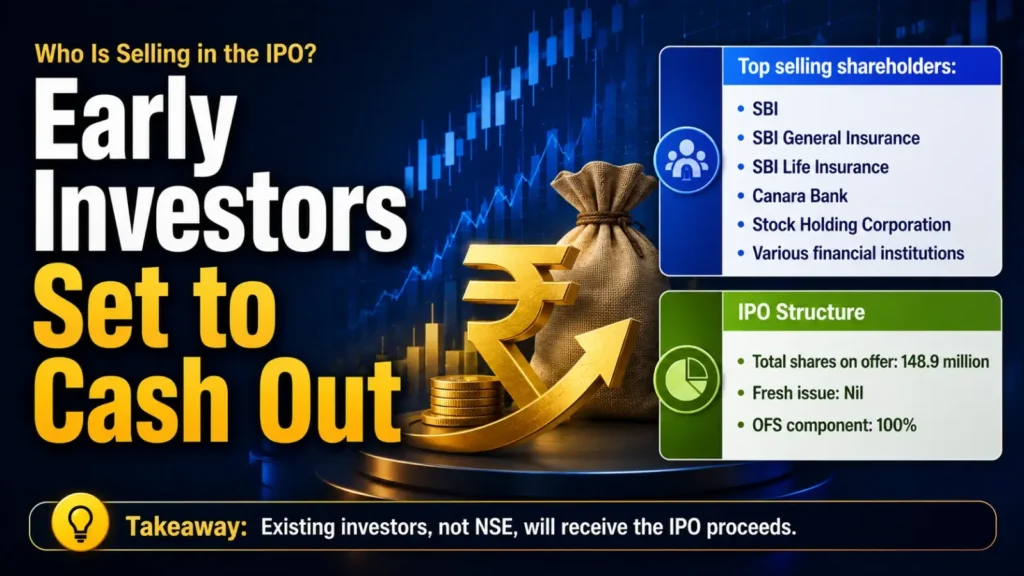
The offering consists entirely of an offer for sale (OFS) of 148.9 million shares, representing about 6% of NSE’s equity. Existing investors—including State Bank of India, insurance companies, private equity funds and foreign institutions—will sell part of their holdings, while the exchange itself will not raise fresh capital.

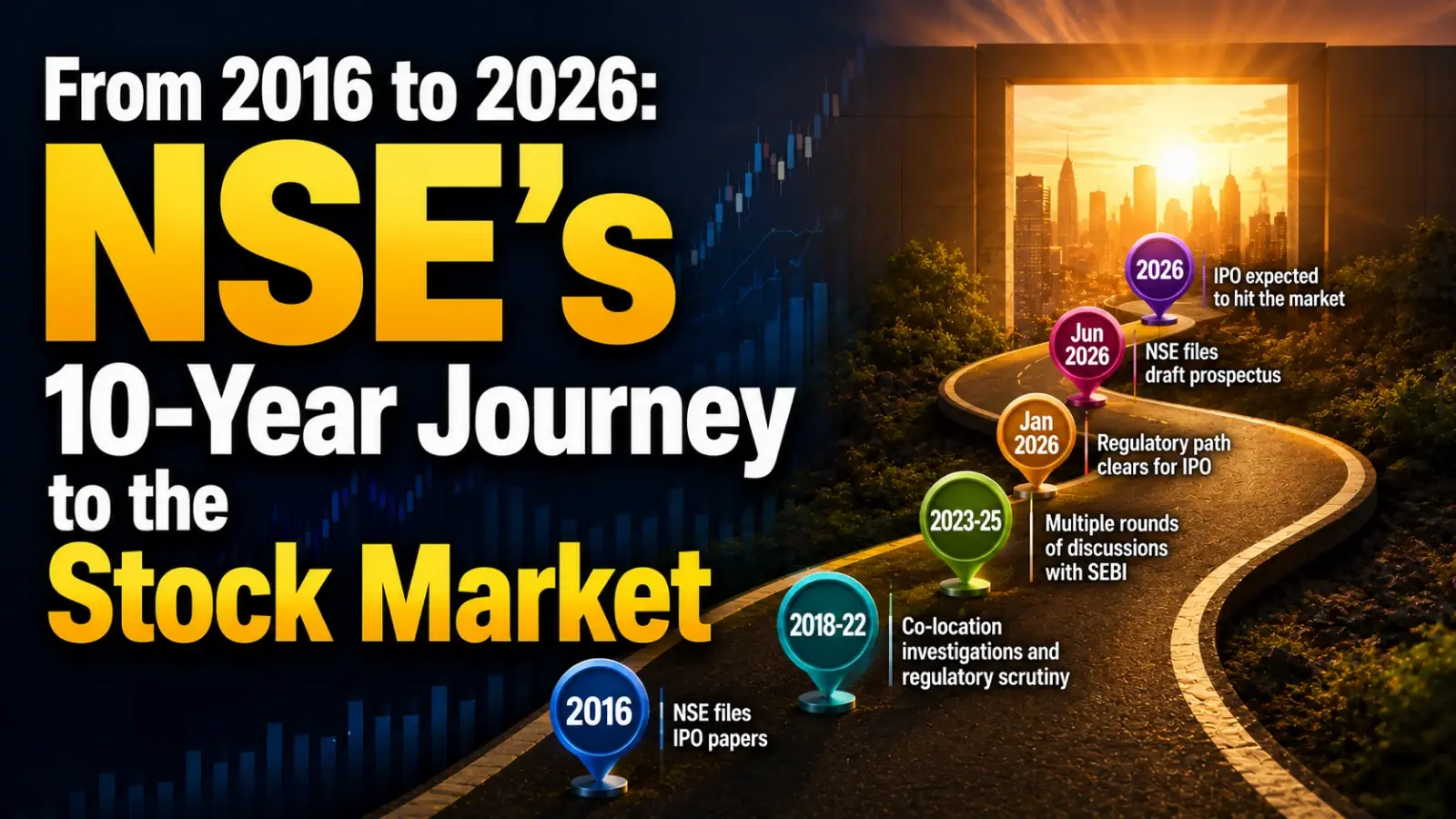
The IPO That Took 10 Years
NSE first sought a public listing in 2016. However, its plans were derailed by a series of regulatory controversies, most notably the co-location case, in which certain brokers were accused of gaining unfair access to trading infrastructure. The episode triggered investigations by the Securities and Exchange Board of India (SEBI), resulting in penalties and years of scrutiny.
The exchange spent years resolving regulatory concerns, seeking approvals and negotiating settlements. Earlier this year, SEBI finally cleared the path for the IPO after NSE addressed several outstanding issues. The exchange is also pursuing settlements related to legacy disputes, including matters linked to the co-location controversy. The NSE has proposed settling the charges by paying a penalty of approximately $158 million (around ₹1,350 crore).
Will Listing Improve NSE’s Relationship With SEBI?
Many market participants believe a public listing could fundamentally alter the dynamics between NSE and its regulator.
A listed NSE would face greater disclosure requirements, enhanced corporate governance standards and heightened scrutiny from institutional investors. Quarterly reporting, public shareholder oversight and greater transparency could help rebuild trust after years of friction with SEBI.
That said, a listing is unlikely to erase regulatory tensions altogether. As India’s dominant exchange and the world’s largest derivatives bourse by contracts traded, NSE remains systemically important. Its relationship with SEBI will continue to be defined by market supervision, technology oversight and investor protection rather than ownership structure alone.
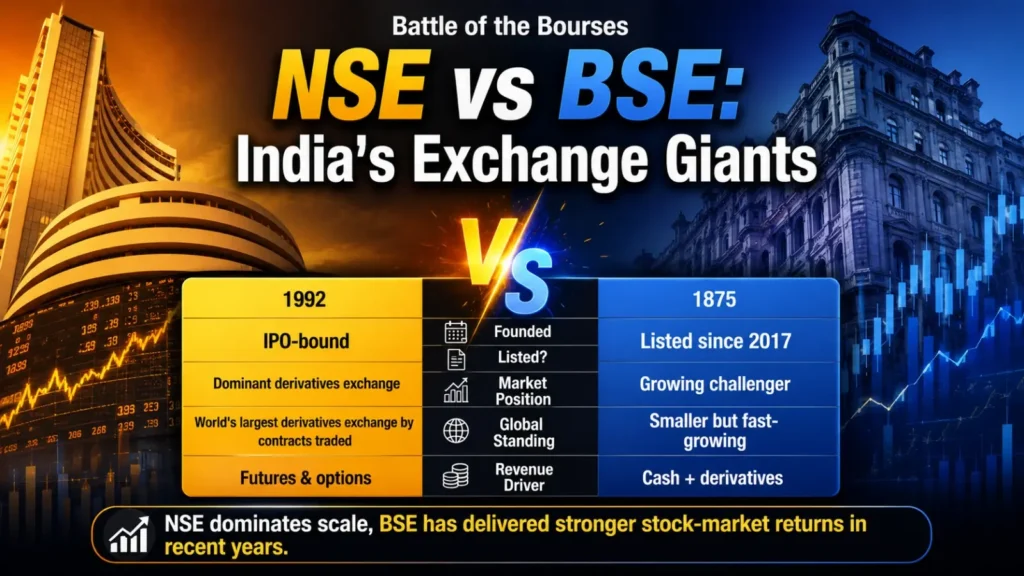
NSE vs BSE: The New Battle of Bourses
The IPO also sets up a direct comparison between NSE and its listed rival, BSE.
While NSE remains the undisputed leader in equity derivatives and commands a dominant share of India’s trading volumes, BSE is putting on a remarkable show. BSE has gained traction in derivatives, improved its cash market share and delivered stronger earnings growth, leading to a sharp rerating in its stock price.
Analysts cited by Business Standard estimate that, assuming an IPO valuation in the ₹1,600–1,800 per-share range, NSE could list at a price-to-earnings multiple of roughly 38–43 times FY26 earnings, making it appear cheaper than BSE on a relative valuation basis. However, BSE is expected to continue outpacing NSE in earnings growth because of its lower base and market-share gains in several segments.
The investment debate, therefore, may boil down to a classic trade-off: NSE offers market leadership, scale and profitability, while BSE offers potentially faster growth and a proven record of execution in recent years.
A Massive Payday for Early Investors
The biggest beneficiaries of the IPO could be the institutions that backed NSE long before it became one of the world’s most valuable exchanges.
State Bank of India is expected to be the largest seller in the IPO, while other public-sector entities, insurers and financial institutions are also set to monetise part of their holdings. Together, early investors could unlock gains worth roughly ₹30,600 crore through the share sale.
Several shareholders invested when NSE’s valuation was a fraction of current levels. The exchange is now valued at $55 billion in the unlisted market, making it one of the 10 most valuable Indian companies by market cap.
Not all investors are heading for the exit, however. Life Insurance Corporation has indicated it will retain its stake, signalling confidence in the exchange’s long-term prospects even after listing.
What Comes Next
The filing of the draft prospectus is only the beginning. Investors will now scrutinise NSE’s valuation, governance structure, regulatory risks and growth prospects before the issue hits the market.
For India’s capital markets, however, the significance goes beyond the IPO itself. The listing of the country’s largest exchange closes a chapter that began nearly 10 years ago and opens a new phase in the rivalry between India’s two bourses. Whether NSE emerges as the market’s preferred exchange stock—or whether BSE continues its recent outperformance—could become one of the most closely watched investment debates of the coming years.
Source
- Public data
Disclaimer
If you have any concerns, questions, or wish to point out any discrepancies in our content, please feel free to write to us at content@hdfcsec.com.
Please Note: The information shared is intended solely for informational purposes and does not make any investment recommendations
Disclaimer
At HDFC SKY*, we take utmost care and due diligence in curating and presenting news and market-related content. However, inadvertent errors or omissions may occasionally occur.
If you have any concerns, questions, or wish to point out any discrepancies in our content, please feel free to write to us at content@hdfcsec.com.
Please Note: The information shared is intended solely for informational purposes and does not make any investment recommendations.
HDFC SKY from HDFC Securities, one of most trusted trading platforms in India, has been recognized with the *Next-Gen Digi Content Awards 2025-26.
 Join Us
 Add as preferred source on Google


More Business News









Open Free Demat Account
Open Free Demat Account











Invest Anytime, Anywhere


By signing up I certify terms, conditions & privacy policy