Nifty 50
- Dr. Reddy's Labs₹1,310.9081.40 (6.62%)
- Shriram Finance₹825-40.00 (-4.62%)
- JSW Steel₹1,26074.50 (6.28%)
- Tata Consumer ₹936.50-27.40 (-2.84%)
- BSE₹3,359128.20 (3.97%)
- Bajaj Finance₹918.70-10.25 (-1.10%)
- Adani Ports₹1,752.5049.80 (2.92%)
- HDFC Life Insurance ₹519-4.75 (-0.91%)
- Eternal₹325.558.15 (2.57%)
- HDFC Bank₹688.05-4.75 (-0.69%)
- Max Healthcare₹83520.00 (2.45%)
- Sun Pharmaceutical₹1,740-8.00 (-0.46%)
- Kotak Mahindra Bank₹440.7510.25 (2.38%)
- HCL Technologies₹1,417-5.20 (-0.37%)
- Grasim Industries₹2,95056.00 (1.94%)
- Tata Motors PV₹263.70-0.90 (-0.34%)
- Coal India₹4057.55 (1.90%)
- Mahindra & Mahindra₹2,853.10-8.10 (-0.28%)
- Hindalco Industries₹885.6515.80 (1.82%)
- Power Grid Corp₹247-0.40 (-0.16%)

- Offerings
- Tools & Platforms
Tools & Calculators
- Open API
- Calculators
- SIP Calculator
- CAGR Calculator
- Compound Interest Calculator
- FD Calculator
- RD Calculator
- EPF Calculator
- Retirement Calculator
- HDFC SIP Calculator
- Mutual Fund Return Calculator
- Lumpsum Calculator
- Step Up SIP Calculator
- ETF SIP Calculator
- Brokerage Calculator
- Equity Margin Calculator
- SWP Calculator
- EMI Calculator
- MTF Calculator
- Margin Pledge Calculator
- Algo Strategy
- Markets
Stocks
F&O
Mutual Funds
- More
Rupee Hits Record Low as Oil Surge, Geopolitical Tensions Weigh
Authored By HDFC SKY | Last Modified: May 5, 2026 01:16 PM IST
Open Free Demat Account
Open Free Demat Account
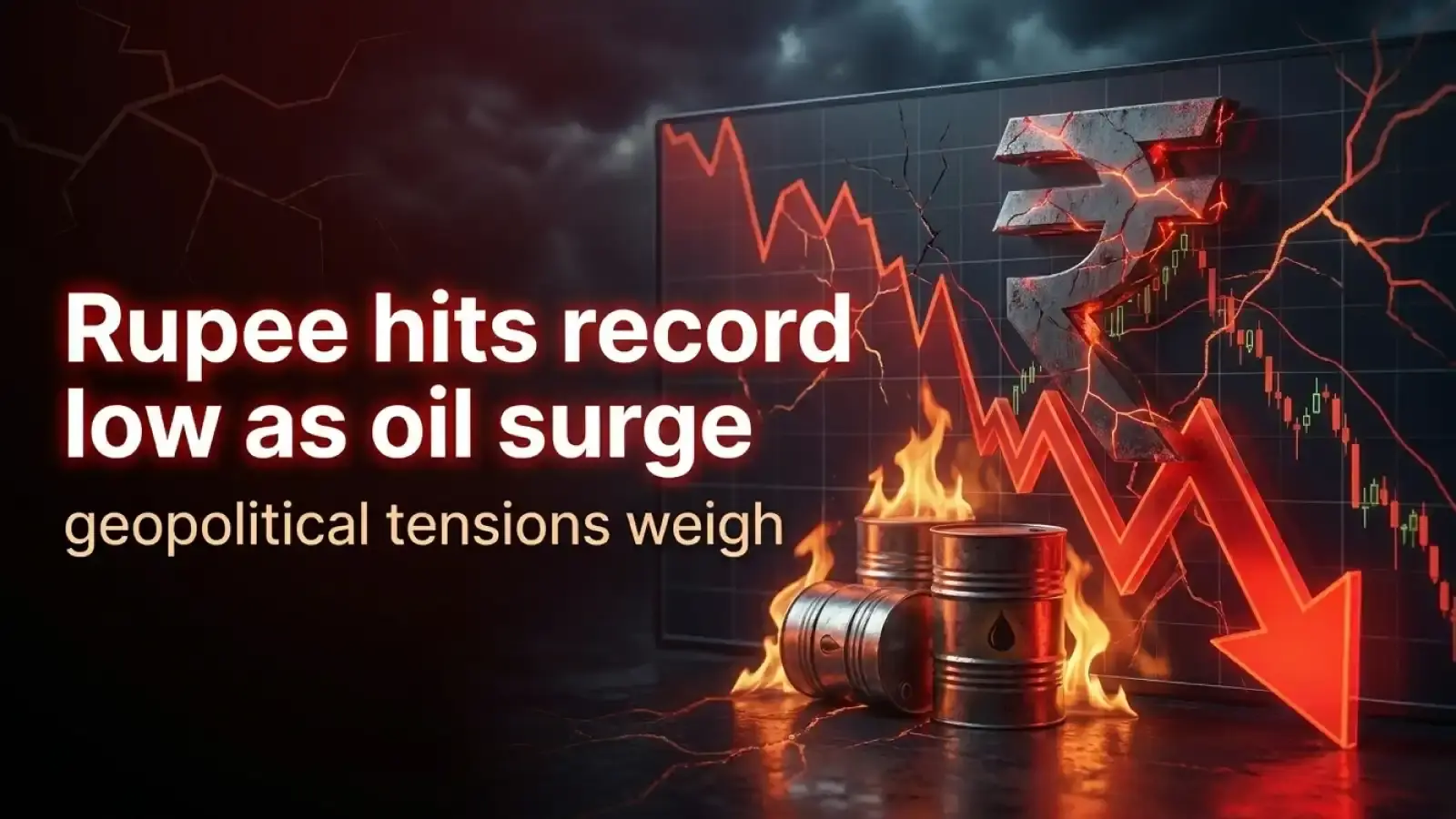
Mumbai, May 5: The rupee slid to a fresh record low on Tuesday as surging crude oil prices amid fading hopes of a de-escalation in US-Iran tensions took a toll on the currency and added to the growing risks facing the country’s macroeconomy.
The currency weakened to 95.42 per US dollar, slipping past its previous all-time low of 95.33 seen last Thursday and extending its losing streak amid a sharp rise in global oil prices. The currency had opened 22 paise lower at 95.31 and, at the time of writing, was down 0.28 percent at 95.36, reflecting persistent pressure.

Crude Impact
Crude oil surging remains the primary factor behind the rupee sliding as prices of the fuel have spiked from around $70 per barrel earlier this year to near $115 following the Middle East conflict. This does not bode well for India which is one of the world’s largest oil importers as a sliding rupee stokes inflationary risks and worsens external balances.
The geopolitical backdrop isn’t helping matters either asrenewed hostilities in the Middle East have dashed hopes of a resolution in the region, keeping investors on edge and energy markets on the boil. To be sure, rupee is not the only currency on the slide from the resulting risk-off. Other Asian currencies are also taking the heat such as the Indonesian rupiah and Philippine peso, melting down from the oil boil.
Dollar Demand
Adding to the pressure on the rupee in intensifying dollar demand from local importers especially oil companies. Moreover, the currency has few support buffers as foreign capital flows remain weak.
Seeing the situation, economists have begun trimming growth expectations while raising the forecasts for inflation tomirror the impact from elevated oil prices. Some global banks now see the rupee sliding further toward the 96–98 per dollar range in the near term.
RBI Intervenes
The Reserve Bank of India (RBI) has stepped up its efforts to stabilise the currency. The central bank has been intervening in the foreign exchange market by selling dollars, often through state-run banks, and has also built up significant short-dollar positions in the forward market. Additionally, policymakers are exploring measures to attract dollar inflows, including incentives for non-resident deposits and easing investment norms.
Despite these interventions, the rupee’s trajectory remains closely tied to oil prices. As long as crude stays elevated and geopolitical tensions persist, the currency is likely to remain under pressure.
In essence, the rupee is being squeezed between rising oil costs and global uncertainty—and until either of those pressures ease, a meaningful recovery may remain elusive.
Source:
- spot rates from https://www.moneycontrol.com/markets/currencies/
Disclaimer
If you have any concerns, questions, or wish to point out any discrepancies in our content, please feel free to write to us at content@hdfcsec.com.
Please Note: The information shared is intended solely for informational purposes and does not make any investment recommendations
Disclaimer
The information shared here is intended solely for informational and educational purposes and does not constitute investment recommendations. While we practice strict due diligence in curating daily market data, readers must perform independent research before trading. To flag any real-time data discrepancies or content concerns, please write to us at content@hdfcsec.com.
 Join Us
 Add as preferred source on Google


More Markets News










Open Free Demat Account
Open Free Demat Account












Invest Anytime, Anywhere


By signing up I certify terms, conditions & privacy policy