Nifty 50
- HCL Technologies₹1,290.9067.90 (5.55%)
- Max Healthcare₹849.75-16.20 (-1.87%)
- TCS₹2,230.40105.40 (4.96%)
- Maruti Suzuki₹11,174-141.00 (-1.25%)
- Tech Mahindra₹1,522.7051.70 (3.51%)
- NTPC₹307.35-2.65 (-0.85%)
- Infosys₹1,038.7518.75 (1.84%)
- Tata Motors PV₹282.30-2.15 (-0.76%)
- Hindustan Unilever₹1,853.8033.10 (1.82%)
- InterGlobe Aviation₹4,767-28.00 (-0.58%)
- Bajaj Auto₹10,182148.00 (1.47%)
- Eicher Motors₹7,081.50-37.50 (-0.53%)
- Adani Enterprises₹2,66838.00 (1.44%)
- Power Grid Corp₹247.90-1.10 (-0.44%)
- Grasim Industries₹2,898.5040.50 (1.42%)
- Reliance Industries₹1,154.50-4.40 (-0.38%)
- Bajaj Finserv₹1,742.9023.00 (1.34%)
- Bharti Airtel₹1,773.10-5.60 (-0.31%)
- Hindalco Industries₹892.359.85 (1.12%)
- JSW Steel₹1,169.50-3.50 (-0.30%)

- Offerings
- Tools & Platforms
Tools & Calculators
- Open API
- Calculators
- SIP Calculator
- CAGR Calculator
- Compound Interest Calculator
- FD Calculator
- RD Calculator
- EPF Calculator
- Retirement Calculator
- HDFC SIP Calculator
- Mutual Fund Return Calculator
- Lumpsum Calculator
- Step Up SIP Calculator
- ETF SIP Calculator
- Brokerage Calculator
- Equity Margin Calculator
- SWP Calculator
- EMI Calculator
- MTF Calculator
- Margin Pledge Calculator
- Algo Strategy
- Markets
Stocks
F&O
Mutual Funds
- More
US Federal Reserve’s June 16–17 FOMC Meeting: Three Scenarios and How Each One Lands for Indian Stocks
Authored By HDFC SKY | Last Modified: Jun 30, 2026 09:12 PM IST
Open Free Demat Account
Open Free Demat Account
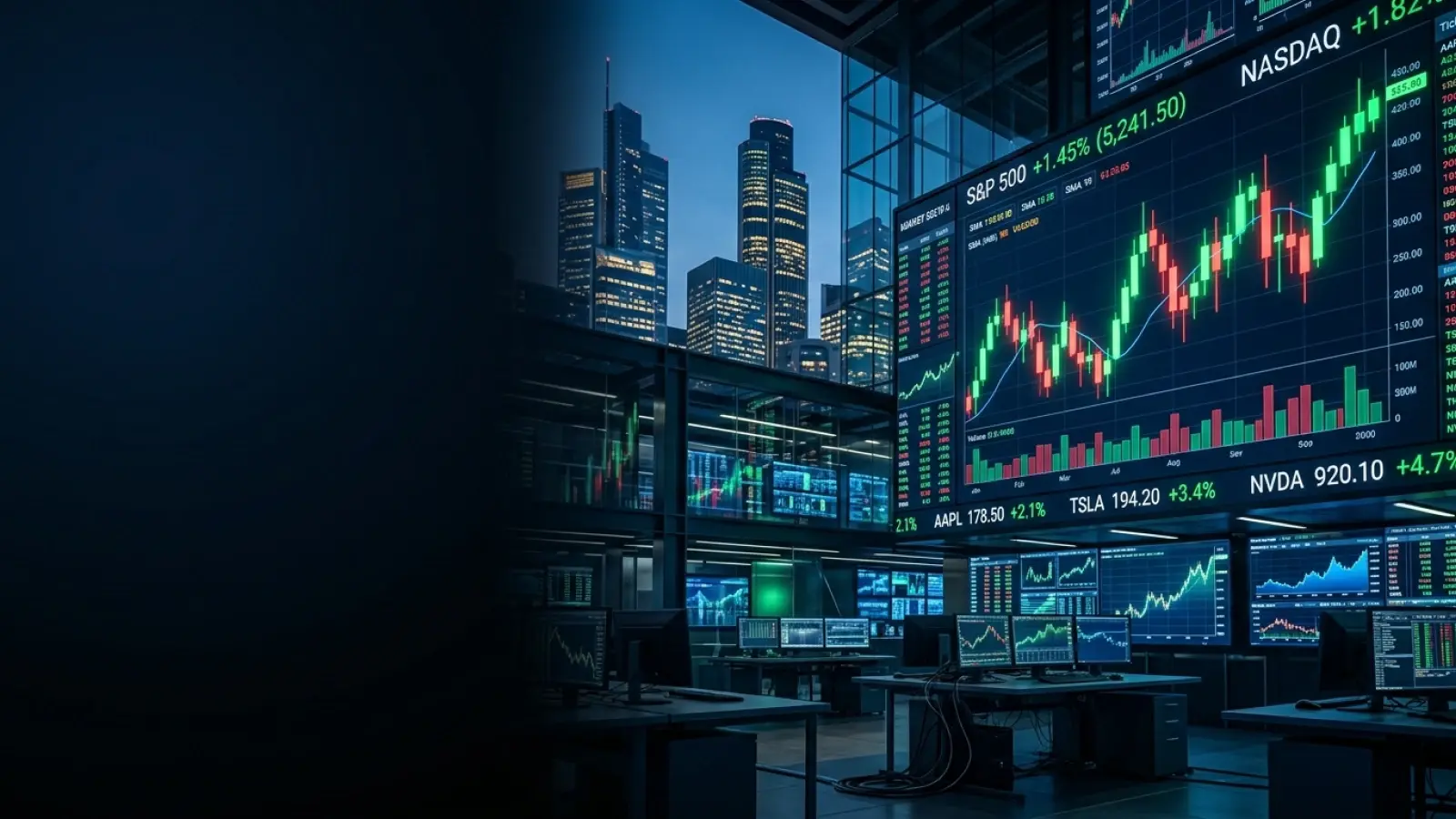
New Delhi, June 14: The US Federal Reserve’s Federal Open Market Committee (FOMC) convenes on June 16–17, with its policy decision due on Wednesday, June 17, at 2 p.m. Eastern Time — or approximately 11:30 p.m. IST — making it an overnight event for Indian markets, with the full impact expected at Monday’s opening bell on June 23. The current federal funds target rate stands at 3.50–3.75%, and market pricing assigns a near-certain 99.4% probability to a hold, with May CPI running at 4.2% year-on-year — the highest since April 2023 — and the labour market remaining resilient with unemployment at 4.3%. New Fed Chair Kevin Warsh, who took over from Jerome Powell on May 15, is presiding over a deeply divided FOMC, and while the rate itself is unlikely to move, the language of the post-meeting statement — particularly any shift in the Fed’s policy bias from easing toward neutral or tightening — could be the real market-mover. Here is how each of the three possible outcomes lands for Indian equities and which sectors feel it first.

Scenario 1 — Rate Cut | Probability: ~1% | Impact: Strongly Bullish
A surprise rate cut — currently a tail-risk outcome given elevated inflation — would be the single most bullish surprise possible for Indian equities. A softer Fed immediately weakens the U.S. dollar, which strengthens the rupee and makes Indian assets significantly more attractive to foreign institutional investors. FII inflows would accelerate sharply, compressing yields and lifting valuations across the board. The sectors most directly in the line of fire — for the better:
- Nifty Bank & Financial Services — the primary beneficiary. Cheaper global money reduces the cost of capital for Indian NBFCs and housing finance companies; private sector banks re-rate on improved net interest margin outlook.
- Nifty Realty — rate-cut tailwind is direct: lower borrowing costs stimulate housing demand and compress cap rates, lifting the entire residential and commercial real estate ecosystem.
- Nifty IT — a weaker dollar compresses rupee-denominated revenue realisation, but the liquidity surge from a rate cut historically overwhelms that concern; large-caps like TCS and Infosys would rally.
- Nifty Smallcap & Midcap — risk appetite peaks in a cut scenario; broad-based FII buying flows deepest into the mid and small-cap universe, which has the highest beta to global liquidity.
- Nifty Consumer Discretionary — improved consumer sentiment and lower EMI costs drive buying in auto, retail and jewellery stocks.
Scenario 2 — Hold | Probability: ~99% | Impact: Neutral to Mildly Positive/Negative
A hold is fully priced in by markets — so the rate decision itself will move nothing. Everything hinges on the statement’s language and Kevin Warsh’s press conference tone. Two sub-scenarios exist within a hold: a dovish hold retaining rate-cut signals for later in 2026, or a hawkish hold with a bias shift toward neutral or tightening. A dovish hold would be a mild positive; a hawkish hold would be a mild negative, particularly for rate-sensitive sectors. Sector impacts under a hold:
- Nifty Bank & Financial Services — neutral to mildly positive under a dovish hold; mild selling pressure if the bias shifts hawkish, as RBI rate-cut expectations would be pushed further out.
- Nifty IT — largely unaffected by the hold itself; Warsh’s commentary on U.S. economic growth and tech spending will matter more to IT valuations than the rate decision.
- Nifty Realty & NBFCs — most vulnerable to a hawkish bias shift within a hold; these sectors are priced for an easing cycle and would correct if that expectation is delayed.
- Nifty FMCG & Pharma — defensive sectors that are relatively insulated; neither benefits greatly from a cut nor suffers significantly from a hold.
- India VIX — expect a brief spike if Warsh’s tone is unexpectedly hawkish, followed by normalisation; overall market impact of a plain hold is likely to be absorbed within one session.
Scenario 3 — Rate Hike | Probability: <1% | Impact: Sharply Bearish
A rate hike is a near-zero probability outcome — but its market impact would be severe enough to warrant planning for. A hike would signal that U.S. inflation is materially out of control, the dollar would surge, the rupee would weaken sharply, and FIIs would pull capital from emerging markets en masse. The Iran-deal rally that has buoyed Indian markets through June would be largely unwound in a single session. Sectors hit hardest:
- Nifty Bank & Financial Services — the steepest loser in a hike scenario; higher U.S. rates compress the valuation premium on Indian financials and delay any RBI easing, squeezing NBFC margins.
- Nifty IT — double blow: rupee depreciation hurts revenue translation into rupees, while a hawkish Fed signals a slowing U.S. economy and contracting discretionary technology budgets at client companies.
- Nifty Metal & Commodities — a stronger dollar suppresses global commodity prices; Tata Steel, Hindalco and JSW Steel would all face headwinds.
- Nifty Realty — a rate hike effectively kills the near-term rate-cut narrative that has been driving real estate valuations; this sector would see the sharpest percentage correction.
- Nifty Pharma (relative outperformer) — export-oriented pharma benefits from rupee depreciation on the revenue side; this sector is the one corner of the market likely to hold up or even gain in a hike scenario.
The Takeaway — The base case remains a hold with minimal market disruption — but the June 17 FOMC is not a non-event for Indian markets. The statement’s bias language, Warsh’s tone on inflation persistence, and any updated dot plot signals will determine whether Indian equities open flat or gap down on the morning of June 23. Traders with overnight positions in rate-sensitives — banks, NBFCs, realty — should watch the 11:30 p.m. announcement closely on June 17.
Sources:
bls.gov/cpi
federalreserve.gov
https://www.cmegroup.com/tools-information/quikstrike/cme-fedwatch-tool-user-guide.html
Disclaimer
If you have any concerns, questions, or wish to point out any discrepancies in our content, please feel free to write to us at content@hdfcsec.com.
Please Note: The information shared is intended solely for informational purposes and does not make any investment recommendations
Disclaimer
At HDFC SKY*, we take utmost care and due diligence in curating and presenting news and market-related content. However, inadvertent errors or omissions may occasionally occur.
If you have any concerns, questions, or wish to point out any discrepancies in our content, please feel free to write to us at content@hdfcsec.com.
Please Note: The information shared is intended solely for informational purposes and does not make any investment recommendations.
HDFC SKY from HDFC Securities, one of most trusted trading platforms in India, has been recognized with the *Next-Gen Digi Content Awards 2025-26.
 Join Us
 Add as preferred source on Google


More Business News







Open Free Demat Account
Open Free Demat Account








Invest Anytime, Anywhere


By signing up I certify terms, conditions & privacy policy