Nifty 50
- Infosys₹9975.00 (0.50%)
- Adani Enterprises₹2,596-147.00 (-5.36%)
- Tech Mahindra₹1,496.205.10 (0.34%)
- JSW Steel₹1,175.20-54.80 (-4.46%)
- Axis Bank₹1,2452.50 (0.20%)
- ITC₹255-10.70 (-4.03%)
- HCL Technologies₹1,186.201.20 (0.10%)
- Max Healthcare₹871.70-36.30 (-4.00%)
- InterGlobe Aviation₹4,813.10-176.90 (-3.55%)
- Shriram Finance₹917.25-30.75 (-3.24%)
- Tata Motors PV₹274-9.00 (-3.18%)
- Apollo Hospitals₹7,666-251.00 (-3.17%)
- Adani Ports₹1,698-52.10 (-2.98%)
- Bharat Electronics₹367.10-11.20 (-2.96%)

- Offerings
- Tools & Platforms
Tools & Calculators
- Open API
- Calculators
- SIP Calculator
- CAGR Calculator
- Compound Interest Calculator
- FD Calculator
- RD Calculator
- EPF Calculator
- Retirement Calculator
- HDFC SIP Calculator
- Mutual Fund Return Calculator
- Lumpsum Calculator
- Step Up SIP Calculator
- ETF SIP Calculator
- Brokerage Calculator
- Equity Margin Calculator
- SWP Calculator
- EMI Calculator
- MTF Calculator
- Margin Pledge Calculator
- Algo Strategy
- Markets
Stocks
F&O
Mutual Funds
- More
How RBI's Policy Pause Sent Rate-Sensitive Stocks in Two Opposite Directions on the Same Day
By Aseem Shrivastava | Updated at: May 27, 2026 06:29 PM IST
Open Free Demat Account
Open Free Demat Account
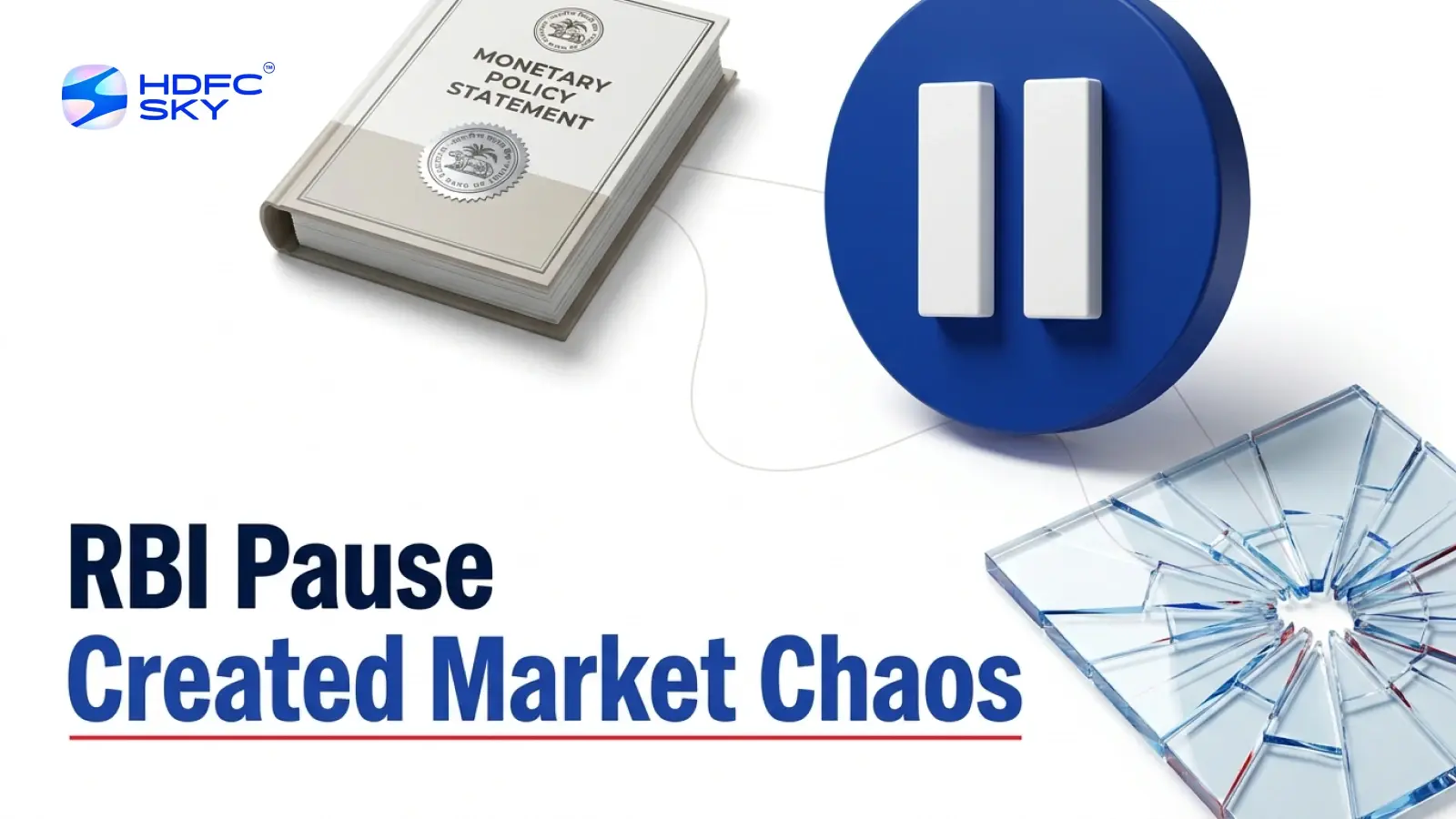
On April 8, 2026, the Reserve Bank of India did something unusual: it kept interest rates exactly where they were. No hike. No cut. Just a “neutral” pause at 5.25%. You would think that would mean all stocks moved in the same direction. But the stock market doesn’t work that way. The same policy that sent some stocks soaring by up to 7% pushed others downward on the exact same day.
Why does the same news create such opposite reactions? Because different investors take away different messages.
Some saw relief. Others saw red flags. Let me break down exactly what happened—and why you need to understand this before putting your money into rate-sensitive stocks.
Upward Direction: The Relief Rally
Rate-sensitive stocks jumped for a very clear reason. RBI kept rates stable. That means your home loan EMIs and car loan EMIs won’t immediately go up.
a) Real Estate Stocks Led the Charge
The Nifty Realty index jumped over 7%. Individual stocks like DLF and Phoenix Mills rose around 7% each. Developers celebrated openly because stable rates keep housing demand alive. When EMIs don’t rise, families feel confident booking a new home. This immediate demand visibility pushed realty stocks higher. The sector had already been recovering, and the rate pause removed a big fear of a demand slowdown.
b) Auto Stocks Followed Closely
The Nifty Auto index also rose more than 7%. Maruti Suzuki, Tata Motors, and Mahindra & Mahindra saw strong buying interest. Lower financing costs make vehicles more affordable for buyers, which directly helps carmakers. Two-wheeler and passenger vehicle loans become easier on the wallet. Dealers also benefit because customers who were waiting on the fence finally walk in. The auto sector hates rate hikes, and the pause handed them a clear win.
c) Banking Stocks Initially Rallied Too
The Nifty Bank and Nifty Financial Services gained around 5 to 6%. Why? Banks earn money from lending. When rates stay stable, loan growth can continue without immediate margin pressure. Stable rates mean fewer defaults and happier borrowers. Banks like HDFC Bank, ICICI Bank, and SBI saw sharp gains in the first hour of trade. Investors also hoped that a neutral stance might eventually lead to a rate cut later in the year, which would boost credit demand further.
But here is where the opposite direction came in—within the same banking sector.
Also Read: How a single FII block deal of ₹3,000 crore moved the entire banking index in one session
Downward Direction: The “Higher for Longer” Reality Check
Some banking stocks actually fell or underperformed on the same day. Why? Because a “neutral pause” also signals that rates might stay “higher for longer”.
Here is what worried the cautious investors:
a) Net Interest Margin Pressure
Banks borrow money (by taking deposits) and lend it out. When rates remain high, especially on deposits, the cost of funds can squeeze their lending profits. SBI’s net interest margin dropped sharply in this period while other large banks struggled to hold steady.
b) Realty Stocks Faced A Similar Split
While developers cheered stable rates, investors with a longer-term view worried about inflation. RBI flagged rising inflation risks due to geopolitical tensions. If inflation stays high, the central bank might actually need to hike rates later. That possibility makes long-term real estate investments less attractive.
Why the Same Policy Created Opposite Reactions
The split happened because different investor groups focused on different things:
a) Immediate Relief Rally (Short-Term View)
Markets rose fast after fears of a rate hike disappeared. The central bank kept rates unchanged at 5.25%, which calmed investors. A US–Iran truce also boosted global sentiment and cut oil prices. This double positive triggered strong buying. Rate-sensitive sectors like banks, autos, and real estate jumped quickly as traders rushed to capture short-term gains.
b) Longer-Term Growth Concerns (Long-Term View)
Long-term investors stayed cautious. The lower GDP forecast signaled slower economic growth ahead. At the same time, inflation is expected to rise through the year. This mix can reduce spending and weaken demand. High interest rates may also stay longer, which can slow housing, auto, and loan growth.
c) Banking Sector Divergence
Banks gained in the short term because stable rates reduce risk and support lending. But long-term investors worried about profit pressure. High deposit costs can reduce margins if banks cannot raise lending rates enough. Slower growth may also reduce loan demand, which adds more pressure.
d) Global Factors
Global news boosted markets. The US–Iran truce cut oil prices sharply, easing inflation fears for India. Lower crude supports profits and improves sentiment. But risks remain if tensions return, as oil supply shocks can quickly reverse these gains.
Final Thoughts
What this means for you as a first-time investor is simple: stock prices don’t just reflect what has already happened — they reflect what people believe will happen next.
The same RBI decision can lead two investors in the same stock to take completely opposite positions. One may buy, seeing relief and stability. The other may sell, expecting caution and long-term risks. Interestingly, both can be right — just on different time horizons.
So the next time you see a market headline, don’t stop at “what happened?” Instead, ask yourself, “what are people betting on now?”
Because in the stock market, the same news rarely means the same thing to everyone.



Open Free Demat Account
Open Free Demat Account
Popular Posts
- 10 Interesting Facts About NSE You Probably Didn’t KnowLast Updated: Sep 30, 2026
- 8-4-3 Rule of SIP - How Does That Work?Last Updated: Jul 30, 2025
- Let's view more exciting Post!
Popular Post from Market WTF by Sky
- Why Q4 Results "Beat Estimates" But Stocks FellLast Updated: May 27, 2026
- Why Oil Falling Is Sometimes Bad For Markets: The Counterintuitive Logic ExplainedLast Updated: May 27, 2026
- Why Did Adani Stocks Drop 60% After a 106-Page Research Report Nobody Paid for?Last Updated: May 27, 2026
- The VIX Spike Nobody Saw Coming: Decoding What Caused The 2024 India Volatility ShockLast Updated: May 27, 2026
- The F&O Expiry Rally: Why Markets Often Move Up on Thursdays and What Drives ItLast Updated: May 27, 2026
- Let's view more exciting Post!
Popular Post from Blogs
- “Bounce Back” Theme Gains Traction in 2026Last Updated: Apr 8, 2026
- 5 Takeaways for Tax Payers from the Budget 2025Last Updated: Jan 29, 2026
- Let’s view more exciting Posts


Invest Anytime, Anywhere


By signing up I certify terms, conditions & privacy policy