Nifty 50
- Dr. Reddy's Labs₹1,229.4032.40 (2.71%)
- Apollo Hospitals₹7,775-252.50 (-3.15%)
- Bajaj Auto₹10,034256.00 (2.62%)
- ITC₹257.90-8.10 (-3.05%)
- Tata Motors PV₹284.454.55 (1.63%)
- Tech Mahindra₹1,471-43.10 (-2.85%)
- Bharat Electronics₹373.905.75 (1.56%)
- L&T₹3,627.50-75.80 (-2.05%)
- BSE₹3,330.2043.00 (1.31%)
- Max Healthcare₹865.95-17.85 (-2.02%)
- Cipla₹1,317.4016.40 (1.26%)
- Hindalco Industries₹882.50-17.85 (-1.98%)
- Eicher Motors₹7,11969.00 (0.98%)
- Hindustan Unilever₹1,820.70-36.00 (-1.94%)
- Mahindra & Mahindra₹2,81316.80 (0.60%)
- SBI₹941-18.10 (-1.89%)
- Kotak Mahindra Bank₹443.402.40 (0.54%)
- Coal India₹404.80-6.75 (-1.64%)
- HCL Technologies₹1,2236.30 (0.52%)
- Bharti Airtel₹1,778.70-26.40 (-1.46%)

- Offerings
- Tools & Platforms
Tools & Calculators
- Open API
- Calculators
- SIP Calculator
- CAGR Calculator
- Compound Interest Calculator
- FD Calculator
- RD Calculator
- EPF Calculator
- Retirement Calculator
- HDFC SIP Calculator
- Mutual Fund Return Calculator
- Lumpsum Calculator
- Step Up SIP Calculator
- ETF SIP Calculator
- Brokerage Calculator
- Equity Margin Calculator
- SWP Calculator
- EMI Calculator
- MTF Calculator
- Margin Pledge Calculator
- Algo Strategy
- Markets
Stocks
F&O
Mutual Funds
- More
Accenture’s Guidance Cut: Causes and the Long-Term Shadow Over Indian IT
Authored By HDFC SKY | Last Modified: Jun 19, 2026 12:04 PM IST
Open Free Demat Account
Open Free Demat Account
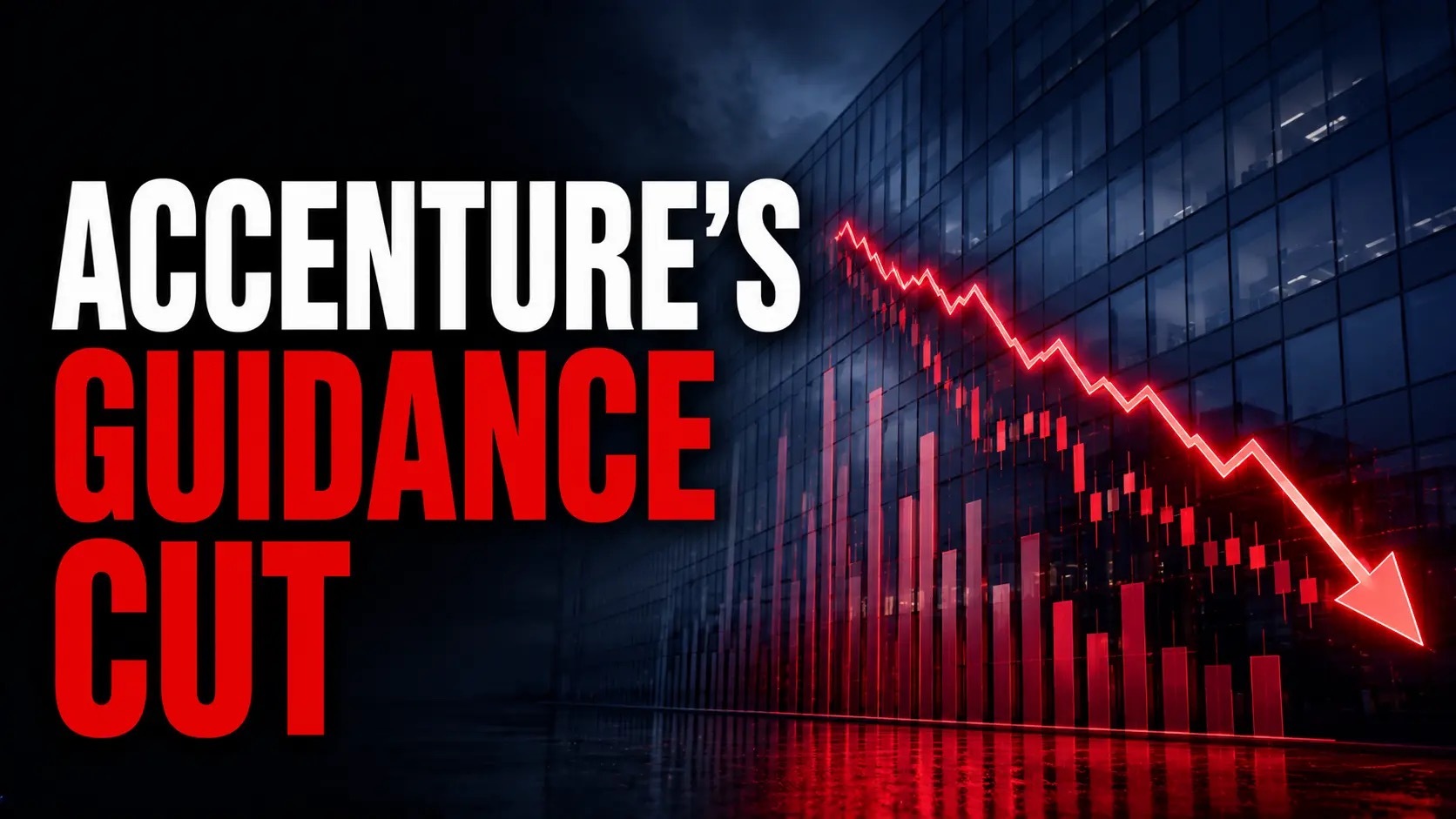
Mumbai, June 19: Accenture reported fiscal Q3 (ended May 31) revenue of $18.7 billion, up 6% year-on-year, but missed Wall Street expectations and narrowed its full-year revenue growth forecast to 3%–4% from a prior range of 3%–5%. The announcement sent Indian IT stocks sharply lower — TCS fell over 5%, Infosys dropped more than 7%, and the Nifty IT Index slid more than 5%.

Why Accenture cut its forecast
- Management explicitly flagged that the U.S. federal business would reduce overall FY26 revenue growth by 1–1.5 percentage points, citing slower procurement cycles and ongoing contract reviews.
- Clients pulled back further on discretionary spending — Jefferies analyst Surinder Thind noted this was “a deeper problem than AI disruption fears.”
- Morgan Stanley analyst James Faucette argued that total IT budget growth was running roughly flat in 2026, even as AI prioritisation within those budgets increased — meaning dollars shifted toward AI pilots were coming at the expense of broader services spending that Accenture monetises.
- Accenture CEO Julie Sweet also cited a $100 million revenue impact from the Middle East conflict.
Long-term impact on Indian IT companies
- Analysts warned that macro-led demand issues for the Indian IT sector could continue into the first half of FY27 (April–September 2026), with the impact on full-year FY27 growth estimates remaining a key risk.
- Nomura cautioned that indirect impacts could continue into Q2FY27, as it remains unclear how quickly spending behaviour will normalise in challenged sectors like automotive.
- AI poses a structural threat over the long run: roughly 75% of Accenture’s 798,000-strong workforce is in low-cost locations such as India and the Philippines, with an estimated 325,000 employees in India alone — meaning AI-driven productivity improvements at Accenture directly compress headcount demand from Indian IT vendors.
- Nomura noted, however, that AI will continue to drive demand for core elements like cloud, data, and platform modernisation services — areas where TCS, Infosys, and HCL Tech are actively building capabilities.
- Morgan Stanley, while downgrading Accenture, maintained that it remains “well positioned for an eventual recovery, given its scale, enterprise relationships, and exposure to large transformational programs” — a sentiment that applies equally to large Indian IT peers that serve the same client base.
Disclaimer
If you have any concerns, questions, or wish to point out any discrepancies in our content, please feel free to write to us at content@hdfcsec.com.
Please Note: The information shared is intended solely for informational purposes and does not make any investment recommendations
Disclaimer
At HDFC SKY*, we take utmost care and due diligence in curating and presenting news and market-related content. However, inadvertent errors or omissions may occasionally occur.
If you have any concerns, questions, or wish to point out any discrepancies in our content, please feel free to write to us at content@hdfcsec.com.
Please Note: The information shared is intended solely for informational purposes and does not make any investment recommendations.
HDFC SKY from HDFC Securities, one of most trusted trading platforms in India, has been recognized with the *Next-Gen Digi Content Awards 2025-26.
 Join Us
 Add as preferred source on Google


More Business News










Open Free Demat Account
Open Free Demat Account










Invest Anytime, Anywhere


By signing up I certify terms, conditions & privacy policy