Nifty 50
- Dr. Reddy's Labs₹1,22120.00 (1.67%)
- Tata Motors PV₹281.75-8.70 (-3.00%)
- Infosys₹1,003.203.00 (0.30%)
- Adani Enterprises₹2,831.10-85.40 (-2.93%)
- HDFC Life Insurance ₹531.600.60 (0.11%)
- Jio Financial ₹220.50-6.50 (-2.86%)
- Power Grid Corp₹261.85-7.65 (-2.84%)
- L&T₹3,766.40-109.80 (-2.83%)
- ONGC₹230-5.86 (-2.48%)
- Adani Ports₹1,743.70-44.30 (-2.48%)
- Hindustan Unilever₹1,896-46.90 (-2.41%)
- Tata Consumer ₹960-23.20 (-2.36%)
- Reliance Industries₹1,197.60-28.40 (-2.32%)

- Offerings
- Tools & Platforms
Tools & Calculators
- Open API
- Calculators
- SIP Calculator
- CAGR Calculator
- Compound Interest Calculator
- FD Calculator
- RD Calculator
- EPF Calculator
- Retirement Calculator
- HDFC SIP Calculator
- Mutual Fund Return Calculator
- Lumpsum Calculator
- Step Up SIP Calculator
- ETF SIP Calculator
- Brokerage Calculator
- Equity Margin Calculator
- SWP Calculator
- EMI Calculator
- MTF Calculator
- Margin Pledge Calculator
- Algo Strategy
- Markets
Stocks
F&O
Mutual Funds
- More
Crude Oil Prices Today, August 11, 2026: Oil Flatlines And Holds Near One-Week Highs At $87.72 Per Barrel
Authored By HDFC SKY | Last Modified: Aug 11, 2026 11:16 AM IST
Open Free Demat Account
Open Free Demat Account
Mumbai, August 11: Crude oil prices remained elevated on Tuesday, holding near more than one-week highs after surging over 5% in the previous session as hopes of a quick U.S.-Iran peace agreement faded. The latest developments have renewed concerns over the reopening of the Strait of Hormuz, a critical route for global energy supplies, keeping the outlook for oil markets and inflation uncertain.

Oil Prices Stay Elevated
Brent crude futures were flat at $87.72 a barrel, while U.S. West Texas Intermediate crude was also flat at $82.14 a barrel. Both benchmarks had climbed more than 5% on Monday to their highest levels since July 31, extending gains after U.S. President Donald Trump made fresh demands as part of any potential peace agreement with Iran.
Trump has demanded that Iran compensate the U.S. for people killed in wars, attacks and protests, a condition that could complicate efforts to reach an agreement and restore normal shipping through the Strait of Hormuz. Trump later said the U.S. Navy had control of the waterway and had cleared it of Iranian mines.
The widening gap between the positions of Washington and Tehran has prompted traders to unwind some of the optimism seen last week. The prospect of a prolonged disruption to shipping through the key oil route has consequently returned to the forefront of the market.
Hormuz Disruption Raises Supply Concerns
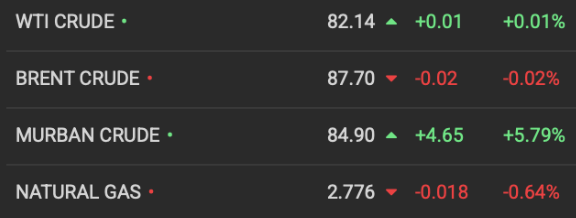
Both benchmarks flatlined after surging yesterday as hopes for a peace deal between US and Iran faded. Source: Oilprice.com
The Strait of Hormuz remains the biggest source of uncertainty for crude markets. The waterway connects the Persian Gulf with the Gulf of Oman and is a major transit route for oil and refined products from some of the world’s largest producers.
Barclays data showed that net exports of crude oil and refined products through the Strait averaged just 3 million barrels per day in the week ended August 7, down from 4.4 million bpd in the previous week. The decline underscores the extent to which geopolitical tensions are already affecting energy flows.
Market participants are also watching the Bab el-Mandeb shipping route, where the risk of further attacks has added to concerns over the movement of energy supplies. Higher insurance costs and longer shipping routes could keep transportation expenses elevated even if physical production remains available.
Also Read: How To Invest In Crude Oil
Saudi Refinery Restart Delayed
Supply concerns were further heightened after Saudi Aramco postponed the restart of its 400,000-barrel-per-day Jazan refinery until August 30. The decision followed claims by Yemen’s Iran-aligned Houthis that they had carried out two attacks on the facility on Sunday.
The continued threat around both the Strait of Hormuz and Bab el-Mandeb means energy markets could remain vulnerable to sudden supply disruptions. Any further attacks on oil infrastructure, tankers or shipping routes could trigger another sharp move higher in crude prices.
India Faces Higher Oil Risk
For India, the renewed rise in crude prices is an important market concern because of the country’s heavy dependence on imported oil. A sustained increase in international crude prices could widen the import bill, put pressure on the rupee and raise input costs for several industries.
Higher oil prices can also complicate India’s inflation outlook. Sectors such as aviation, paints, chemicals, logistics and tyres are particularly sensitive to energy and transportation costs, while companies with significant fuel consumption could face pressure on margins if higher costs cannot be passed on to consumers.
The oil rally could therefore weigh on Indian equities even as energy companies benefit from higher crude prices. Investors are likely to closely monitor the rupee, foreign fund flows and government measures should oil remain elevated.
Iraq Raises Crude Price For Asia
The impact of tighter regional supplies is also visible in physical crude markets. Iraq raised the September official selling price for Basra Medium crude to Asia by $2.50 a barrel to $4 below the average of Oman/Dubai quotes.
With negotiations between the U.S. and Iran showing limited signs of an immediate breakthrough, crude prices are likely to remain highly sensitive to developments around the Strait of Hormuz. For Indian markets, a prolonged period of elevated oil prices could emerge as a significant headwind, potentially limiting gains and keeping investors focused on inflation, the rupee and corporate margins.
Source
- oilprice.com
Disclaimer
If you have any concerns, questions, or wish to point out any discrepancies in our content, please feel free to write to us at content@hdfcsec.com.
Please Note: The information shared is intended solely for informational purposes and does not make any investment recommendations
Disclaimer
At HDFC SKY*, we take utmost care and due diligence in curating and presenting news and market-related content. However, inadvertent errors or omissions may occasionally occur.
If you have any concerns, questions, or wish to point out any discrepancies in our content, please feel free to write to us at content@hdfcsec.com.
Please Note: The information shared is intended solely for informational purposes and does not make any investment recommendations.
HDFC SKY from HDFC Securities, one of most trusted trading platforms in India, has been recognized with the *Next-Gen Digi Content Awards 2025-26.
 Join Us
 Add as preferred source on Google


More Business News






Open Free Demat Account
Open Free Demat Account











Invest Anytime, Anywhere


By signing up I certify terms, conditions & privacy policy