Nifty 50
- Cipla₹1,428.5040.50 (2.92%)
- Titan Company₹4,700.90-207.10 (-4.22%)
- Trent₹3,216.9040.60 (1.28%)
- Adani Enterprises₹2,673.90-71.20 (-2.59%)
- Kotak Mahindra Bank₹501.254.00 (0.80%)
- Hindalco Industries₹904.20-23.55 (-2.54%)
- Sun Pharmaceutical₹1,88313.00 (0.70%)
- BSE₹3,770.40-94.50 (-2.45%)
- Tata Consumer ₹1,119.206.80 (0.61%)
- HDFC Life Insurance ₹580.60-14.45 (-2.43%)
- Maruti Suzuki₹12,70176.00 (0.60%)
- Bajaj Finance₹1,095.95-25.15 (-2.24%)
- UltraTech Cement₹12,36171.00 (0.58%)
- Jio Financial ₹224-4.96 (-2.17%)
- SBI₹1,112.503.90 (0.35%)
- Asian Paints₹2,569.30-55.70 (-2.12%)
- ICICI Bank₹1,601.903.20 (0.20%)
- Tata Motors PV₹253.85-5.35 (-2.06%)
- Dr. Reddy's Labs₹1,390.702.70 (0.19%)
- Eicher Motors₹7,697-131.00 (-1.67%)

- Offerings
- Tools & Platforms
Tools & Calculators
- Open API
- Calculators
- SIP Calculator
- CAGR Calculator
- Compound Interest Calculator
- FD Calculator
- RD Calculator
- EPF Calculator
- Retirement Calculator
- HDFC SIP Calculator
- Mutual Fund Return Calculator
- Lumpsum Calculator
- Step Up SIP Calculator
- ETF SIP Calculator
- Brokerage Calculator
- Equity Margin Calculator
- SWP Calculator
- EMI Calculator
- MTF Calculator
- Margin Pledge Calculator
- Algo Strategy
- Markets
Stocks
F&O
Mutual Funds
- More
Oil Prices Today, November 18, 2026: Brent Falls 0.5% to $92.6, WTI Drops 1.15% as US Stockpiles Rise; Middle East Risks Limit Losses
Authored By HDFC SKY | Published at: Nov 18, 2026 10:10 AM IST

Open Free Demat Account
Mumbai, November 18: Oil prices declined on Wednesday, November 18, as a substantial increase in US crude and fuel inventories reinforced concerns over supply, although escalating military tensions between the United States and Iran and disruptions to shipping through the Strait of Hormuz limited the losses.
Brent crude futures fell 0.5% to $92.6 a barrel, while US West Texas Intermediate (WTI) crude dropped 1.15% to $85 a barrel. Both benchmarks had settled higher in the previous session as fresh military confrontations between Washington and Tehran heightened concerns over potential disruptions to energy supplies from the Middle East.

US crude inventories register sharp increase
The latest decline in oil prices followed data indicating a significant build-up in US petroleum inventories, suggesting that supplies remain relatively comfortable despite geopolitical uncertainties.
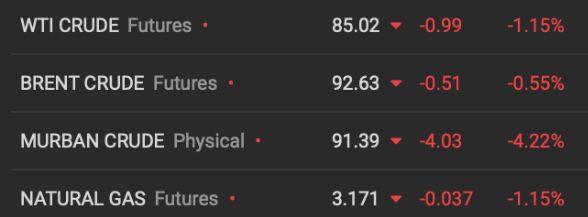
Both contracts declined amid hostilities as rising US stockpiles suggested good enough supplies for the globe. Source: oilprice.com
US crude stockpiles increased by 5.28 million barrels in the week ended November 13, according to figures from the American Petroleum Institute (API), Reuters said citing market sources.
Inventories of refined petroleum products also moved higher. US gasoline stocks climbed by 5.12 million barrels during the week, while distillate inventories, which include diesel and heating oil, increased by 351,000 barrels.
The rise across crude and refined fuel inventories points to a potentially softer near-term supply-demand balance in the US market. Higher stockpiles can weigh on crude prices by reducing concerns over immediate supply shortages and indicating that refiners and consumers have sufficient inventories to meet demand.
Investors are also assessing whether the latest inventory build-up signals a broader easing of supply conditions as oil markets contend with competing signals from global production, consumption and geopolitical developments.
US-Iran conflict keeps supply concerns alive
Despite the bearish inventory data, the possibility of further disruptions to Middle Eastern energy supplies continued to provide a floor to oil prices.
Tensions between Washington and Tehran escalated further on Wednesday after Bahrain’s defence force said it had intercepted Iranian aerial attacks on the country, which hosts the US Navy’s Fifth Fleet. The development followed an exchange of military strikes between the United States and Iran a day earlier.
Iranian drones had targeted a US military radar installation in Bahrain on Tuesday, prompting Washington to retaliate with strikes on a missile launch site on Iran’s Qeshm Island.
The latest escalation has heightened concerns about the security of energy infrastructure and shipping routes across the Gulf region, particularly the Strait of Hormuz, one of the world’s most important maritime corridors for crude oil and petroleum product shipments.
Strait of Hormuz disruptions threaten oil flows
The security situation around the Strait of Hormuz remains a major concern for energy markets, with attacks on commercial vessels raising questions about when shipping activity through the waterway can return to normal.
An LPG tanker was struck by a projectile while sailing through the strait off the coast of Oman on Monday, forcing its crew to evacuate. The incident added to a series of security threats facing vessels transiting the region.
Analysts at LSEG said regional oil supplies could continue recovering through alternative export routes, but recent vessel-tracking data suggested that a normalisation of shipping flows through the Strait of Hormuz remained unlikely under prevailing conditions.
The disruption is particularly significant because the waterway serves as a critical export route for major oil-producing countries in the Persian Gulf. Any prolonged interruption could restrict the movement of crude and refined products into international markets, potentially tightening supplies and pushing prices higher.
Saudi pipeline infrastructure also in focus
Concerns over alternative export routes have also increased after Yemen’s Iran-aligned Houthi group claimed responsibility for launching five drones towards two pumping stations along Saudi Arabia’s East-West pipeline.
Saudi Arabia has relied on the pipeline during the conflict to redirect crude towards its Yanbu port on the Red Sea, bypassing the Strait of Hormuz and maintaining an alternative route for exports.
Any threat to this infrastructure could further complicate efforts by regional producers to maintain crude shipments amid disruptions in the Gulf.
Meanwhile, diplomatic efforts have continued, with Iran holding discussions with mediators Oman and Qatar even as military confrontations have intensified. The uncertain outcome of these engagements has kept traders cautious about the possibility of further escalation.
Oil markets weigh supply surplus against geopolitical risks
The latest movement in crude prices reflects the competing forces currently shaping the global energy market. Rising US inventories and expectations of relatively comfortable supplies are exerting downward pressure, while military escalation and shipping disruptions in the Middle East are preventing a sharper correction.
For major oil-importing economies such as India, a sustained decline in international crude benchmarks would be beneficial, potentially easing the imported inflation burden, reducing pressure on the current account deficit and supporting the domestic currency.
However, the trajectory of oil prices will remain closely tied to developments around the Strait of Hormuz, the security of regional export infrastructure and the availability of alternative shipping routes. A further escalation in the US-Iran conflict could quickly reverse the recent decline in crude prices.
Source
- oilprice.com
Disclaimer
The information shared here is intended solely for informational and educational purposes and does not constitute investment recommendations. While we practice strict due diligence in curating daily market data, readers must perform independent research before trading. To flag any real-time data discrepancies or content concerns, please write to us at content@hdfcsec.com.
 Join Us
 Add as preferred source on Google


More Business News






















Invest Anytime, Anywhere


By signing up I certify terms, conditions & privacy policy