Nifty 50
- Maruti Suzuki₹13,165533.00 (4.22%)
- Infosys₹1,082.10-26.70 (-2.41%)
- Eicher Motors₹7,929.50229.50 (2.98%)
- Tech Mahindra₹1,719-31.00 (-1.77%)
- Mahindra & Mahindra₹3,439.7080.60 (2.40%)
- HCL Technologies₹1,321.20-23.50 (-1.75%)
- InterGlobe Aviation₹5,59999.70 (1.81%)
- Eternal₹360.75-5.25 (-1.43%)
- Hindustan Unilever₹2,02936.00 (1.81%)
- TCS₹2,350.40-29.10 (-1.22%)
- Bharat Electronics₹401.856.05 (1.53%)
- Dr. Reddy's Labs₹1,384.80-13.40 (-0.96%)
- Tata Motors PV₹255.603.05 (1.21%)
- Shriram Finance₹960.95-9.05 (-0.93%)
- BSE₹3,79539.30 (1.05%)
- Apollo Hospitals₹8,744-77.00 (-0.87%)
- SBI₹1,144.459.45 (0.83%)
- L&T₹4,134.60-24.40 (-0.59%)
- Nestle₹1,2919.40 (0.73%)
- ICICI Bank₹1,592.80-8.50 (-0.53%)

- Offerings
- Tools & Platforms
Tools & Calculators
- Open API
- Calculators
- SIP Calculator
- CAGR Calculator
- Compound Interest Calculator
- FD Calculator
- RD Calculator
- EPF Calculator
- Retirement Calculator
- HDFC SIP Calculator
- Mutual Fund Return Calculator
- Lumpsum Calculator
- Step Up SIP Calculator
- ETF SIP Calculator
- Brokerage Calculator
- Equity Margin Calculator
- SWP Calculator
- EMI Calculator
- MTF Calculator
- Margin Pledge Calculator
- Algo Strategy
- Markets
Stocks
F&O
Mutual Funds
- More
Oil Prices Today, November 19, 2026: Brent Slips 0.2% To $91.7, WTI Falls To $82.7 As Surplus Looms
Authored By HDFC SKY | Published at: Nov 19, 2026 10:11 AM IST

Open Free Demat Account
Mumbai, November 19: Oil prices declined on Thursday, November 19, as expectations of a growing global supply surplus and the possibility of higher US interest rates weighed on market sentiment. Concerns over disruptions to energy shipments in the Middle East amid the ongoing US-Israeli war with Iran, however, limited the losses.
Brent crude futures edged down 0.2% to $91.70 a barrel, while US West Texas Intermediate (WTI) crude fell 0.7% to $82.70. Both benchmarks had already registered losses in the previous session, with Brent shedding 1.3% and WTI plunging 3.2% to its lowest level since August 26.

Supply surplus expectations weigh on crude oil prices
The prospect of an expanding global oil surplus has emerged as a key headwind for crude prices, with improving flows through the Strait of Hormuz easing concerns over the availability of supplies.
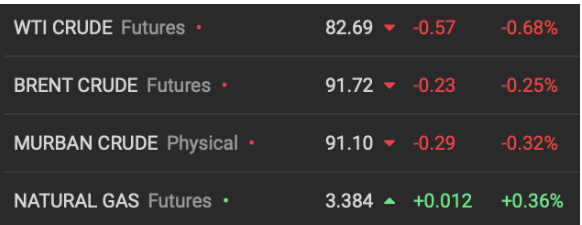
Both contracts continued to ease with shipments through Strait of Hormuz having recovered to near pre-war levels. Source: Oilprice.com
Oil shipments through the strategically important waterway have recovered to approximately pre-war levels, reducing the risk premium that had supported prices during the earlier phase of the conflict. The recovery in supply flows has strengthened expectations that the global market could face an excess of crude, particularly if demand growth fails to keep pace with rising availability.
The bearish outlook has also been reinforced by a larger-than-anticipated increase in US crude inventories. Data released by the US Energy Information Administration (EIA) showed that crude stocks rose by 3.4 million barrels to 417.8 million barrels in the week ended November 13.
The increase was substantially higher than market expectations. Analysts polled by Reuters had forecast a rise of just 58,000 barrels, pointing to a considerably tighter supply-demand balance than the latest inventory figures suggest.
Higher inventories generally indicate that available supplies are outpacing refinery demand or consumption, adding to concerns about the near-term direction of crude prices.
Also Read: How To Invest In Crude Oil
Fed rate outlook adds pressure on oil demand
Expectations of tighter US monetary policy have emerged as another factor weighing on the commodity. Minutes of the Federal Reserve’s October meeting, released on Wednesday, indicated that policymakers remained concerned about persistent inflation and were prepared to consider further monetary tightening.
Investors have consequently increased their expectations of an interest-rate hike at the central bank’s December meeting as policymakers seek to bring inflation under control.
Higher interest rates could constrain economic activity, making borrowing more expensive for businesses and consumers and potentially slowing the pace of global economic growth. This, in turn, could dampen energy consumption and limit the growth in oil demand.
A tighter monetary policy outlook could also strengthen the US dollar, making dollar-denominated crude more expensive for buyers holding other currencies. This could further weigh on international demand and restrict the scope for a sustained recovery in prices.
Gulf tensions keep a floor under oil prices
Despite the bearish supply and demand outlook, geopolitical developments continue to pose risks to global energy markets.
Iran’s navy reportedly said that three oil tankers sailing east of the Strait of Hormuz had been disabled by mines, according to Iranian media reports on Wednesday. The development has renewed concerns over the safety of commercial shipping and the possibility of further disruptions to oil transportation through the region.
The Strait of Hormuz remains a critical artery for global energy supplies, making any escalation involving shipping in the area a potential source of volatility in crude prices.
Markets are also monitoring diplomatic developments, including an upcoming trilateral summit involving the leaders of the United States, China and Russia. Investors are looking for indications of whether diplomatic efforts could pave the way for a negotiated resolution to the US-Iran conflict and Russia’s invasion of Ukraine, both of which have disrupted global energy markets.
Russian oil supply faces additional uncertainty
Separately, Ukrainian drone attacks have reduced the combined crude processing volumes of Russian oil refineries by 45% since late October, Reuters reported on Wednesday, citing industry sources.
The disruption adds another layer of uncertainty to the global supply outlook, particularly as the market weighs the prospect of an overall surplus against geopolitical risks and potential interruptions to production and refining capacity.
For now, expectations of abundant supplies, rising US inventories and a potentially more hawkish Federal Reserve are outweighing concerns over Middle Eastern shipping disruptions. However, developments around the Strait of Hormuz and the broader geopolitical situation could continue to inject volatility into crude oil prices.
Source
- oilprice.com
Disclaimer
The information shared here is intended solely for informational and educational purposes and does not constitute investment recommendations. While we practice strict due diligence in curating daily market data, readers must perform independent research before trading. To flag any real-time data discrepancies or content concerns, please write to us at content@hdfcsec.com.
 Join Us
 Add as preferred source on Google


More Business News










Open Free Demat Account












Invest Anytime, Anywhere


By signing up I certify terms, conditions & privacy policy