Nifty 50
- TCS₹2,456.4080.20 (3.38%)
- Tata Steel₹162.90-15.10 (-8.48%)
- Shriram Finance₹99422.00 (2.26%)
- Axis Bank₹1,395.10-50.90 (-3.52%)
- Tech Mahindra₹1,784.5038.30 (2.19%)
- HDFC Bank₹820.35-25.65 (-3.03%)
- HCL Technologies₹1,36520.60 (1.53%)
- Hindalco Industries₹902.15-27.35 (-2.94%)
- Titan Company₹4,67050.00 (1.08%)
- ICICI Bank₹1,593.50-46.50 (-2.84%)
- Max Healthcare₹1,090.959.95 (0.92%)
- Kotak Mahindra Bank₹502.50-13.30 (-2.58%)
- Apollo Hospitals₹9,27878.00 (0.85%)
- SBI₹1,135.70-29.40 (-2.52%)
- Infosys₹1,1079.00 (0.82%)
- JSW Steel₹1,304.70-32.30 (-2.42%)
- Maruti Suzuki₹14,124113.00 (0.81%)
- UltraTech Cement₹12,651-288.00 (-2.23%)
- ITC₹301.102.00 (0.67%)
- Tata Motors PV₹260.65-5.70 (-2.14%)

- Offerings
- Tools & Platforms
Tools & Calculators
- Open API
- Calculators
- SIP Calculator
- CAGR Calculator
- Compound Interest Calculator
- FD Calculator
- RD Calculator
- EPF Calculator
- Retirement Calculator
- HDFC SIP Calculator
- Mutual Fund Return Calculator
- Lumpsum Calculator
- Step Up SIP Calculator
- ETF SIP Calculator
- Brokerage Calculator
- Equity Margin Calculator
- SWP Calculator
- EMI Calculator
- MTF Calculator
- Margin Pledge Calculator
- Algo Strategy
- Markets
Stocks
F&O
Mutual Funds
- More
Oil Prices Today, November 23, 2026: Brent Falls 0.5% To $92, WTI Slips To $83 As Global Market Selloff Weighs On Demand Outlook
Authored By HDFC SKY | Published at: Nov 23, 2026 10:28 AM IST

Open Free Demat Account
Mumbai, November 23: Crude oil prices declined on Monday, extending their losing streak to a third consecutive week, as a broader selloff across global financial markets spilled over into commodities, with investors reassessing the outlook for economic growth amid concerns over artificial intelligence valuations and spending. Brent crude futures fell 0.50% to $92 per barrel, while US West Texas Intermediate (WTI) crude declined by the same margin to $83 per barrel. The decline came despite escalating geopolitical tensions in the Middle East, with attacks on energy infrastructure and commercial shipping in the Gulf limiting losses in oil markets.

Crude Oil Prices Under Pressure Amid Global Market Selloff
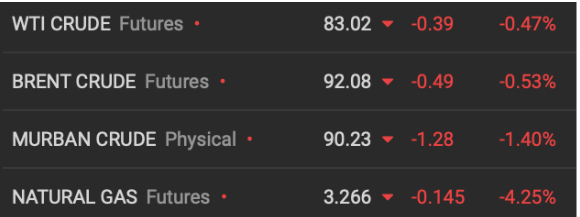
Both contracts declined on global market sentiment even as the escalating Iran war limited their losses. Source: Oilprice.com
Oil prices have come under pressure alongside other risk-sensitive assets as investors increasingly question whether the massive investments in artificial intelligence infrastructure will translate into sufficient economic returns. The concerns have triggered a sharp correction in global technology stocks, with the weakness spreading across broader equity markets and weighing on sentiment towards commodities.
Asian equities opened lower on Monday, extending the previous week’s losses. South Korea’s technology-heavy stock market declined around 4%, while China, Hong Kong and Australia also traded lower. The selloff followed a particularly difficult week on Wall Street, where the Nasdaq plunged 10%, marking its steepest weekly decline since March 2020.
The weakness in equity markets has raised concerns about the sustainability of global economic growth and its implications for energy consumption. A deterioration in investor sentiment and expectations of slower economic activity could weigh on industrial demand and fuel consumption, adding to the pressure on crude prices.
Brent crude declined 4% last week, while US WTI registered a steeper 5% fall. The latest losses extend a three-week downward trend in oil markets, reflecting the growing influence of macroeconomic concerns on commodity prices.
Also Read: How To Invest In Crude Oil
Iran War, Gulf Shipping Attacks Limit Oil Price Losses
However, geopolitical developments in the Middle East have prevented a sharper correction in crude prices. The ongoing US-Israeli war against Iran continues to threaten energy infrastructure and shipping routes across the Gulf, keeping supply-side concerns firmly in focus.
On Sunday, Yemen’s Iran-aligned Houthi movement claimed responsibility for an attack on a Saudi Arabian oil refinery. Multiple attacks on commercial shipping vessels were also reported over the weekend in the Gulf and near the strategically important Strait of Hormuz.
The developments have raised concerns about potential disruptions to crude supplies from one of the world’s most important oil-producing regions. The Strait of Hormuz is a critical transit route for global energy shipments, and any prolonged disruption could have significant implications for international oil markets.
The divergence between falling prices and mounting supply risks suggests that geopolitical developments could become a more significant driver of crude markets if disruptions to shipping persist.
COP31 Climate Talks Collapse Over Fossil Fuel Phase-Out
Meanwhile, negotiations at the COP31 climate summit in Turkey collapsed on Sunday after participating nations failed to reach an agreement on including a commitment to phase out fossil fuels in the final text.
The breakdown marked the first such collapse of climate negotiations since 2009, highlighting continuing divisions between countries over the future of conventional energy sources. Saudi Arabia and other major oil-producing nations opposed references to phasing out fossil fuels, arguing that oil and other conventional energy sources would continue to play a role in the global economy for the foreseeable future.
The disagreement underscores the competing priorities facing energy markets, with governments balancing climate commitments against energy security, economic growth and the need for reliable supplies.
OPEC+ Meeting In Focus
Investors will also track the upcoming meetings of the Organisation of the Petroleum Exporting Countries and its allies (OPEC+), scheduled for November 29. Ministers from the group are expected to discuss oil production policy for 2027, with their decisions likely to influence supply expectations and price direction in the coming months.
The balance between weakening demand expectations and geopolitical supply risks will remain central to crude oil price movements. While the global equity selloff and concerns over economic growth are weighing on prices, continuing attacks on Gulf shipping and the possibility of disruptions to energy supplies could limit further declines.
For major oil-importing economies such as India, the recent correction in crude prices offers some relief by potentially easing pressure on import bills, inflation and currency stability. However, any escalation in the Iran conflict or prolonged disruption to shipping through the Strait of Hormuz could reverse the decline and renew concerns over imported inflation.
Source
- Oilprice.com
Disclaimer
The information shared here is intended solely for informational and educational purposes and does not constitute investment recommendations. While we practice strict due diligence in curating daily market data, readers must perform independent research before trading. To flag any real-time data discrepancies or content concerns, please write to us at content@hdfcsec.com.
 Join Us
 Add as preferred source on Google


More Business News






















Invest Anytime, Anywhere


By signing up I certify terms, conditions & privacy policy