Nifty 50
- SBI₹1,037.0521.05 (2.07%)
- Tata Steel₹184.73-5.47 (-2.88%)
- Dr. Reddy's Labs₹1,387.1017.10 (1.25%)
- HCL Technologies₹1,409.70-32.30 (-2.24%)
- NTPC₹326.303.60 (1.12%)
- Infosys₹1,147.50-24.10 (-2.06%)
- Apollo Hospitals₹8,51484.00 (1.00%)
- UltraTech Cement₹12,256-243.00 (-1.94%)
- HDFC Bank₹791.457.35 (0.94%)
- Bharti Airtel₹2,051.90-33.60 (-1.61%)
- ICICI Bank₹1,577.8012.80 (0.82%)
- ITC₹279-4.45 (-1.57%)
- HDFC Life Insurance ₹565.953.95 (0.70%)
- Grasim Industries₹3,159.40-47.80 (-1.49%)
- Trent₹3,076.5019.00 (0.62%)
- Tech Mahindra₹1,805.50-24.40 (-1.33%)
- Maruti Suzuki₹12,87156.00 (0.44%)
- Bajaj Finance₹1,068-13.75 (-1.27%)
- Cipla₹1,411.505.70 (0.41%)
- TCS₹2,468.40-30.40 (-1.22%)

- Offerings
- Tools & Platforms
Tools & Calculators
- Open API
- Calculators
- SIP Calculator
- CAGR Calculator
- Compound Interest Calculator
- FD Calculator
- RD Calculator
- EPF Calculator
- Retirement Calculator
- HDFC SIP Calculator
- Mutual Fund Return Calculator
- Lumpsum Calculator
- Step Up SIP Calculator
- ETF SIP Calculator
- Brokerage Calculator
- Equity Margin Calculator
- SWP Calculator
- EMI Calculator
- MTF Calculator
- Margin Pledge Calculator
- Algo Strategy
- Markets
Stocks
F&O
Mutual Funds
- More
Oil Prices Today, November 9, 2026: Brent Slips to $98, WTI Rises to $91; Supply Outlook in Focus Amid Trump Peace Remarks
Authored By HDFC SKY | Published at: Nov 9, 2026 09:32 AM IST

Open Free Demat Account
Mumbai, November 9: Crude oil prices traded mixed on Monday, with Brent futures edging lower while US West Texas Intermediate (WTI) advanced, as investors assessed the prospects of a diplomatic resolution to the Iran conflict against continuing concerns over supply disruptions in the Middle East. US President Donald Trump’s remarks that fresh attacks on Iran were unlikely if negotiations continued to make progress helped ease some geopolitical concerns, although uncertainty surrounding shipping through the Strait of Hormuz continued to support prices.
Brent crude futures declined 0.13% to $98.2 per barrel, while US WTI crude futures rose 0.40% to $91.2 per barrel. The mixed movement came after crude benchmarks recorded their steepest weekly losses in years, with expectations of an easing in Middle East tensions prompting investors to pare back some of the geopolitical risk premium built into oil prices.

Trump’s Iran remarks ease supply concerns
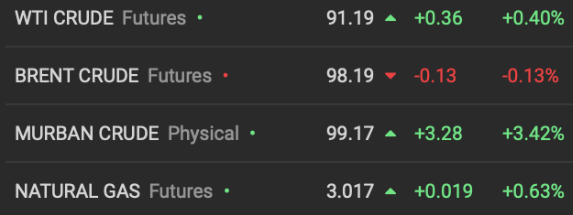
Both contracts showed mixed movement as uncertainty persisted amid peace remarks. Source: Oilprice.com
Oil prices came under pressure after Trump indicated that further US military strikes against Iran were unlikely as long as negotiations continued to make progress. The comments raised hopes of a possible diplomatic resolution to the conflict and reduced fears of a prolonged disruption to crude supplies from one of the world’s most important oil-producing regions.
The US president had previously threatened renewed military action against Tehran, but his latest remarks suggested a preference for pursuing negotiations. Iran, however, has warned that it would retaliate against US and Israeli targets if attacked, keeping the geopolitical situation uncertain.
The conflict has raised concerns over the security of energy infrastructure and shipping routes across the Middle East, particularly the Strait of Hormuz, through which a substantial share of global oil shipments passes. Any prolonged disruption to traffic through the waterway could tighten global supplies and push crude prices higher.
Also Read: How To Invest In Crude Oil
Oil records steepest weekly decline
The latest weakness in crude follows a sharp correction last week. Brent crude shed around 17%, marking its steepest weekly decline since the beginning of the Covid-19 pandemic, as markets increasingly priced in the possibility of a diplomatic breakthrough and the eventual restoration of disrupted supplies.
The decline also reflected changing expectations around the global oil balance. Investors have been weighing the possibility that supplies could recover faster than demand, particularly if Middle Eastern exports normalise and production from other regions continues to increase.
Supply glut adds to bearish outlook
Adding to the pressure on crude prices, JPMorgan warned that the global oil market was heading towards a supply surplus as Middle Eastern exports recovered, production increased elsewhere and demand remained subdued.
The bank estimated that the global oil surplus stood at 1.1 million barrels per day in September and widened to 1.4 million barrels per day in October. A sustained surplus could weigh on benchmark prices, particularly if demand growth fails to absorb the additional barrels entering the market.
The outlook for crude will therefore depend not only on developments in the Iran conflict but also on the pace of production recovery and the strength of global consumption. Any resumption of normal export flows from the Middle East could add to supply pressures in an already well-supplied market.
Iraq seeks to restore oil exports through Hormuz
Developments surrounding the Strait of Hormuz remain critical to the near-term outlook for crude prices. Iraq reached an understanding with the US on Sunday to facilitate crude oil exports through the Strait of Hormuz using a shipping lane near Oman, Foreign Minister Fuad Hussein said in an interview with Al Jazeera.
The arrangement could help revive some of Iraq’s disrupted oil shipments and ease supply concerns if shipping operations return to normal. Hussein said Iraq had suffered losses of around $60 billion due to the Iran conflict and disruptions to its oil exports.
However, the situation remains fragile. Yemen’s Houthi group claimed responsibility for an attack on Saudi Aramco’s offices in Riyadh on Sunday. The attack damaged windows, although there were no reported casualties. The incident underscores the continuing threat to energy infrastructure in the region, even as diplomatic efforts raise hopes of de-escalation.
Market participants are therefore monitoring developments around the Strait of Hormuz, the security of oil infrastructure and the pace at which Middle Eastern producers can restore disrupted exports. Any renewed military escalation or prolonged disruption to shipping could reverse the recent decline in crude prices.
What lower crude prices mean for India
The movement in international crude prices is particularly important for India, one of the world’s largest oil importers. A sustained decline in crude prices could ease the country’s import bill, reduce inflationary pressures and provide support to the Indian rupee.
Lower crude prices also offer some relief to oil marketing companies (OMCs), as cheaper imported crude can improve their marketing margins, depending on domestic retail fuel prices and refining economics. It could also moderate input costs for sectors such as aviation, paints, chemicals and logistics, where energy accounts for a significant portion of operating expenses.
However, the benefit for India will depend on whether the decline in international benchmarks is sustained. Currency movements, geopolitical developments and domestic fuel pricing decisions will also influence the extent to which lower crude prices translate into savings for consumers and businesses.
For now, the oil market faces competing forces: the possibility of an easing in Middle East tensions and a growing global supply surplus on one side, and the continuing risk of attacks on energy infrastructure and shipping routes on the other. Investors will closely track diplomatic developments involving Washington and Tehran, alongside changes in global supply and demand, for further direction.
Source
- Oilprice.com
Disclaimer
The information shared here is intended solely for informational and educational purposes and does not constitute investment recommendations. While we practice strict due diligence in curating daily market data, readers must perform independent research before trading. To flag any real-time data discrepancies or content concerns, please write to us at content@hdfcsec.com.
 Join Us
 Add as preferred source on Google


More Business News










Open Free Demat Account












Invest Anytime, Anywhere


By signing up I certify terms, conditions & privacy policy