Nifty 50
- Eicher Motors₹7,404.50120.00 (1.65%)
- Axis Bank₹1,241.10-48.90 (-3.79%)
- UltraTech Cement₹11,080173.00 (1.59%)
- HDFC Bank₹714-14.85 (-2.04%)
- Adani Ports₹1,776.2025.40 (1.45%)
- Infosys₹1,138.95-22.25 (-1.92%)
- ONGC₹224.752.75 (1.24%)
- Hindustan Unilever₹1,863.30-30.50 (-1.61%)
- Maruti Suzuki₹11,631142.00 (1.24%)
- HDFC Life Insurance ₹544.40-8.60 (-1.56%)
- L&T₹3,67042.90 (1.18%)
- Trent₹2,916-42.70 (-1.44%)
- Reliance Industries₹1,222.6011.40 (0.94%)
- Apollo Hospitals₹7,784-106.00 (-1.34%)
- SBI₹971.508.90 (0.92%)
- Tata Consumer ₹967.80-11.10 (-1.13%)
- Power Grid Corp₹252.351.90 (0.76%)
- ICICI Bank₹1,381.50-15.50 (-1.11%)
- JSW Steel₹1,224.808.50 (0.70%)
- Bajaj Finserv₹1,710.60-18.40 (-1.06%)

- Offerings
- Tools & Platforms
Tools & Calculators
- Open API
- Calculators
- SIP Calculator
- CAGR Calculator
- Compound Interest Calculator
- FD Calculator
- RD Calculator
- EPF Calculator
- Retirement Calculator
- HDFC SIP Calculator
- Mutual Fund Return Calculator
- Lumpsum Calculator
- Step Up SIP Calculator
- ETF SIP Calculator
- Brokerage Calculator
- Equity Margin Calculator
- SWP Calculator
- EMI Calculator
- MTF Calculator
- Margin Pledge Calculator
- Algo Strategy
- Markets
Stocks
F&O
Mutual Funds
- More
Oil Prices Today, October 19, 2026: Brent Falls 1.9% To $107.8, WTI Drops 1% To $100.4 As Trump Eases Russia Sanctions
Authored By HDFC SKY | Published at: Oct 19, 2026 10:14 AM IST

Open Free Demat Account
Open Free Demat Account
Mumbai, October 19: Crude oil prices declined on Monday as US President Donald Trump’s decision to waive sanctions and tariffs on Russia raised expectations of increased Russian fuel supplies to global markets. Brent crude futures fell 1.9% to $107.8 per barrel, while US West Texas Intermediate (WTI) crude dropped 1% to $100.4 per barrel.
The decline came after oil prices settled at their highest levels since May on Friday, with geopolitical tensions and disruptions to energy shipments in West Asia raising concerns over global supply. Trump’s move to ease restrictions on Russian fuel exports offered some relief to markets, although uncertainty surrounding the duration and implementation of the waiver continued to limit the outlook for a sustained decline in prices.

Trump’s Russia Sanctions Waiver
Trump signed an executive order on Friday waiving key sanctions and tariffs imposed on Russia under the Graham Act, a law introduced to increase economic pressure on Moscow over its war in Ukraine. The decision could allow Russia to expand fuel exports and ease some of the supply constraints facing international markets.
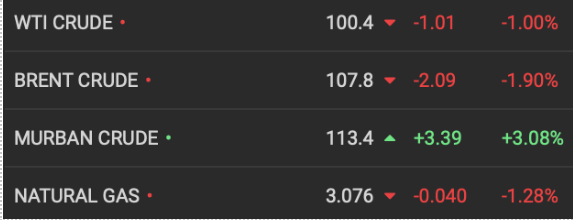
Both contracts fell as Russian sanctions eased. Source: oilprice.com
The move followed an agreement between Trump and Russian President Vladimir Putin to facilitate Russian diesel exports to the United States. The potential increase in shipments could add to the availability of refined petroleum products at a time when geopolitical tensions have tightened supplies and pushed energy prices higher.
However, the longer-term impact of the waiver remains uncertain. US Secretary of State Marco Rubio said the administration could take up to 60 days to assess its economic implications. The extent to which the policy translates into additional supplies will depend on the implementation of the measures and the response of energy traders and buyers.
Ukrainian President Volodymyr Zelenskiy criticised Washington’s decision, arguing that easing restrictions would undermine efforts to pressure Moscow over the war. The disagreement adds another layer of uncertainty to the geopolitical outlook for energy markets, particularly if relations between Washington and Kyiv deteriorate further.
West Asia Tensions Limit Oil Price Decline
Despite the prospect of additional Russian fuel supplies, risks to global energy flows remained elevated. Brent crude briefly touched $110 per barrel on Friday, its highest level since May 19, as concerns over shipping security and disruptions in West Asia heightened fears of tighter supplies.
According to analytics firm Kpler, crude oil flows through the Gulf fell to an average of around 8.5 million barrels per day over the seven days leading up to Friday, compared with more than 20 million barrels per day in the preceding week. The decline highlighted the potential impact of regional hostilities on energy shipments.
Kpler also reported at least 10 confirmed incidents involving commercial vessels during the week, underscoring the risks facing maritime trade. Any prolonged disruption to shipments through key waterways could restrict the movement of crude oil and petroleum products, offsetting some of the additional supply expected from Russia.
Developments involving Iran-aligned Houthi forces in Yemen also remained on investors’ radar. Egypt said it was prepared to support Saudi Arabia in protecting its security and stability amid escalating regional tensions, adding to concerns about the potential for further disruption.
What Lower Crude Oil Prices Mean For India
For India, a sustained decline in international crude oil prices could provide relief by reducing the country’s import bill and easing pressure on inflation and the rupee. As one of the world’s largest oil importers, India is particularly vulnerable to prolonged increases in energy prices, which can raise transportation and production costs across the economy.
Lower crude prices could also improve the operating environment for oil marketing companies, depending on refining margins, procurement costs and the extent to which changes in international benchmarks are reflected in domestic fuel prices. A reduction in the import bill could additionally ease pressure on India’s current account balance.
However, crude oil remains elevated despite Monday’s decline, and the outlook is clouded by the possibility of further supply disruptions. The impact of the Russian sanctions waiver will also depend on how quickly additional fuel reaches global markets and whether the policy remains in place.
Outlook
Investors will monitor developments surrounding US sanctions policy, Russian fuel exports and the security of shipping routes in West Asia for further direction. While expectations of higher Russian supplies have eased some concerns, persistent geopolitical risks could keep oil prices volatile. For India, a sustained correction in crude prices would be a positive development, but the duration of the decline remains uncertain.
Source
- Oilprice.com
Disclaimer
The information shared here is intended solely for informational and educational purposes and does not constitute investment recommendations. While we practice strict due diligence in curating daily market data, readers must perform independent research before trading. To flag any real-time data discrepancies or content concerns, please write to us at content@hdfcsec.com.
 Join Us
 Add as preferred source on Google


More Business News










Open Free Demat Account
Open Free Demat Account












Invest Anytime, Anywhere


By signing up I certify terms, conditions & privacy policy