Nifty 50
- Eternal₹317.4012.95 (4.25%)
- Shriram Finance₹865-35.90 (-3.98%)
- Apollo Hospitals₹7,730125.50 (1.65%)
- Adani Enterprises₹2,477-73.00 (-2.86%)
- ONGC₹227.502.50 (1.11%)
- JSW Steel₹1,185.50-34.50 (-2.83%)
- Asian Paints₹2,30722.20 (0.97%)
- Jio Financial ₹205.03-5.77 (-2.74%)
- TCS₹2,53023.10 (0.92%)
- Tata Steel₹167.67-4.66 (-2.70%)
- UltraTech Cement₹11,05092.00 (0.84%)
- Adani Ports₹1,702.70-47.30 (-2.70%)
- Maruti Suzuki₹11,23060.00 (0.54%)
- Tech Mahindra₹1,790-39.10 (-2.14%)
- Cipla₹1,3387.10 (0.53%)
- Tata Motors PV₹264.60-5.40 (-2.00%)
- Reliance Industries₹1,1905.50 (0.46%)
- Hindalco Industries₹869.85-15.75 (-1.78%)
- Axis Bank₹1,217.505.50 (0.45%)
- Trent₹2,727.50-48.30 (-1.74%)

- Offerings
- Tools & Platforms
Tools & Calculators
- Open API
- Calculators
- SIP Calculator
- CAGR Calculator
- Compound Interest Calculator
- FD Calculator
- RD Calculator
- EPF Calculator
- Retirement Calculator
- HDFC SIP Calculator
- Mutual Fund Return Calculator
- Lumpsum Calculator
- Step Up SIP Calculator
- ETF SIP Calculator
- Brokerage Calculator
- Equity Margin Calculator
- SWP Calculator
- EMI Calculator
- MTF Calculator
- Margin Pledge Calculator
- Algo Strategy
- Markets
Stocks
F&O
Mutual Funds
- More
Oil Prices Today, September 4, 2026: Brent Rises 0.4% To $95.90 As US-Iran Tensions Escalate; Set For Biggest Weekly Gain Since July
Authored By HDFC SKY | Last Modified: Sep 4, 2026 10:16 AM IST

Open Free Demat Account
Open Free Demat Account
New Delhi, September 4: Oil prices climbed on Friday and were on track for their strongest weekly gain since mid-July as renewed U.S.-Iran hostilities heightened concerns over disruptions to crude supplies from the Middle East. Brent crude rose 0.4% to $95.90 a barrel, while U.S. West Texas Intermediate gained 0.7% to $91.90 a barrel.

Oil prices head for sharp weekly gains
The latest gains put Brent on course for a weekly rise of around 7%, while WTI was headed for a nearly 10% increase, marking the biggest weekly advances for both benchmarks since the week ended July 20. Oil prices have climbed sharply as the conflict between the United States and Iran has intensified, raising the risk of further disruption to supplies from the oil-rich Middle East.
The latest escalation followed U.S. attacks that killed and wounded dozens of people, including Iranian civilians. The strikes represented the most serious exchange of fire between Washington and Tehran since July, while the conflict itself has now entered its seventh month. Israel has also renewed warnings of attacks on Iranian military and civilian infrastructure, including energy facilities.
The developments have added a substantial geopolitical premium to crude prices, with traders closely watching whether the latest escalation remains contained or develops into a broader disruption to regional energy infrastructure and shipping. Brent had already touched a six-week high earlier in the week before consolidating around current levels.
Strait of Hormuz in focus
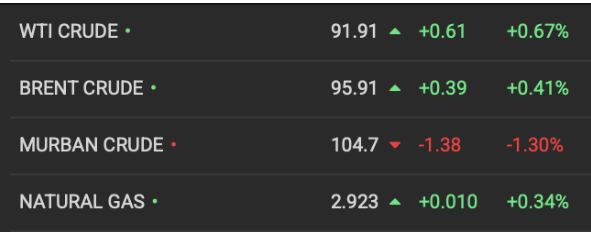
Both contracts rose as Middle East conflict continued to keep oil traders on edge. Source: oilprice.com
The Strait of Hormuz remains one of the biggest risks for the global oil market. Shipping traffic through the strategic waterway has declined, with preliminary data showing only six commodity vessels crossed on Wednesday, down from 11 a day earlier and below the 10-day average of around 13 vessels.
Iran has also expanded the list of vessels it considers non-compliant and potentially subject to fines, confiscation or detention if they attempt to transit the strait. Iraqi vessels are among those that Tehran has permitted to pass, adding another layer of uncertainty to the movement of crude through the region.
The Strait of Hormuz is particularly important for global energy markets because of the volume of oil and other commodities transported through it. Any prolonged disruption could tighten physical supplies and push prices substantially higher, although the extent of the impact would depend on the duration of the disruption and the availability of alternative supply.
Also Read: How To Invest In Crude Oil
Russia-Ukraine peace hopes offer some relief
The oil rally has been moderated by developments outside the Middle East. Russian President Vladimir Putin said there remained a possibility of reaching an agreement to end the war in Ukraine, with the U.S. and China among countries prepared to support a peace settlement.
A potential resolution to the Russia-Ukraine conflict could reduce concerns over Russian energy supply disruptions, particularly if attacks on refineries ease and production and exports normalise. That has provided some counterweight to the supply risks arising from the Middle East.
Iraq has also increased its crude exports. Its oil exports rose to around 2.34 million barrels per day in August, from about 1.35 million bpd in July, while September shipments are also expected to increase. Discounts and Iranian approvals for Iraqi tankers have encouraged buyers and helped keep additional barrels flowing into the market.
Tight inventories add to price pressure
The geopolitical risks come at a time when the physical oil market is already showing signs of tightness. Global inventories have been declining, supporting prices even as traders assess the potential impact of developments in the Middle East.
U.S. crude inventories also fell more than expected in the latest week. Stockpiles declined by 4.5 million barrels to 424.5 million barrels, compared with a 1.1-million-barrel draw expected by analysts. Strong refinery activity and higher exports contributed to the decline.
What higher crude prices mean for India
The surge in oil prices is particularly important for India, one of the world’s largest crude importers. A prolonged period of elevated crude could increase the country’s import bill, widen the trade deficit and put pressure on the rupee.
Higher oil prices could also feed into inflation by raising transportation and production costs across the economy. Industries such as aviation, paints, chemicals, logistics and other energy-intensive businesses could face higher input costs if crude remains elevated.
For Indian equities, therefore, the sharp weekly rise in crude prices remains a key headwind. While upstream oil producers could benefit from higher realisations, oil-consuming sectors may come under pressure if prices remain near current levels or move towards $100 a barrel.
For now, the market’s focus remains firmly on the U.S.-Iran conflict, developments around the Strait of Hormuz and signs of any disruption to regional crude flows. Further escalation could push oil higher, while any meaningful diplomatic progress could quickly unwind part of the geopolitical premium.
Source:
- oilprice.com
Disclaimer
If you have any concerns, questions, or wish to point out any discrepancies in our content, please feel free to write to us at content@hdfcsec.com.
Please Note: The information shared is intended solely for informational purposes and does not make any investment recommendations
HDFC SKY, one of India’s most trusted trading platforms, has been recognized with the Next-Gen Digi Content Awards 2025–26.
Disclaimer
At HDFC SKY*, we take utmost care and due diligence in curating and presenting news and market-related content. However, inadvertent errors or omissions may occasionally occur.
If you have any concerns, questions, or wish to point out any discrepancies in our content, please feel free to write to us at content@hdfcsec.com.
Please Note: The information shared is intended solely for informational purposes and does not make any investment recommendations.
HDFC SKY from HDFC Securities, one of most trusted trading platforms in India, has been recognized with the *Next-Gen Digi Content Awards 2025-26.
 Join Us
 Add as preferred source on Google


More Business News










Open Free Demat Account
Open Free Demat Account












Invest Anytime, Anywhere


By signing up I certify terms, conditions & privacy policy