Nifty 50
- Dr. Reddy's Labs₹1,310.9081.40 (6.62%)
- Shriram Finance₹825-40.00 (-4.62%)
- JSW Steel₹1,26074.50 (6.28%)
- Tata Consumer ₹936.50-27.40 (-2.84%)
- BSE₹3,359128.20 (3.97%)
- Bajaj Finance₹918.70-10.25 (-1.10%)
- Adani Ports₹1,752.5049.80 (2.92%)
- HDFC Life Insurance ₹519-4.75 (-0.91%)
- Eternal₹325.558.15 (2.57%)
- HDFC Bank₹688.05-4.75 (-0.69%)
- Max Healthcare₹83520.00 (2.45%)
- Sun Pharmaceutical₹1,740-8.00 (-0.46%)
- Kotak Mahindra Bank₹440.7510.25 (2.38%)
- HCL Technologies₹1,417-5.20 (-0.37%)
- Grasim Industries₹2,95056.00 (1.94%)
- Tata Motors PV₹263.70-0.90 (-0.34%)
- Coal India₹4057.55 (1.90%)
- Mahindra & Mahindra₹2,853.10-8.10 (-0.28%)
- Hindalco Industries₹885.6515.80 (1.82%)
- Power Grid Corp₹247-0.40 (-0.16%)

- Offerings
- Tools & Platforms
Tools & Calculators
- Open API
- Calculators
- SIP Calculator
- CAGR Calculator
- Compound Interest Calculator
- FD Calculator
- RD Calculator
- EPF Calculator
- Retirement Calculator
- HDFC SIP Calculator
- Mutual Fund Return Calculator
- Lumpsum Calculator
- Step Up SIP Calculator
- ETF SIP Calculator
- Brokerage Calculator
- Equity Margin Calculator
- SWP Calculator
- EMI Calculator
- MTF Calculator
- Margin Pledge Calculator
- Algo Strategy
- Markets
Stocks
F&O
Mutual Funds
- More
Oil Climbs on Iran Blockade Fears, but UAE’s OPEC Exit Tempers Rally Outlook
Authored By HDFC SKY | Last Modified: Apr 29, 2026 04:01 PM IST
Open Free Demat Account
Open Free Demat Account
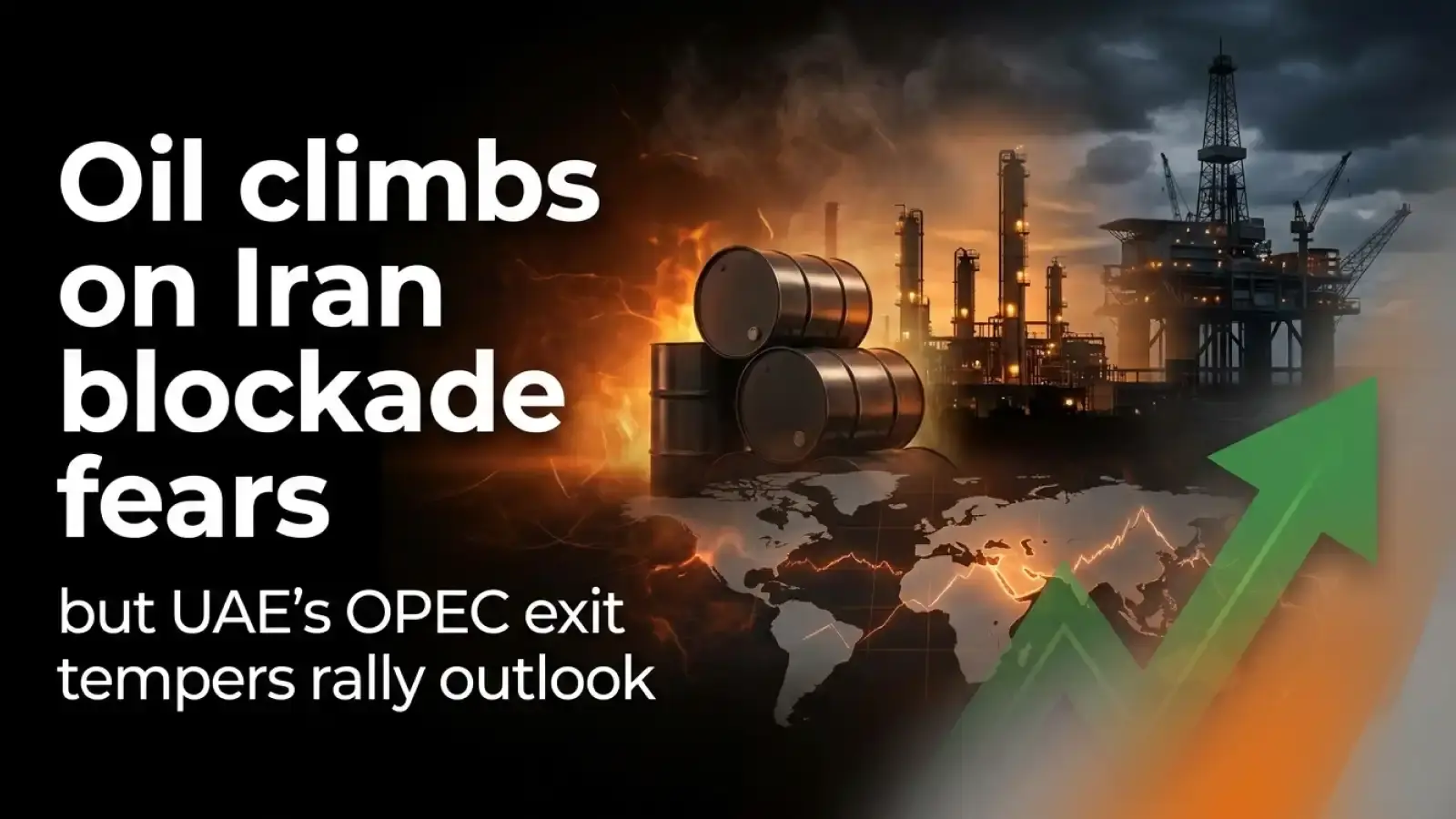
Oil prices extended their gains on Wednesday, hovering above the $110-per-barrel mark, as escalating tensions in the Middle East tightened supply expectations—even as a structural shift from the United Arab Emirates threatens to reshape the longer-term outlook.
Benchmark Brent crude traded around $112 per barrel while WTI crude kept around $100 per barrel levels.

Geopolitics Weighs
The immediate trigger remains geopolitical. Reports that the United States may extend its blockade on Iranian exports have amplified fears of prolonged supply disruption, particularly with shipping through the Strait of Hormuz—one of the world’s most critical oil arteries—already under strain. With a significant portion of global crude flows routed through the narrow passage, even partial disruptions have been enough to push prices higher and keep markets on edge.
This has introduced a strong risk premium into oil prices, where crude is being bid up not just on current supply tightness, but on the fear of further escalation. Traders are increasingly pricing in a scenario where disruptions persist longer than expected, keeping inventories tight and limiting the ability of global markets to rebalance quickly.
UAE Shocker
However, running parallel to this immediate supply shock is a quieter but equally significant development—the UAE’s decision to exit OPEC from May 1.
Unlike the Iran-related disruptions, which are constraining supply, the UAE’s move points in the opposite direction. Freed from OPEC’s production quotas, the UAE gains the flexibility to increase output and compete more aggressively for market share. Over time, this could inject additional barrels into the global system, acting as a counterweight to the current supply squeeze.
The result is a market being pulled in two directions.
In the short term, geopolitics is firmly in control. Supply disruptions linked to Iran and constrained shipping flows are dominating price action, keeping crude elevated and volatile. As long as these risks persist, oil is likely to trade with an upward bias.
But in the medium term, the UAE’s exit introduces a structural shift. A more competitive supply environment—particularly if other producers follow suit or OPEC’s cohesion weakens—could cap price gains and even push crude lower once logistical bottlenecks ease.
Dual Dynamic
This dual dynamic is creating a layered market narrative. On one hand, immediate disruptions are tightening supply and lifting prices. On the other, the erosion of coordinated production discipline within OPEC suggests a future where supply could be more abundant and pricing power more fragmented.
For now, the balance tilts towards tightness. But the seeds of a softer oil regime may already be sown.
Bottom line: Oil’s current rally is being driven by geopolitical stress, but the UAE’s exit from OPEC is quietly reshaping the longer-term supply landscape—introducing a future cushion even as present disruptions keep prices elevated.
Source:
- https://oilprice.com/
Disclaimer
If you have any concerns, questions, or wish to point out any discrepancies in our content, please feel free to write to us at content@hdfcsec.com.
Please Note: The information shared is intended solely for informational purposes and does not make any investment recommendations
Disclaimer
The information shared here is intended solely for informational and educational purposes and does not constitute investment recommendations. While we practice strict due diligence in curating daily market data, readers must perform independent research before trading. To flag any real-time data discrepancies or content concerns, please write to us at content@hdfcsec.com.
 Join Us
 Add as preferred source on Google


More Markets News










Open Free Demat Account
Open Free Demat Account











Invest Anytime, Anywhere


By signing up I certify terms, conditions & privacy policy