Nifty 50
- Dr. Reddy's Labs₹1,229.4032.40 (2.71%)
- Apollo Hospitals₹7,775-252.50 (-3.15%)
- Bajaj Auto₹10,034256.00 (2.62%)
- ITC₹257.90-8.10 (-3.05%)
- Tata Motors PV₹284.454.55 (1.63%)
- Tech Mahindra₹1,471-43.10 (-2.85%)
- Bharat Electronics₹373.905.75 (1.56%)
- L&T₹3,627.50-75.80 (-2.05%)
- BSE₹3,330.2043.00 (1.31%)
- Max Healthcare₹865.95-17.85 (-2.02%)
- Cipla₹1,317.4016.40 (1.26%)
- Hindalco Industries₹882.50-17.85 (-1.98%)
- Eicher Motors₹7,11969.00 (0.98%)
- Hindustan Unilever₹1,820.70-36.00 (-1.94%)
- Mahindra & Mahindra₹2,81316.80 (0.60%)
- SBI₹941-18.10 (-1.89%)
- Kotak Mahindra Bank₹443.402.40 (0.54%)
- Coal India₹404.80-6.75 (-1.64%)
- HCL Technologies₹1,2236.30 (0.52%)
- Bharti Airtel₹1,778.70-26.40 (-1.46%)

- Offerings
- Tools & Platforms
Tools & Calculators
- Open API
- Calculators
- SIP Calculator
- CAGR Calculator
- Compound Interest Calculator
- FD Calculator
- RD Calculator
- EPF Calculator
- Retirement Calculator
- HDFC SIP Calculator
- Mutual Fund Return Calculator
- Lumpsum Calculator
- Step Up SIP Calculator
- ETF SIP Calculator
- Brokerage Calculator
- Equity Margin Calculator
- SWP Calculator
- EMI Calculator
- MTF Calculator
- Margin Pledge Calculator
- Algo Strategy
- Markets
Stocks
F&O
Mutual Funds
- More
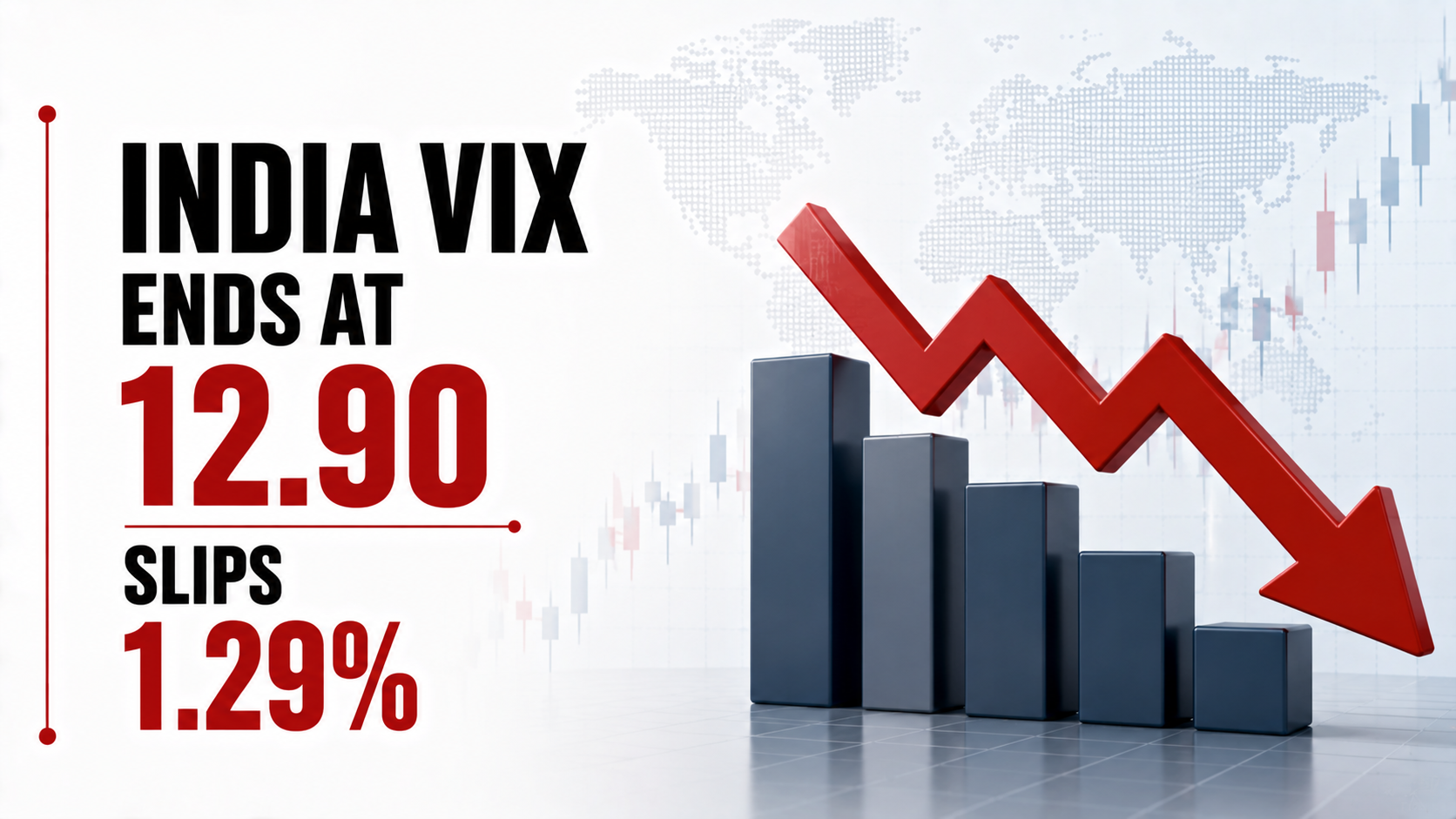
India VIX Ends at 12.90, Slips 1.29% as Earnings, Oil Prices and Global Risks Keep Volatility Elevated
Authored By HDFC SKY | Last Modified: Jul 20, 2026 05:47 PM IST
Open Free Demat Account
Open Free Demat Account
Mumbai, July 20: India VIX, the National Stock Exchange’s volatility index, ended the trading session at 12.90, down 0.17 points (1.29%) from the previous close of 13.15, after moving within a day range of 12.89–13.84. Although the index finished lower, it remained above the session’s low after witnessing intraday fluctuations driven by corporate earnings, elevated crude oil prices and continuing geopolitical developments in West Asia. The volatility gauge has now delivered a year-to-date return of 36.92%, while remaining well below its 52-week high of 28.90 and above its 52-week low of 8.72.

India VIX Trades between 12.89 and 13.84 Amid Market Swings
India VIX opened at 13.15, unchanged from the previous close, before touching an intraday high of 13.84 and later easing to a low of 12.89. The index eventually settled at 12.90, reflecting a decline of 1.29% by the close. Throughout the trading session, volatility remained influenced by movements in the broader equity market, where benchmark indices traded under pressure following weakness in financial stocks and heightened global uncertainty. Despite ending lower than the previous session, the index continued to remain above levels seen earlier this month, indicating that option pricing continued to reflect a measured degree of near-term market uncertainty.
Weak Equities and Banking Losses Kept Volatility in Focus
The session coincided with a broad decline in domestic equity benchmarks. The Sensex fell by around 600 points, while the Nifty 50 slipped below the 24,200 mark during the day. Banking stocks remained among the biggest contributors to the decline after quarterly earnings from major lenders weighed on the sector. Shares of HDFC Bank and Axis Bank came under pressure following their financial results, contributing significantly to weakness in the benchmark indices. The broader market decline led to increased activity in the options segment, keeping volatility elevated even though India VIX ultimately closed below its opening level.
Crude Oil and West Asia Developments Supported Caution
International developments continued to remain an important factor influencing market volatility during the session. Crude oil prices stayed elevated, with Brent crude remaining near $90 per barrel, supported by continuing geopolitical tensions involving the United States and Iran. Reports of renewed military activity and concerns over energy supply routes in the region kept global markets focused on potential disruptions. Higher crude oil prices remained a key macroeconomic concern because of their implications for inflation, fiscal balances, corporate costs and India’s import bill. These developments continued to provide support to volatility levels during the trading session despite the index ending lower.
Q1 FY27 Earnings Season Sustained Options Activity
The ongoing Q1 FY27 earnings season also remained a major driver of market activity. With several large-cap companies reporting quarterly earnings, market participants continued adjusting positions ahead of corporate announcements. Financial sector earnings attracted particular attention during the session, with disappointing numbers from some major banks contributing to broader market weakness. Increased hedging activity around earnings announcements continued to support options trading volumes, even as the final reading of India VIX reflected a modest decline compared with the previous close.
Technical Levels Show Neutral Trend Despite Session Decline
Technical indicators continued to classify India VIX under a Neutral trend at the close of trading. According to the day’s technical levels, the Classic Pivot Point stood at 13.10, while immediate resistance levels were placed at 13.40, 13.64, and 13.94. On the downside, support levels were identified at 12.86, 12.56, and 12.32. During the session, the index traded close to its first support level before ending marginally above it, reflecting balanced movement within the day’s established trading range rather than a decisive directional shift.
July Seasonality Contrasts with Current Market Movement
Historical data continues to show that July has generally been a weak month for India VIX. Over the past 18 years, the volatility index has delivered negative July returns in 15 years. The month has recorded an average decline of 8.38%, with the strongest positive July gain being 7.39% in 2011, while the largest July decline was 24.22% in 2022. Although India VIX has experienced intermittent spikes during the current month because of earnings announcements and global developments, the longer-term seasonal trend continues to indicate that July has historically been associated with softer volatility readings.
Current Levels Remain Below 52-Week Peak of 28.90
Despite recent fluctuations, India VIX continues to trade significantly below its 52-week high of 28.90. At the same time, the index remains comfortably above its 52-week low of 8.72, highlighting the range within which volatility has moved over the past year. The current closing level of 12.90 also places the index below the widely watched 15 mark, even after periods of elevated market uncertainty seen during recent months. The year-to-date gain of 36.92% indicates that volatility has remained higher than levels recorded at the beginning of the calendar year despite periodic declines.
India VIX Reflects NSE’s Expected Market Volatility
India VIX is the National Stock Exchange’s real-time volatility index, derived from the pricing of Nifty 50 options contracts. It measures the market’s expectation of near-term volatility rather than the direction of equity prices. Widely tracked across Indian financial markets, the index serves as an indicator of expected price fluctuations over the coming weeks and is commonly referenced during periods of heightened market activity, earnings announcements and global macroeconomic developments.
India VIX closed at 12.90, down 1.29%, after trading between 12.89 and 13.84 during the session. The day’s movement reflected the combined influence of ongoing Q1 FY27 earnings, elevated Brent crude oil prices, geopolitical developments in West Asia, and weakness in domestic benchmark indices, while the index remained below its 52-week high of 28.90 and retained a Neutral technical trend.
Source
- https://www.nseindia.com/reports-indices-historical-vix
Disclaimer
If you have any concerns, questions, or wish to point out any discrepancies in our content, please feel free to write to us at content@hdfcsec.com.
Please Note: The information shared is intended solely for informational purposes and does not make any investment recommendations
Disclaimer
At HDFC SKY*, we take utmost care and due diligence in curating and presenting news and market-related content. However, inadvertent errors or omissions may occasionally occur.
If you have any concerns, questions, or wish to point out any discrepancies in our content, please feel free to write to us at content@hdfcsec.com.
Please Note: The information shared is intended solely for informational purposes and does not make any investment recommendations.
HDFC SKY from HDFC Securities, one of most trusted trading platforms in India, has been recognized with the *Next-Gen Digi Content Awards 2025-26.
 Join Us
 Add as preferred source on Google


More Business News










Open Free Demat Account
Open Free Demat Account












Invest Anytime, Anywhere


By signing up I certify terms, conditions & privacy policy