Nifty 50
- Infosys₹9975.00 (0.50%)
- Adani Enterprises₹2,596-147.00 (-5.36%)
- Tech Mahindra₹1,496.205.10 (0.34%)
- JSW Steel₹1,175.20-54.80 (-4.46%)
- Axis Bank₹1,2452.50 (0.20%)
- ITC₹255-10.70 (-4.03%)
- HCL Technologies₹1,186.201.20 (0.10%)
- Max Healthcare₹871.70-36.30 (-4.00%)
- InterGlobe Aviation₹4,813.10-176.90 (-3.55%)
- Shriram Finance₹917.25-30.75 (-3.24%)
- Tata Motors PV₹274-9.00 (-3.18%)
- Apollo Hospitals₹7,666-251.00 (-3.17%)
- Adani Ports₹1,698-52.10 (-2.98%)
- Bharat Electronics₹367.10-11.20 (-2.96%)

- Offerings
- Tools & Platforms
Tools & Calculators
- Open API
- Calculators
- SIP Calculator
- CAGR Calculator
- Compound Interest Calculator
- FD Calculator
- RD Calculator
- EPF Calculator
- Retirement Calculator
- HDFC SIP Calculator
- Mutual Fund Return Calculator
- Lumpsum Calculator
- Step Up SIP Calculator
- ETF SIP Calculator
- Brokerage Calculator
- Equity Margin Calculator
- SWP Calculator
- EMI Calculator
- MTF Calculator
- Margin Pledge Calculator
- Algo Strategy
- Markets
Stocks
F&O
Mutual Funds
- More
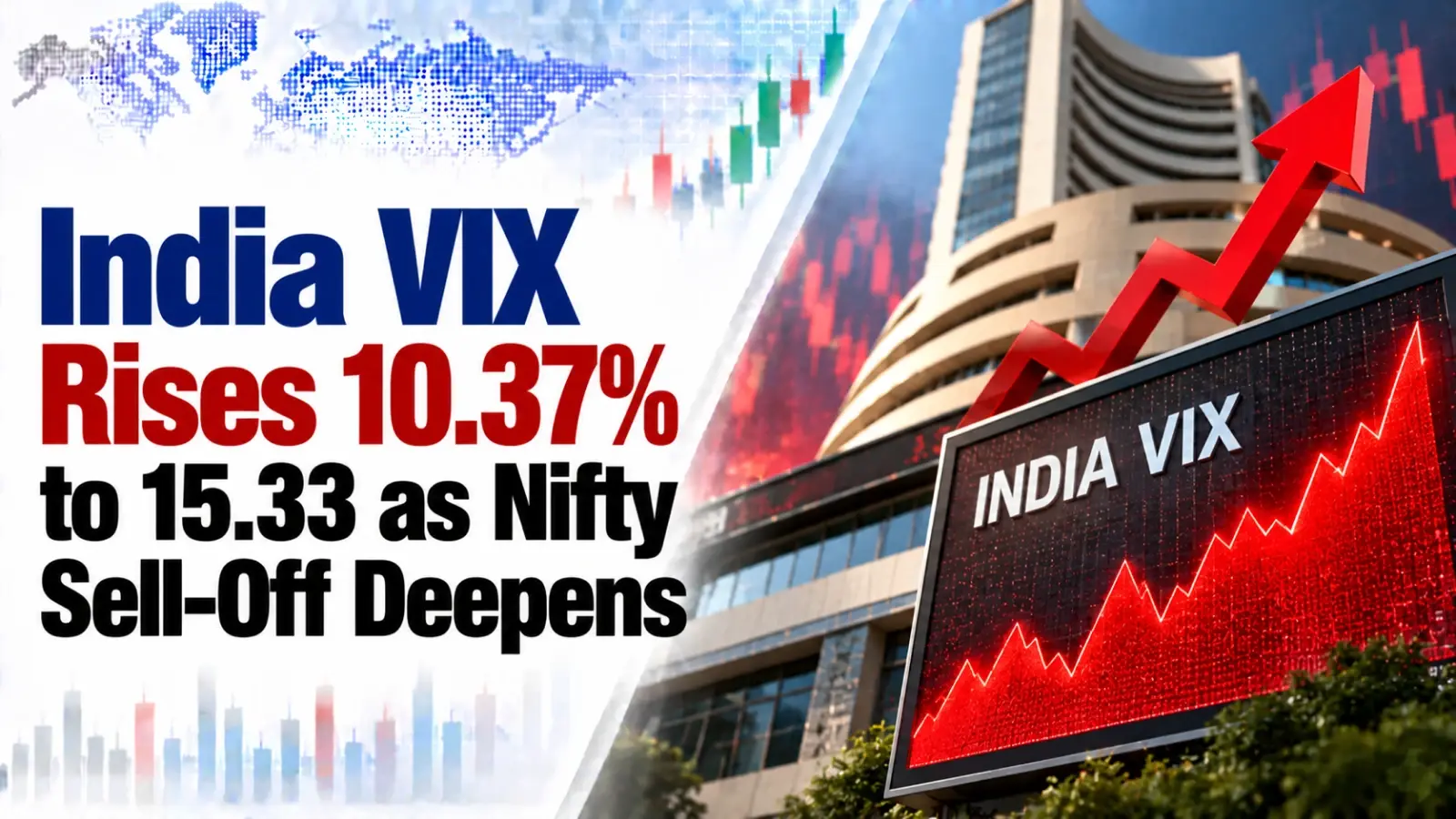
India VIX Rises 10.37% to 15.33 as Nifty Sell-Off Deepens
Authored By HDFC SKY | Published at: Oct 8, 2026 03:55 PM IST
Open Free Demat Account
Open Free Demat Account
Mumbai, 8 October 2026: India VIX ended the 8 October 2026 trading session at 15.33, rising 1.44 points or 10.37% from the previous close of 13.89, as a combination of higher crude oil prices, renewed Middle East tensions, elevated US Treasury yields, rupee weakness and a broad decline in Indian equities increased volatility during the session. The index opened at 13.88, touched a high of 15.48 and was shown with a day range of 11.96 to 15.48.

India VIX Climbs 10.37% as Market Volatility Intensifies
The rise in India VIX came as the Indian equity market faced several domestic and global pressures at the same time. Crude oil moved above $104 per barrel, while concerns around shipping through the Strait of Hormuz added to uncertainty over energy supplies. At the same time, US Treasury yields remained elevated, expectations around US Federal Reserve rate policy continued to weigh on global markets, and Asian equities opened weaker.
The rupee also remained close to its record low, adding another layer of pressure to the domestic market. Foreign-investor selling remained an overhang, while the Nifty sell-off became broader during the session. Several heavyweight stocks declined sharply, although gains in information technology stocks provided some support.
India VIX measures expected volatility in the Nifty based on option prices. Its movement therefore reflected the sharp change in market conditions during the session, particularly as the Nifty came under increasing selling pressure.
Brent Oil Above $104 Raises Pressure on Indian Markets
Brent crude moved above $104 per barrel, with the price reaching approximately $104.09, up about 3.9% during the session. The increase came amid renewed concerns over Middle Eastern oil supplies, including attacks on shipping in the Gulf, risks around the Strait of Hormuz and renewed geopolitical tensions involving Iran.
The rise in crude prices was significant for India because higher oil costs can increase the country’s import bill and add pressure to the rupee and inflation. The development also raised concerns around corporate margins, the current account and the scope for monetary policy to remain supportive.
The oil movement therefore formed a major part of the day’s volatility backdrop as markets dealt with both higher energy prices and uncertainty over the duration of the supply risks.
Middle East Tensions Add to $104 Oil Supply Risks
Geopolitical developments extended beyond the movement in crude prices. Reports during the session indicated that the US administration was considering military options involving Iran, while continued attacks on tankers increased concerns around shipping and energy infrastructure.
The Strait of Hormuz remained a particular focus because of its importance to global oil and fuel shipments. The combination of geopolitical tensions and shipping risks added uncertainty to the outlook for energy supplies, while the possibility of prolonged disruption kept attention on crude prices.
For Indian markets, the developments came alongside existing concerns over inflation, the rupee and monetary policy. The combination contributed to the wider risk-off conditions during the trading session.
US Treasury Yields Stay High as Rate Risks Persist
US Treasury yields also remained a significant global market factor on 8 October. The US 10-year Treasury yield was around 5.3%, while the 30-year yield was around 5.7%, keeping global borrowing costs and financial conditions under pressure.
Higher US yields can influence capital flows towards US fixed-income assets while increasing the discount rate used across global financial markets. Indian equities were therefore trading against a backdrop of elevated global yields, weaker risk appetite and continuing concerns around US monetary policy.
Markets were also assessing the possibility of another US Federal Reserve rate increase. Higher oil prices, inflation concerns and elevated Treasury yields added uncertainty to the rate outlook and formed another part of the day’s volatility backdrop.
Asian Markets Open Lower As Global Risk Appetite Weakens
Indian equities also entered the session after a weak opening across several Asian markets. Japan, South Korea and Australia recorded declines, while Chinese equities faced pressure after reopening following the holiday period.
The weakness in regional markets reflected a combination of higher US Treasury yields, renewed US-China tensions and concerns around elevated technology valuations. The weaker Asian opening meant Indian equities began the day against an already cautious global market backdrop.
The international weakness added to pressure created by domestic factors, including the rupee, foreign-investor flows and the previous day’s change in India’s monetary-policy stance.
Rupee Near ₹97 Adds Another Layer of Market Pressure
The rupee opened at around ₹96.71 per US dollar, compared with ₹96.77 at Wednesday’s close, but remained close to its record-low levels during the session. The currency’s proximity to ₹97 remained an important market concern.
There was also discussion that the Reserve Bank of India (RBI) may have intervened near the opening to support the rupee. The development came as the currency remained under pressure from higher crude prices and broader global conditions.
The rupee movement was particularly relevant because a weaker domestic currency can increase the rupee cost of imported crude and add to inflation concerns. It also formed part of the broader uncertainty affecting Indian equities during the session.
FII Selling Keeps Pressure on Indian Equities
Foreign-investor selling remained an important overhang entering the session. The latest confirmed data available at the start of trading showed foreign institutional investors (FIIs) had sold approximately ₹6,121 crore of Indian equities on 7 October, while domestic institutional investors (DIIs) bought around ₹4,597 crore.
The ₹6,121 crore figure relates to the previous trading day and is not being classified as selling recorded on 8 October. However, the flow data formed part of the market backdrop as equities came under pressure again.
Foreign-investor withdrawals, particularly from financial stocks, remained a key feature of the broader market environment and coincided with the weakness in the Nifty during Thursday’s session.
Nifty Falls Below 22,300 as Selling Broadens
The Nifty opened at around 22,540, but selling intensified as the session progressed. By around 1:30 pm, the index was near 22,260, down approximately 1.5%, after touching an intraday low around 22,228. The Sensex was also down more than 1,000 points at that stage.
Later in the afternoon, the Nifty was around 22,269, down approximately 1.5%, while the Sensex was lower by roughly 930 points. The decline across the underlying index coincided with the increase in India VIX from 13.89 to above 15.
The broader equity decline was also visible beyond the headline index. The Nifty Midcap 100 was down about 2.35%, the Nifty Smallcap 100 declined around 2.22%, and the Nifty Next 50 fell approximately 2.36%. Bank Nifty also remained lower.
Adani and ITC Declines Add to Index Pressure
Several heavyweight stocks recorded significant declines during the session. Around midday, Adani Enterprises was down approximately 4.8%, JSW Steel around 4%, ITC about 3.7%, Max Healthcare roughly 3.5% and Adani Ports around 3.4%.
By the afternoon, Adani Enterprises had fallen roughly 7%, while ITC and JSW Steel were down around 4%. The weakness among major index constituents added to the pressure on the broader Nifty.
ITC also saw a large block transaction involving approximately 36.67 crore shares at around ₹257.35 per share, representing roughly ₹9,437 crore. Multiple block transactions were also reported at discounts to the previous close.
IT Stocks Gain as TCS Earnings Add Event Risk
Information technology stocks provided some support during the session. TCS, Infosys, HCL Technologies and Tech Mahindra were among the gainers. Around midday, TCS was up approximately 1.37%, Infosys 1.06%, HCL Technologies 1% and Tech Mahindra 1.46%. The Nifty IT index was also higher by about 1.8% in morning trading.
TCS was scheduled to announce its September-quarter results after market hours, making the earnings release an additional event during the session. As one of the largest Nifty constituents and a major IT services company, its results were closely watched as the September-quarter earnings season began.
RBI’s 5.50% Rate Adds to Thursday’s Policy Backdrop
The Reserve Bank of India’s 25-basis-point repo-rate increase to 5.50% occurred on 7 October, not 8 October, and therefore was not a new policy announcement during Thursday’s session. However, its implications remained part of the market backdrop.
The RBI had also shifted its stance from neutral to calibrated tightening. During Thursday’s trading, market participants continued to assess the implications of that decision alongside crude oil prices, inflation risks and rupee weakness. The possibility of further policy tightening under sustained inflation and oil-price pressure remained part of the discussion.
India VIX Reaches 15.48 After Opening at 13.88
India VIX opened at 13.88, compared with the previous close of 13.89, before moving higher as market volatility increased. The index reached a session high of 15.48 and ended at 15.33, up 1.44 points or 10.37%.
The index’s displayed day range was 11.96 to 15.48, while its 52-week range stood at 8.72 to 28.90. India VIX was also shown with a YTD return of 61.50%. Its technical rating for the session was Neutral.
Seasonality data showed that India VIX has recorded positive returns in 9 of 18 years during October. For the month, the maximum positive change was 26.73% in 2020, while the maximum negative change was -30.99% in 2013. The average positive change was 12.09%, the average negative change was -13.66%, and the overall average change was -0.79%.
India VIX closed at 15.33, up 10.37%, after crude oil exceeded $104, the rupee remained near ₹97, US yields stayed elevated and the Nifty fell below 22,300. The session combined geopolitical, currency, monetary-policy and equity-market pressures, while IT gains provided a partial offset and TCS earnings added an event-driven element.
Disclaimer
At HDFC SKY*, we take utmost care and due diligence in curating and presenting news and market-related content. However, inadvertent errors or omissions may occasionally occur.
If you have any concerns, questions, or wish to point out any discrepancies in our content, please feel free to write to us at content@hdfcsec.com.
Please Note: The information shared is intended solely for informational purposes and does not make any investment recommendations.
HDFC SKY from HDFC Securities, one of most trusted trading platforms in India, has been recognized with the *Next-Gen Digi Content Awards 2025-26.
 Join Us
 Add as preferred source on Google


More Business News










Open Free Demat Account
Open Free Demat Account











Invest Anytime, Anywhere


By signing up I certify terms, conditions & privacy policy