Nifty 50
- Dr. Reddy's Labs₹1,229.4032.40 (2.71%)
- Apollo Hospitals₹7,775-252.50 (-3.15%)
- Bajaj Auto₹10,034256.00 (2.62%)
- ITC₹257.90-8.10 (-3.05%)
- Tata Motors PV₹284.454.55 (1.63%)
- Tech Mahindra₹1,471-43.10 (-2.85%)
- Bharat Electronics₹373.905.75 (1.56%)
- L&T₹3,627.50-75.80 (-2.05%)
- BSE₹3,330.2043.00 (1.31%)
- Max Healthcare₹865.95-17.85 (-2.02%)
- Cipla₹1,317.4016.40 (1.26%)
- Hindalco Industries₹882.50-17.85 (-1.98%)
- Eicher Motors₹7,11969.00 (0.98%)
- Hindustan Unilever₹1,820.70-36.00 (-1.94%)
- Mahindra & Mahindra₹2,81316.80 (0.60%)
- SBI₹941-18.10 (-1.89%)
- Kotak Mahindra Bank₹443.402.40 (0.54%)
- Coal India₹404.80-6.75 (-1.64%)
- HCL Technologies₹1,2236.30 (0.52%)
- Bharti Airtel₹1,778.70-26.40 (-1.46%)

- Offerings
- Tools & Platforms
Tools & Calculators
- Open API
- Calculators
- SIP Calculator
- CAGR Calculator
- Compound Interest Calculator
- FD Calculator
- RD Calculator
- EPF Calculator
- Retirement Calculator
- HDFC SIP Calculator
- Mutual Fund Return Calculator
- Lumpsum Calculator
- Step Up SIP Calculator
- ETF SIP Calculator
- Brokerage Calculator
- Equity Margin Calculator
- SWP Calculator
- EMI Calculator
- MTF Calculator
- Margin Pledge Calculator
- Algo Strategy
- Markets
Stocks
F&O
Mutual Funds
- More
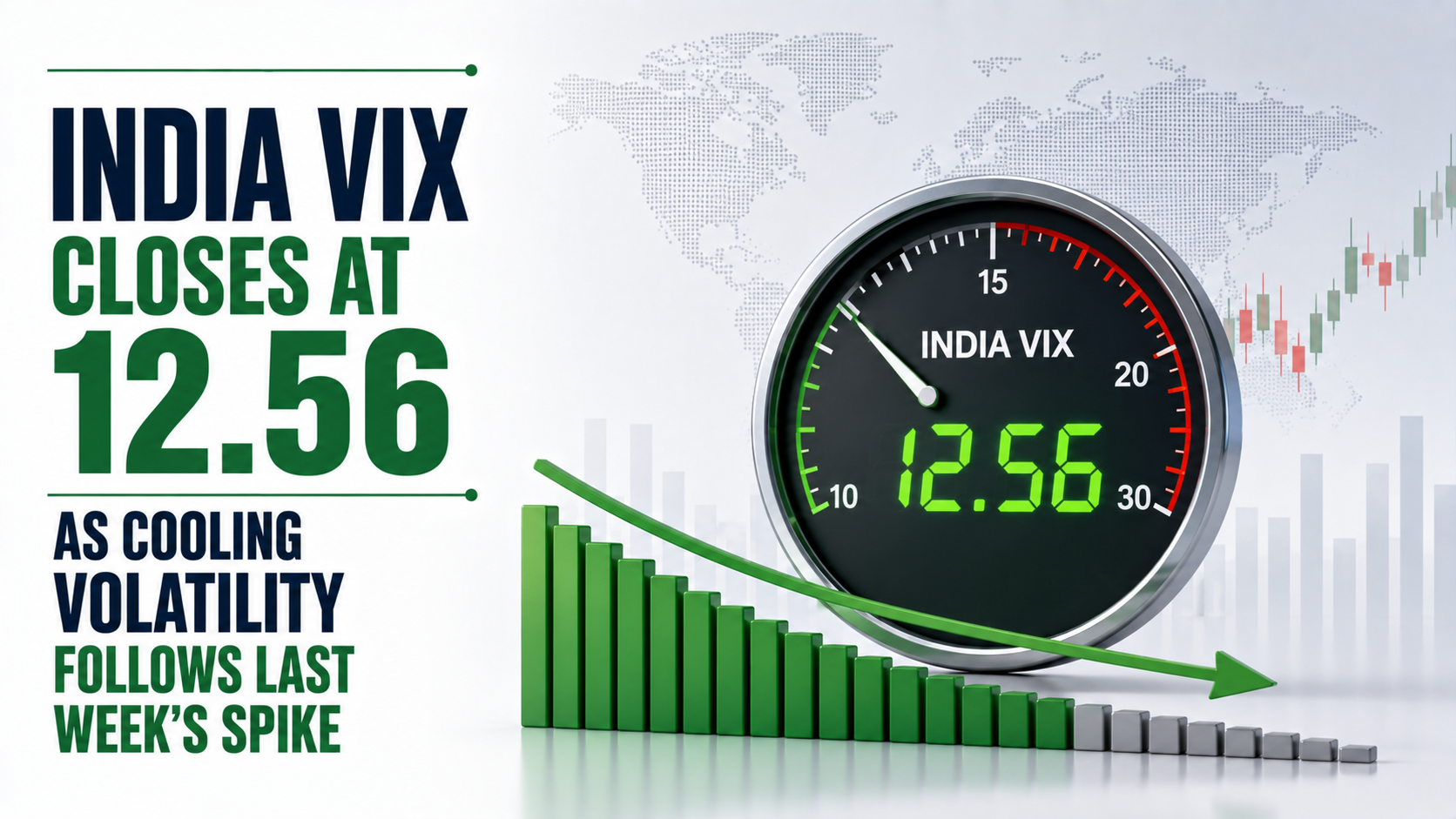
India VIX Closes at 12.56 as Cooling Volatility Follows Last Week’s Spike
Authored By HDFC SKY | Last Modified: Jul 28, 2026 04:50 PM IST
Open Free Demat Account
Open Free Demat Account
Mumbai, July 28: India VIX, the domestic equity market’s benchmark measure of expected near-term volatility, closed at 12.56, down 0.10 points (0.79%) on 28 July 2026, extending the decline seen after Monday’s sharp fall.
The index opened at 12.66, the same as the previous close, touched an intraday high of 12.82 and a low of 11.72, reflecting relatively contained movement in the derivatives market.
The latest session followed one of the steepest single-day declines in July, when India VIX dropped 9.76% to 12.66 on 27 July, coinciding with a recovery in benchmark equity indices after several sessions of weakness.

India VIX Ends at 12.56 as Volatility Continues to Ease
The closing level of 12.56 kept India VIX within the lower half of its 52-week range of 8.72 to 28.90, indicating that implied market volatility remained well below the elevated levels witnessed earlier this month.
During Tuesday’s session, the index traded in a relatively narrow band between 11.72 and 12.82, suggesting that options markets continued to price in moderate short-term fluctuations rather than sharp swings.
Technical indicators continued to assign the index a Neutral trend, while the day’s classic pivot levels stood at 13.79 (R1), 14.93 (R2), 15.52 (R3), 13.20 (pivot point), 12.06 (S1), 11.47 (S2) and 10.33 (S3).
Sharp 9.76% Fall on 27 July Set the Stage
The subdued close on 28 July followed the significant decline recorded during the previous trading session. On 27 July, India VIX closed at 12.66, down 9.76%, marking one of the largest single-session percentage declines in recent months.
The fall coincided with a broad-based recovery in domestic equities, with the Sensex gaining 776 points (1.02%) to finish at 76,836, while the Nifty 50 advanced 228.5 points (0.96%) to close at 23,995.95. The rebound also lifted the combined market capitalisation of BSE-listed companies by more than ₹5 lakh crore during the session.
Lower Crude and Easing Risks Reduced Volatility Expectations
The decline in India VIX came amid a combination of domestic and global developments that coincided with reduced volatility expectations. Market reports highlighted easing geopolitical tensions compared with the previous week, alongside a sharp correction in crude oil prices. Brent crude declined by more than 9% during the period, reducing concerns surrounding energy prices.
At the same time, the Indian rupee strengthened against the US dollar, while bond yields softened, contributing to a relatively stable macroeconomic backdrop. These developments coincided with lower implied volatility across the options market following the heightened uncertainty experienced earlier in July.
Derivatives Activity Reflected Reduced Hedging Demand
The moderation in India VIX was also accompanied by changes in derivatives positioning. As immediate uncertainty eased, traders reduced protective hedging activity, resulting in lower implied volatility and softer option premiums.
The decline followed elevated hedging demand seen earlier this month when geopolitical developments and rising crude prices pushed India VIX above 14–15. With volatility easing, market participants increasingly shifted towards range-bound expectations during the July expiry week, while derivatives pricing reflected lower demand for downside protection compared with the previous week.
Expiry Week Keeps Markets Focused Despite Lower VIX
Although India VIX remained subdued, market participants continued to monitor several scheduled events during the final week of July. The weekly Nifty derivatives expiry remained a key focus, while global attention centred on the upcoming US Federal Reserve policy decision later in the week.
Domestic markets also tracked the ongoing corporate earnings season and institutional fund flows. During Tuesday’s session, the Nifty 50 traded above the 24,000 level, while the Nifty 25 August 2026 futures contract traded at 24,125, representing a premium of 17.45 points over the spot index.
July Trading Pattern Highlights Earlier Volatility Surge
The latest close marked another stage in India VIX’s changing trajectory during July. The volatility gauge traded below 12 during the early part of the month before surging above 14–15 on 8 July, when geopolitical developments, higher crude oil prices and a sharp decline in Indian equities triggered increased hedging activity.
By 24 July, India VIX had moved to around 14.19 ahead of monthly derivatives expiry. The subsequent decline to 12.66 on 27 July, followed by the latest close at 12.56, reflected the reversal of those elevated volatility expectations over the final trading sessions of the month.
Seasonality Shows July Has Historically Delivered Negative Returns
Historical seasonality data continued to place the latest movement in a broader context. Over the past 18 years, India VIX has recorded negative returns during July in 15 years. The month has historically produced a maximum positive change of 7.39% in 2011, with an average positive move of 4.47%.
Conversely, the maximum negative change stands at 24.22% in 2022, while the average negative movement is 11.17%, resulting in an overall average July change of -8.56%. Despite this historical trend, the index has delivered 31.75% year-to-date returns as of 28 July 2026.
India VIX closed at 12.56 after extending the sharp decline recorded on 27 July, remaining within its 52-week range of 8.72 to 28.90. The latest session reflected easing implied volatility amid lower crude oil prices, reduced geopolitical concerns and a calmer derivatives market, while attention remained on the July expiry week, global policy developments and ongoing corporate earnings announcements.
Source
- https://www.nseindia.com/reports-indices-historical-vix
Disclaimer
If you have any concerns, questions, or wish to point out any discrepancies in our content, please feel free to write to us at content@hdfcsec.com.
Please Note: The information shared is intended solely for informational purposes and does not make any investment recommendations
Disclaimer
At HDFC SKY*, we take utmost care and due diligence in curating and presenting news and market-related content. However, inadvertent errors or omissions may occasionally occur.
If you have any concerns, questions, or wish to point out any discrepancies in our content, please feel free to write to us at content@hdfcsec.com.
Please Note: The information shared is intended solely for informational purposes and does not make any investment recommendations.
HDFC SKY from HDFC Securities, one of most trusted trading platforms in India, has been recognized with the *Next-Gen Digi Content Awards 2025-26.
 Join Us
 Add as preferred source on Google


More Business News










Open Free Demat Account
Open Free Demat Account












Invest Anytime, Anywhere


By signing up I certify terms, conditions & privacy policy