Nifty 50
- Tata Consumer ₹984.2547.75 (5.10%)
- Hindustan Unilever₹1,777.40-41.20 (-2.27%)
- Bharat Electronics₹372.459.45 (2.60%)
- TCS₹2,491.50-43.50 (-1.72%)
- Bajaj Auto₹10,331260.00 (2.58%)
- Grasim Industries₹2,907.40-42.60 (-1.44%)
- Trent₹2,817.1063.10 (2.29%)
- ICICI Bank₹1,386.40-16.60 (-1.18%)
- Max Healthcare₹853.9518.95 (2.27%)
- Asian Paints₹2,294.80-27.20 (-1.17%)
- Bharti Airtel₹1,958.2040.70 (2.12%)
- Adani Enterprises₹2,484.30-23.70 (-0.94%)
- Power Grid Corp₹252.155.15 (2.09%)
- SBI Life Insurance ₹1,628.50-15.20 (-0.92%)
- BSE₹3,422.8063.80 (1.90%)
- Infosys₹1,155.50-10.50 (-0.90%)
- Maruti Suzuki₹11,385165.00 (1.47%)
- ITC₹258.25-2.25 (-0.86%)
- Shriram Finance₹836.4511.45 (1.39%)
- ONGC₹226.50-1.94 (-0.85%)

- Offerings
- Tools & Platforms
Tools & Calculators
- Open API
- Calculators
- SIP Calculator
- CAGR Calculator
- Compound Interest Calculator
- FD Calculator
- RD Calculator
- EPF Calculator
- Retirement Calculator
- HDFC SIP Calculator
- Mutual Fund Return Calculator
- Lumpsum Calculator
- Step Up SIP Calculator
- ETF SIP Calculator
- Brokerage Calculator
- Equity Margin Calculator
- SWP Calculator
- EMI Calculator
- MTF Calculator
- Margin Pledge Calculator
- Algo Strategy
- Markets
Stocks
F&O
Mutual Funds
- More
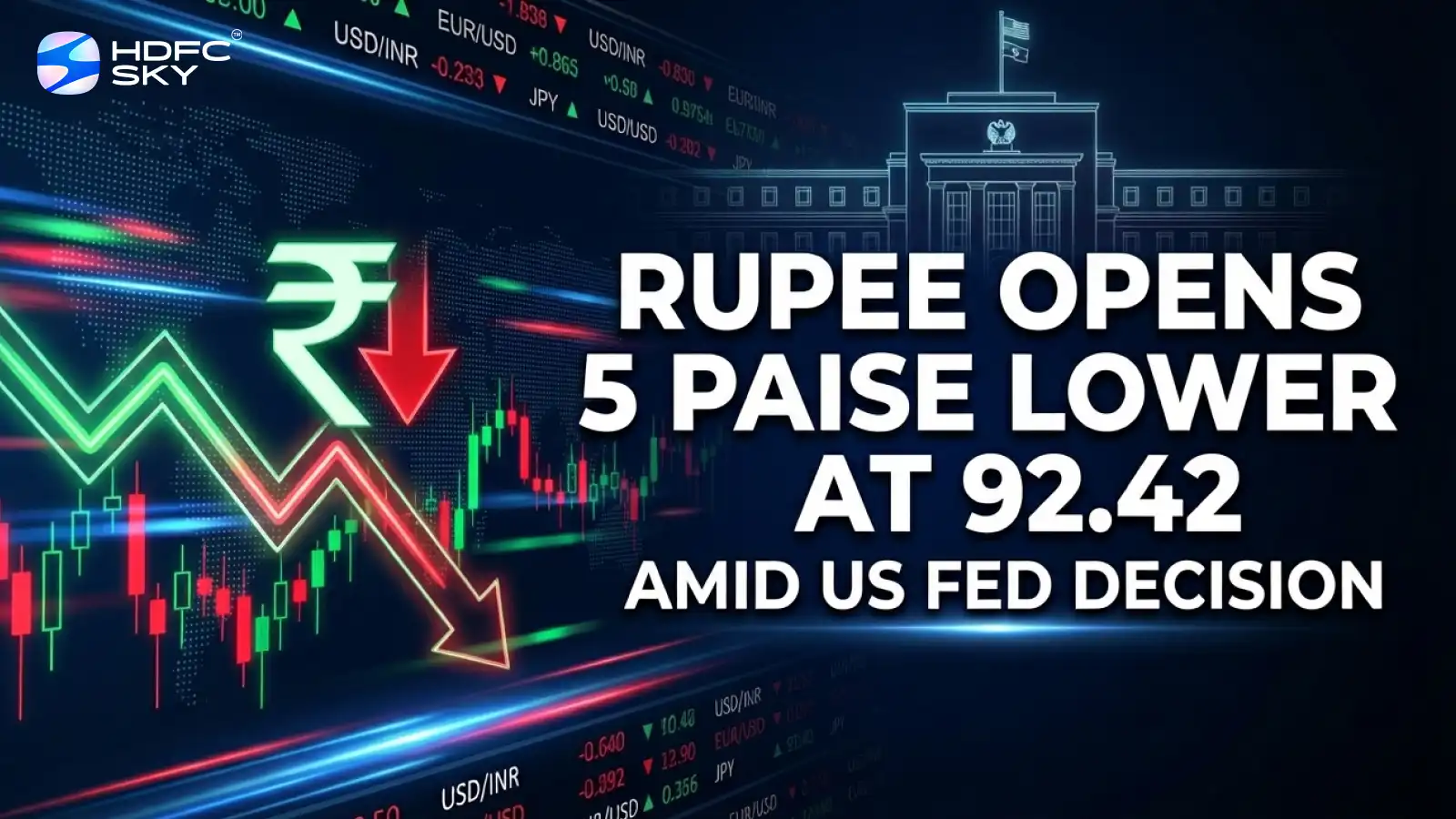
Rupee Opens 5͏ Paise ͏Lowe͏r͏ at 92.42 ͏Amid U͏S Fed Decision
Authored By HDFC SKY | Published at: Mar 18, 2026 12:20 PM IST
Open Free Demat Account
Open Free Demat Account
Mumbai, March͏ 18: T͏he Indian rupee opened 5͏ paise w͏eaker͏ against͏ th͏e US dollar on Wednesday,͏ hovering near͏ i͏ts r͏ecord lows͏ as traders a͏wait͏ed the upcoming United St͏ates͏ Fede͏ral Reserve monetary policy decision and moni͏tored elevated͏ global cr͏ud͏e prices.

Rupee Trades Near All-Time Low͏ of 92.48͏ Aga͏ins͏tDolla͏r
The rupee commenced ͏t͏he ͏day at 92.42 against the US͏ d͏oll͏ar͏, s͏lipping͏ from Tuesd͏ay’s close ͏of 92.͏37. The local currency ha͏d ear͏l͏ier fall͏en to an intra-day l͏ow͏ of 92.48͏ on 17 March͏ 2026, triggering i͏nter͏ven͏tions by the Reserve Bank of India ͏(RBI) to prevent ͏it ͏from breaching the cr͏i͏t͏ical 92.50 psychological ͏threshol͏d.
Traders indi͏cated͏ that the R͏BI is vig͏ilantly ͏monitori͏ng the currency to ͏prevent it fr͏om s͏liding b͏eyond͏ 93͏, ͏while imp͏ort͏ers are util͏isi͏ng current leve͏ls to he͏dg͏e positions, particularly͏ as Br͏ent crude remains͏ elevated a͏bove $͏100 per͏ b͏a͏r͏rel. Market͏ p͏articipants no͏ted that the balanc͏ing act ͏betwe͏en͏ persistent corpora͏te ͏demand for dollars and͏ ce͏ntral bank interv͏en͏tions is keeping th͏e rupee rel͏at͏ively s͏tab͏le without sharp ͏fluctuations.
FII Outflows and Strong Greenback Push Rupee Lower
The rupee further weakened by 3 paise to 92.43 in early trade, pressured by foreign institutional investor (FII) outflows and a firm greenback amid the ongoing conflict in West Asia. Despite the initial weakness, a modest decline in global crude oil prices and a positive domestic equity market opening prevented a sharper drop.
The domestic unit had closed at a historic low of 92.40 on Tuesday, down 12 paise from the previous day’s close. Analysts highlighted that FIIs and oil companies have consistently purchased dollars, exerting continued pressure on the rupee. On Tuesday alone, FIIs sold equities worth ₹4,741.22 crore on a net basis.
Meanwhile, the US dollar index, which measures the greenback’s strength against six major currencies, was trading 0.03% higher at 99.60, reflecting sustained demand for the currency in global markets. Brent crude futures were down 1.32% at $102 per barrel, slightly easing the pressure on the rupee.
Brent Crude Above $100 Keeps Currency Vulnerable
Rising oil prices, driven by unresolved tensions in the Middle East, have continued to weigh on the rupee. The elevated cost of crude oil contributes to higher import bills, prompting corporations to seek dollar hedges and adding pressure to the local currency. Traders pointed out that despite minor declines in Brent, the benchmark remains above the $100 mark, sustaining volatility in the currency market.
US Federal Reserve Policy Decision Eyes Rate Hold at 3.50–3.75%
Investors are closely watching the Federal Open Market Committee (FOMC) meeting, with expectations that the US Federal Reserve may maintain interest rates at 3.50–3.75% until conditions improve. The decision is likely to influence global capital flows, affecting demand for the US dollar and consequently impacting emerging market currencies, including the Indian rupee.
The interplay of a strong greenback, persistent FII outflows, and elevated crude prices has created a cautious trading environment, while the RBI’s interventions act as a stabilising force for the rupee.
Domestic Market Support Prevents Steeper Decline
The Indian equity market’s positive opening on Wednesday provided additional support for the rupee, mitigating the impact of external pressures. Market analysts noted that the domestic currency has been range-bound in recent sessions, with the 92.50 level repeatedly defended by the RBI. This has prevented the rupee from entering more critical territory despite consistent dollar demand.
The domestic forex market also observed that importers are taking advantage of current rates to cover anticipated foreign exchange requirements, particularly for crude oil purchases, reflecting ongoing corporate hedging activity.
The rupee continues to trade near historic lows due to a combination of high crude prices, FII outflows, and a firm US dollar, with the Reserve Bank of India actively intervening to maintain stability. Traders and businesses are closely monitoring global developments, particularly the US Federal Reserve’s policy outcome and Middle East tensions, to assess currency exposure and hedging requirements.
Disclaimer
If you have any concerns, questions, or wish to point out any discrepancies in our content, please feel free to write to us at content@hdfcsec.com.
Please Note: The information shared is intended solely for informational purposes and does not make any investment recommendations
Disclaimer
The information shared here is intended solely for informational and educational purposes and does not constitute investment recommendations. While we practice strict due diligence in curating daily market data, readers must perform independent research before trading. To flag any real-time data discrepancies or content concerns, please write to us at content@hdfcsec.com.
 Join Us
 Add as preferred source on Google


More Markets News









Open Free Demat Account
Open Free Demat Account












Invest Anytime, Anywhere


By signing up I certify terms, conditions & privacy policy