Nifty 50
- Eternal₹317.4012.95 (4.25%)
- Shriram Finance₹865-35.90 (-3.98%)
- Apollo Hospitals₹7,730125.50 (1.65%)
- Adani Enterprises₹2,477-73.00 (-2.86%)
- ONGC₹227.502.50 (1.11%)
- JSW Steel₹1,185.50-34.50 (-2.83%)
- Asian Paints₹2,30722.20 (0.97%)
- Jio Financial ₹205.03-5.77 (-2.74%)
- TCS₹2,53023.10 (0.92%)
- Tata Steel₹167.67-4.66 (-2.70%)
- UltraTech Cement₹11,05092.00 (0.84%)
- Adani Ports₹1,702.70-47.30 (-2.70%)
- Maruti Suzuki₹11,23060.00 (0.54%)
- Tech Mahindra₹1,790-39.10 (-2.14%)
- Cipla₹1,3387.10 (0.53%)
- Tata Motors PV₹264.60-5.40 (-2.00%)
- Reliance Industries₹1,1905.50 (0.46%)
- Hindalco Industries₹869.85-15.75 (-1.78%)
- Axis Bank₹1,217.505.50 (0.45%)
- Trent₹2,727.50-48.30 (-1.74%)

- Offerings
- Tools & Platforms
Tools & Calculators
- Open API
- Calculators
- SIP Calculator
- CAGR Calculator
- Compound Interest Calculator
- FD Calculator
- RD Calculator
- EPF Calculator
- Retirement Calculator
- HDFC SIP Calculator
- Mutual Fund Return Calculator
- Lumpsum Calculator
- Step Up SIP Calculator
- ETF SIP Calculator
- Brokerage Calculator
- Equity Margin Calculator
- SWP Calculator
- EMI Calculator
- MTF Calculator
- Margin Pledge Calculator
- Algo Strategy
- Markets
Stocks
F&O
Mutual Funds
- More
UAE Exits OPEC: Here’s How It Impacts India, OMC Stocks
Authored By HDFC SKY | Last Modified: Apr 29, 2026 04:02 PM IST
Open Free Demat Account
Open Free Demat Account
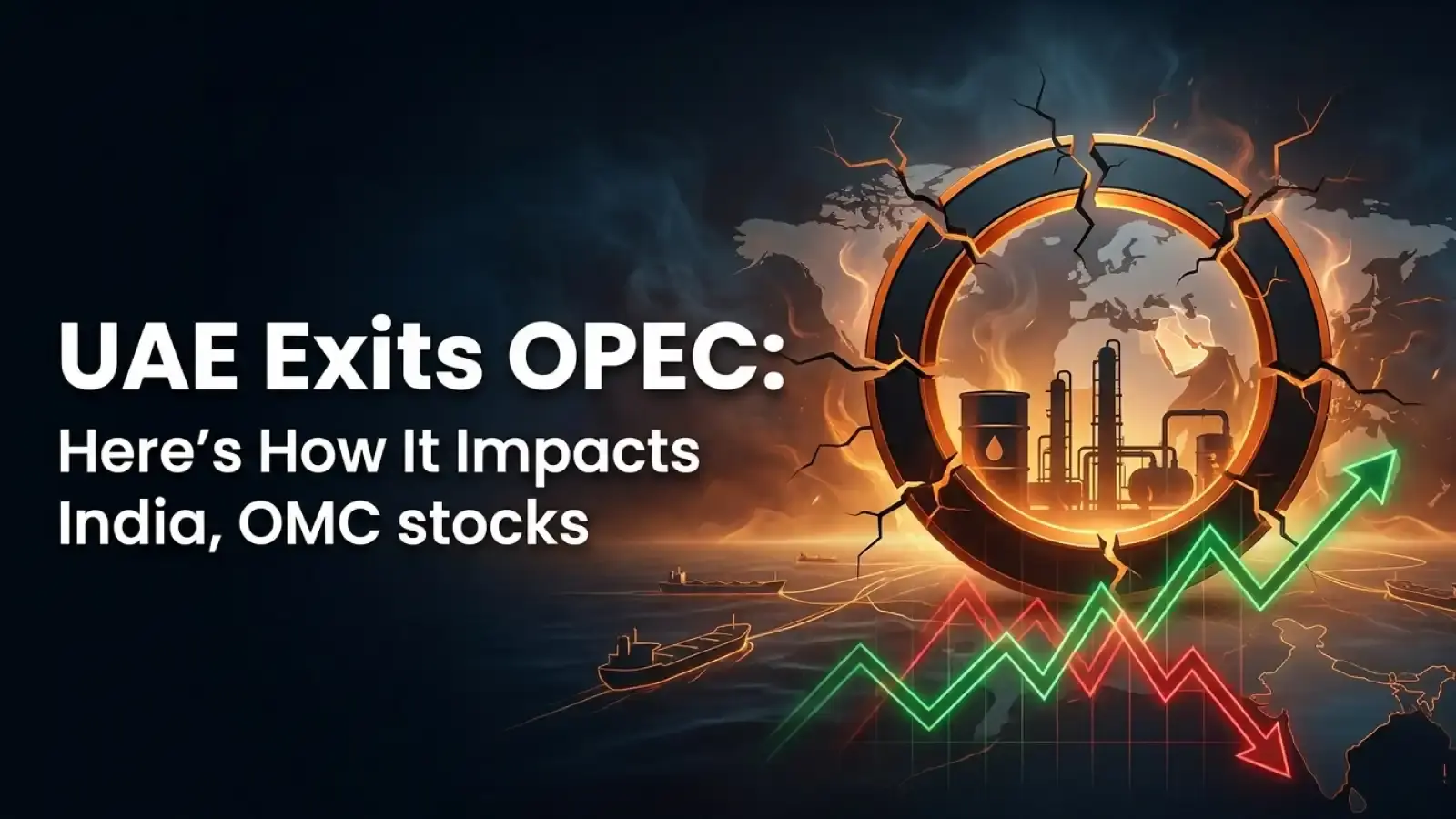
The decision by the United Arab Emirates to exit OPEC from May 1 marks a significant shift in the global oil landscape—and one that could tilt meaningfully in India’s favour.
OPEC, or the Organization of the Petroleum Exporting Countries, is a bloc of major oil-producing nations—including Saudi Arabia, Iraq, Iran, Kuwait, the UAE and others—that collectively coordinate output to influence global oil prices. The group accounts for roughly 30–40% of global oil supply and an even larger share of proven reserves, giving it significant control over pricing dynamics.
For India, which imports over 80% of its crude requirements, access and pricing of oil remain critical macro levers. Roughly 40% of India’s oil imports come from OPEC nations, with the UAE alone contributing close to a tenth of total shipments. The UAE’s exit, therefore, is not just symbolic it alters the framework through which a meaningful chunk of India’s energy basket is priced and negotiated.
At the heart of the shift lies freedom from coordinated supply discipline. Within OPEC, production quotas and pricing strategies are collectively managed, often keeping supplies tight to support prices. With the UAE stepping out, it gains the flexibility to produce more and price more competitively. For India, this opens the door to deeper bilateral engagement, where oil trade could increasingly be shaped by direct negotiations rather than cartel dynamics.
This could translate into more favourable long-term contracts, pricing discounts, or flexible supply arrangements, strengthening India’s energy security while potentially lowering its import bill. In macro terms, softer crude prices act like a lubricant for the economy—easing inflation, narrowing the current account deficit, and giving the government more fiscal breathing room.
The ripple effects extend beyond macro stability. Lower oil prices reduce input costs across a wide swathe of industries—from transportation and logistics to manufacturing and consumer goods—ultimately supporting demand and consumption.
That said, the road ahead may not be entirely smooth. In the near term, markets could see heightened volatility, especially if the UAE ramps up production while OPEC attempts to defend price levels after geopolitics over Iran settles. Over the longer term, however, a more competitive supply environment is likely to keep prices in check, which structurally benefits import-heavy economies like India.

Stocks in focus
Winners
Oil Marketing Companies
- Indian Oil Corporation
- Bharat Petroleum Corporation Limited
- Hindustan Petroleum Corporation Limited
Impact:
Oil marketing companies stand at the frontline of any decline in crude prices. Their core business depends on the gap between input costs (crude) and retail fuel prices. When crude softens—especially if pump prices don’t immediately adjust downward—these companies enjoy a period of margin expansion. This improves profitability, strengthens balance sheets, and often leads to re-rating in the market. In a scenario where UAE-driven supply pressures keep oil benign, OMCs could see sustained earnings support.
Aviation
- InterGlobe Aviation
- SpiceJet
Impact:
Fuel is the single largest cost component for airlines, often accounting for 35–40% of total expenses. A decline in crude prices directly feeds into lower aviation turbine fuel (ATF) costs, offering immediate relief to operating margins. This can improve profitability even without fare hikes, while also giving airlines flexibility to stimulate demand through competitive pricing.
Paint & Chemical Companies
- Asian Paints
- Pidilite Industries
Impact:
These companies rely heavily on crude-derived inputs such as solvents and petrochemicals. Lower oil prices reduce raw material costs, which can significantly boost gross margins. Over time, this either enhances profitability or allows companies to pass on benefits to consumers, thereby driving volume growth.
Tyres & Auto Ancillaries
- MRF
- Balkrishna Industries
Impact:
Crude-linked inputs such as synthetic rubber and carbon black form a major part of costs. Softer oil prices help ease input pressures, while also supporting broader auto demand through lower fuel costs. The combined effect is margin stability alongside demand tailwinds, a rare double benefit.
Losers
Upstream Oil Companies
- Oil and Natural Gas Corporation
- Oil India Limited
Impact:
For upstream players, crude prices are directly tied to revenue realisations. A sustained decline in oil prices translates into lower earnings per barrel, which can weigh on profitability despite stable production volumes. In a softer oil regime driven by increased UAE supply, these companies could see pressure on both earnings and valuations.
Mixed Impact
Refiners
- Reliance Industries
Impact:
Refining businesses operate on “crack spreads”—the difference between crude input costs and refined product prices. While lower crude can reduce working capital needs and input costs, margins ultimately depend on global demand for fuels and petrochemicals. As a result, the impact is balanced rather than directional, with profitability hinging on refining margins rather than crude prices alone.
Bottom line
For markets, the script is familiar but amplified: lower crude fuels consumption stories—setting up a landscape where India gains. The UAE’s exit from OPEC subtly shifts the balance of power in global oil markets. For India, it opens the door to cheaper, more flexible energy access—a clear macro positive. But it also introduces a layer of near term unpredictability, where oil prices may swing more freely without the stabilising hand of cartel discipline.
Disclaimer
If you have any concerns, questions, or wish to point out any discrepancies in our content, please feel free to write to us at content@hdfcsec.com.
Please Note: The information shared is intended solely for informational purposes and does not make any investment recommendations
Disclaimer
At HDFC SKY*, we take utmost care and due diligence in curating and presenting news and market-related content. However, inadvertent errors or omissions may occasionally occur.
If you have any concerns, questions, or wish to point out any discrepancies in our content, please feel free to write to us at content@hdfcsec.com.
Please Note: The information shared is intended solely for informational purposes and does not make any investment recommendations.
HDFC SKY from HDFC Securities, one of most trusted trading platforms in India, has been recognized with the *Next-Gen Digi Content Awards 2025-26.
 Join Us
 Add as preferred source on Google


More Markets News










Open Free Demat Account
Open Free Demat Account










Invest Anytime, Anywhere


By signing up I certify terms, conditions & privacy policy