Nifty 50
- Eternal₹317.4012.95 (4.25%)
- Shriram Finance₹865-35.90 (-3.98%)
- Apollo Hospitals₹7,730125.50 (1.65%)
- Adani Enterprises₹2,477-73.00 (-2.86%)
- ONGC₹227.502.50 (1.11%)
- JSW Steel₹1,185.50-34.50 (-2.83%)
- Asian Paints₹2,30722.20 (0.97%)
- Jio Financial ₹205.03-5.77 (-2.74%)
- TCS₹2,53023.10 (0.92%)
- Tata Steel₹167.67-4.66 (-2.70%)
- UltraTech Cement₹11,05092.00 (0.84%)
- Adani Ports₹1,702.70-47.30 (-2.70%)
- Maruti Suzuki₹11,23060.00 (0.54%)
- Tech Mahindra₹1,790-39.10 (-2.14%)
- Cipla₹1,3387.10 (0.53%)
- Tata Motors PV₹264.60-5.40 (-2.00%)
- Reliance Industries₹1,1905.50 (0.46%)
- Hindalco Industries₹869.85-15.75 (-1.78%)
- Axis Bank₹1,217.505.50 (0.45%)
- Trent₹2,727.50-48.30 (-1.74%)

- Offerings
- Tools & Platforms
Tools & Calculators
- Open API
- Calculators
- SIP Calculator
- CAGR Calculator
- Compound Interest Calculator
- FD Calculator
- RD Calculator
- EPF Calculator
- Retirement Calculator
- HDFC SIP Calculator
- Mutual Fund Return Calculator
- Lumpsum Calculator
- Step Up SIP Calculator
- ETF SIP Calculator
- Brokerage Calculator
- Equity Margin Calculator
- SWP Calculator
- EMI Calculator
- MTF Calculator
- Margin Pledge Calculator
- Algo Strategy
- Markets
Stocks
F&O
Mutual Funds
- More
Weekly Wrap Up: Dow Holds Steady as Nasdaq Plunges 2.5% on AI Chip Wipeout and IBM's Historic 25% Crash
Authored By HDFC SKY | Published at: Jul 18, 2026 01:31 PM IST
Open Free Demat Account
Open Free Demat Account
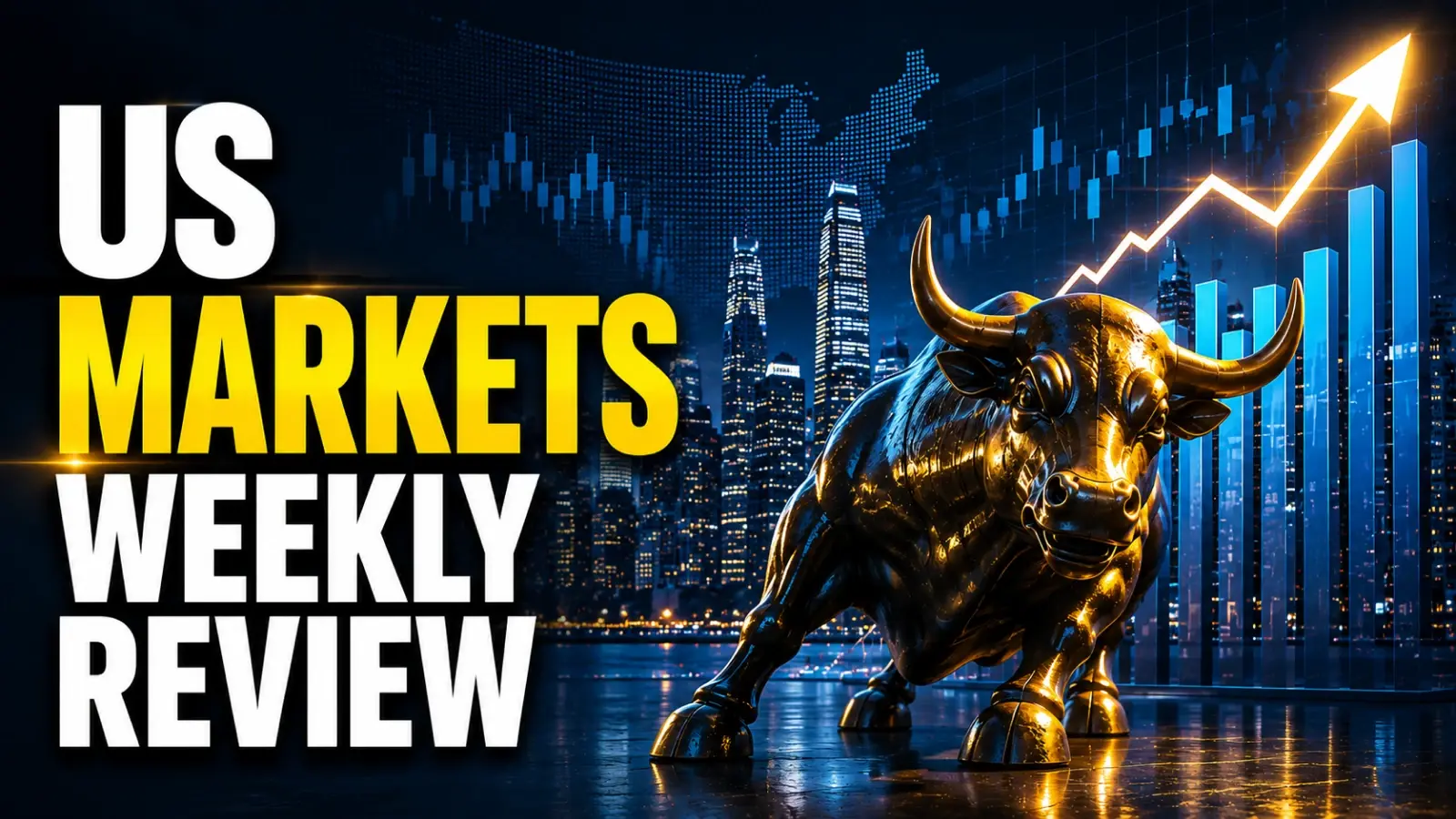
Mumbai, July 18: The US stock market concluded a tumultuous trading week, marked by a stark divergence between traditional industrial stocks and technology-heavy indices. While the Dow Jones Industrial Average remained relatively resilient, shedding just 0.4% for the week, the Nasdaq Composite suffered its worst weekly decline since late June, dropping 2.5% as a broad-based selloff in artificial intelligence and semiconductor stocks rattled investor confidence.
The S&P 500 also ended the week in the red, falling 1.1%, as concerns over valuation sustainability in the AI sector and escalating geopolitical tensions in the Middle East outweighed robust earnings from financial giants. The week was defined by International Business Machines Corp (IBM) suffering its worst single-day decline in history, a $100 billion fresh investment pledge by Taiwan Semiconductor Manufacturing Co (TSMC) in the US, and a disappointing forecast from streaming leader Netflix (NFLX) that compounded the tech sector’s woes.
Nasdaq’s 2.8% Weekly Rout Erases Two Weeks of Gains as Tech Bubble Fears Resurface
The Nasdaq Composite bore the brunt of the market’s selling pressure, closing the week at 25,543.01, down 738.60 points or 2.8% over the five-day period. This marked the index’s largest one-week point and percentage decline since the week ending 26 June and snapped a two-week winning streak. The tech-heavy index is now 5.7% below its record closing high of 27,093.90, which was set on Tuesday, 9 June. The selling was particularly intense on Friday, 17 July, when the Nasdaq plummeted as much as 2.2% in early trading before paring losses to close down 1.19% or 308.67 points at 25,573.27.
The sharp decline in the Nasdaq reflects growing investor anxiety over the sustainability of the AI-driven rally that has propelled the market for much of 2026. The Philadelphia SE Semiconductor Index, a key barometer for chip stocks, tumbled about 17% so far in July, although it remains up 63.2% year-to-date.
The selloff was exacerbated on Friday by the release of a new open-source Chinese AI model that performs on par with leading US offerings, intensifying competitive pressures in the sector. The primary catalyst for the Nasdaq’s decline was a deepening rout in semiconductor and AI-related stocks. Investors began reassessing the nearly $1 trillion spending boom on AI infrastructure, with some active managers scaling back exposure.
Also Read: How to Invest in the US Stocks From India?
The weakness was broad-based, with every member of the Magnificent Seven group of megacap tech stocks dipping on Friday. Meta Platforms (META) and Alphabet (GOOGL) were the worst hit among the group, falling 2.7% and 3.2%, respectively.
Dow Jones Holds Steady Near Highs With Mere 0.4% Drop Amid Rotation Into Value Stocks
In stark contrast to the tech-heavy Nasdaq, the Dow Jones Industrial Average demonstrated remarkable resilience, finishing the week nearly flat with a modest 0.4% decline. The blue-chip index closed Friday at 52,260.46, down 290.49 points or 0.56% for the session, supported by strength in financials, healthcare, and energy sectors. Earlier in the week, the Dow had shown intraday gains of more than 600 points following encouraging consumer sentiment data, before fading.
The Dow’s relative stability underscores a significant rotation out of growth and technology stocks into value and defensive sectors. Investors sought refuge in healthcare, consumer staples, and energy stocks, which benefited from surging crude oil prices amid escalating US-Iran hostilities.
Also Read: Tax on US Stock Investing for Indian Residents – Complete Guide (2026)
The index’s performance was buoyed by strong earnings from financial heavyweights including Goldman Sachs (GS) and JPMorgan Chase (JPM), which reported robust second-quarter results. The divergence between the Dow and the Nasdaq highlights shifting market leadership.
While AI and tech stocks faced valuation headwinds, traditional industrial and financial companies attracted buying interest on the back of solid earnings and attractive valuations. The CBOE Volatility Index (VIX), often referred to as Wall Street’s fear gauge, increased by 6.8% to 16.73, reflecting heightened market anxiety. Declining issues outnumbered advancers by a 2-to-1 ratio on the New York Stock Exchange on Friday, with 241 new highs and 166 new lows.
S&P 500 Tests Key Support Amid 1.1% Weekly Decline
The S&P 500 ended the week at 7,468.83, down 1.1% and recording its first weekly loss in three weeks. The index tested its 50-day moving average as weakness in technology and communication services outweighed gains in energy and consumer staples. Earlier in the week, eight of the 11 major sectors had closed higher, highlighting resilience outside the technology sector.
Despite the decline, the second-quarter earnings season has remained strong, with 90% of the 49 S&P 500 companies reporting so far beating expectations. Analysts now forecast Q2 earnings growth of 26.0%, up from 19.2% at the start of April. However, concerns over AI spending and geopolitical tensions continued to pressure technology stocks, while investors rotated into defensive sectors such as consumer staples. On Friday, the S&P 500 recorded 46 new 52-week highs and four new lows.
Russell 2000 Extends Rally with 20% YTD Gain
The Russell 2000 continued to outperform, rising 20% year-to-date through 14 July, its strongest start since 2003. Although the index pulled back slightly during the week, it remained well ahead of large-cap benchmarks, continuing a trend that began in mid-2025.
The rally reflects a broadening of market participation beyond megacap technology stocks, supported by attractive valuations and expectations of continued economic growth. While the Magnificent Seven have gained less than 3% in 2026, the Russell 2000 has advanced 20%. The rotation has also been driven by growing interest in AI-related power and electricity companies, while unprofitable small-cap stocks have significantly outperformed profitable peers, highlighting investors’ increased appetite for higher-growth opportunities.
IBM Plunges 25% in Historic Single-Day Crash Erasing $69 Billion in Market Value
International Business Machines Corp (IBM) recorded its worst-ever single-day decline on 14 July, with shares plunging 25% and erasing about $69 billion in market value. The fall pushed the stock into bear market territory, down 26% year-to-date, after the company warned that its upcoming second-quarter earnings would fall well below Wall Street expectations.
The sharp selloff weighed on the broader software sector. IBM reported 5% growth in software revenue but a 7% sequential decline in infrastructure revenue. CEO Arvind Krishna attributed the weak performance to execution challenges and softer demand across key business segments. Management also noted that customers are shifting IT spending from software to servers, storage, and memory to support AI infrastructure amid the ongoing memory chip shortage. The trend has heightened concerns that AI-driven spending priorities could pressure traditional software-as-a-service (SaaS) companies.
TSMC Pledges Fresh $100 Billion for US Expansion as Q2 Profit Surges Past Forecasts
Taiwan Semiconductor Manufacturing Co. (TSMC), the world’s largest contract chipmaker and a key supplier to Nvidia, announced an additional $100 billion investment in the United States on 16 July, taking its total US commitment to $265 billion. The investment will fund four new semiconductor fabrication plants in Arizona, expanding TSMC’s US footprint to 10 fabrication facilities and two packaging plants. The announcement followed a record second quarter, with revenue rising more than 30% year-on-year to $40.2 billion.
TSMC also raised its 2026 capital expenditure budget to as much as $64 billion and increased its full-year revenue growth forecast to above 40%, compared with an earlier outlook of over 30%. The company expects third-quarter revenue of $44.6–$45.8 billion, up from $33.1 billion a year earlier. Despite the strong results, TSMC shares declined alongside other AI chipmakers amid a broader sector selloff. The expanded US investment is aimed at strengthening supply chain resilience and meeting growing AI-driven chip demand.
Netflix Tumbles on Disappointing Forecast as Growth Concerns Intensify
Netflix (NFLX) shares fell 6.7% on 17 July after the company issued a weaker-than-expected third-quarter forecast. It projected revenue of $12.86 billion and diluted earnings per share of 82 cents, missing analyst estimates of $13 billion in revenue and 84 cents in EPS. The stock has declined around 20% in 2026 as investors question the company’s ability to sustain growth.
The weak outlook intensified concerns over Netflix’s slowing growth trajectory, with the stock down 27% year-to-date, putting it on course for its worst annual performance since 2023. The company also announced that it would reduce viewing-hours reporting to once a year from January 2027, a move some analysts viewed as an attempt to shift attention away from moderating engagement. Analysts attributed the softer guidance to a maturing business and a weaker second-half content slate, while broader weakness in technology stocks and investor rotation out of high-growth companies added further pressure.
Goldman Sachs Posts Record $20.98 EPS as Q2 Earnings Surge 92% Year-Over-Year; Shares Gain 4.7%
Goldman Sachs Group Inc. (GS) delivered exceptional second-quarter results on 14 July, reporting earnings per share of $20.98, which comfortably surpassed the Zacks Consensus Estimate of $14.47 and represented a staggering 92% increase from $10.91 a year earlier. Net revenue climbed 39% year-over-year to $20.34 billion, beating analyst expectations of $16.13 billion, while net profit reached $6.63 billion. The firm’s annualised return on equity stood at an impressive 23.5%. The Global Banking & Markets division led the charge with revenue growth of 53%, underscoring the strength of investment banking and trading activities. Goldman Sachs shares gained 4.7% following the results, providing the biggest boost to the Dow Jones Industrial Average for the week.
The strong performance was driven by robust investment banking and trading activity amid the AI boom and favourable market conditions. CEO David Solomon said the AI opportunity remains in its “early innings,” signalling continued potential for advisory, underwriting, and trading businesses. The results underscore the financial sector’s ability to benefit from the AI-driven market cycle, in contrast to technology companies facing margin pressure from heavy AI investments.
UnitedHealth Beats Estimates with $6.38 EPS as Abbott Surges 10.7% on Strong Results
UnitedHealth Group (UNH) reported second-quarter adjusted earnings of $6.38 per share on 15 July, comfortably beating estimates of $4.94 and improving from $4.08 a year earlier. Revenue reached $112.03 billion, while the company raised its full-year 2026 adjusted EPS guidance to $19.50–$20.00, above analyst expectations. UnitedHealth shares gained 1.2% following the results.
Abbott Laboratories (ABT) also delivered strong results, reporting adjusted EPS of $1.31 on revenue of $12.59 billion, both ahead of market estimates. The company increased its full-year EPS guidance to $5.45–$5.60, supported by a 42.3% surge in diagnostics revenue following the Exact Sciences acquisition. Abbott shares jumped 10.7%, making it one of the week’s top-performing S&P 500 stocks and highlighting continued strength in the healthcare sector amid broader market volatility.
Morgan Stanley Beats Estimates with $3.46 EPS as PayPal Rallies 15% and AtaiBeckley Climbs 33%
Morgan Stanley (MS) reported second-quarter earnings of $3.46 per share on 16 July, comfortably beating the Zacks Consensus Estimate of $2.89 per share and rising from $2.82 a year earlier. However, quarterly net revenues of $21.35 billion fell 8.90% below the consensus estimate of $23.43 billion, reflecting a challenging environment for investment banking amid market volatility. The mixed results weighed on the stock, with Morgan Stanley shares trading largely flat following the announcement, as the earnings beat was offset by the revenue shortfall.
PayPal Holdings Inc. (PYPL) shares surged 12% on 15 July after reports that Stripe and Advent International had proposed a $53 billion joint acquisition of the digital payments company. The $60.50-per-share offer represented a 28% premium to PayPal’s previous closing price. If completed, the deal would combine Stripe’s payment infrastructure with PayPal’s consumer payments platform, strengthening their position in the growing digital payments and stablecoin market.
AtaiBeckley Inc (ATAI) climbed to a new four-year high on 16 July following news that Eli Lilly agreed to acquire the company for up to $3.8 billion. AtaiBeckley shares surged 33.4% to close at $7.15, after touching an intraday record of $7.22. Under the agreement, shareholders are expected to receive $6.75 in cash per share, plus up to $2.50 per share in contingent value rights payable upon achievement of certain milestones. The total consideration of $9.25 represents a potential 72% premium over the previous day’s closing price of $5.36. The acquisition expands Eli Lilly’s pipeline in treatments for treatment-resistant depression and other severe psychiatric disorders, with AtaiBeckley’s therapies designed to restore synaptic connectivity and promote the growth of new neural connections.
Csquare Raises $1.05 Billion IPO, Standard Nuclear Debuts with $356 Million Listing
The IPO market remained active during the week, led by Brookfield-backed Csquare (CSQR), which raised $1.05 billion by offering 50 million shares at $21 each, below its marketed range of $23–$27. Shares opened at $20.90 and closed at $20.67, valuing the data centre operator at $3.2 billion, reflecting cautious investor sentiment towards AI infrastructure companies.
Standard Nuclear (STDN) also debuted on the NYSE after pricing its $356 million IPO, offering 10 million shares at $15 each. The company is the only independent US producer of TRISO nuclear fuel, supplying advanced nuclear reactors and supporting domestic energy security.
In the SPAC market, Research Alliance Corporation IV (RACD) raised $75 million, while Samos Energy Acquisition secured $200 million, highlighting continued investor interest in healthcare, life sciences, and energy-focused acquisition vehicles despite broader market volatility.
Shell and Uber Lead $31 Billion Global Deal Activity; Stocks Respond Mixed
Global M&A activity remained robust during the week, led by Shell’s $16.4 billion acquisition of ARC Resources, which received shareholder approval and is expected to close in the second half of 2026. Shell shares traded flat on the news, while ARC Resources shares edged up 1.2% following the shareholder vote approval. Uber Technologies (UBER) also agreed to acquire Delivery Hero in a $14.8 billion all-cash deal, creating the world’s largest food-delivery platform outside China. Uber shares dropped 1.8% on the announcement, as investors weighed integration risks and anticipated regulatory scrutiny, while Delivery Hero shares surged 9.5% on the offer price of €41.50 per share.
In the capital markets, Samos Energy Acquisition raised $200 million through its SPAC IPO, while General Fusion completed its merger with Spring Valley Acquisition Corp. III and began trading on Nasdaq as GFUZ, securing approximately $150 million to fund its fusion energy programme.
Meanwhile, SoundHound AI and LivePerson signed an amended merger agreement under which LivePerson will become an indirect wholly owned subsidiary of SoundHound AI, with the original transaction valued at approximately $250 million on an enterprise value basis. SoundHound AI shares declined 3.2% following the announcement, while LivePerson shares gained 2.8% on the news.
Weekly Gainers and Losers: Abbott Labs, JB Hunt Surge as SanDisk, Netflix Plunge
Abbott Laboratories (ABT) emerged as a standout performer in the S&P 500, posting a 10.7% gain on Thursday alone following its earnings beat. JB Hunt Transport Services (JBHT) gained 5.2% after the trucking firm’s quarterly results topped estimates, benefiting from stabilizing freight markets. Coterra Energy (CTRA) rose 4.8% alongside the broader energy sector rally, driven by surging crude prices. Among the S&P 500’s worst performers, Western Digital Corp (WDC), operating as SanDisk, tumbled 8.5% as memory chip demand concerns resurfaced. Netflix (NFLX) declined 6.7% on its weak forecast, while Advanced Micro Devices (AMD) fell 6.3% amid the semiconductor rout. Super Micro Computer (SMCI) dropped 7.8% , and Dell Technologies (DELL) lost 5.1%, reflecting broad-based selling across the AI server and hardware space.
In the Dow Jones Industrial Average, Goldman Sachs (GS) rose 4.7% after its blockbuster earnings, providing the biggest boost to the index, while UnitedHealth (UNH) advanced 2.1%. IBM’s 25% collapse was the largest drag on the Dow.
On the Nasdaq, AtaiBeckley (ATAI) was among the top gainers, surging 33.4% following the Eli Lilly acquisition announcement, while PayPal (PYPL) rallied 12% on takeover speculation. Netflix (NFLX) and Super Micro Computer (SMCI) were among the Nasdaq’s biggest decliners, with the former falling 6.7% and the latter dropping 7.8%, reflecting the broader tech sector weakness that weighed heavily on the Nasdaq Composite throughout the week.
The US market experienced a sharp bifurcation, with technology indices bearing the brunt of selling driven by valuation concerns and competitive pressures, while value-oriented sectors and small-caps demonstrated resilience. The rotation out of AI-related stocks into defensive sectors and value plays signals a shift in market leadership. Geopolitical tensions and mixed economic data add layers of complexity, warranting a watchful stance on oil prices and Federal Reserve policy signals as Q2 earnings season progresses.
Disclaimer
If you have any concerns, questions, or wish to point out any discrepancies in our content, please feel free to write to us at content@hdfcsec.com.
Please Note: The information shared is intended solely for informational purposes and does not make any investment recommendations
Disclaimer
At HDFC SKY*, we take utmost care and due diligence in curating and presenting news and market-related content. However, inadvertent errors or omissions may occasionally occur.
If you have any concerns, questions, or wish to point out any discrepancies in our content, please feel free to write to us at content@hdfcsec.com.
Please Note: The information shared is intended solely for informational purposes and does not make any investment recommendations.
HDFC SKY from HDFC Securities, one of most trusted trading platforms in India, has been recognized with the *Next-Gen Digi Content Awards 2025-26.
 Join Us
 Add as preferred source on Google


More Business News






Open Free Demat Account
Open Free Demat Account









Invest Anytime, Anywhere


By signing up I certify terms, conditions & privacy policy