Nifty 50
- Tata Consumer ₹986.4549.95 (5.33%)
- Infosys₹1,135.65-30.35 (-2.60%)
- Bharat Electronics₹373.8010.80 (2.98%)
- Hindustan Unilever₹1,775.30-43.30 (-2.38%)
- BSE₹3,40041.00 (1.22%)
- Asian Paints₹2,297.90-24.10 (-1.04%)
- Max Healthcare₹8438.00 (0.96%)
- JSW Steel₹1,247.70-12.30 (-0.98%)
- Hindalco Industries₹890.855.20 (0.59%)
- Bajaj Finserv₹1,656-14.90 (-0.89%)
- Dr. Reddy's Labs₹1,317.206.30 (0.48%)
- Tech Mahindra₹1,779.10-15.90 (-0.89%)
- Kotak Mahindra Bank₹442.551.80 (0.41%)
- Grasim Industries₹2,925.30-24.70 (-0.84%)
- Axis Bank₹1,224.804.80 (0.39%)
- Reliance Industries₹1,193.50-8.30 (-0.69%)
- Trent₹2,763.309.30 (0.34%)
- Tata Motors PV₹261.90-1.80 (-0.68%)
- L&T₹3,69212.00 (0.33%)
- Coal India₹402.45-2.55 (-0.63%)

- Offerings
- Tools & Platforms
Tools & Calculators
- Open API
- Calculators
- SIP Calculator
- CAGR Calculator
- Compound Interest Calculator
- FD Calculator
- RD Calculator
- EPF Calculator
- Retirement Calculator
- HDFC SIP Calculator
- Mutual Fund Return Calculator
- Lumpsum Calculator
- Step Up SIP Calculator
- ETF SIP Calculator
- Brokerage Calculator
- Equity Margin Calculator
- SWP Calculator
- EMI Calculator
- MTF Calculator
- Margin Pledge Calculator
- Algo Strategy
- Markets
Stocks
F&O
Mutual Funds
- More
Taking Loans to Invest in the Stock Market: The Math on Why It Almost Never Works
By Aseem Shrivastava | Published at: Jun 13, 2026 06:26 PM IST
Open Free Demat Account
Open Free Demat Account
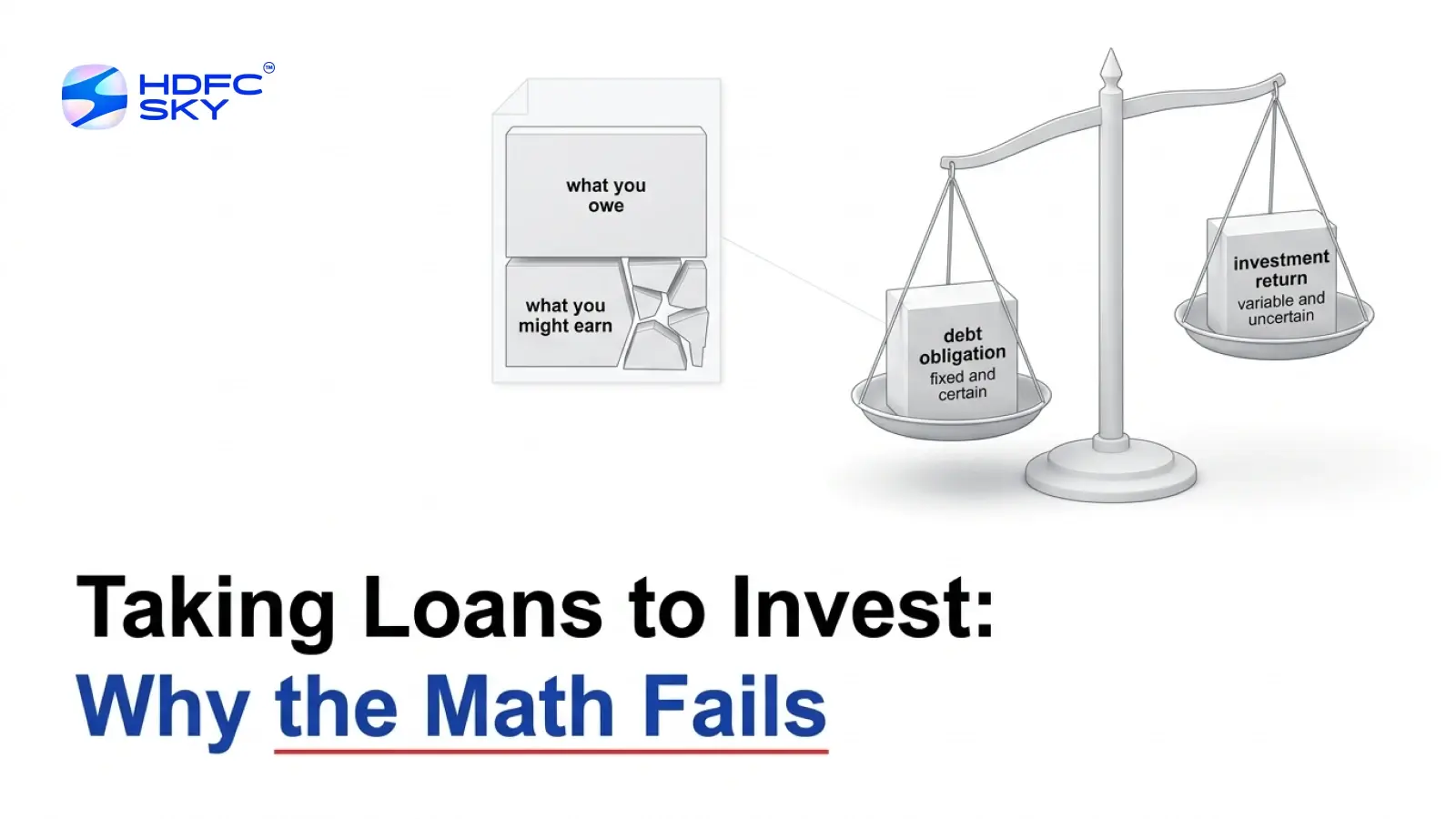
Borrowing money to invest can seem like an easy way to multiply wealth when markets are rising fast. You see stocks delivering 15%, 20%, even 30% returns in a year, while personal loans or margin funding may cost far less on paper. The math appears simple. Borrow at a lower rate, invest at a higher return, and keep the difference.
But the stock market does not deliver fixed returns. Loan EMIs, however, are fixed and unavoidable. That difference is precisely why leveraged investing destroys far more portfolios than it builds.
The Problem Starts With Market Timing
Most people take loans to invest when markets are already doing well. Confidence is high and social media is full of stories about quick profits. But markets move in cycles.
Suppose you borrow ₹5 lakh at 12% annual interest to invest in stocks. Your expectation may be a 15% or 18% return. But if the market falls 20% instead, your ₹5 lakh becomes ₹4 lakh while your loan repayment obligation remains unchanged.
You are now facing:
- Capital loss
- Interest payments
- EMI pressure
- Emotional stress
Borrowed investing leaves very little room for patience, unlike regular investing.
The Math Rarely Favors You
Most retail investors underestimate how difficult it is to consistently outperform borrowing costs after taxes and market volatility.
For example:
- Loan interest rate: 12%
- Expected market return: 15%
- Short-term market correction: -10% to -20%
You may be forced to sell early to manage EMIs even if the market eventually recovers. That converts temporary losses into permanent damage.
A better justification for borrowing is that your investments must generate profits and also outperform:
- Interest costs
- Taxes
- Brokerage charges
- Inflation
- Market drawdowns
That is a very high hurdle.
Also Read: The portfolio rebalancing strategy that systematically forces you to buy low and sell high
Where Loans Actually Make Sense
Loans are generally suitable for:
- Buying productive assets
- Expanding businesses
- Education
- Real estate with long-term utility
Stocks are different because returns are uncertain and market movements remain unpredictable. Even professional investors with years of experience struggle to consistently generate returns above borrowing costs without taking excessive risk.
Build Wealth With Time Instead of Leverage
The stock market rewards patience and discipline with consistency. You do not need borrowed money to benefit from compounding. A simple SIP running for 15 to 20 years can create substantial wealth without the stress of EMIs or margin calls.
Survival matters more than speed in investing. And taking loans to invest reduces your ability to survive market volatility when it matters most.



Open Free Demat Account
Open Free Demat Account
Popular Posts
- 10 Interesting Facts About NSE You Probably Didn’t KnowLast Updated: Sep 30, 2026
- 8-4-3 Rule of SIP - How Does That Work?Last Updated: Jul 30, 2025
- Let's view more exciting Post!
Popular Post from Dumb Money Mistakes
- Skipping Nominee Updates and Joint Holding: The Estate Planning Mistake That Freezes Family WealthLast Updated: Jun 13, 2026
- Chasing Last Year’s Top-Performing Mutual Fund: The Most Reliable Way to UnderperformLast Updated: Jun 13, 2026
- Investing Based on Neighbor's Tip: The Psychology and Math of Social Proof LossesLast Updated: Jun 13, 2026
- Selling Winning Stocks Too Early and Holding Losers Too Long: The Disposition Effect ExplainedLast Updated: Jun 13, 2026
- Ignoring Expense Ratios in Mutual Funds: How 1.5% Extra Cost Destroys ₹40 Lakh Over 20 YearsLast Updated: Jun 13, 2026
- Let's view more exciting Post!
Popular Post from Blogs
- “Bounce Back” Theme Gains Traction in 2026Last Updated: Apr 8, 2026
- 5 Takeaways for Tax Payers from the Budget 2025Last Updated: Jan 29, 2026
- Let’s view more exciting Posts


Invest Anytime, Anywhere


By signing up I certify terms, conditions & privacy policy