Nifty 50
- Tata Consumer ₹1,00063.50 (6.78%)
- Asian Paints₹2,277-45.00 (-1.94%)
- Bharti Airtel₹1,978.8061.30 (3.20%)
- Coal India₹398-7.00 (-1.73%)
- Bajaj Auto₹10,390319.00 (3.17%)
- Grasim Industries₹2,900.80-49.20 (-1.67%)
- BSE₹3,441.1082.10 (2.44%)
- SBI₹945.10-15.70 (-1.63%)
- Trent₹2,820.6066.60 (2.42%)
- TCS₹2,496.90-38.10 (-1.50%)
- Maruti Suzuki₹11,450230.00 (2.05%)
- Adani Enterprises₹2,474.10-33.90 (-1.35%)
- Power Grid Corp₹251.754.75 (1.92%)
- Axis Bank₹1,205.70-14.30 (-1.17%)
- Eternal₹3315.45 (1.67%)
- ICICI Bank₹1,386.90-16.10 (-1.15%)
- Max Healthcare₹847.9012.90 (1.54%)
- HDFC Bank₹680.20-7.85 (-1.14%)
- Bharat Electronics₹368.155.15 (1.42%)
- HDFC Life Insurance ₹513.60-5.40 (-1.04%)

- Offerings
- Tools & Platforms
Tools & Calculators
- Open API
- Calculators
- SIP Calculator
- CAGR Calculator
- Compound Interest Calculator
- FD Calculator
- RD Calculator
- EPF Calculator
- Retirement Calculator
- HDFC SIP Calculator
- Mutual Fund Return Calculator
- Lumpsum Calculator
- Step Up SIP Calculator
- ETF SIP Calculator
- Brokerage Calculator
- Equity Margin Calculator
- SWP Calculator
- EMI Calculator
- MTF Calculator
- Margin Pledge Calculator
- Algo Strategy
- Markets
Stocks
F&O
Mutual Funds
- More
Ignoring Expense Ratios in Mutual Funds: How 1.5% Extra Cost Destroys ₹40 Lakh Over 20 Years
By Aseem Shrivastava | Published at: Jun 13, 2026 06:56 PM IST
Open Free Demat Account
Open Free Demat Account
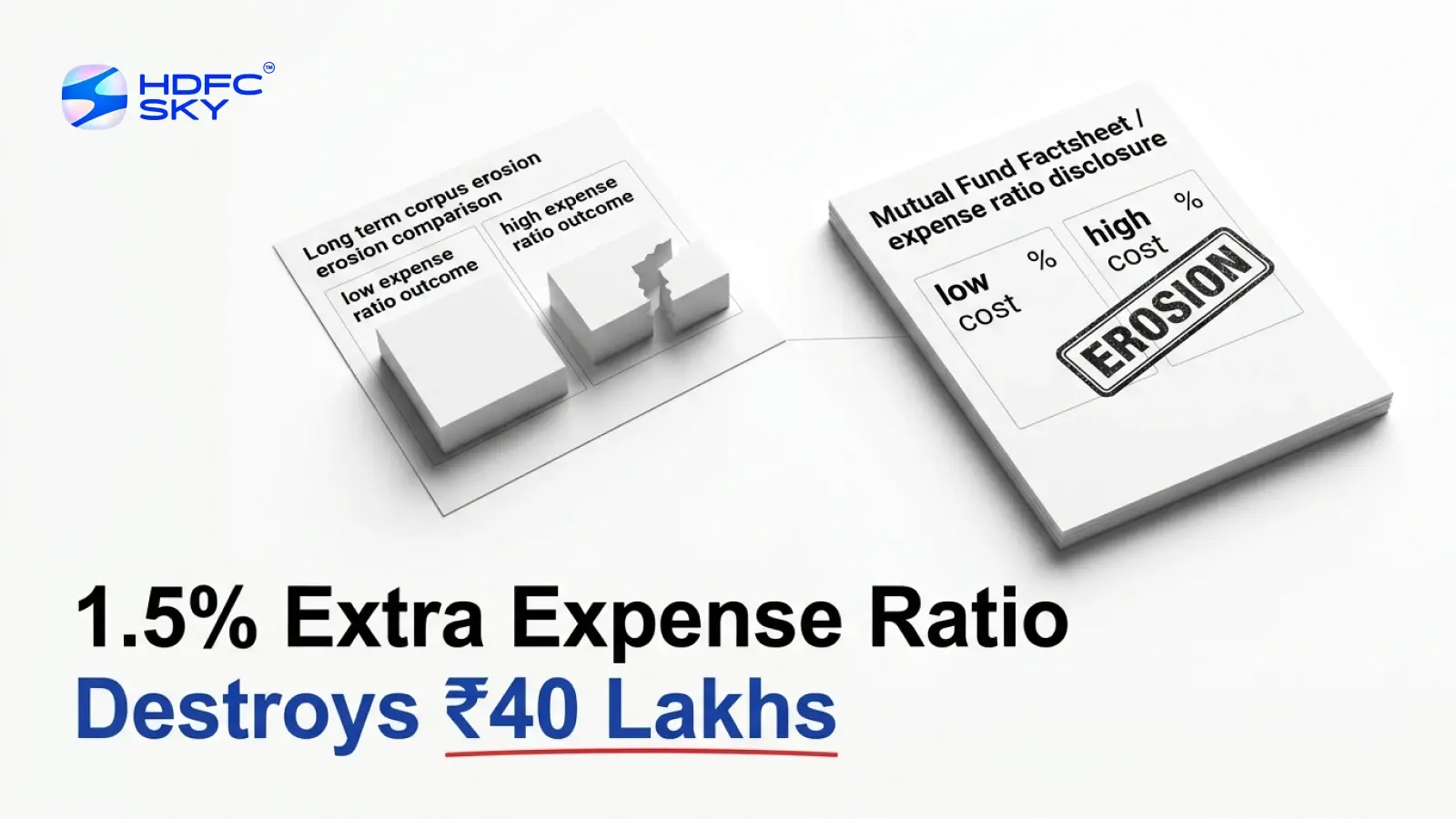
Most mutual fund investors spend hours comparing past returns and market outlooks. But many completely ignore the expense ratio that quietly eats into wealth every single year. A difference of just 1.5% may not look serious on paper. Over 20 years, it can reduce your final corpus by tens of lakhs.
That is the hidden cost most retail investors underestimate.
What Is an Expense Ratio?
An expense ratio is the annual fee a mutual fund charges to manage your money. It includes fund management charges and administrative costs, among other expenses. The charge is deducted directly from the fund’s Net Asset Value (NAV). You do not pay it separately, which is why many investors barely notice it.
For example:
- Fund A expense ratio: 0.5%
- Fund B expense ratio: 2%
Both may invest in similar stocks. Both may even deliver similar gross returns before costs. But the fund with a higher cost leaves you with far less money over time.
The ₹40 Lakh Difference Most Investors Miss
Let’s assume two investors each invest ₹25,000 monthly for 20 years. Both funds generate a gross annual return of 12% before expenses.
The only difference is cost:
- Investor 1 chooses a low-cost fund with a 0.5% expense ratio
- Investor 2 chooses a regular fund with a 2% expense ratio
That means:
- Net return for Investor 1: 11.5%
- Net return for Investor 2: 10%
Over 20 years:
Investor 1 builds roughly ₹2.3 crore
Investor 2 builds roughly ₹1.9 crore
The gap is close to ₹40 lakh.
Also Read: Why investors buy the highest NAV mutual fund thinking it’s the best performer
Why Expense Ratios Hurt More Over Time
Expense ratios damage returns in two ways.
- Reduce yearly gains.
- Reduce the power of compounding.
This is why even small percentage differences become massive over long investment horizons. A 1% or 1.5% higher fee may sound harmless today. Over 15 to 25 years, it becomes one of the biggest wealth destroyers in investing.
Lower Cost Does Not Mean Better Fund
Expense ratio is important, but it should not be the only factor. A fund with lower costs and poor portfolio management is not automatically a good investment.
It is best to evaluate:
- Consistency
- Portfolio quality
- Fund management style
- Expense ratio
Bottom line
Most investors focus heavily on returns and barely pay attention to costs. That approach quietly reduces wealth creation chances in the long run. The market is unpredictable. Expense ratios are not.
You cannot control market movements in the short run, but you can manage how much you pay to invest. Over 20 years, that single decision can decide whether you retire with an extra ₹40 lakh or not.



Open Free Demat Account
Open Free Demat Account
Popular Posts
- 10 Interesting Facts About NSE You Probably Didn’t KnowLast Updated: Sep 30, 2026
- 8-4-3 Rule of SIP - How Does That Work?Last Updated: Jul 30, 2025
- Let's view more exciting Post!
Popular Post from Dumb Money Mistakes
- Skipping Nominee Updates and Joint Holding: The Estate Planning Mistake That Freezes Family WealthLast Updated: Jun 13, 2026
- Chasing Last Year’s Top-Performing Mutual Fund: The Most Reliable Way to UnderperformLast Updated: Jun 13, 2026
- Investing Based on Neighbor's Tip: The Psychology and Math of Social Proof LossesLast Updated: Jun 13, 2026
- Selling Winning Stocks Too Early and Holding Losers Too Long: The Disposition Effect ExplainedLast Updated: Jun 13, 2026
- Taking Loans to Invest in the Stock Market: The Math on Why It Almost Never WorksLast Updated: Jun 13, 2026
- Let's view more exciting Post!
Popular Post from Blogs
- “Bounce Back” Theme Gains Traction in 2026Last Updated: Apr 8, 2026
- 5 Takeaways for Tax Payers from the Budget 2025Last Updated: Jan 29, 2026
- Let’s view more exciting Posts


Invest Anytime, Anywhere


By signing up I certify terms, conditions & privacy policy